




Archive for 2012

Begrudgingly, Labour must accept police and crime commissioners

20/11/2012, 07:00:52 AM

by David Talbot

The police must no longer be immune to radical reform. A mighty vested interest, which has historically seen off just about all attempts to reform it, they have grown into a monolithic empire that successive governments dare not touch. It has been a failure of political will to pursue reform; Blair balked from many of the more controversial reforms his bellicose former home secretaries, in the shape of Messrs Blunkett and Clarke, conjured up. For Labour’s leaders, being pro-police was a vital ingredient of being New Labour. But the myopic faith our political leaders, and the public, once had in the police has sadly waned in the light of recent events – and it is why Labour should welcome the newly-minted police and crime commissioners

The police have long claimed the irrelevance of their political masters when it comes to policing. They have operated an arrogant closed doors policy that has intimidated, and dissuaded, many from engaging in their work. These reactions demonstrate that our police are systemically intolerant of debate and virulently closed to new ideas.

The police need democratic oversight. They are one of the most closed, complex and costly of public services. It is can only be right that the police are brought closer to the very people they are sworn to protect. The apparent immunity of the police service to wider accountability has been a distressing aspect of the service ever since the committees of councillors, members of the public and magistrates took over in the 1960s from local watch committees, which had existed since the 1830s.

(more…)

Facebook Twitter Digg Delicious StumbleUpon

Sunday Review on Monday: Bill Clinton at policy network

19/11/2012, 07:00:52 AM

by Jonathan Todd

In the closing stages of the US presidential election Joe Klein voiced “the frustration that many informed voters have had with this race: Romney’s proposals for the next four years are ridiculous; the President’s are nonexistent … The vast majority of people in the vast majority of states are irrelevant to the process. The campaigns brag about their ability to microtarget voters. That is precisely what we’ve gotten: a whole lot of micro at a time when macro is sorely needed.”

Now that the Republicans have thrown all they could at Barack Obama, securing less popular votes for Mitt Romney than John McCain managed after the nadir of George W Bush and failing to deny the Democrats another four years in the White House, it seems almost churlish to revisit Klein’s moans.

But Bill Clinton brought them to mind last Thursday night at Policy Network and Global Progress’ launch of a major programme of transatlantic political dialogue. While full of praise for Obama’s hyper-efficient machine, which “knew the names of all undecided voters, the names of their children and their TV viewing habits”, Clinton stressed the continued importance of the macro vision that Klein felt was lost this year.

He argued that tough economic conditions set Obama a testing re-election challenge, meaning that he had to utilise every advantage, including micro-targeting of voters so precise as to outdo the slickest corporate campaigns. Progressives should, however, seek to hold the centre, as this will deliver a majority of support, irrespective of micro-targeting.

(more…)

Facebook Twitter Digg Delicious StumbleUpon

Results this week show middle England is moving away from David Cameron

17/11/2012, 03:23:52 PM

by Michael Dugher

Yesterday’s Corby by-election victory for Andy Sawford was a significant result for Labour. It went well beyond our expectations, with a swing of 12.7 per cent from the Tories, which if repeated across the county in a general election would see a Labour majority of well over 100.

Corby is important as it is a key middle England seat and the result shows that people in the heart of Britain are putting their trust in Labour once again.  The Corby constituency is a microcosm of the country – with Corby itself, alongside small market towns and chocolate box villages.  Since its creation in 1983, Corby has been held and won by the party that has formed the government.  Labour won it from the Tories in 1997 and the Tories gained it in 2010.

Andy Sawford fought a one nation campaign, reaching out right across the constituency, persuading those who did not vote for us in 2010 to put their trust in Labour once again. That is exactly what Ed Miliband and one nation Labour is about – standing up for working families who are having their budgets squeezed, for young people who are out of work, and for those who are being ignored by a Tory-led government that thinks the priority now is to cut taxes for millionaires.

The government has tried to spin away the result as just people venting their anger at Louise Mensch for quitting half way through her term.  But that’s not what people were saying on the doorstep.  When I was out campaigning during the by-election, most people I spoke to hadn’t even heard of Louise Mensch.  But they had heard of David Cameron.  And they were angry with a government that is cutting taxes for millionaires while families across the constituency are feeling their incomes squeezed.

(more…)

Facebook Twitter Digg Delicious StumbleUpon

Are Britons more comfortable with bureaucracy than democracy?

16/11/2012, 04:59:03 PM

by Kevin Meagher

The people have spoken.

Well some of us have. As the results from the police and crime commissioner elections trickle in, it will be a blessed relief if as many as one in five of us actually voted.

Of course some people were not just apathetic about the idea, but determinedly hostile; visiting the polling booth in high dudgeon – simply to spoil their ballot paper.

Here was a chance, as I argued yesterday, to bring some much needed accountability about how a vital public service is run. Might be a bit boring, or possibly abstract for some, but the hostility to the idea leaves me baffled.

Of course it’s not just the police commissioners. The dismal 18 per cent turnout in last night’s Manchester Central by-election reflects the same malaise at the heart of our politics. It is reckoned to be the lowest turnout in a parliamentary election since 1942, when just 8.5 per cent voted in Poplar South, (although I suspect the not insignificant combination of world war two and the blitz may have had some bearing then).

Even in Corby, scene of this afternoon’s significant Labour win by Andy Sawford, just 45 per cent voted. And that’s after a small rainforest’s worth of election leaflets and direct mails were shovelled through voters’ letterboxes.

It seems the old saying that ‘we get the politicians we deserve’ has never been truer. For a nation of inveterate moaners about how we are led we seem to readily pass up the chance to do anything about it.

(more…)

Facebook Twitter Digg Delicious StumbleUpon

Forget the chatter, George Osborne’s power in the Conservative party is as strong as ever

16/11/2012, 07:00:01 AM

by Mark Stockwell

There has been a tendency lately in some circles – no doubt including many Labour Uncut readers – to scoff somewhat at George Osborne. Since the chancellor’s questionable (politically if not economically) decision to cut the top rate of income tax, there has been a sense that his influence is on the wane. In particular, there has been a lot of chatter to the effect that he can’t combine his position as chancellor of the exchequer with his role as the Conservative party’s principal electoral strategist.

This week’s op ed in The Times – “”Obama proves you can win in tough times’(£) – shows that both his opponents and his enemies underestimate Osborne at their peril: he remains the key strategic force behind Conservative modernisation. In conjunction with David Cameron’s well-received party conference speech – admittedly a rather short-lived success – the Times piece gives a clear indication that while the occupants of Nos. 10 and 11 Downing Street remain in situ, that agenda is still very much alive.

It was gratifying, of course, that the central thrust of the chancellor’s argument was to endorse that of my own piece on the US elections a couple of weeks back – namely that the Tories would be heartened by an Obama victory. As Osborne puts it, “People agree with the message ‘we’re on the right track, don’t turn back’ because it is correct.”

I hesitate to say ‘you heard it here first’ but…

While that central message confirmed the Conservatives’ strategy for the next election, there were two other particularly notable points about Osborne’s piece. These suggest that the chancellor is intent on continuing to lift his eyes from the red book and the latest economic projections, and take a rather longer-term view of the political landscape.

(more…)

Facebook Twitter Digg Delicious StumbleUpon

Labour history uncut: “I’m alright Jack” say the skilled working classes

15/11/2012, 04:15:53 PM

Pete Goddard and Atul Hatwal continue their look at the development of the unions and their role in establishing the Labour representation committee (LRC) in 1900

By 1866 the Tories had been out of power for 18 of the past 20 years and were pretty ticked off. What’s the point of being a Tory if you can’t lord it over the little people by being in government?

In the meantime working people had started to organise in earnest. Unions were springing up, Duncan’s horses were eating each other and civilisation was teetering on the brink of the abyss – at least as far as the landed gentry saw things.

Worst of all, there was pressure to extend the vote to the working classes. The Tories failed to see why anyone should be allowed to vote if they didn’t even have enough sense to be born into a wealthy family. But apparently, some people thought otherwise.

Throughout the 1860s various attempts by Liberals to broaden the franchise were defeated by a combination of Liberal splits and Tory opposition.

But it was only a matter of time.

In 1866 the Tories squeaked back into government as a minority administration. After so many years out in the cold, and with a toxic electoral brand, the Tories’ first moderniser, Benjamin Disraeli had a plan.

Previous approaches to voting reform had involved saying “no”, and then when pressed, shouting “NO!” much louder and storming out in a huff.

Core Tory supporters loved this approach and it always went down a storm in the House of Lords, which incidentally was where the core Tory support sat, literally. But, out in the electorate, enthusiasm was rather lacking.

Disraeli’s big idea was to stop saying “no” and start saying “sort of.”

It was going to happen at some point anyway, so the Tories might as well be the ones to do it. They could then claim the credit and still only implement low-calorie suffrage, thus averting the risk that the Liberals might implement something bonkers like votes for everyone. Those Liberals were crazy.

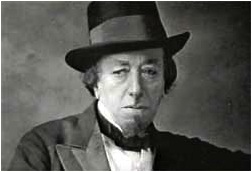
Disraeli, shortly after his appearance on "Pimp my Tory"

Disraeli, shortly after his appearance on "Pimp my Tory"

(more…)

Facebook Twitter Digg Delicious StumbleUpon

Labour has missed a chance to be positive about police commissioners

15/11/2012, 01:42:29 PM

by Kevin Meagher

Well, here we are, the day when, if some pollsters are to be believed, fewer than one in ten of us in England and Wales will bother to trudge to the polling station and cast a vote for our first-ever police and crime commissioners.

It is fair to say that this is the most unloved choice put before the electorate since Herod offered Jerusalem voters a choice of slaughtering the first or second born.

It’s not just the prophets of doom among our number-crunching mystics who are predicting disaster. The hostile chatter across the media and British politics over the past year will make a low turnout today a self-fulfilling prophecy. I gave up going through the Labour website press release section looking for something – anything – positive that the frontbench has said about commissioners.

Yet the concept of elected police commissioners deserves a chance. A cursory glance through the independent report into the Hillsborough disaster shows why stronger oversight of our police service is so badly needed. South Yorkshire Police’s abuse of power, including running background and fingerprint checks on the dead as senior officers concocted their alibi and slur the victims, is what happens when the police have no-one able to frustrate their knavish tricks.

Chief constables enjoy almost feudal powers. Police authorities, which are supposed to act as a check and balance, are about as effective as the audit committee at Lehman Brothers. The conspiracy that resulted in the Hillsborough cover-up would not happen with a strong commissioner, ever mindful of public opinion, and ultimately personally responsible, refusing to be bowed by such evil intent.

(more…)

Facebook Twitter Digg Delicious StumbleUpon

Our free press should remain free

15/11/2012, 07:00:17 AM

by Peter Watt

I know a bit about the impact of aggressive press activity.  Back in 2008 when I resigned as general secretary of the Labour party it was pretty big news.  The story revolved around me.  For the first few days (it could’ve been a week) there were journalists outside our home, TV trucks in the street and people trying to climb into our back garden to see if we were in but not answering the door.

Luckily the whole family, including our very young children, had shot off to stay with relatives before they arrived.  We had to move twice over the next few weeks.  The neighbours had their doors knocked but they all closed ranks and wouldnt talk to the media.  At one point my wife, Vilma, had to go home to collect some clothes; she went into our neighbours’ house so that she could go into our house unseen by the media via our back door.  While she was in the neighbours’ house a journalist knocked on the door and asked her if she knew the neighbours – i.e. us!

Friends were contacted to comment via Facebook and my wider family were phoned at home and work.  One newspaper offered a large sum of money to someone to both comment and let them know where I was.

Someone else told me to change the PIN on my voicemail which I did and changed my phone as well.  Friends eventually told us when the media had gone; it took a while as for a further week or so after most had left, there was a pooled journalist constantly on guard.

Even after that there would be someone knocking on the door at least once a week.  All in all, it was a pretty grim experience that went on for a couple of months with someone even turning up at our door on Boxing Day.  For months we had to ban the kids from answering the door.

So I know what serious intrusion into your life by an aggressive persistent media feels like.  The truth is that unless you have actually gone through it then it is actually hard to imagine just how frightening and destabilising it really is.

(more…)

Facebook Twitter Digg Delicious StumbleUpon

The Rotherham selection is a case study in how not to manage a party

14/11/2012, 05:12:03 PM

by Kevin Meagher

The bad karma emanating from Denis MacShane’s resignation appears to have seeped into the process to select his successor, if last night’s shambles is anything to go by.

Reports that half the membership in Rotherham walked out of the selection meeting in protest over the shortlist of just two candidates they were presented with must qualify as the worst-ever start to a parliamentary by-election campaign.

In its defence, the party needed to act quickly if it was to move the writ to include Rotherham in the brace of by-elections in Croydon and Middlesbrough already scheduled to take place on November 29.

It made sense to do so. The reputation of politics is low enough without MPs being found to have “knowingly submitting 19 false invoices” by the House of Commons’ standards and privileges committee as MacShane was (oddly enough, the committee is chaired by MacShane’s neighbouring MP, Kevin Barron).

But the other festering issue in Rotherham is child abuse, particularly the lamentable, grotesque failure of the authorities in the town to stamp out the grooming of vulnerable young white girls by gangs of predominantly Pakistani men.

So the party was left with a dilemma. Move quickly, and a short campaign could prevent a head of steam building up, either about MacShane or child abuse. So far, so smart.

But then it started to unravel. Rather than allowing the local party to influence the selection shortlist a decision was taken to drop-in a “clean skin” candidate. Someone from outside the usual political haunts who wouldn’t draw quite so much heat from a jaundiced electorate, sick of all politicians.

(more…)

Facebook Twitter Digg Delicious StumbleUpon

Time to smash the glass ceiling that still faces women at work

14/11/2012, 03:41:13 PM

by Ann McKechin

Workplace equality is currently a hot topic among UK and EU legislators. In Europe, Viviane Reding, the EU commissioner for justice, fundamental rights and citizenship, recently had plans for a 40% female quota on EU listed company boards quashed. Revised proposals released today look to soften down the original draft legislation. In Westminster, my colleagues and I on the business, innovation and skills select committee are now gathering evidence for a new inquiry: women in the workplace. The results so far have been both illuminating and alarming.

On a positive note, the evidence suggests that one year on from Lord Davies’s report Women on Boards, women at the top of British businesses are finally getting a seat at the table. The number of female board members in FTSE 100 companies has increased from 12% in 2010 to 17.3% in 2012, whilst the number with no women on the board dropped to eleven.

But there is still work to be done. The majority of women being appointed to board level positions at public companies are non-executive directors, who lack the power and influence that executive office brings. Despite the number of FTSE 100 companies with more than one woman on the board increasing to fifty since Lord Davies recommended a voluntary code of conduct for chairmen to follow, there remain fifty companies with only a single female board member. Change is a slow process, however, and the news that the corporate gender balance is gradually tilting towards equality can only be a good thing.

“Breaking the glass ceiling” and progressing to the top of the corporate ladder is far removed from the concerns of the vast majority of working women in the UK. Much of the written evidence submitted to the committee relates to the barriers stopping women across the pay levels returning to work after having children, from lack of flexibility in working hours to childcare costs which rank as the most expensive in the developed world. Gingerbread, a charity championing the rights of single parents, noted in their evidence that too much part-time work is concentrated in low-paid, low-skilled jobs.

(more…)

Facebook Twitter Digg Delicious StumbleUpon