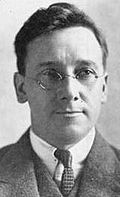





Please, let’s remember Tony Benn and Bob Crow for who they were, not bland Diana-fied national treasures

14/03/2014, 10:32:06 AM

by Atul Hatwal

To hear tributes to Tony Benn this morning and Bob Crow earlier in the week, is to enter an alternate reality, one of saccharine reflection and anodyne dolour.

In the myriad of CGI memories that are being publicly broadcast, the defining characteristic that made Tony Benn and Bob Crow national figures is all too often omitted: threat.

There are lots of committed socialists who lead their lives, unflinching in their beliefs and whose passing is not remembered.

What made Tony Benn and Bob Crow different was that they attained positions where their proximity to power meant they threatened the status quo in their respective worlds.

Threat isn’t a bad thing. It’s the essential precursor of change and both reveled in their ability to threaten the established order. But it brings with it costs: confrontation, fear and anger.

To overlook the visceral conflict which both generated is to suck the vigour and colour out of their professional lives. Without at least acknowledging this threat, the commemorations lapse into the North Korean.

We remember Tony Benn and Bob Crow because they were men of consequence. For many that consequence was far from benign. In the case of Tony Benn in the early 1980s, it threatened the future existence of the Labour party.

Both men were comfortable with confronting opposition and crushing it under foot. They were there to fight and be fought.

To recall the passion, bitterness and division does not sully their memory. Quite the reverse. It is why they are remembered, because they mattered and people cared enough about what they were doing to get involved, either for or against them.

The Dianafication of the deaths of Tony Benn and Bob Crow is perhaps the least fitting tribute possible to the lives they led. They were not bland national treasures but powerful and threatening political figures.

Along-side the warmer words about their personal virtues, it’s worth remembering this. For people in the business of attaining and wielding power, such as Tony Benn and Bob Crow, to adapt a common refrain following Diana’s death, it’s what they would have wanted.

Atul Hatwal is editor of Uncut

Facebook Twitter Digg Delicious StumbleUpon

Labour prepares to re-write Collins party reform package

13/03/2014, 01:08:46 PM

by Atul Hatwal

A fortnight on from Labour’s special conference and major change is on the agenda for Ed Miliband’s flagship party reforms.

The Labour leadership was able to secure strong backing for the Collins review from the unions largely because it delegated resolution of much of the contentious detail to a separate “implementation group”, to be set up following the special conference.

This group, comprising union and party representatives, has now been formed and outstanding questions need answers.

Immediately, problems are emerging in two areas: how the unions’ new political funds will be administered, and the role of union members in elections held before the end of the five year Collins’ process.

First, on the arrangements for the new structure of the political funds, the unions are split.

Broadly, the majority of the unions envisage a version of the Unison model.

This is where there are, in effect, two political funds: a general political fund, which is not used to fund Labour, and an affiliated or “Labour link” fund, which is used to support the party.

Where a trade unionist decides that they do not want their political fund contributions to support Labour, they all go into the general fund.

Where they want to financially support Labour, their contributions are split between the two funds.

The defining rule about the general fund is that its resources cannot be donated by the union to the Labour party.

Sounds simple.

(more…)

Facebook Twitter Digg Delicious StumbleUpon

Oh dear Ed, this Europe policy is a disaster

12/03/2014, 11:53:18 AM

by Anthony Bonneville

Today, Ed Miliband blew it.

Contrary to some of the warm words from the likes of Martin Sorrell and Peter Mandelson, effectively ruling out a referendum has sabotaged Labour’s last chance to win over a strong coalition of business backers, not to mention irrevocably divide the Tories.

Labour is largely united on the benefits of staying in Europe. Trade, growth, jobs and the environment are all policy areas wholly dependent on our positive relations with the continent.

It’s a strong case but one that our frontbenchers seem reluctant to make.

The media is largely hostile and in the hurly burly of daily political debate, it’s understandable that Labour politicians prioritise issues more immediately relevant to voters.

Yes, today Ed Miliband gave a speech on Europe, but how many more times will he mention the subject in the next year?

It’s clear that today’s speech was an exercise in box ticking, in doing the bare minimum before abandoning the European battlefield.

If we, as pro-Europeans, want to play a positive role in Europe, we can’t do so without the engagement of the British public. There is a debate that is being conducted and right now Labour isn’t even in the chamber.

(more…)

Facebook Twitter Digg Delicious StumbleUpon

Labour history uncut: “And a mouse shall lead them”

11/03/2014, 10:21:26 PM

by Pete Goddard and Atul Hatwal

In 1935 Labour hit on a new idea: a try-before-you-buy scheme for the leadership.

Just days before the November general election, Clement Attlee had been elected interim boss. Because nothing says “we’re ready to lead the country,” than having a temp at the helm.

The electorate agreed. With a disappointing 154 seats secured, it looked like Clement Attlee had no hope of going temp to perm and was about to become another victim of Britain’s insecure labour market.

Especially as now there was rather more choice on offer. The election, though uninspiring overall, had seen the return of several leading Labour politicians to the Commons, including Herbert Morrison, Hugh Dalton and John Clynes.

These new options, combined with over 100 more MPs to do the choosing, meant a change at the top seemed imminent when, barely a week after the national poll, the leadership election beckoned.

After some early jockeying for position and switches of allegiance in the manner of the children’s gameshow Runaround, the field of applicants was winnowed down to three.

Herbert Morrison, Clement Attlee and Arthur Greenwood remained, the last two of whom had also contested the leadership one month earlier.

Of the three, Morrison was the early favourite. He was the only one on the national executive in his own right, he had a track record of electoral success, and his dad was a policeman, so he could wheel his bike wherever in Westminster he wanted.

Morrison was on the right of the party, making him a right Herbert

Morrison was on the right of the party, making him a right Herbert

(more…)

Facebook Twitter Digg Delicious StumbleUpon

Brown’s call for greater devolution to Scotland should apply to the English regions too

11/03/2014, 02:23:38 PM

by Kevin Meagher

The only thing better than a five-point plan is, of course, a ten-point plan. However, on this occasion, Gordon Brown can be forgiven for only making it to six with his interesting ideas for modernising the relationship between Scotland and the rest of the UK.

In a bid to flesh out what a ‘devo max’ agenda might mean (or perhaps that should be ‘indy lite?’) the former Prime Minister recommends beefing-up the Scottish Parliament’s tax-raising powers, enshrining in law the settlement between Scotland and the UK and establishing a new division of powers that gives Holyrood more clout over employment, regeneration, health and transport.

But why stop at Scotland? So welcome are Brown’s suggestions that they should also be replicated between Westminster and Whitehall (‘WaW’) and the midlands and north of England. This is because the concentration of all major decision-making power in WaW entrenches the asymmetrical way power is exercised in Britain (particularly England) leading to the soaraway success of London and the less certain progress of pretty much everywhere else.

(more…)

Facebook Twitter Digg Delicious StumbleUpon

Labour Digital: Welcome to the Brave New World

10/03/2014, 11:03:44 AM

by Jonathan Todd

The internet, claims the opening sentence of The New Digital Age, the bestseller by Google’s Eric Schmidt and Jared Cohen, is among the few things that humans have built that they don’t truly understand. Labour has, however, resolved to learn and act accordingly.

That is the goal of Labour Digital, launched last week at Google Campus. The crossbencher Martha Lane Fox and Labour’s Parry Mitchell, the digital entrepreneurs of the upper house, spoke, as did John McTernan, who will gather digital policy ideas for the next Labour manifesto.

Lane Fox and Mitchell both focused on the digital divide – unequal access to digital technologies. Some are highly digitally literate, many are not, denying them tremendous benefits. As an egalitarian party, correcting this should be a Labour priority.

For 20 years, Labour spokespeople have stressed the need for adaptation to globalisation. Yet, in a seminal mid-1990s paper, Richard Freeman, a Harvard economist, attributed more importance to technological change in determining the wages of the low skilled than international trade. Labour spokespeople, however, have less frequently highlighted the importance of adaptation to technological change.

(more…)

Facebook Twitter Digg Delicious StumbleUpon

Letter from Wales: The last thing Wales needs is devolved policing

09/03/2014, 09:48:10 PM

by Julian Ruck

Dyfed-Powys Police and Crime Commissioner (PCC)  Christopher Salmon has issued a media statement reflecting his thoughts on the Silk Commission’s second report, which recommends that youth justice and policing should be devolved to Wales. The PCC said:

 “I welcome this report; it’s important that we have ongoing public discussion about major issues….I don’t see how Silk would enhance our ability to catch criminals. It would add great deal more expense, and fracturing the criminal justice system down the border would make it harder for us to bring justice and easier for people to escape justice.

We have the balance about right now between Westminster and Wales. We have strong local accountability in the form of Police and Crime Commissioners and, in Dyfed-Powys, that has allowed me to find savings of more than 4% since I arrived whilst adding 30 more police officers to the force…Centralising things in Cardiff would be no better than centralising things in Westminster.”

Before going any further one is compelled to consider the antecedents of said Mr Silk. Readers will not be surprised to learn that the gentleman is a Welsh speaker, born and still lives in Crickhowell, Welsh schooled and an honorary Professor at that old chestnut the Cardiff University madrassa – no surprises here, Crachach time again, nothing like giving plum jobs to outside talent is there?

(more…)

Facebook Twitter Digg Delicious StumbleUpon

There can be no Oprah-ification of Northern Ireland’s Troubles. Some things are better left bottled up

06/03/2014, 08:29:54 AM

by Kevin Meagher

Sabres are the only weapons that have never been decommissioned in Northern Ireland. The reward for Peter Robinson rattling his, has been the creation of a “judge-led” review of how the British Government has been dealing with Irish republican “On-The-Runs” for the past decade.

This follows the collapse of the Old Bailey trial last month against John Downey, charged with the IRA’s Hyde Park bombing in 1982 in which four soldiers were killed. It brought to light the scheme by which 180 or so republicans like Downey who had evaded the authorities were sent letters confirming, in effect, that they would not be prosecuted on returning home to Northern Ireland.

For republicans, this is merely an extension of the prisoner release programme which took place after the Good Friday Agreement was signed in 1998 and no big deal. For Robinson, it amounts to a secret deal letting untried killers off the hook – and Ulster unionism doesn’t let any chance to yell “sell out” pass it by.

Yet what the government has conceded is a long way short of the “full judicial review” (a la Lord Saville’s inquiry into Bloody Sunday) that Robinson initially called for last Wednesday. According to the published terms of reference, the as yet unnamed judge will be tasked with producing “a full public account of the operation and extent” of the policy for dealing with On the Runs and to “determine whether any letters sent through the scheme contained errors”.

(more…)

Facebook Twitter Digg Delicious StumbleUpon

The boy Miliband done good

05/03/2014, 09:29:23 AM

by Rob Marchant

In a sense, nothing changed over the weekend: there was virtually no doubt that, once a proposal of such import was made “privately” to the NEC – and therefore instantly leaked to the whole world – that ducks were already in a neat row and nods had already been duly given. In dark, smoke-filled rooms, of course (it wouldn’t be the same without them).

But the securing of the party’s reform package – namely, the change from bulk to individual relationships with the party for union members, fair and representative leadership elections and a primary for London – was undoubtedly a great thing.

Finally – finally – Miliband has left his mark indelibly on his party. Even should he turn out next year to have been a mere one-term leader, the changes he has made will have an extremely long-lasting impact (assuming, that is, that such things cannot be undone later: either owing to an untimely 2015 leadership election, as noted here; or the use of the NEC veto clause on the London primary, as Progress’ Robert Philpot observantly pointed out last week).

There are things missing from the final report: NEC and conference votes remain unreformed. Neither, as blogger Ben Cobley noted, did the party take the opportunity to address its pathological obsession with identity politics, which has left to some nasty stitch-ups in the past, and which may yet be the undoing of the party before long (read this piece by Uncut’s Kevin Meagher if you want to understand why).

(more…)

Facebook Twitter Digg Delicious StumbleUpon

Why does Paul Kenny hate wine bars so much?

04/03/2014, 06:33:01 PM

by Stephen Bush

At the beginning of the twentieth century I would have been a mongrel, in the middle I would have been half-caste. Now I’m mixed-race; and it is not a coincidence that there has never been a better time to be mixed-race in Britain than today. Language, George Orwell once wrote, “becomes ugly and inaccurate because our thoughts are foolish”. Foolish language, though, makes it all the easier for us to have foolish thoughts.

Perhaps that’s why, at Labour’s special conference, I found myself shaking with anger. Political discourse is full of foolish words designed to excuse the lack of an argument; the word “neoliberal”, say, or worse still, “metropolitan”. Eighty percent of the British population lives in an urban area, so, with the exception of badger culling, you can throw the word “metropolitan” at pretty much any argument you don’t like. “Only ethnic minorities and economists think Labour got it right on immigration,” is an embarrassing sentence for political weathervanes, but the word “metropolitan” hides all number of sins.

What we say matters: the phrase “one man, one vote” reflects that the Labour Party is still a boy’s club; the phrase “one member, one vote” suggests that it doesn’t always have to be. The words that we use, and the way we use them: they shape the kind of party we are, and the world we’re trying to create.

So what kind of party is Paul Kenny, the General Secretary of the GMB, shaping when he warns Labour delegates against engaging in “wine bar gossip”?

(more…)

Facebook Twitter Digg Delicious StumbleUpon