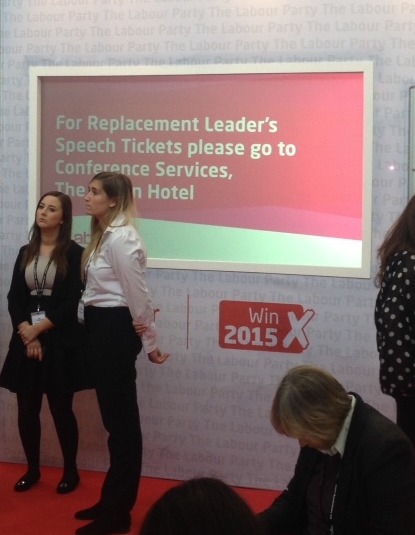
We knew times were tough for Ed, but does the party machine know something we don’t? Just who is the replacement leader?








We knew times were tough for Ed, but does the party machine know something we don’t? Just who is the replacement leader?
What are you doing this evening? Well, if you’re in and around Westminster, cancel your plans and get yourself down to the Two Chairmen (39 Dartmouth St, London SW1H 9BP – nearest tube St James’ Park) for a spot of policy in the pub from 18.30.
You know the format: pitch a policy idea in just ONE minute, followed by TWO minutes of questions from the audience’s Q&A, culminating in a vote for ONE Top Policy. The Policy must be fiscally neutral, funded and well thought out to sustain scrutiny from the floor/Chair.
This week its all about the digital revolution, with Labour Digital’s Lord Parry Mitchell in the chair and sponsored by O2 (who are paying for all those lovely non-digital pints).
So what are you waiting for? Stop reading this on your computer or checking twitter on your phone and get down the pub for some face to face digital policy-making.
An extraordinary election broadcast from 1974 – Jimmy Saville, followed by Cyril Smith in support of Jeremy Thorpe’s Liberal party (h/t Left Futures)
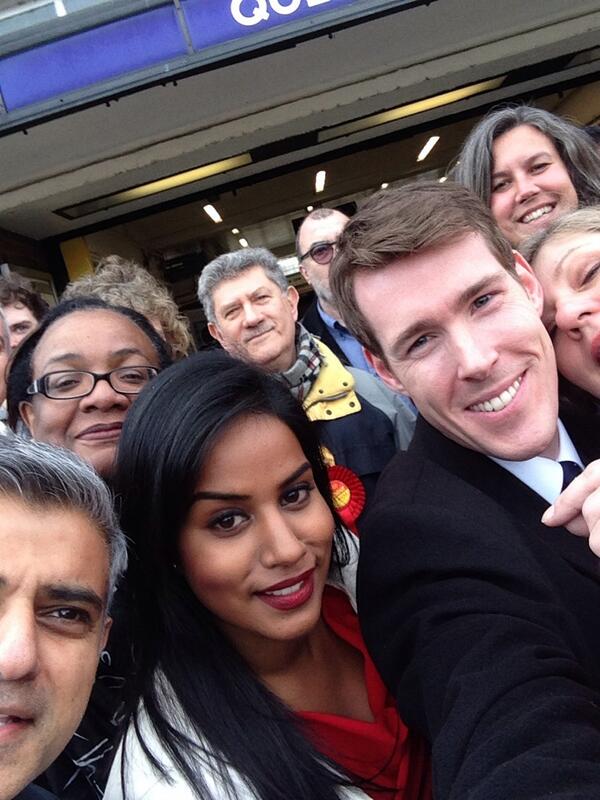
Ah the internet, what a wonderful thing. In our modern world it was inevitable that Labour politicians would soon offer up their take on that selfie.
People say that a picture is worth a thousand words. They are of course wrong because no picture is complete without a caption, so what would be appropriate for Labour’s selfie? Suggestions in the comments please…
Some of you might have noticed an addition to the site this morning: Adverts.
We decided to take ads because we’re making some improvements to the site, starting with more robust hosting, and that all costs money.
Uncut is not sponsored by any business, union or interest group and no-one involved is paid. The funds have to come from somewhere so ads it is!
As the polls narrow and Labour nerves begin to jangle, it’s the question many are thinking: how does the party secure a majority in 2015? What seemed comfortable 13 months ago, when the poll lead was regularly in double digits, is now in the balance.
Fortunately, for those of a nervous disposition who do not simply want to wonder in silence, the good people at Progress have organised a series of events where answers can be provided. Uncut will be taking part in the next one
6-7.30pm, Monday 3 February 2014
Boothroyd Room, Portcullis House, House of Commons
Atul Hatwal Editor, Labour Uncut
Peter Kellner President, YouGov
Marcus Roberts Deputy general secretary, the Fabian Society
Polly Toynbee Columnist, the Guardian
Chair: Siobhain McDonagh MP Member, education select committee
If you can make it, come along. If not, follow it (and the other events) on twitter at #labmaj.
As a teaser for the debate, over the coming days, we will be publishing a series of short pieces that look at the key issues for Labour to win majority in 2015, where the party is and what needs to be done. So look out for them and we’ll see you on Monday.
Launched at Labour party conference 2013, Labour Uncut’s first book, “Labour’s manifesto uncut: How to win in 2015 and why” maps out a centrist view of what the party’s electoral offer could be at the next election.
It directly answers the question of how to fund a radical Labour alternative in a time of austerity with a suite of fully costed policies that would redraw the current political dividing lines and reduce peoples’ cost of living.
The whole of this book is greater than the sum of its parts. Individually, each chapter tactically addresses a discrete area for action. Together, they paint a picture of how Labour can win the next election and change Britain for the better.
And now the book is available online.
Click here to read or download.
We have withdrawn an article today relating to Unite and Mr Len McCluskey that contained allegations concerning Unite’s role in nominating Labour MPs with particular reference to Paisley. This withdrawal follows correspondence form Unite’s solicitors to the effect that information contained in the article was false. Pending further enquiries, we have withdrawn the article and request that media outlets do not report further the information contained in it.
You like pubs? You like policy? Ok, are mildly interested in policy? Well, good news. Back by public demand is policy in the pub. Tonight it’s all about business with the shadow secretary of state for business, Chuka Umunna.
So, if you want to know how a Labour government should support start-ups, entrepreneurs and small businesses, get yourself down to the Barley Mow pub on Horseferry Road SW1P 2EE this evening. The fun kicks off at 1900 and runs till 2100.
For those that haven’t been to one of these Pragmatic Radicalism events before, it’s a quick fire format with 90 seconds for speakers to present a policy idea, 2 minutes for questions and answers and then a vote at the end on the best policy.
There’s even free food and drink, so what’s not to like?
See you in pub.
In case you missed them, these were the best read pieces on Uncut in the last seven days:
Jim Murphy launches the Labour defence review
Matt Cavanagh reports on Cameron’s crime problems
Jonathan Ashworth’s latest Whip’s notebook
Atul Hatwal with the February shadow cabinet league table
John Woodcock say’s Labour need to go further on welfare reform
Tom Harris on the cult of Alex


