


The Sunday review: Lincoln

03/02/2013, 08:00:25 AM

by Anthony Painter

As a director, how can you possibly cope with a figure such as Abraham Lincoln on screen? The most logical projection is to mesh civil war grotesqueness with the oratorical adeptness. Perhaps one could place him in a battle of wills and minds with his confederacy adversary, Jefferson Davis: a man of history doing battle with a man of corrupted vested interests. Some none too subtle allusions to the later pioneers of racial equality could be sprinkled in along the way – maybe the distant voices of a Luther King or even a Barack Obama could be dropped in. The gruesome life of a slave could be depicted and reminders that America’s third president – Thomas Jefferson – took a slave concubine (his late wife’s half sister) could be referenced.

To be perfectly honest, all of this is exactly what was to be expected once Steven Spielberg took on the challenge of re-introducing us to America’s most brilliant yet enigmatic president – post founding fathers that is. And somehow, despite himself, Spielberg mostly avoids the obvious pitfalls. Spielberg is a director who does schmaltzy and effect-heavy kids films with a certain panache and treats adults as if they are kids- with honourable exceptions such as Schlinder’s List. Not this time.

Instead, Spielberg focuses our gaze on the character of the man himself. For that to work would require a method actor of sublime capacity. You’d need someone like Daniel Day-Lewis. That is precisely who Spielberg persuaded to do the role. The brilliance of this biopic is that from the outset the director draws us simultaneously into the world of wartime political intrigue and the character of the man who found it his responsibility to navigate the republic through civil war with its union intact and slavery abolished. Everything I have ever read about the character of Lincoln was there in this on-screen play- for that is what it is.

(more…)

Facebook Twitter Digg Delicious StumbleUpon

Rugby union: it’s not just for the posh boys

01/02/2013, 05:17:28 PM

by Ian Stewart

Aside from politics, I find both codes of rugby excellent spectator sports, especially rugby union. I can’t say that I like football all that much, excepting an interest that Norwich City stay up, and Ipswich Town do badly.

I know this puts me in a minority, and in some leftwing circles such an admission seems as outrageous as professing a liking for bullfighting.

After all, isn’t the fifteen player game synonymous with class privilege, as in the Jam’s excellent “Eton Rifles” (unlike David Cameron, I actually do understand the point of the song), what chance do we have against a tie and a crest indeed?

From the historic meeting at the George hotel in Huddersfield in 1895, rugby league has been seen as the workers version of the game. True enough, the league sanctioned payment for players, was (and still is) firmly rooted in the working class culture of the industrial north, and quickly became the biggest code in more egalitarian Australia. Yet at the top, the game was still controlled by the same hard-nosed men as football, probably best portrayed as the Leeds United and Derby County directors were in the stonking “Damned United.”

Snobbery was out, but although workers could afford to honestly play, there would be no question of any workers control (Incidentally, what a history Huddersfield has – the best choral society, rugby league, the philharmonic, and the last British performance of the Sex Pistols in 1977, a benefit for striking fire fighters, puts other towns to shame.)

Yet in south Wales and south west England, rugby union remained a popular working class sport, both for players and fans. The 1908 county champions, Cornwall represented Great Britain at that year’s Olympics, gaining Silver against Australia, and although a lacklustre match, the team included a true working class hero – Bert Solomon.  A shy man devoted to his pigeons, this legendary winger sold the first dummy in international rugby.

(more…)

Facebook Twitter Digg Delicious StumbleUpon

Whip’s Notebook: The great boundary bust-up

01/02/2013, 09:00:25 AM

by Jon Ashworth

Tuesday was not a good day for the Tory whips.

There were early signs that not all was well on the Tory benches at Tuesday’s Treasury questions. In Westminster terms, the monthly joust between Ed Balls and George Osborne is usually box office and true to form the Labour benches were packed. Yet strangely the Tory benches were sparse and subdued.

A complete contrast with two and half years ago when adoring Tory MPs would try desperately hard to impress Osborne asking helpful questions here and guffawing at every “gag” there.

But now what a turnaround.

As each day goes by and we hear more grim news about an economy that continues to flat line while government borrowing and debt continues to increase, it seems Tory MPs are literally deserting their chancellor. Future leaders now talked of are Norman, Afyirie, Johnson and Gove, not Osborne anymore. No wonder his punch lines this week were greeted with tumbleweed on the Tory benches.

Perhaps Tory MPs were saving themselves for the debate later that afternoon on the boundaries and boy did they vent their spleen. Take Portsmouth Tory MP Penny Mordaunt accusing the Liberal Democrats of “spite, pettiness and self-interest”, while at the same time appearing oblivious to the fact that the pain she was experiencing from this Lib Dem “betrayal” was as a result of the gun she had taken and fired at her own foot as a Tory ringleader of the Lords rebellion last year.

Tory MP after Tory MP spluttered about the impertinence of an unelected chamber telling the Commons how it’s elected members’ constituency boundaries should be drawn. The self same Tory MPs who had defended and voted for an unelected House of Lords just months earlier.

(more…)

Facebook Twitter Digg Delicious StumbleUpon

Let’s make legal fees work better

01/02/2013, 07:00:34 AM

by Ian Lucas

The perennial argument between government and lawyers is with us again. The Today programme reverberates once more with the arguments of the government that too much is spent on legal aid and, on the other hand, by the legal profession, that the payments are necessary to maintain principled support for an independent legal system.

As a lawyer and former whip in the ministry of Justice, I know that both sides have right on their side. But this dialogue of the deaf must end. It serves no purpose.

I suggest that we adopt a simple principle to make public money work for the benefit of the legal profession and for society as a whole.

The amount paid by the British taxpayer to the legal profession is huge. It is a big mistake to believe that the money involved is limited to the legal aid budget – which in itself amounts to around £2.2 billion. On the contrary, most money is paid to firms who do not carry out legal aid work: to commercial firms of lawyers and to counsel and other legal advisers who provide specialist advice to the myriad of public authorities which exist in the UK.

These include local authorities, regulatory authorities, statutory undertakings and all of the other organisations set up to administer and deliver public services.

This gives an enormous amount of power to the purchaser of legal services, power which I believe should be directed to the public good. Procurement gives government an opportunity and government in its various forms, the biggest single procurer of legal services, needs to wake up to this fact.

(more…)

Facebook Twitter Digg Delicious StumbleUpon

The damage has been done. Inside the coalition, it’s now personal

31/01/2013, 07:00:51 AM

by Peter Watt

Relations have been strained for some time now, but events on Tuesday in the House of Commons have now made it personal.  In essence, as far as the Tories are going to be concerned, the Lib Dems have increased the chances of them losing their seats at the next election.  And the numbers of Tories on the government benches assuming that the next election is now lost will rise further.

But think back.  Both the Lib Dems and the Tories had proposals to reduce the size of the House of Commons in their manifestos.  The Lib Dems linked this to a change in the voting system.  For the Tories though it wasn’t just about principle it was also a matter of pragmatism.  For election after election they had been screwed by the electoral arithmetic of uneven constituency boundaries.  The result was that it took far fewer Labour votes to get a Labour MP than Tory ones.  It made winning elections even harder for the Tories and it made them pretty cross.  To be fair, from their point of view you can see why!

So unsurprisingly the Coalition agreement contained a commitment to introduce a referendum on AV, a commitment to reduce the size of the House of Commons from 650 to 600 members and to equalise the size so that there were approximately 76,640 voters in each one.  It also contained a commitment to reform the House of Lords.  And the stated assumption was that both sides in the coalition would support all of the measures it contained.

To risk incurring the wrath of John Rentoul and his ‘banned list’ – the coalition agreement wasn’t a pick-n-mix.

The Parliamentary Voting System and Constituencies Act 2011 duly introduced the referendum on AV and also the aim of reducing the number of constituencies to 600.  It all started to go a little wrong when the Lib Dems felt let down by the way that the Tories campaigned against AV in the referendum.  The referendum was lost but at that point the Lib Dems could still point to House of Lords reform as a sign that their constitutional reforming zeal was far from being finished.

(more…)

Facebook Twitter Digg Delicious StumbleUpon

Bristol needs a better deal for buses

30/01/2013, 03:57:42 PM

Last week Amanda Ramsay won the “top of the policies” vote at Pragmatic Radicalism’s top of the policies event in Bristol, chaired by Maria Eagle MP, shadow transport secretary. The winning proposal was for a “Better Deal on the Buses”, to bring buses under a new regulatory framework

People like me who live in Bristol would like to be able to leave our front doors, walk just a few minutes to a bus stop and easily reach work, meetings, job interviews, the main shopping areas, visit friends or just explore the outskirts of the city. That’s what Londoners enjoy, so why can’t we in Bristol?

I want to see cities like Bristol negotiating better deals with the likes of First Group, to deliver more routes, better reliability and lower prices.

It’s time to use the powers granted to metropolitan cities like Manchester, Sheffield, Glasgow and Bristol by the last Labour government, to regulate fares, routes, frequency of services and improve customer relations.

Private bus operators outside London enjoy a whopping £2 billion a year in tax payers’ money, but in Bristol it’s often cheaper when two or more people are travelling to take a taxi than to ride a bus. It causes traffic congestion, more dangers for cyclists and a weaker bus system itself, as customers vote with their feet and often only freedom pass users are passengers, meaning no income stream.

(more…)

Facebook Twitter Digg Delicious StumbleUpon

Labour history uncut: Labour gets conscripted

29/01/2013, 10:53:57 PM

by Pete Goddard and Atul Hatwal

“Conscription? Why would we need that? Who wouldn’t volunteer for a free trip to Europe and the chance to shoot foreigners?”

This was the comforting assurance given to Labour leaders, by prime minister Asquith as they trooped into the coalition government in May 1915. Surely a Liberal leader wouldn’t make a pledge and then do the absolute, exact opposite?

To be fair to Asquith, whatever he personally believed was largely irrelevant. Losses were outstripping recruitment at a staggering rate thanks to the British army’s patented “run through that withering hail of bullets and bombs would you old chap?” technique for conducting modern warfare.

At the start of the war, Britain was the only major European power to not have conscription in place. Having to compel your army to maintain an empire seemed a trifle arriviste, un-British and, frankly, the sort of thing the French would do.

Then again, as the war dragged on, it was clear more men were needed, and losing a major European war was definitely un-British too, and most certainly the sort of thing the French would do.

In the press, calls for conscription were growing in volume, with the Times leading the charge condemning Britain’s “great army of shirkers,” identifying, even then, the mortal threat to national well-being from a fifth column of skivers undermining the strivers.

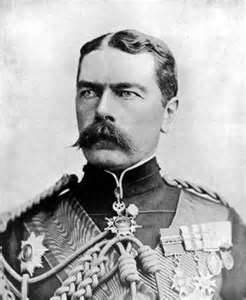
At the end of September 1915, worries across the Labour movement that conscription might become reality prompted the party’s national executive committee (NEC) to summon a special meeting. Labour Parliamentarians and union officials were addressed by prime minister Asquith along with Lord Kitchener, the chief of staff and, quite literally the poster boy for World War One.

Lord Kitchener models Edwardian smart casual

(more…)

Facebook Twitter Digg Delicious StumbleUpon

Adam Afriyie. Who?

28/01/2013, 02:57:56 PM

by Kevin Meagher

What does Tory backbencher Adam Afriyie think we should be doing to boost the economy, reform public services and deal with Iran’s nuclear ambitions?

Until I read yesterday’s newspapers, the thought to ask had never crossed my mind, but judging by yesterday’s Sunday Times it’s clear the MP for Windsor is the coming man; the saviour of a post-defeat Conservative party. A future prime minister. “Black MP is hot tip to be next Tory leader” ran the headline. I searched in vain in the subsequent story, (as bemused Tory MPs may have), for any indication of what Mr. Afriyie thinks, well, about anything.

Nevertheless, the paper reports “a secret operation is underway” to propel him to the party leadership. More than 100 Tory MPs have been approached to this end. A “friend” of Mr Afriyie explains that his cadre of backers are “very concerned” about the long-term direction of the party and believe that Afriyie is the best man to succeed David Cameron. “He has a fantastic back story and is very impressive.”

I admit to knowing the name and knew a bit of his biography, but to be honest I had quite forgotten Afriyie was there. He’s pretty low profile, but that’s not really an excuse as he’s been in parliament since 2005. Brutally, I assumed he had missed his mark and like Archie Norman and other business people who realise too late that the rough and tumble of Westminster is not their bag, led a quiet life before, inevitably, shuffling off back to business.

How wrong I was. What I did learn is that Afriyie is very rich and has a gang of eight fellow MPs pursuing his cause among Tory backbenchers in the expectation (hope?) that David Cameron will blow it in 2015.

I wrote last week that Cameron gives some of his troops the belief that he is weak and vacillating because he understands the compromises that are needed to make a coalition work. But within his own party he should be assured of more loyalty than he is clearly getting. A Thatcher, Blair or even a Brown would not be so sanguine about a well-heeled upstart flesh-pressing the backbenchers to build his on powerbase on the assumption of defeat for the party.

Where was the counter-briefing to knock holes in the Afriyie veneer once it became clear the Sundays were running with this story? Did Downing street do nothing to prick the bubble of arrant pomposity surrounding him with a pair of clod-hopping size 12s?

(more…)

Facebook Twitter Digg Delicious StumbleUpon

Gove’s narcissistic dogma 1 – Evidence 0

28/01/2013, 08:57:26 AM

by Kevin Brennan

Last week’s announcement by Michael Gove that AS Levels would no longer count towards an A Level grade was a classic example of making policy based on dogma not evidence.

Back in 2010 Michael Gove announced his intention to get rid of AS Levels. They were originally introduced to give students a chance to study a broader range of subjects in year 12 (the old lower 6th). Students could decide to specialise in year 13 by dropping one or two subjects, but still have a good AS qualification to show for it. If they carried on, their AS mark could contribute to the final A Level grade in that subject.

One objection to AS Levels was that because of modular testing students in year 12 faced exams very early on, before having matured sufficiently. This was dealt with by getting rid of such early assessments which also discouraged entering early assessments just to ‘bank’ a mark. This was a reasonable reform to AS.

But Michael Gove was left with a problem that despite his stated intention to scrap AS Levels altogether, it was clear that he had very little support for his plans.

The right thing to do would have been to retain AS Levels as modified, but instead he has chosen to render them largely irrelevant by removing their ability to act as a building block to A-Level.

(more…)

Facebook Twitter Digg Delicious StumbleUpon

Labour history uncut: Labour gets its first taste of government

25/01/2013, 06:48:07 PM

by Pete Goddard and Atul Hatwal

It was the start of 1915 and something wasn’t quite right. Contrary to the confident predictions of the press, the government and most of the Labour party, Fritz had not been sent packing and the government began to regret printing quite so many invitations to “1915’s big victory conga through no man’s land”.

In fact, to the uninformed bystander everything seemed to have ground to a halt in a bloody stalemate of trench-based slaughter.
Fortunately, the British public were very well informed by a national press that was still insisting victory was just around the corner.

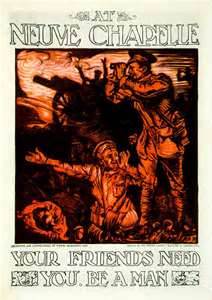
For example, when the British attacked Neuve Chapelle at the start of March the Daily Express headline boomed “German’s routed…great victory at Neuve Chapelle”.

Which was sort of true, if your idea of victory was the loss of 13,000 men to gain two pocketfuls of French gravel. The offensive advanced 2km and then was abandoned due to the catastrophic losses.

Who could resist this upbeat plea to join the fun at Neuve-Chapelle?

With successes like these, it was no wonder the worry-o-meter in government was swinging towards the red. No-one had planned for war that devoured resources at such a rate. Not only were more troops needed, demand for munitions was outstripping production.

(more…)

Facebook Twitter Digg Delicious StumbleUpon