




The Sunday review: Starbucks

09/12/2012, 08:00:58 AM

by Anthony Painter

I imagine the first Starbucks store that opened in Pike Place market in Seattle was quite an exciting affair. The coffee was probably great. It must have been a remarkable local institution. Four decades later, Starbucks is now synonymous with corporate greed. What a few weeks it’s had – a long way from Pike Place.

What has taken place shows that direct action works. No, not UK Uncut. But that of MPs. Step forward Margaret Hodge, a name mostly associated with New Labour. Who’d have thought it? But when a special report appeared on Reuters in the middle of October, it was the House of Commons public accounts committee that reacted. A few weeks later and Starbucks is £20 million out of pocket. Investigative journalism and a backbench House of Commons committee – it doesn’t get much more old politics than that but it did the trick.

Starbucks seem pretty par for the course when it comes to multinational tax avoidance. In this case, moral outrage seems to have done the trick as thousands turned away from Starbucks, helped by campaigns such as 38 Degrees (UK Uncut have a habit of putting people off rather than encouraging them to join their campaigns – whatever the claims of the direct action left or paranoid right). But moral outrage only goes so far. Starbucks will be hoping it’s all died down in a couple of years and then get back to business as usual.

(more…)

Facebook Twitter Digg Delicious StumbleUpon

In yesterday’s debate, George Osborne had a clear script, Ed Balls didn’t

06/12/2012, 10:00:08 AM

by Jonathan Todd

“It was just like a budget”. This was the immediate reaction of the ever perceptive Nigel Lawson when the Daily Politics sought it soon after the Autumn statement. Ming Campbell – the only other participant on a very balanced panel – concurred. That said; they had a point. Not only was the stagecraft familiar. The content was too.

The Conservatives have a script, you see. China is rising but the skivers aren’t, so further welfare reform is needed to prevent China eating all our dinners. The global race will be won by strivers, not drunken layabouts. And reform of our schools will create a nation of strivers. That’s if Johnny Foreigner and his euro don’t do what the last government and our “mess” could not quite do and do for us good and proper.

This script has been obvious since Conservative party conference. It has, in its own parlance, stayed the course. It is no surprise, therefore, that it was served up again yesterday. That’s the thing with political scripts. Politicians disembark on one that feels right, feelings which polling confirms. Then they keep saying it and saying it and saying it some more. Finally, maybe, it hits home with the electorate. By which time, certainly, they have bored themselves and the lobby into a stupor.

It was never really in doubt, consequently, what Osborne’s key messages would be. Any sentient political observer should have long known. We know its villains: the last government and the bed we made; welfare recipients and the beds that they lie in; the rest of Europe and their siesta.

But Osborne’s heroes shun and abhor all such lazy, flabby, debt-sodden indulgence. It is the strivers that have doubled exports to major emerging economies since 2009 and created over a million jobs in the private sector since he became chancellor.

Politics is the ceaseless clash of narratives: many half-baked, most never reaching a real terminus but the endless grafting of perceptions unto realities. So, what story did Ed Balls tell in rebutting this tale of striving heroes and shirking villains?

(more…)

Facebook Twitter Digg Delicious StumbleUpon

Changing the law is only the start in tackling discrimination

06/12/2012, 07:00:07 AM

by Peter Watt

Attacking discrimination in all of its forms has been something that unites many from across the political spectrum.  Many political battles fought over the years to pass legislation that seeks to end discrimination.  In fact Wikipedia has a very helpful list of all of the UK Acts passed over the years, and it is quite a list:

  • Equality Act 2010
  • Equality Act 2006
  • Disability Discrimination Act 2005
  • Race Relations Amendment Act 2000
  • Disability Discrimination Act 1995
  • Race Relations Act 1976
  • Sex Discrimination Act 1975,
  • Equal Pay Act 1970
  • Race Relations Act 1968
  • Race Relations Act 1965
  • Representation of the People (Equal Franchise) Act 1928
  • Representation of the People Act 1918

Every one of these will have been hard fought and will often have been resisted.  Each was dramatic in its impact and generally led rather than followed public opinion in the area of life that it sought to influence. And the social change that can be charted in this list is worth reflecting on.

It starts with extending the franchise to all men and then all women and ends with an Act that brings together the series of laws passed outlawing discrimination on the basis of race, disability, religion or belief, gender, age and sexuality.  And let’s not forget that there have also been other battles fought along the way that have slowly made life fairer.  For instance, one of the proudest moments for many of us of the last Labour government was the passing of the civil partnership act (2004).

(more…)

Facebook Twitter Digg Delicious StumbleUpon

Pluralism isn’t a choice for Labour, it’s a necessity

05/12/2012, 05:30:25 PM

by Kevin Meagher

One of the curiosities of devolution to Scotland, Wales and Northern Ireland is the way in which the institutions look nothing like Westminster.

Whether it was a Freudian rejection of the hyper-tribalism of the Commons chamber and Westminster’s self-regard, the model for the devolved bodies has ensured a more pluralistic form of politics, with more grown-up politics the result.

That’s something Westminster village dwellers are not used to. Here, politics is still shaped by student union politicking and the public school debating society.

Yet all parties are coalitions of people with a wide range of views who happen to coalesce around broad themes. Is there really much of an issue of principle, therefore, to seek agreement with people outside the tribe if the ends are mutually satisfactory?

Enter Labour for Democracy, launched in Westminster last night and led by MPs Paul Blomfield and John Denham. The group seeks to make the case for inter-party working, particularly on big, expensive, long-term, cross-cutting issues like social care, pensions and climate change. As the website blurb puts it:

“The tough decisions that we will face, and the need to build wide support for radical change, demand a new approach to the way we do politics.’

It adds: ‘The days when over 95% of the electorate voted either Tory or Labour are long gone. Increasing support for smaller parties, switching between parties and differentiation between local and national voting reflect the changed approach of the electorate.”

By 2015 the age of majoritarian government may well indeed be behind us. There is nothing to guarantee Labour will win a general election victory outright (alas) and the party needs to get its collective head around that prospect.

(more…)

Facebook Twitter Digg Delicious StumbleUpon

Labour history uncut: Lib-Labbery and the 1906 election

04/12/2012, 10:35:17 PM

by Pete Goddard and Atul Hatwal

By late 1903, initial worries over the survival of the LRC had abated. But these were soon replaced by the eternal question for every small party: how do we make this a big party, with national standing, official stationery and an annual conference that doesn’t take place above a pub?

There were two schools of thought: the first was to go to the nation, stand in as many seats as possible on a purely socialist platform and trust the people to embrace the need for change and bring about a new dawn for the nation.

The second stood a chance of actually working.

It entailed finding something in common with a bigger, more successful party and hanging out with them – the law of the playground on a national scale.

Ramsay Macdonald had already cosied up to the Liberals in the Woolwich by-election, securing a clear run for LRC man Will Crooks to go head to head with the Tory. It was a tactical victory but a more systematic alliance seemed unlikely without a clear issue to bring Labour and Liberals together.

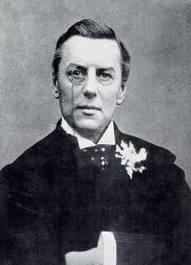
Step forward Joseph Chamberlain, secretary of state for the colonies in the Tory government and all round political homewrecker.

Joseph Chamberlain was a major force in politics, despite being operated the entire time by ventriloquist Ray Alan

(more…)

Facebook Twitter Digg Delicious StumbleUpon

The debate on Osborne’s Autumn statement will, once again, ignore what really matters

04/12/2012, 07:00:37 AM

by Jonathan Todd

Is the national scandal David Cameron’s lack of inclination to implement Leveson or his failure to facilitate a similarly forensic investigation and debate on the culture, practices and ethics of the financial sector?

The central reality of Britain in 2012 is that our national wealth remains more than 3 percent below its pre-crisis peak. The Autumn statement should tell us precisely how far George Osborne’s debt and deficit targets are off track. But the core truth is obvious: our anaemic growth makes it ever harder for us to sustain the public services and quality of life we would like.

We have not been through a deeper and longer growth contraction than the notoriously grim 1930s because of Rupert Murdoch. Labour rightly insists that if Leveson is implemented then the indignities and injustices of the press will be reduced. But we have little to offer in terms of policies that will provide comparable certainty that the financial crisis of 2008 will either not happen again or not precipitate such a deleterious effect upon the wider economy if it does.

Labour has made much of Cameron’s reluctance to provide a statutory underpinning to press regulation but the call made by Michael Jacobs and Tony Wright for a judicial inquiry into the financial crash on the lines of Leveson went unheeded. Instead we had the Vickers Report, which Osborne managed to get away with partially implementing, in spite of Sir John’s insistence throughout that his recommendations will only work as a complete package.

(more…)

Facebook Twitter Digg Delicious StumbleUpon

Is the shire one nation? Are hobbits blue Labour?

03/12/2012, 02:54:47 PM

by Ian Stewart

Sometimes it is a good thing to have obsessions other than politics. There are times when your interests can coincide, and that’s good too, but we all need to have an escape from the world – even an atheist needs his “heart in a heartless world.”

Only a few days to go now comrades, and I am reaching a level of excitement normally only reached at election time, or during the six nations. Soon we will see the results of all that had work for ourselves.

Not a by-election, not a mayoral race nor even one of those exciting composite motions at the TUC, but the imagining of the wilds of Mirkwood. Yes, Mirkwood, across The misty mountains of middle earth, with Bilbo Baggins, Gandalf and thirteen dwarfs, led by Thorin Oakenshield.  I really, really cannot wait to see what Peter Jackson has made of this children’s classic.

From December the thirteenth, we will finally get to see if the waiting has been worth it.  The production has been fraught with controversy, from Gulliermo del Toro being in, then out, to accusations of animal cruelty, to taking a pretty slim book and expanding it into three full-length feature films.

On top of this, the Conservative New Zealand government drove a horse and cart through workers rights to enable Warner Brothers and New Line to pay actors and extras below scale. From the outside, it has sometimes looked like a production doomed to failure, and what with the anti-union practices and threats, a deserved one at that.

Yet we all watched the Olympics, knowing full well that the companies who built the stadia were engaged in blacklisting health and safety reps, that the founder of the modern games was a proto-fascist who admired and applauded Hitler in 1936. All I will do is cut the films and Jackson a little slack.

(more…)

Facebook Twitter Digg Delicious StumbleUpon

The Lib Dems are flocking to Labour, but are we losing support too?

30/11/2012, 02:42:58 PM

by Kevin Meagher

So as we predicted earlier this week, Labour held Rotherham last night. And, on the face of it, in impressive style.

Labour’s Sarah Champion lived up to her name winning 46 per cent of the vote, 1.7 per cent up on 2010. UKIP were next on 21.8 per cent, with the BNP in third place.

Against the triple whammy of a horrible child grooming scandal in the town, the case of the foster parents who had three children removed from their care by the local council for being UKIP members and the circumstances of Denis MacShane’s resignation, it was not a bad night, all in all, for Labour.

The Lib Dems crashed to eighth place, repeating their dismal performance in the recent police commissioner elections in South Yorkshire when they managed fifth place. Out of five.

They could only muster 451 votes last night, on a 13.9 per cent swing away from their 2010 result when 5,994 people voted for them. Not enough support, then, to win a local council by-election in the town.

So where are these ex-Lib Dems going?

If they are coming straight over to Labour, which seems perfectly plausible given what we know about voting patterns between the two parties, then Labour’s result would have been even more impressive.

(more…)

Facebook Twitter Digg Delicious StumbleUpon

Ignore the headlines, Leveson will still pass…if Nick Clegg wants it to

30/11/2012, 07:00:59 AM

by Atul Hatwal

It’s quite simple really. The decision on whether Leveson is implemented is not exclusively in the gift of the prime minister. He does not, to quote today’s Telegraph headline, have a veto because the Tories do not command a majority in the House of Commons. Ed Miliband has committed to bringing forward a vote on the judge’s recommendations so it will be down to the 650 members of parliament to determine the future of press regulation.

Here’s how the arithmetic stacks up: the coalition normally has a working majority of 82. This is the number by which the 360 coalition MPs (303 Tory and 57 Liberal Democrat) exceed the combined strength of all the other parties – 278 MPs – less the speaker and his three deputies who don’t vote and the five Sinn Fein MPs who similarly don’t vote.

If the Lib Dems were whipped to support a vote on implementing Leveson (albeit an amended version to address Clegg’s misgivings on Ofcom’s role in verifying the new watchdog and on data protection), the working majority over the Tories would be 35 (303 Tories versus a new combined total of 335 of the rest).

There is the potential that one of the Lib Dems, John Hemming, will defy the whip, given he signed the anti-Leveson letter organised by Conor Burns and David Blunkett. Similarly there are a handful of anti-Leveson Labour MPs who may defy the whip, including Blunkett, Gisela Stuart, Frank Field, Kate Hoey, Gerald Kaufman and Eric Joyce (yes, I know Eric Joyce is nominally an independent).

Taking these dissenters and adding them to the Tory total gives a reduced pro-Leveson majority in the Commons of 18 (a combined total of 328 MPs versus 310 Tories and anti-Leveson defectors.)

As whips office veterans of the knife edge votes in the 1990s and late 1970s can attest, this is where it gets complicated. The remaining 23 votes are made up of a hotch potch of minor groups and parties.

(more…)

Facebook Twitter Digg Delicious StumbleUpon

Labour history uncut: By-elections beckon and the fixers get fixing for the LRC

29/11/2012, 07:37:20 PM

by Pete Goddard and Atul Hatwal

It was early 1902 and times were tough for the Labour representation committee. They had a worryingly low bank balance, only 2 MPs and not enough members to deliver leaflets.

The parliamentary Labour party couldn’t even descend into proper factionalism as Keir Hardie and Richard Bell got on quite well.  This wasn’t what the left was about at all.

The Taff Vale ruling by the Lords had thrown the LRC a much needed lifeline, forcing more unions into the arms of the party, but support wasn’t growing quickly enough. Although more were affiliated by 1902 than 1901, numbers were still down on the founding conference in 1900.

Something needed to be done.

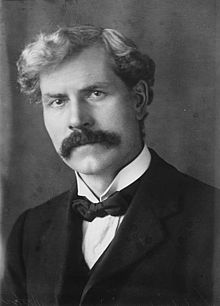
Fortunately, Ramsay Macdonald was on hand. He was a sharp operator and he had a cunning plan.

As party secretary, Macdonald had a key role in developing the party machine and fixing things about which the saintly Keir Hardie didn’t have to ask too many questions.

Secondary duties included taking minutes, making the tea and, eventually removing his glasses, shaking his hair out and waiting for Keir Hardie to say “why Mr Macdonald, you’re beautiful.”

Movember was a way of life for Ramsay Macdonald

(more…)

Facebook Twitter Digg Delicious StumbleUpon