




Labour history uncut: the union road from Tolpuddle

13/11/2012, 03:40:50 PM

Pete Goddard and Atul Hatwal continue their tour through Labour history with a look at the role of the unions in establishing the Labour representation committee (LRC) in 1900

For the unions, the road to the Labour representation committee started in a field in Dorset. Not an actual field, obviously. A road starting in a field wouldn’t be very useful, and nobody had yet invented EU infrastructure funding.

In 1832, six agricultural labourers from Tolpuddle gathered together and founded a friendly society. They aimed to protest against the lowering of wages in the area in the hope that they could afford the little luxuries in life, such as food.

The name friendly society was appropriate to the gentle pace of protest in the region. West country militancy had reached its peak a couple of years earlier, in nearby Wroughton in Wiltshire.

In response to cuts to welfare administered by the local church under the poor laws, working men marched along to the church’s graveyard and began smoking. Not in a Tibetan monk-protest type way. They simply lit their pipes and puffed away.

Outrageous.

The local gentry thought so anyway. As far as they were concerned pipes in the graveyard was the thin end of a wedge that inevitably led to mob rule and the guillotine. Sure, they called it a friendly society, but wasn’t that just marketing? In 1789 Parisians had probably been invited to the “unexpected open day of the Bastille” too. (more…)

Facebook Twitter Digg Delicious StumbleUpon

This government is abandoning Britain to the legal loan sharks

13/11/2012, 10:50:01 AM

by Stella Creasy

Today’s evidence from R3, the insolvency practitioners, that the rapid and rabid growth of Britain’s payday loan industry is leading people to go hungry in order to repay these debts, is saddening but not surprising to me. For two years now along with many others I’ve been trying to warn the government that they needed to protect British consumers from these legal loan sharks- and for two years they have found excuses not to do so. Now as debt engulfs the household budgets of so many, we see the consequences of their choice to do nothing.

As the government tries to claim Britain is now on the up, we ignore how people are coping with the financial hardship of the recession at our peril. ONS data shows families are being squeezed much more this time than in previous eras, as they experience both falling household incomes and rising inflation. Predictions are wages will stay flat for years to come, offering little respite to which to look forward.

Dismissing the consequences of this as some in the government have done by telling people they should ”live within their means” misses the point. Too many in Britain, both in and out of work, cannot make their incomes meet the basic costs of everyday living. Research by Which? published last week found a third of payday loan users had taken out credit they knew they couldn’t afford to repay in order to pay for essentials such as food and fuel.  In the week when British Gas bills will rise again, consumers are looking at the gaps in their budgets and rightly asking when will this all end. With massive cuts in benefits around the corner only adding to the misery they face, it is a question Westminster must answer.

(more…)

Facebook Twitter Digg Delicious StumbleUpon

Labour will only win the economic argument when we make it about the future, not the past

12/11/2012, 07:00:02 AM

by Jonathan Todd

The return of the British economy to growth and president Obama to the White House both suggest that Labour will only decisively win the economic argument when it is primarily about the future, not the past.

While welcoming the economy’s recovery, Labour claims output has been foregone due to the government cutting too far, too fast. This frames the economic debate as being about faulty decisions of autumn 2010 by George Osborne and their consequences over the next two years. As much as the celebrated speech of Ed Balls at Bloomberg in August 2010 is vindicated by events over this period, framing the debate in this way invites the question: Why was the government’s fiscal consolidation programme deemed necessary?

Of course, Osborne then cites the reckless profligacy of Labour. Equally obviously, we contend that this programme was unnecessary and the cause of the recession “made in Downing Street”. What may be less apparent is that, no matter how intellectually justified the Bloomberg speech, arguing about past decisions asks the public to reconsider events over which they have a settled mind.

They would have voted differently at the last election were they convinced that Labour had credible and effective plans for public spending. Especially given the pain that government spending decisions have since brought, it is understandable that we find it difficult to concede this. But a strategy for winning the next election predicated upon the electorate reversing a verdict given at the last election rarely works.

(more…)

Facebook Twitter Digg Delicious StumbleUpon

The Sunday review: the US presidential election

11/11/2012, 08:00:19 AM

by Anthony Painter

Politics is part art, part science. The best campaigns combine artistry and method. US election 2012 was the one in which science won and art was overwhelmed. And what a disappointing election it turned out to be – albeit one with a good outcome.

In his victory speech, president Obama declared:

“You’ll hear the deep patriotism in the voice of a military spouse who’s working the phones late at night to make sure that no one who fights for this country ever has to fight for a job, or a roof over their head when they come home.

That’s why we do this. That’s what politics can be. That’s why elections matter. It’s not small; it’s big. It’s important.”

What a pity that this voice was muffled throughout the campaign. The Washington Post blogger, Ezra Klein, explains why:

“The Obama campaign found that their key voters were turned off by soaring rhetoric and big plans. They’d lowered their expectations, and they responded better when Obama appeared to have lowered his expectations, too. And so he did. The candidate of hope and change became the candidate of modest plans and achievable goals.”

This campaign was driven by focus groups and polls – science. Only, this wasn’t a campaign of modest plans and achievable goals. It was a campaign of attack and vagueness. What on earth has changed? In The Audacity to Win, campaign leader David Plouffe’s take on the 2008 Obama campaign recounts:

“Focus groups … and feedback from the field were two of our most important assets…We did not use them to make policy decisions. We used them to gauge how the arguments in the campaign were being received and digested. It was about communications, no content.”

(more…)

Facebook Twitter Digg Delicious StumbleUpon

The future of our reserve forces is vital for national security

09/11/2012, 07:00:17 AM

by Jim Murphy

Yesterday, the government announced a public consultation on the future of reservists.  We support an enhanced role for reserve forces as we know they can make a bigger contribution to regular forces and our country’s ability to project force around the world to achieve national ambitions.

In recent years reservists have operated in the Balkans, Iraq, Afghanistan, and most recently Libya. 29 have lost their lives. We pay tribute to their courage, which is a pertinent sentiment in this week of all weeks, remembrance week.

Labour welcomes much of the content of today’s announcement as we recognise that reservists need to modernise.  We support considering a symbolic name change from “territorial army” to “army reserve”, for example, to reflect their contemporary composition.

This government has announced extreme cuts in regular forces. 30,000 will be made redundant, with 20,000 from the Army and 5,000 from both Navy and RAF. Reserve numbers will be doubled to compensate. Reserve numbers, however, are going up by 15,000, a figure far smaller than those being lost so there is a capability shortfall in manpower the government have yet to adequately explain.

Furthermore, we have already heard from the consultation’s co-author, Julian Brazier MP, that there is a backlog of applicants who cannot sign up because the bureaucracy in place is inadequate.

In light of this, does it really make sense to cut in regulars regardless of whether the target for reserves is met or not?  Given that it is this government’s policy to rely on reservists to meet their defence ambitions, wouldn’t it make more sense to make the cut in regulars contingent upon growth in reserves’ capability?

(more…)

Facebook Twitter Digg Delicious StumbleUpon

Labour history uncut: Fabians – don’t get mad; get pamphleting

08/11/2012, 01:30:56 PM

Pete Goddard and Atul Hatwal turn their attention to the Fabians as they look at the organisations that set up the Labour representation committee (LRC) in 1900

The Fabians germinated from very modest seeds.

In October 1883 Edith Nesbit, her husband Hubert Bland and their Quaker chum Edward Reese decided to set up a debating society. That was it. They were the first Fabians.

Nesbit was something of a J K Rowling of her day, mixing easily in political and literary worlds. Not content with founding the Fabians, Britain’s first political think tank, she also wrote a series of best-selling books.

Most pertinently for the modern generation, she wrote the Railway Children and thereby can claim the credit for introducing a generation of young men to Jenny Agutter. Thank you, Edith Nesbit.

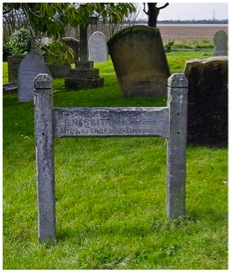
Helping others even after death, Edith Nesbit’s grave doubles as a handy boot scraper

(more…)

Facebook Twitter Digg Delicious StumbleUpon

Labour’s opposition to regional pay in the NHS is intellectually dishonest

08/11/2012, 07:00:55 AM

by Peter Watt

There was a debate yesterday instigated by Labour on the introduction of regional pay into the NHS.  Labour’s argument is clear, that by allowing the introduction of regional pay into the NHS the government risks breaking it up.  Of particular focus for criticism were the group of twenty trusts in the south west, the south west consortium.  They are seeking to opt out of the national agenda for Change framework for pay and conditions as an element of their plans to achieve their required cost reductions.  As Andy Burnham said in the debate:

“National pay is part of the glue of a national health service, part of what holds it together, and in turn the NHS is part of what holds our country together.

A one nation service bridging the social and economic divides of our country, uniting east and west, north and south. The N in NHS should be cherished, but instead it is coming under ideological attack.”

Powerful stuff and you may think hard to disagree with.  But Labour has some form in this area, in both government and opposition, which makes their position a little tenuous.  It may well be that there is a perfectly good reason for this apparent inconsistency but you can be sure that this inconsistency will be exploited by opponents.

First, in government it was Labour that introduced the very flexibilities and freedoms that allow NHS trusts to make decisions that ensure their responsiveness to local needs.  And rightly so; as commissioners agree local priorities it was important that the local providers were able to operate flexibly and choose what they did in order to deliver on these priorities.

This didn’t mean an end to national pay and conditions but it did mean that if needed trusts could be flexible.  So for instance, if there was a need for one particular service to be expanded in an area where attracting the right staff was difficult, then a trust could respond.

(more…)

Facebook Twitter Digg Delicious StumbleUpon

After that result, the Republicans will go even more batsh*t insane

07/11/2012, 08:00:18 AM

by Nikhil Dyundi

There is an old adage that oppositions do not win elections, governments lose them. Clearly, there is a lot of truth in this; after all, it is only the government that can actually do things. The administration has the record to be judged.

But let us be in no doubt about what happened yesterday: yes president Obama won, but more than anything else, the Republicans lost. They lost, not only the presidency but failed to retake the senate in a year when both should have been a lock.

They achieved this improbable feat because of one simple fact: their base is batshit insane.

As a result, no vaguely competitive candidate stepped forward for the presidential nomination, leaving them with the weakest representative in decades. Electable, centrist senate incumbents and prospective candidates were brushed aside to make way for a variety of fruitloops who couldn’t stop talking about rape.

(more…)

Facebook Twitter Digg Delicious StumbleUpon

Labour history uncut: Labour’s original hard left – the social democratic federation

06/11/2012, 02:01:28 PM

Pete Goddard and Atul Hatwal continue their stroll through the organisations that set up the Labour representation committee (LRC) in 1900. Today, it’s the turn of the social democratic federation (SDF)

The SDF was founded in June 1881 by Henry M Hyndman, a journalist and world traveller. On reading the communist manifesto, rather than just agreeing with everything then going back to watching X-Factor, he decided that he was the very man to form Britain’s first socialist party and transform the nation into a socialist idyll.

Very sure of himself was Henry M Hyndman.

Initially, many socialists were sceptical. Hyndman had a history of opposing democracy (including home rule in Ireland) and, worse, he was the son of a wealthy businessman.

Still, after some time, a selection of socialist thinkers and luminaries came around and joined the organisation. This was because Hyndman managed to convince them of the heartfelt sincerity of his beliefs. Also he was the son of a wealthy businessman.

Well, socialist clubs need funds too.

Thus began the long and honourable tradition within the labour movement of taking much-needed funds from a friendly businessman, hoping there are no strings attached.

Henry Hyndman supported the SDF with the proceeds of his work as a shopping centre Santa

(more…)

Facebook Twitter Digg Delicious StumbleUpon

Last week’s commons defeat will force the government to address its EU strategy void

06/11/2012, 07:00:19 AM

by Mark Stockwell

The Labour leadership has no doubt spent much of the past week slapping each other heartily on the back. Bliss is it to defeat the government on the floor of the house; to do so by outflanking them on the EU budget is very heaven.

They should enjoy this tactical victory while they can. They were aided by a lackadaisical Conservative whipping operation, and abetted by a worryingly large group of chronic malcontents on the Tory backbenches. Labour will have to work harder in the long term to persuade voters that Ed Miliband and Douglas Alexander’s new-found Eurosceptic fervour would not evaporate the moment the ministerial Eurostar pulled out of St Pancras international.

Clearly, though, it is the government which faces the more pressing strategic issues.

David Cameron’s political instinct (not necessarily the same as his personal inclination) is to try as far as possible to avoid talking about Europe for fear of the “toxic” effect on the Conservative brand. This is understandable. Cameron and George Osborne cut their political teeth in the Maastricht era and that thoroughly miserable experience can’t have failed to be formative.

(I suspect this also partly explains why Labour’s own coterie of former special advisers had so little hesitation in siding with the Tory rebels. There is something of Pavlov’s dog in the way in which both sides have behaved.)

One of the benefits of coalition from Cameron’s point of view was, as Andrew Lilico has suggested at ConservativeHome, that this evasion could be sustained by a block of Lib Dem votes, acting as a counter-weight to backbench rebellions from the Tory right. Wednesday’s vote has shown that this cannot be relied on.

(more…)

Facebook Twitter Digg Delicious StumbleUpon