Osborne also needs a political Plan B

09/06/2011, 12:00:48 PM

by Kevin Meagher

“When the facts change, I change my mind” remarked the great John Maynard Keynes. Easy for economists. As George Bernard Shaw noted, if you laid them all end to end they still could not reach a conclusion.

Chancellors, on the other hand, cannot readily change their minds. They have to come to a conclusion; and then they have to stick to it. Their personal judgement is indelibly stamped on the government’s macroeconomic policy. They are locked into their strategies and directions of travel. Any deviation risks a fatal leaching of trust and credibility.

Of course, nothing changes with economic policy until it all changes. Which begs the question: does George Osborne have a Plan B in case the economy runs out of puff?

If he does, he’s not telling. Hardly surprising really; chancellors cannot be “a little bit pregnant”. It’s either one plan or the other.

Either way, Osborne is no slouch. He knows the economic outlook is precarious. And whatever else he is, the chancellor is a politician first and foremost. Economics – the dismal science, according to Carlyle – is a second order priority for him. He knows that the ice beneath his feet is thinning and he does not intend to sink.

If growth falters and requires a revision in policy, Osborne cannot afford for it to be on his watch. Although it would kill him to do so, he should heed Gordon Brown’s warning: there are two sorts of chancellor: those who fail and those who get out in time.

(more…)

Facebook Twitter Digg Delicious StumbleUpon

We need to diversify our funding base

09/06/2011, 07:00:50 AM

by Peter Watt

We recently saw the publication by the electoral commission of the list of donations by all political parties in the first quarter of 2011 (Q1). The Labour party received £2,882,765 of which £2,507,372 was from trade unions. This means that almost 90% of Labour’s donations in Q1 came from affiliated trade unions. Now whichever way you cut that, it cannot be a good thing. There are two aspects that are specifically worthy of scrutiny. One is political and the other is financial.

Politically, it is a mixed picture. We share history, and over the years the trade unions have proved that they are more than fair weather friends. The affiliated trade unions are members of the party in their own right. Their membership (affiliation) fees mean that trade union members are in theory a constituency of millions of working people with a stake in the party. These members should act as a constant reminder of life in the real world. And, of course, their organisations and ours are enshrined in our constitution with ties at every level of the party.

Over the years, our opponents have unfairly characterised the relationship as one of master and servant, with Labour’s union paymasters demanding and getting their policies. The reality has been somewhat different. In fact, as one union general secretary said to me recently, “if that really was the case then the pound for pound return has been pretty fucking poor”. No. Affiliated trade unions are members of the party because they continue to believe that a Labour government will, on balance, always be better for their members than the alternative.

But we need to be honest. The relationship between the party and the unions has not been right for some time. It isn’t really a direct relationship between the party and millions of trade union members. The relationship is mediated by a small group of senior figures. While for many in the party, the trade union link is just a source of patronage and funds when they are seeking selection. Which comfortable status quo means that millions of trade union members are mainly represented by the millions of votes cast on their behalf by trade union general secretaries at party conference.

With 90% of all donations now coming from trade unions, it is simply not credible to claim that they are not in a stronger position to demand greater compromise on party reform and on policy. If they pushed hard enough, it would be all but impossible for Ed to refuse. And if Ed wanted to do something that they really they didn’t want him to do then could he just ignore them? No.

Meanwhile, our opponents have done a very good job in the minds of the public of painting us as a party of the trade union vested interest. And they have linked this to notions of political extremism and economic excess. Whether this is fair or not is one thing. Another is why are we not capable of attracting a broader base of financial support in the first place? Why are successful companies and individuals not beginning to support us again? Because while it is great news that 70,000 new members have joined leading to an extra £1 million or so into the coffers, that is simply not enough to arrest the long term decline in our income. Particularly when you think that the party costs roughly £25 million per year to run.

Which leads to the second issue worthy of scrutiny – the financial implications of the party receiving 90% of its donations from the trade unions. The first thing to say is that it is simply not sustainable.

Remember that we are committed to paying off £2 million a year in debt before we pay anything else. Of the £2.8 million received between January and March this year, £1 million came from Unite, £500,000 from GMB and £400,000 from Unison. In other words, it would only take a decision by one of their conferences to withhold or reduce funds and the impact would be pretty serious. Any organisation with the levels of debt that the party has, and that is so reliant on a single source of funding, can only be described as vulnerable.

Second, the overall reduction in the amount we have available to spend each year because of our narrow funding base is being masked. It is being masked by the tax payers’ money that we now receive because we are in opposition. A combination of Short, Cranborne and Scottish Parliamentary money took our income from £2.9 million to £4.6 million in the first quarter of this year, meaning that we will be in receipt of the best part of £7 million this year from the taxpayer. So while our income this year is likely to be about £23 – £24 million in cash terms, without the taxpayer we would be looking at income of about £17 million. In other words, we can barely afford to fight an election and we almost certainly can’t afford to win one.

Finally, and most seriously, there is the threat of party funding reform. Quite simply, if the government decides to implement its proposed cap of £50,000 on all donations to political parties, then the Labour party is in dire trouble. The money received from trade unions would go from £8 – £10 million per year to a maximum of £750,000. And yet there is every sign that that is exactly what the government is going to do. And I’m not sure that another “defend the link” campaign is going to be enough on this occasion.

So all in all, 90% of donations to the party coming from the trade unions exposes some pretty serious political and financial weaknesses that we need take seriously. If it’s not happening already, I hope that we are talking to the other parties about agreeing some sort of consensus on party funding reform. I hope that we are looking at why we don’t appear to have been able to diversify our income and attract back large numbers of successful wealthy individuals and companies. And I hope that we are looking at how we can further increase the amount that our members give.

If not, then we may well have a bit more to worry about than Refounding Labour and poor attendance at local party meetings.

Peter Watt is a GMB member and former general secretary of the Labour party.

Facebook Twitter Digg Delicious StumbleUpon

Labour needs relentless focus on private sector growth

08/06/2011, 07:00:36 AM

by John Denham

Over the last few months, Ed Miliband has set out three key challenges facing the country:

The problems faced by the “squeezed middle”, on low and middle incomes, who feel that the rewards of working hard are too little compared to those whose stellar salaries are not matched by results.

The threat to the British promise; our expectation that our children will enjoy better lives than we have done, because we cannot now pay our way in the world and create opportunities for them.

And the need to strengthen our communities, recognising that in myriad ways, not least in the way workplaces and working lives have changed, our confidence in a society of strong social institutions is being eroded.

We cannot deliver for the squeezed middle, revive the British promise or deliver strong communities without building an economy which looks and feels very different, with more opportunities to get better jobs.

We have developed an economy that is dangerously dependent on too many low skilled jobs. We cannot promise a better future for the next generation unless we can pay our way and create the skilled, well paid jobs which make the most of, and properly reward, their skills and abilities.

In building a different and stronger economy, the growth and jobs we need will be private sector growth and private sector jobs. The next Labour government will need to have a relentless, single-minded focus in creating the conditions for private sector growth. That means creating the conditions in which companies compete within fair markets and make profit by being the best in those competitive markets.

The Tory-Lib Dem notion is that support for market-led growth means that the ideal state is one in which government does as little as possible. In truth, markets are inevitably and unavoidably shaped by what governments do, and by what government doesn’t do.

(more…)

Facebook Twitter Digg Delicious StumbleUpon

Only nationalisation and CCTV can stop abuse in care homes

07/06/2011, 01:00:56 PM

by Dennis Kavanagh

Satan and the sociology professor sat perched on a roof in Srebrenica watching a man with a Kalashnikov taking pot shots at the people running away from him. The professor explained the complex causes of the conflict and the culture of brutalisation that had transformed the once peaceful farmer into a cold blooded killer. In the pause that followed, Satan turned to the sociology professor and remarked, “But that doesn’t quite explain the glint in his eye though, does it”?

That was Radio 4’s superlative Harry’s Game, but had Satan taken up in one of the dilapidated office chairs in Winterbourne View care home I wonder if the same observation would occur to him. In a week that saw Jon Ronson argue in his book How to spot a psychopath that sadists are practically everywhere; we needed only to tune into last week’s Panorama to spot a number of them. The most vulnerable people in our community had been warehoused on an industrial estate in Bristol; though “warehoused” implies some care over the goods stored. This was an oubliette, a forgotten place in a land that wanted to forget about these people. Secret filming by Joe Casey gave these forgotten people eyes and ears and voices, and last week we heard their screams, their pleas for mercy and their howls of pain.

On the left, we often bury unfashionable impulses that would have protected these people. Go on, give into your inner socialists, you know this was about the market. Give into your inner authoritarian; you know secret filming was the only way to tell the truth about what happened.

(more…)

Facebook Twitter Digg Delicious StumbleUpon

Time for Labour’s flat earthers to get real

07/06/2011, 07:00:37 AM

by Dan Hodges

The world is round. It’s a shame, I know. Personally, I’d love a flat world. Think of the excitement of being able to go on “Edge of the World” tours. Sneak up to the boundary; take a peak into infinity.

But alas, it’s not to be. We’re just so mundane. Too damn spherical.

Once upon a time, people thought the world was flat. It had to be. What else could it be? Then, all of a sudden, everyone knew the earth was round. Of course it was. How could anyone have ever though otherwise.

But in between there must have been a transition period. A time when views gradually shifted:

“I was chatting to my mate Ampelius the other day. About this round world stuff”.

“Yeah”?

“Yep. You know what? I think there may be something in it”.

“Get away…”.

And then there would have been the hold outs. The diehards who clung to the earth in all its glorious flatness right till the very end: “I don’t care what they say. It’s flat, and that’s all there is to it”.

What happened to those people? The “circumference deniers”. Were they mocked? Oppressed? Or did they just fade away?

I’ll tell you what they did. They upped sticks and joined the Labour party.

(more…)

Facebook Twitter Digg Delicious StumbleUpon

Knife crime: Cameron’s pre-election lies and subsequent betrayal

06/06/2011, 03:00:54 PM

by Matt Cavanagh

Five years ago, shortly after he became Conservative leader, David Cameron made a speech in which he called on politicians to “stop making incredible promises that the public do not believe they will keep”. He announced a “taskforce” that would help him sort out this problem. The man he asked to chair it was Ken Clarke.

Last week, Ken Clarke’s department released figures showing how he and Cameron are getting on with one particular promise Cameron made loudly and often while in opposition: that anyone caught carrying a knife would go to jail.

In fact, Clarke had already let slip back in December that this promise had been abandoned. But the latest figures show that, never mind everyone caught carrying a knife going to jail, in fact, a smaller proportion are going to jail now than under Labour. This was greeted with predictable outrage by the Sun, Telegraph and others who have campaigned for tougher sentences on knife crime.

Tory MPs have also reacted angrily, blaming either Clarke, the Liberal Democrats, or the judges. But on this issue, the blame must go to the top. Back in 2008, it was David Cameron who personally led the Conservatives’ attack on Labour’s response to the moral panic over knife crime then gripping the country. He encouraged the media and the public to believe it was the job not of judges but of politicians, and in particular the prime minister, to ensure that people caught carrying a knife were getting the punishment they deserved. He made his position clear in July 2008, in an exclusive interview with the Sun: “anyone caught carrying a knife will be jailed under a Tory Government, David Cameron vows today. The Conservative leader declares automatic jail terms for carrying a dangerous knife is the only way of smashing the current epidemic gripping broken Britain”.

(more…)

Facebook Twitter Digg Delicious StumbleUpon

Much obliged, m’lord Ashcroft

06/06/2011, 12:00:28 PM

by Rob Marchant

On discovering, via Tim Montgomerie’s Saturday piece, that Michael Ashcroft has commissioned a report into the future of the Labour party, one’s immediate reaction is that it was exceptionally kind of him. After all, as Montgomerie points out, the party is not exactly awash with cash at the moment to do its own polling. Really a very public-spirited action by the noble Lord.

All right, perhaps Ashcroft is not really bankrolling a report for our benefit. It is of great political value to the Tories to show Labour to be out of touch and polling poorly. But you know what the smart thing for us to do would be? It would be to read it very carefully anyway. And the article is a good starting point. It is uncomfortable reading, naturally, but it is always a position of strength to listen to adverse criticism, especially when it’s based on the opinion of ordinary people. And it is always a position of weakness to ignore it.

Wisdom from the Daily Mail, you say? Free your mind. Montgomerie is an intelligent Tory: strip out the partisan from the adverse criticisms made in the first half of the piece, and what’s left is a pretty objective, if ruthless, analysis.

At the very highest level, there are two things any politician needs to get right in order to attain or keep power: the policy thing; and the non-policy thing. It would be great if we were elected purely on our policies; but to think so is dangerously naïve. There is a range of other factors which can make a big difference. Aside from public perception of the leader, we have public perception of other key figures, historical context, current economic situation, expectations of the future and so on. And these things tend to apply irrespective of political stripe.

The policy thing you can never get much out of through a Tory prism. Montgomerie himself is a full-blooded Tory on touchstone issues such as Europe; therefore such issues, irrespective of whether the public is bothered about them, are talked up, as we would talk up ours. No, we can mostly skip the policy part.

However, on the non-policy areas, the piece makes for some interesting points. First it reinforces what the personal attack line will be: it characterises Ed Miliband, simply, as odd. Now, the Red Ed approach was always too glib and too visibly inappropriate to stick, but Odd Ed – well, it’s cleverer and more effective. Instead of angrily rejecting the personal attack – after all, a fact of political life – we should do what grown-ups do: calmly clock it; analyse it; and deal with it.

None of us can do much about the way we look or sound; but Ed does need to work on how he comes across on television. More personable bloke from the pub, if you like, and less policy wonk or visionary Martin Luther King. Reagan, Clinton and Bush Jr. all had one thing in common: they were people the American public felt they could have a beer with. There is something important in that attack line that needs to be neutralised.

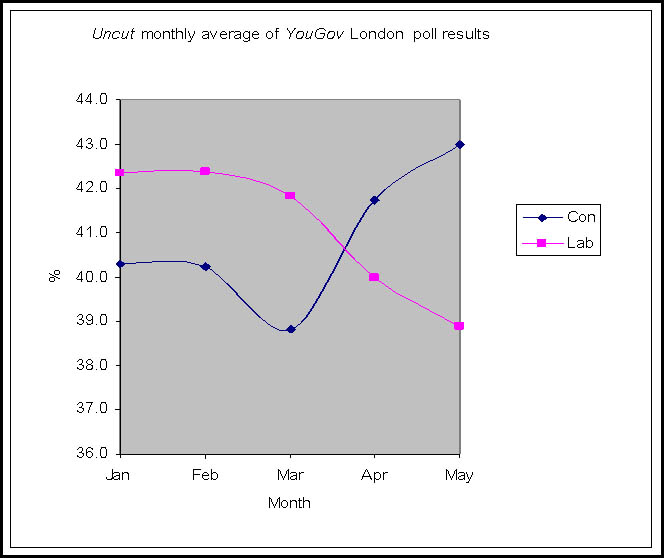
Next, the low personal poll rating is brought up, as per last week’s poll. Again, this should be a concern, but it is not an insurmountable one: there is still time to change it. More importantly, he admonishes Labour for giving the impression of returning to being a party of protest, of student politics. That stings, but it’s also credible, if we review with realism the overall impression left by the March 26 demo (and, while there are undoubtedly other factors, it is at least an interesting coincidence that the month following the London demo was the month our poll lead there abruptly evaporated).

Not everything is accurate about the analysis. For example, Montgomerie adversely criticises Miliband’s failure to reform his party, and here he is wrong: it is simply not possible to reform a political party in eight months (although if he means challenge the party, that is a different matter). But one final adverse criticism is insightful:

“By the early stages of his leadership, David Cameron had been sending mega-watt messages to voters on issues such as the NHS, the environment and fighting poverty — whether you agreed with them or not, they all energetically suggested that he was a very different kind of Conservative”.

The vital subtext here is this: Cameron was prepared to bypass the conventional wisdom of his own party to tell the public what they needed to hear: that his party had changed.

And here is the crux of the matter. Cameron did it. Blair did it with clause four. Thatcher did it against the wets. Once done, all of their positions became secure. All of our leaders, in winning power from opposition, have to do it, usually shortly after becoming leader: it is difficult to argue that Ed should be an exception.

A message of change has been there, yes. But it has been muted, a little fuzzy and, most importantly, directed more at the party and core Labour supporters than at the wider public and swing voters. The public can’t see what’s changed and, if they see anything, they likely see a swing to the left, away from them.

All of this non-policy analysis by the Tories is interesting and useful, precisely because it is largely dispassionate: they have no reason to be nice. It may not all be right, but we could do much worse than to go through it carefully in search of learning points. Because sometimes your worst enemy will tell you the home truth that your best friend won’t.

So, thank you, Lord Ashcroft, for all your hard work on our behalf. You’ve whetted our appetite, now if you could just send the full report to Labour Uncut, we’d be much obliged. We’ll pay the postage.

Rob Marchant is an activist and former Labour Party manager who blogs at The Centre Left.
Facebook Twitter Digg Delicious StumbleUpon

The government’s NHS changes tell you everything you need to know about the Tories

06/06/2011, 08:29:05 AM

by Michael Dugher

When Parliament returns this week after the half-term recess, the spotlight will once again return to the battle over the government’s changes to the NHS. The so-called “listening period” is at an end and we will see if Andrew Lansley has really listened, or if the pause to the health and social care bill was merely a cynical, cosmetic exercise designed to shore up Nick Clegg’s position and maintain the coalition as a going concern. John Healey, Labour’s shadow health secretary, has done a brilliant job exposing the true nature of the government’s proposals for the NHS. He will table nearly 40 amendments once the bill comes back to the Commons to test the government’s willingness to listen and think again. But the government’s approach to the NHS tells us everything we need to know about the Tories and Labour’s attack might similarly apply to other areas of government policy too.

First, the changes to the NHS demonstrate that the Tories are reckless. Like in other areas – the so-called strategic defence and security review leaps to mind – the changes were rushed, careless and ill-thought through. The new bill is the largest legislative document in the history of the NHS. With its 136 clauses, the original text of the bill was so large that the chief executive of the NHS, David Nicholson, joked that it was “the only reorganisation you can see from space”.  The coalition agreement stated that it was the government’s intention to “cut the bureaucracy at the heart of the NHS”.  Yet the British medical association (BMA) claimed that the changes will “replace one bureaucracy with a perhaps even more dangerous one”. As John Healey has highlighted, the usual process for sound public policy, namely that of consultation-legislation-implementation, has been reversed.

David Cameron has tried desperately to “detoxify” the Conservative brand. He knew that central to the old image of the Tories as the “nasty party” was consistently polling so badly in the “who do you most trust to protect the NHS” question. Cameron has also read Tony Blair’s book. Blair once famously said: “Every time I’ve ever introduced a reform, I wish in retrospect I had gone further”.  But when it comes to the proposed changes to the NHS, the Conservatives are guilty of seriously over-reaching themselves. They simply do not understand that the national health service is a cherished institution for the British people.  We all want to see improvements – big ones – but all governments must proceed with care.

(more…)

Facebook Twitter Digg Delicious StumbleUpon

The Sunday Review: The Master Switch, by Tim Wu

05/06/2011, 05:37:27 PM

by Anthony Painter

The information and communication revolutions of the last few decades have given us access to more content than we could possibly have dreamed of. Imagine what it would have taken to establish Labour Uncut just twenty years ago. You’d need an investor, an office, professional writers, paying subscribers, access to a printing press, and some form of retail and/or mail order distribution. The chances that it would exist are slight.

Labour Uncut is not alone- there is a huge diversity of political blogs and websites providing access to an enormous range of voices. That’s before Twitter or Facebook are even factored in. This is a golden age of access to content diversity. We are fortunate because if the history of the information industries is anything to go buy, these periods of openness are relatively short-lived. The age of the open internet is precious.

It is not the only time such a diverse range of content has been publicly accessible. In the US in the 1920s, radio was a cacophony. It was limited by frequency and amplitude in a way that the internet in the broadband age isn’t but it bears a striking similarity to the internet of today. Local enthusiasts would broadcast their take on the world, local gossip, critical community information; it was a true people’s medium. Alongside that there were the early radio networks: Radio Corporation of America and AT&T’s National Broadcasting Service who merged in 1926 to become what we know today as NBC. Thus, radio of the mid-1920s was a blend of national commercial might and enthusiastic amateurism- much like today’s internet.

Could the two sit together in perpetuity? Of course not. And the big guy won. It wasn’t even a fair fight. The Federal Radio Commission stepped in and, in the interests of clearing the airwaves to enable a higher quality service, all but killed amateur radio. The master switch had been flipped. In Nazi Germany, Goebbels centralised radio in the interests of the creation of bringing ‘a nation together.’ The US did it in the interests of corporate power and customer service. In each case, however, they chose a closed over an open form of information provision and carriage. (more…)

Facebook Twitter Digg Delicious StumbleUpon

No way back from losing London?

03/06/2011, 07:30:54 AM

by Atul Hatwal

Can you hear it? That creaking, grinding metallic sound, emanating from the capital.

Even faintly in the background?

No? Well, it will get louder in the coming months till it’s deafening.

It is the sound of the clock being turned back twenty years to a time when London was a Tory town.

Labour might have lost the 2010 general election, but London remained a last redoubt in the south. Despite all the troubles, Labour was still the dominant party, winning 36.6% compared to the Tories on 34.5% and the Lib Dems on 22.1%.

In terms of seats, the result was even better with Labour taking 38 seats, the Tories 28 seats and the Lib Dems just 7 seats.

But that was then and a year is an eternity in politics.

2011 could go down as the year in which the Tories turned back a generation of Labour ascendancy in London and pulled decisively ahead.

A new Uncut analysis of YouGov polling shows how a Labour lead of 2% in January had become a deficit of 4% by the start of June.

Polls can be deceptive and there is always a debate to be had about the extent to which they really reflect voting intentions, but two factors make these figures particularly worrying for Labour.

(more…)

Facebook Twitter Digg Delicious StumbleUpon