Liar, know thyself

15/11/2010, 09:00:20 AM

by Eric Joyce

Upon reading the dozens of bitter and bileful comments below Peter Watt’s thoughtful Uncut piece on the Phil Woolas episode, I was struck by how many people there are around of unimpeachable personal integrity, their lives un-marred by a single personal error of any significance.

As a pure person who has never done anything I later regretted, I felt among kindred spirits. Indeed, if you check out the letters page of any newspaper, you’ll see that such virtue is commonplace these days. While, at the same time, recent research (at yougovstone.com) shows that most people are pretty sure that most politicians are lying most of the time.

So why is it that all politicians, apart from me, are such lying liars? Why are they all, with the same caveat, such cowardly cowards? What’s so wrong with democracy that it only elevates to public office scoundrels and never the pure (me aside)? It’s a puzzle.

It occurs to me that, just for laughs you understand, it might be worth taking a look at these questions through the other end of the telescope. What if it were the case that our democratic system does not systematically and dysfunctionally send just the scum of the earth to Westminster? What, instead, if it were true that many people were living lies and using politicians as a means of exorcising their own demons of guilt and frustration; politicians the vessel for their own imperfections? (more…)

Facebook Twitter Digg Delicious StumbleUpon

Lib Dems are trembling over NUS plans to recall MPs

14/11/2010, 04:24:51 PM

by Denis MacShane

The president of the NUS, Aaron Porter, wrote a strongly worded email to all MPs on Friday. In it he said that students would seek to use the proposed Lib Dem law on recall to put pressure on MPs over tuition fees.

The recall mechanism – also advanced on Newsnight on Friday by the thoughtful Tory MP, Robert Halfon – is not yet a draft law so no-one knows exactly how it will work. Halfon was critical of the notion that judges should overturn election results on account of what was printed in leaflets.

In the Woolas case the judges were apparently unaware that there was a local election the same day so the struggle was never going to get above the gutter politics which Lib Dems have for a long time specialised in when it comes to local contests. But Halfon said that, in his view, Woolas should be allowed to contest this seat again.

Now it must be the turn of Lib Dem MPs to tremble as the NUS awaits the new recall ideas becoming law.

In 2005, students angry about Iraq and Labour’s modest tuition fee proposals turned Labour seats like Manchester Withington and Cambridge into Lib Dem seats. But students will be the first to use a recall system to target Lib Dem seats following Nick Clegg’s decision to dishonour the solemn public pledge he gave to the NUS before May.

Calling their opponents liars used to be a Tory speciality. (“How do you know Harold Wilson is lying? His lips are moving” was a favourite Tory remark). Accusing Blair of lying – “Bliar” – was normal discourse. But no-one in politics can recall quite such a spectacular untruth as Clegg’s signature on an NUS pledge poster which we now learn from the Guardian he was planning to betray before the election.

So the Lib Dems’ passion for recall may turn out to be a boomerang. It is also a gift to the BNP, UKIP and other single issue groups who can throw everything at raising the required number of signatures to force a recall election.

How long would Tony Benn have stayed an MP at the height of the media hate campaign against him in the 1980s? MPs like Chris Mullin who bravely defied conventional opinion on the issue of IRA terror bomb convictions could easily have had a recall petition run by the Sun or Daily Mail with a coupon on its front page.

Recall is an expression of the new populism in politics which should raise concerns. The Lib Dems who are experts at local populist propaganda are likely to be hanged by their own dishonesty.

Denis MacShane is MP for Rotherham and a former Labour minister.

Facebook Twitter Digg Delicious StumbleUpon

The real reasons Ken wants Lutfur back in the party

13/11/2010, 12:00:13 PM

by Jessica Asato

It is clear that, despite trying to arm-twist some quite senior members of the Labour party into allowing Lutfur Rahman back into the fold, Ken Livingstone has failed the new mayor of Tower Hamlets for the time being. Instead of pushing the issue at the next meeting of the NEC, Ken has recently rowed back – having had the riot act read to him by Victoria Street – and said there’s no timescale. Though the ambition is still there. Earlier this week Ken said “there is a lot to be said for letting this all calm down and seeing how Lutfur performs”. So why has Livingstone gone out of his way to find such common cause with Rahman?

When I last wrote about the Mayoral election, some commenters suggested that Ken was merely being politically pragmatic by supporting Lutfur. This was not an endorsement of Lutfur’s ideological position, but instead a calculated partnership with an eye on the future. They pointed out that his vote doubled in Tower Hamlets during the 2008 London Mayoral election, arguing that the East London mosque and the Islamic forum of Europe (IFE) were key to his success. By siding with the Labour candidate three weeks ago, Livingstone might have alienated these two important lobby interests in the borough, which could create a mass desertion of Muslim voters from Labour’s cause across London ahead of 2012. (more…)

Facebook Twitter Digg Delicious StumbleUpon

Guru boogie: who will be godhead to Ed?

12/11/2010, 11:03:28 AM

by Dan Hodges

Earlier this week, I dined with an old comrade. As it does, our conversation drifted to gurus.

“Alastair Campbell. Great communications guru”.

“No. Swore too much. Gurus don’t swear. They hardly even speak. They emit”.

“Peter Mandelson. He was a proper guru”.

“Not a guru. A svengali. There’s a difference”.

“What is it?”.

“Not sure exactly. But there is”.

“OK, got a real one. Gramsci”.

“The guy who used to  work for Harriet?”.

“No. The Gramsci. Antonio Gramsci”.

“Oh that Gramsci. Yeah. The Ledg. Dead. Foreign. Funny little glasses. Ticks all the boxes”.

A guru. Wanna make it in politics, Mack? Gotta get yourself a guru. The true guru is part university lecturer, part parent, part deity. A  strange creature. Ill defined, he occupies a curious netherworld somewhere between, or rather above, policy, communication and organisation. (more…)

Facebook Twitter Digg Delicious StumbleUpon

Smashing things doesn’t prove you’re more angry, just more violent

12/11/2010, 09:00:50 AM

by Jonathan Walker

I’ve been surprised at the number of left-leaning people who seem to celebrate the violence in London this week.

Personally, I agree with the NUS and the Labour party that “the vandalism and violence that we saw on Wednesday is completely unacceptable”, to quote Ed Balls.

But many people I’ve spoken to (including quite a few journalists) seem to believe that violent protestors were representative of the protestors as a whole and even, echoing Guido Fawkes and other right-wing bloggers, that the NUS is secretly pleased about the while thing.

Unlike Guido, however, they don’t mean it as an adverse criticism. They enjoyed watching Tory HQ (actually the reception of a building used by a number of organisations) get smashed up.

One argument used by apologists for the violence is that it got people’s attention.

But getting attention doesn’t always help you win the argument.

The demo prompted earnest debate about the failings of the metropolitan police, not the correct level to set university tuition fees or the merits of a graduate tax. (more…)

Facebook Twitter Digg Delicious StumbleUpon

What now after Woolas? Is the campaign playbook facing a re-write?

11/11/2010, 12:00:00 PM

by Dave Collins

FROM the glorious revolution onward, “anything goes” has been the default position for British election literature, subject principally to the deterrence provided by England and Wales’ notoriously plaintiff-friendly defamation legislation. The Oldham East & Saddleworth judgement asks a lot of questions about whether this is going to continue. British political communications could be transformed.

UK election campaigns have a long record of controversy and allegations of skulldugery. A classic was the 1784 Westminster election in which supporters of the prime minister, William Pitt, backed by the palace, organised to oppose the return of star Whig politician, Charles James Fox, in the seat with the widest popular franchise in Great Britain. According to the Wikipedia entry, “both sides spent heavily, campaigned bitterly, allegedly libelled and slandered their opponents relentlessly and resorted to all kinds of tactics, including Georgiana, Duchess of Devonshire touring the streets and, according to the opposition, kissing many voters to induce them to vote for Fox”.
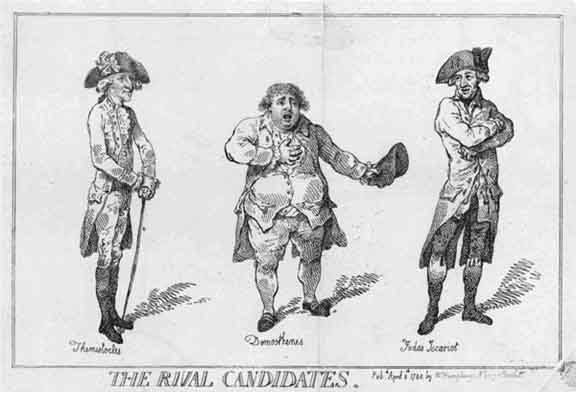
Subtle. But does it constitute misrepresentation?

Following Fox’s victory by 6,233 votes to 5,998, a prolonged scrutiny of the votes (similar to Florida’s ‘hanging chads’ dispute in 2004) was used by the high bailiff as a pretext to delay making the return. Until finally, 10 months later, the House voted 162-124 against the government, in effect finding Pitt guilty of illicit intriguing against his leading opponent.

More contemporary controversies include Smethwick (1964), in which the Conservative candidate who defeated Patrick Gordon-Walker ran an openly racist campaign, employed the slogan “if you want a nigger for your neighbour – vote Liberal or Labour”. Victorious PM Harold Wilson promptly elevated Gordon Walker to the peerage and made him foreign secretary, while calling for the new MP, Peter Griffiths, to be made a “parliamentary leper”. Griffiths lost the seat in 1966, being kicked out by the voters rather than as the consequence of legal action.

In 1992 Gerald Malone, defeated in Winchester by just two votes, did go to court arguing that 55 ballots voided for lack of official mark should have been counted. He won the case and the election of Mark Oaten for the Lib Dems was voided. Oaten however went on to win the resulting by-election with a handsome 10,000 majority. This swing against Malone was taken by many as evidence that voters tend to react against attempts to overturn election results via the courts on technicalities and the 1992 Winchester by-election result, together with the costs incurred by both parties, have generally served to discourage similar cases ever since.

In the 1997 New Labour landslide, the election of Fiona Jones for Newark was overturned after she and her (volunteer) agent were found guilty by the high court of failing correctly to declare some costs on the expenses return and thereby exceeding campaign spending limits. Neither Jones nor her agent had expected to win and ran a rather shambolic campaign, directed equally toward the concurrent local elections in which the local Labour party did expect to be able to make gains. Not anticipating victory, they failed to budget for the campaign properly, or to track spending once it had started. Exactly like Phil Woolas, Fiona Jones was initially defended by Labour party solicitors, but dropped like a stone once convicted and disqualified on March 19th 1999. (more…)

Facebook Twitter Digg Delicious StumbleUpon

The old cancer at the heart of the student riot

11/11/2010, 09:00:18 AM

by Luke Akehurst

THE SAD lesson of the hijacking of part of Wednesday’s NUS demo – by a small minority who turned it into a mini-riot – is that some of the iron laws of left politics from the last time there was a Tory PM still hold true.

The mainstream left, whether that’s the Labour party, its affiliated trade unions, NUS or other organisations campaigning against the cuts needs to know that the bad guys are not all to our right on the political spectrum.

Idealistically, we might have thought that the sheer horror of the cuts being proposed by the Tory-Lib Dem government would mean all forces on the left in Britain could unite to protest and fight to protect key public services and benefits.

Wednesday’s behaviour killed that idealistic dream as it probably killed the political enthusiasm of some of the 50,000 ordinary students on the march.

On the plus side 49,000+ of them marched peacefully. By any stretch that’s a remarkable political mobilisation. The entire membership of all the student political organisations in the UK plus non-student supporters and non-partisan student union activists does not get anywhere near 10,000 people. So 80% or more of the marchers were “real people” driven to political protest by the government, not long-term political activists.

This should therefore have been a marvellous opportunity to get an entire new generation involved in politics, inspired by participation in a powerful protest that would have got their case all over the media and put fear in the hearts of the Lib Dem MPs who betrayed their erstwhile student voters. This should have been the start of a campaign that would have seen those 50,000 marchers go back to their colleges and work to either stop a government policy in its tracks or failing that contribute to mobilising their fellow students to evict Tory and Lib Dem MPs in university seats in the next general election. (more…)

Facebook Twitter Digg Delicious StumbleUpon

Sadly, it’s a graduate tax that is stupid, not Vince Cable

10/11/2010, 03:00:01 PM

by Nick Keehan

With a student demonstration marching on Westminster today, it will be tempting for Labour to throw in its lot with the protesters and embark on wholesale opposition to tuition fees. Before we do, however, we should ask ourselves a question: how stupid do we think Nick Clegg and Vince Cable are?

Really stupid, that is. Not wrong. Not dishonest or unprincipled. Not sanctimonious, smug or irritating. Not ignorant or ill-informed, but stupid. Totally useless and incompetent. So inept and ineffectual that stuck on a sinking ship they would burn the lifeboats.

Whatever else they may be, Nick Clegg and Vince Cable are not that stupid. When it comes to tuition fees, however, this is what we are expected to believe. (more…)

Facebook Twitter Digg Delicious StumbleUpon

David Cameron’s vulgar obsession with image

10/11/2010, 09:02:41 AM

by Tom Watson

It was Vladimir Dmitrievich Nabokov who wrote “complacency is a state of mind that exists only in retrospective: it has to be shattered before being ascertained”.

When the history of the Cameron-Clegg administration is written, Andy Parsons will be a footnote to the coalition chronicles, a fleeting fact in a wider story of ultra-pragmatism and opportunity. He will feature more prominently on photographic bookplates than amid the text.

And yet, in the last week of the sixth month of this unique political construct, Mr Parsons has come to symbolise something more than the unbounded personal ambition of Messrs Cameron and Clegg.

He is an expression of the super-ego of the Prime Minister. And as any Zen Buddhist will tell you, the ego, unlike an Andy Coulson bad news day, is hard to extinguish. (more…)

Facebook Twitter Digg Delicious StumbleUpon

Three cheers for Nigel Farage!

09/11/2010, 12:00:33 PM

by Kevin Meagher

NIGEL Farage is back. Yes, that suspiciously French-sounding, irrepressibly upbeat Euro-baiter par excellence swept up 60% of the votes to retake the leadership of UKIP last week.

This is of course the same job he casually abandoned just a year ago. For big talents on small stages, there is always the lure of something better. In Farage’s case, defying Parliamentary protocol and standing against Speaker Bercow in the general election. That did not work out, so it’s back to the old day job: jolly Euro-bashing and all round right-wing populism.

To many, leading UKIP is a dubious honour. This is, after all, a party David Cameron once described as “a bunch of … fruitcakes and loonies and closet racists, mostly.” But therein lies the point: Farage’s enemies are on the right. The two men in British politics loath to see Farage return to lead UKIP are David Cameron and Nick Griffin. (more…)

Facebook Twitter Digg Delicious StumbleUpon