



Oi journalists! Stop complaining about MPs tweeting campaign pics. It’s called democracy and it’s great

20/01/2015, 05:11:28 PM

by Ian McKenzie

There is currently a deep and widening fracture between the British people and their political parties, apparently. The chasm is so big that the political party as a concept is in terminal decline. The main two parties are in particular danger because their joint share of the national vote has fallen dramatically in the last 6 decades: it’s all over now, baby blue and baby red.

These assertions have become truths all but universally acknowledged; it’s all a bit boring really.

People do not join parties in large numbers any more. The electorate has slammed its doors on the main parties after saying “you are all the same”. People feel alienated and disenfranchised, believing that politicians are only in it for themselves and only come round at election times when they want votes and are nowhere to be seen during the rest of the electoral cycle. Yada yada yada.

I know all this because I’ve read it, and endlessly repeated variations of it, in newspapers and on Twitter.

It’s pervasive: explicit in opinion columns and covert in the news. The articles are written by political journalists and others and then tweeted and re-tweeted by them and their colleagues. These reports of widespread disconnection from the political process usually include expressions of regret; the demise of the parties is often celebrated. The theme is usually the same “you politicians had it coming, you’ve taken the electorate for granted for decades, the system’s broken and it’s your fault, you feckless, lazy reprobates.”

But the last couple of years have seen a little twist: Twitter has gone mainstream and not just in Westminster either. Hundreds of MPs and thousands of activists, in most constituencies, have continued doing what they have been doing for decades, knocking on doors and staying in touch with electors, only now they are doing it on Twitter.

In fact, Twitter has helped motivate and mobilise activism. Any Labour organiser will tell you there’s nothing like a bit of peer pressure and leading by manifest example to get people off their sofas and onto doorsteps. These days, hundreds of MPs, even those who once swore they would never stoop so low, and their campaign teams post thousands of tweets from, say, Acacia Avenue. We know it’s Acacia Avenue because the team is usually snapped in front of the road sign.

(more…)

Facebook Twitter Digg Delicious StumbleUpon

Why Dapper Laughs is not the same as Charlie Hebdo

20/01/2015, 09:41:21 AM

by Sam Fowles

In the aftermath of the Charlie Hebdo massacre everybody wants to remind us that they support free speech.

But the new vogue for Article 10 has its drawbacks. Mehdi Hasan calls them “free speech fundamentalists”. I’d call them apologists for racism, sexism and homophobia, but I lack Mehdi’s pith. These people equate the denial of a platform (often for the most extreme and offensive views) with the denial of the right to free expression. Brendan O’Neill of Spiked.com argues that the attack on Charlie Hebdo was a more violent symptom of a general intolerance for free speech which stretches across Europe. Mr O’Neill was one of those scheduled to speak at the Oxford University abortion event blackballed for not including a single woman on its panel. He cites social media campaigns against Dapper Laughs and Page Three of The Sun as evidence for his theory. Spiked has even starting its own campaign, “Free Speech Now”. In the Times Education Supplement Claire Fox, Director of the Institute of Ideas, argues that policies like NUS’s “No Platform”, which bans individuals who are racist, misogynist, or homophobic from speaking at member institutions, represent an attack on freedom of speech.

Mehdi is astute to point out that the right to freedom of speech does not create a duty to be offensive. But there is a more important distinction to be drawn: “Expression” (which is a right) is not the same as “platform” (which is a privilege). Having a right to free speech means that one cannot be punished for one’s expression or coerced into changing that which one chooses to express. The obvious caveat is the prohibition against using one’s expression to incite violence against others (In much the same way that one can’t use one’s freedom of movement to commit violent acts). This is different from having a platform. While freedom of expression requires protecting all individuals equally against coercion, the issue of platform revolves around questions of who gets to use their freedom of expression from a more privileged position than others.

(more…)

Facebook Twitter Digg Delicious StumbleUpon

The fightback starts now: Pro-business Labour is starting to make its voice heard

19/01/2015, 10:29:01 AM

by Samuel Dale

It was an absolute delight to read the Fabian Society’s new research on paper on Labour’s woeful relationship with the private sector. It can be summed up in one damaging quote: “Business doesn’t trust Labour”.

As I have argued on this site, Labour has a horrific relationship with British business that could cost the party dearly this May.

The Fabian report, In it Together, authored by Ed Wallis and Robert Tinker and published on Friday, seeks to redefine Labour’s relationship with business.

It wants the party to make a “big, open and comprehensive offer “ and create a Charter for Business.

“Profit and social purpose are not only compatible objectives but the conditions of a flourishing economy and a healthy society,” says the Charter’s proposed vision. “Public health, environmental sustainability and strong local communities are integral to long-term business success, and cannot be delivered by government alone but by using partnerships between business and government.”

The Charter contains ideas such as not creating punitive and shock-value regulation, setting long-term targets beyond electoral cycles (something business cries out for again and again because how can you expect business to think long-term when politicians don’t?) and offering tax breaks to companies who contribute positive environmental and social change.

(more…)

Facebook Twitter Digg Delicious StumbleUpon

There is a debate going on about the future of British Islam. Labour needs to join it

14/01/2015, 01:00:45 PM

by Rob Marchant

Following last week’s fatal shootings in the offices of Charlie Hebdo in Paris, Monday night’s superbly-timed Panorama: The Battle for British Islam gave an insight into Islamic radicalism and the narratives which feed it.

The most notable thing, as a number commented on Twitter during the programme, was not so much that it was telling a few home truths about radicalism on prime-time television; but that it was being broadcast on the BBC, the heart of the liberal media establishment. (It is also a great tribute, incidentally, to why we still need public-service broadcasting, the Beeb being practically alone, among its not-so-brave British mainstream media competition, in showing the offending Charlie Hebdo cartoons.)

It was also possibly the first mainstream documentary which has homed in, correctly, on the poisonous “grievance narrative” – that Muslims are oppressed in Britain, singled out and victimised for their beliefs – which, as the program points out, is helping drive young Muslims away from their families and towards jihad. Racism exists, yes: but it also exists in non-Muslim ethnic communities, where the results are undeniably less extreme.

Finally, it seems, rational debate on what all this means is starting to reach ordinary people, and there is a glimmer of hope for resolving the deep problems currently faced by Muslim communities in Britain; in turning impressionable youth towards British culture and away from radicalism.

In short, there is a sensible position which neither mollycoddles Islamist extremists nor attacks moderate Muslims, and the lines of it were gently sketched out in the programme: promoting a positive vision from within, of an Islam which embraces Britain, rather than recoils from it.

(more…)

Facebook Twitter Digg Delicious StumbleUpon

Our rights are protected. It’s time for Labour to emphasise our responsibilities

14/01/2015, 09:22:21 AM

by John Slinger

In a 2002 Observer article Tony Blair set out the theme of “rights and responsibilities”. He sought to expose the inadequacies of what he termed the left’s “1945 ‘big state’ that wrongly believed it could solve every social problem” and the right’s “narrow, selfish individualism of the 1980s”. For Blair, responsibilities were concomitant with rights. Admirable people and organisations, from MPs to QCs, Amnesty to Liberty, the CAB to the EU, have ensured that rights are now well-defined and defended. We must remain vigilant about rights, but now it’s time to foster a “responsibilities culture.”

The culture of rights, fought for by philosophers, politicians and ordinary people throughout history has advanced human happiness, security and economic prosperity. It achieved this by imbuing individuals with rights by virtue of being human, not as gifts of God or the state.

Responsibilities should be given this irreducible, non-negotiable status. “I know my rights” is the unacceptable face of rightsism. The responsibilities agenda has historically been directed at the poor rather than the better-off, when in fact it is a universal imperative. In the future, it would be good to hear more of, “I know my responsibilities”, from citizens, companies and organisations throughout society and the economy.

Here are a few areas where the responsibilities revolution could take effect:

Crime

We are required to by the law to obey its strictures. However, we each have a moral responsibility to avoid illegal behaviour. Our criminal justice system would be much less necessary if people accepted the not unreasonable responsibility to desist from harming others. We should spend less time trying to understand the “causes” of crime and more on instilling a sense of respect for others and ensuring that violators fear the law and wider community. The challenge is huge: despite crime apparently falling, the Met reported last week that violent crime in London is up 25 per on last year.

Health
(more…)

Facebook Twitter Digg Delicious StumbleUpon

The Labour right does not belong to Tony Blair

12/01/2015, 10:17:30 AM

by Jonathan Todd

There are worthwhile endeavours within the Labour family that are devoutly non-factional. The point of Pragmatic Radicalism, for example, is to get away from left and right labels and to debate the way ahead in this unencumbered and comradely form.

Unsurprisingly, however, Prag Rad has not succeeded in moving our party beyond having groupings within itself. As much as the vibrancy and relevance of Labour depends on not over emphasising internal differences, which are never as substantial as the things that unite us, and interweaving ourselves with the communities that we serve, such groupings fall into that awkward category of thing that we might prefer not to exist but in all likelihood are always going to and which, therefore, we might as well be grown-up about.

To the best of my knowledge, if this is not too ridiculous a segue from talk of being grown-up, the only person who has ever blocked me on Twitter is a notoriously prolific tweeter, squarely on the party’s left. I’ve never exchanged views on Twitter with this person. I’ve never had a face-to-face conversation with them. I’ve never had any direct engagement with them of any sort. But somehow, I’ve upset them. Being Deputy Editor of Uncut is probably “crime” enough.

It’s not personal. It’s political. I know that. Which is why I don’t take it personally (though, it is petty and is not something, I hope, I’d find myself doing). This activist has one view of what Labour should be and I have another. The party is a broad church. In this context, there will always be different views.

In terms of my views, I have written plenty for Uncut that might be broadly associated with a Blairite position: the importance of fiscal credibility; bring pro-EU and reform in the EU; admiration for Jim Murphy; the desirability of big tents; applauding bridges built with business and wealth creation; embracing the contributory principle; and so on.

(more…)

Facebook Twitter Digg Delicious StumbleUpon

Winning the election street by street – and station by station too

11/01/2015, 09:00:05 AM

by Michael Dugher

It’s the first time since the 1920s that working people will be worse off at the end of a parliament than they were at the beginning”. That was how Ed Miliband summed up the cost-of-living crisis that continues to engulf hard working families across the country in his big speech earlier this week.  And this was brought into sharp focus for rail commuters returning to work last week who’ve seen their fares go up by more than 20 per cent since David Cameron became prime minister.

Ed Miliband is determined that Labour will speak to four million people before polling day in this year’s general election. That’s why Labour’s transport team have been out in recent weeks talking to the hard-pressed members of travelling public at bus and railway stations up and down the country.

This week I was with Labour’s brilliant local candidate Matt Turmaine at Watford Junction railway station where commuters are having to dip even deeper into their pockets just to get to work on increasingly overcrowded trains.  Season tickets from London to Watford junction have increased by £528 since 2010 – a rise of 22 per cent. Commuters further up the London Midland line travelling from Milton Keynes have endured a 28 per cent hike – an increase of over £1000 – something Labour’s Andrew Pakes and Emily Darlington have recently exposed.

On top of this, people across the country have been hit with stealth fare rises. The government has imposed fare rises on the Northern franchise of up 162 per cent. In my own constituency, in Barnsley East, we have been clobbered by increases of up to 25 per cent, as the government has allowed the operator to extend peak hours. At the opposite end of the country, in Brighton we have revealed government plans for more stealth fare rises on the Brighton main line through eliminating cheaper tickets, which could leave some passengers paying £664 more for their season tickets.

(more…)

Facebook Twitter Digg Delicious StumbleUpon

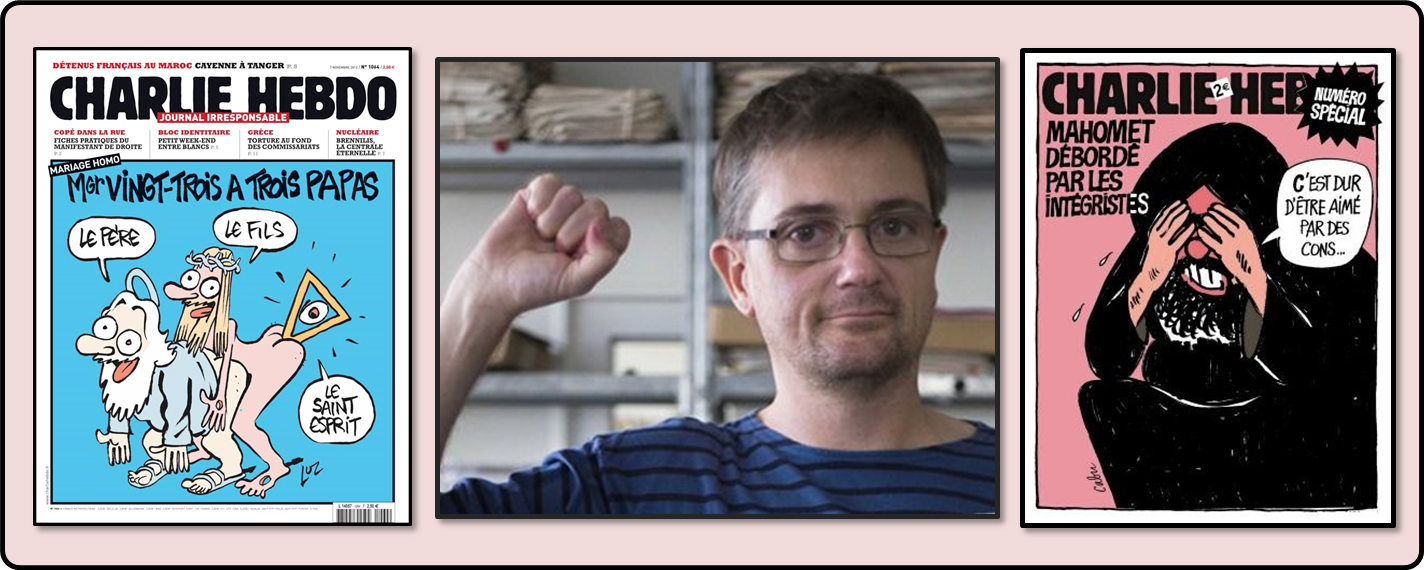
#NousSommesCharlie

07/01/2015, 09:21:22 PM

Hebdo

Facebook Twitter Digg Delicious StumbleUpon

What has changed on the deficit since general election 2010?

07/01/2015, 08:31:55 AM

by Jonathan Todd

This is the first of a series of pieces from Uncut on what has changed in respect of key political issues since the last general election. Looking over this timescale, we hope to distinguish the signal from the noise; what really matters from the day-to-day froth.

Liverpool played Burnley away on Boxing Day. The last time that happened was just before the 2010 general election when Rafa Benitez managed Liverpool. Roy Hodgson and Kenny Dalglish both did so between Benitez and the current reign of Brendan Rodgers. Hodgson’s tenure coincided with the near bankruptcy of one of the world’s great sporting institutions. Enter John Henry, deus ex machina. This American has invested in the club stadium and playing squad, including in Luis Suarez, who brought both disgrace and nearly a Premier League title. Life is easier off the pitch and harder on the pitch sans Suarez. Fans yearn to be made to dream again. And will soon have to hope to do so without talisman Steven Gerrard.

In summary, much has happened at Liverpool since the last general election. Soon after which, I wrote my first piece for Uncut on ‘the emerging politics of deficit reduction’. Since when, as much as politics feels like a rollercoaster, these politics have changed remarkably little. Around the time that piece was published, Peter Mandelson was fighting for airtime by launching his memoirs.

We would not convince the country, Mandelson conceded on the deficit, that the Tories were going too far unless we convinced them that we would go far enough. That reflection on the 2010 election exactly parallels the advice that both myself and Samuel Dale have recently given Labour’s current campaign. I called for ‘Don Miliband’ to show himself, Sam for a ‘carpe deficit’ moment. The terminology doesn’t matter, the point is the same. Mandelson returned to the debate before Christmas to make a similar point in a speech to a Progress and Policy Network conference. Labour, Mandelson advised, will only get a hearing on ‘what will the effect be on society and the economy?’ if we are clear on ‘how much must we cut public spending?’

(more…)

Facebook Twitter Digg Delicious StumbleUpon

Some gloomy general election predictions

06/01/2015, 08:55:06 AM

by Atul Hatwal

The next election is not too close to call. Neither is it a contest where the current party system is under threat nor one where voter volatility renders meaningful predictions impossible.

There are excuses wheeled out by pundits and pollsters who are frit. Here are my predictions.

The Conservatives are going to repeat their 2010 performance and secure 36% of the vote while suffering a small fall in their number of seats to the range 290 to 300.

Labour will struggle to 32%, boosting its seats by 20-25 to the high 270s or low 280s and the Lib Dems will exceed their current polling to get to 16% with seats in the high 30s or very low 40s.

Ukip will under-perform their current poll rating to achieve 7% with one seat (Douglas Carswell) while the SNP will lose to Labour in Scotland. However, they will make some progress, boosting their representation by taking 6-10 Labour seats and reducing the majorities for most of Labour’s Scottish MPs.

This is why.

As May 7th draws near, three shifts will take place in the way that the voting public go about their choice that will move the current polling.

These changes happen in every electoral cycle and are the reason that decades of forecasts of new settlements, moulds being broken and unprecedented uncertainty are usually wrong.

They relate to the nature of the decision that voters are making, the criteria they use to make it and how they judge the parties meet that criteria.

First, the way most voters perceive their choice fundamentally changes in the run up to a general election.

For the majority of the parliament, when pollsters (or indeed friends and family) ask about voting preference, the question is taken as a referendum on the government.

(more…)

Facebook Twitter Digg Delicious StumbleUpon