


UNCUT: The Labour right does not belong to Tony Blair

12/01/2015, 10:17:30 AM

by Jonathan Todd

There are worthwhile endeavours within the Labour family that are devoutly non-factional. The point of Pragmatic Radicalism, for example, is to get away from left and right labels and to debate the way ahead in this unencumbered and comradely form.

Unsurprisingly, however, Prag Rad has not succeeded in moving our party beyond having groupings within itself. As much as the vibrancy and relevance of Labour depends on not over emphasising internal differences, which are never as substantial as the things that unite us, and interweaving ourselves with the communities that we serve, such groupings fall into that awkward category of thing that we might prefer not to exist but in all likelihood are always going to and which, therefore, we might as well be grown-up about.

To the best of my knowledge, if this is not too ridiculous a segue from talk of being grown-up, the only person who has ever blocked me on Twitter is a notoriously prolific tweeter, squarely on the party’s left. I’ve never exchanged views on Twitter with this person. I’ve never had a face-to-face conversation with them. I’ve never had any direct engagement with them of any sort. But somehow, I’ve upset them. Being Deputy Editor of Uncut is probably “crime” enough.

It’s not personal. It’s political. I know that. Which is why I don’t take it personally (though, it is petty and is not something, I hope, I’d find myself doing). This activist has one view of what Labour should be and I have another. The party is a broad church. In this context, there will always be different views.

In terms of my views, I have written plenty for Uncut that might be broadly associated with a Blairite position: the importance of fiscal credibility; bring pro-EU and reform in the EU; admiration for Jim Murphy; the desirability of big tents; applauding bridges built with business and wealth creation; embracing the contributory principle; and so on.

Read the rest of this entry »

Facebook Twitter Digg Delicious StumbleUpon

INSIDE: Why is it ok for Sajid Javid to attack Muslims?

11/01/2015, 05:02:38 PM

Sajid Javid sums up everything the Conservative party would like to believe about itself.  The son of a bus driver who dragged himself up by his bootstraps to get to university, before embarking on a dazzling career in the City and a seat in the Cabinet.

But Javid’s tale of social mobility and hard work is all the more compelling because of his ethnicity. Specifically, his Pakistani-Muslim heritage. For a party that barely has a toe-hold into Britain’s ethnic minority communities, he is a powerful emblem.

But here’s the problem. Javid isn’t religious. In his own words he is “not practicing”. Nevertheless, he felt able this morning to weigh into the dubious debate about the culpability of all Muslims for countering Jihadi terror, telling BBC Radio 5 Live that:

“All communities can do more to try and help and deal with terrorists, try and help track them down, but I think it is absolutely fair to say that there is a special burden on Muslim communities…”

Contrast this with what Rupert Murdoch posted yesterday on Twitter:

“Maybe most Moslems peaceful, but until they recognize and destroy their growing jihadist cancer they must be held responsible.”

Or when Nigel Farage claimed the other day that there was now a “fifth column” of Muslims who “hate us”.

Twitter exploded in indignation against Murdoch, while Home Secretary Theresa May called Farage “irresponsible”, and Nick Clegg accused him of making “political points”.

So why does Javid, the non-Muslim, get away with claiming there is a “special burden” on Muslims for dealing with Jihadi terror?

Surely, by opting out of the faith of his father, Javid has no more right to make the same, inelegant argument than fellow affluent non-Muslim men like Murdoch and Farage?

Facebook Twitter Digg Delicious StumbleUpon

UNCUT: Winning the election street by street – and station by station too

11/01/2015, 09:00:05 AM

by Michael Dugher

It’s the first time since the 1920s that working people will be worse off at the end of a parliament than they were at the beginning”. That was how Ed Miliband summed up the cost-of-living crisis that continues to engulf hard working families across the country in his big speech earlier this week.  And this was brought into sharp focus for rail commuters returning to work last week who’ve seen their fares go up by more than 20 per cent since David Cameron became prime minister.

Ed Miliband is determined that Labour will speak to four million people before polling day in this year’s general election. That’s why Labour’s transport team have been out in recent weeks talking to the hard-pressed members of travelling public at bus and railway stations up and down the country.

This week I was with Labour’s brilliant local candidate Matt Turmaine at Watford Junction railway station where commuters are having to dip even deeper into their pockets just to get to work on increasingly overcrowded trains.  Season tickets from London to Watford junction have increased by £528 since 2010 – a rise of 22 per cent. Commuters further up the London Midland line travelling from Milton Keynes have endured a 28 per cent hike – an increase of over £1000 – something Labour’s Andrew Pakes and Emily Darlington have recently exposed.

On top of this, people across the country have been hit with stealth fare rises. The government has imposed fare rises on the Northern franchise of up 162 per cent. In my own constituency, in Barnsley East, we have been clobbered by increases of up to 25 per cent, as the government has allowed the operator to extend peak hours. At the opposite end of the country, in Brighton we have revealed government plans for more stealth fare rises on the Brighton main line through eliminating cheaper tickets, which could leave some passengers paying £664 more for their season tickets.

Read the rest of this entry »

Facebook Twitter Digg Delicious StumbleUpon

GRASSROOTS: England’s coastal towns need Labour. We mustn’t forget about them

09/01/2015, 11:24:01 AM

by Nathan Bennet

The Labour party should aim to represent coastal towns across the whole of Southern and Eastern England.

We hold seats in Southampton and Plymouth. Many of our target seats are there – Brighton, Hastings, Great Yarmouth, to name just a few. But I’d go further and argue that there’s a case for Labour representation well outside of our usual battlegrounds.

First, let’s debunk the general myth some permeate that there isn’t really a case for Labour in southern England outside our target seats. Bin the North-South divide – the real world is far more complicated.

Look at wages: Labour’s Southern Taskforce have mapped data from the ONS’ Annual Survey of Hours and Earnings. We’ve shown that right round the coast of Southern and Eastern England, average wages are below the national average. There are 43 coastal constituencies here where a higher proportion of people earn less than the living wage than the national average.

And it’s not always in the places you’d expect. In Torridge, West Devon average wages are just over £15,000 a year – £7,000 less than the national average. 38.6% of workers don’t earn a living wage. A report by Sheffield Hallam University and CRESR highlighted the dependency of much of the coast on seaside tourism. It employs 140,000 people in the South and East, and towns like Salcombe, Fowey, Southwold, New Quay, and Aldeburgh are heavily dependent on it. Yes they’re jobs, but they’re often seasonal and low paid, meeting few aspirations and offering few chances to get on

Rebalancing these local economies is as important here as in declining former industrial tows. The coalition’s reliance on market forces clearly isn’t delivering. The southern and eastern coastal communities, need an active government, willing to devolve power and resources, reforming the banks to support small business, delivering on real improvements in broadband, and tackling persistent failings in many schools that leave too many children poorly qualified and means that, even in regions of high HE participation, children from the poorer areas are missing out.

Read the rest of this entry »

Facebook Twitter Digg Delicious StumbleUpon

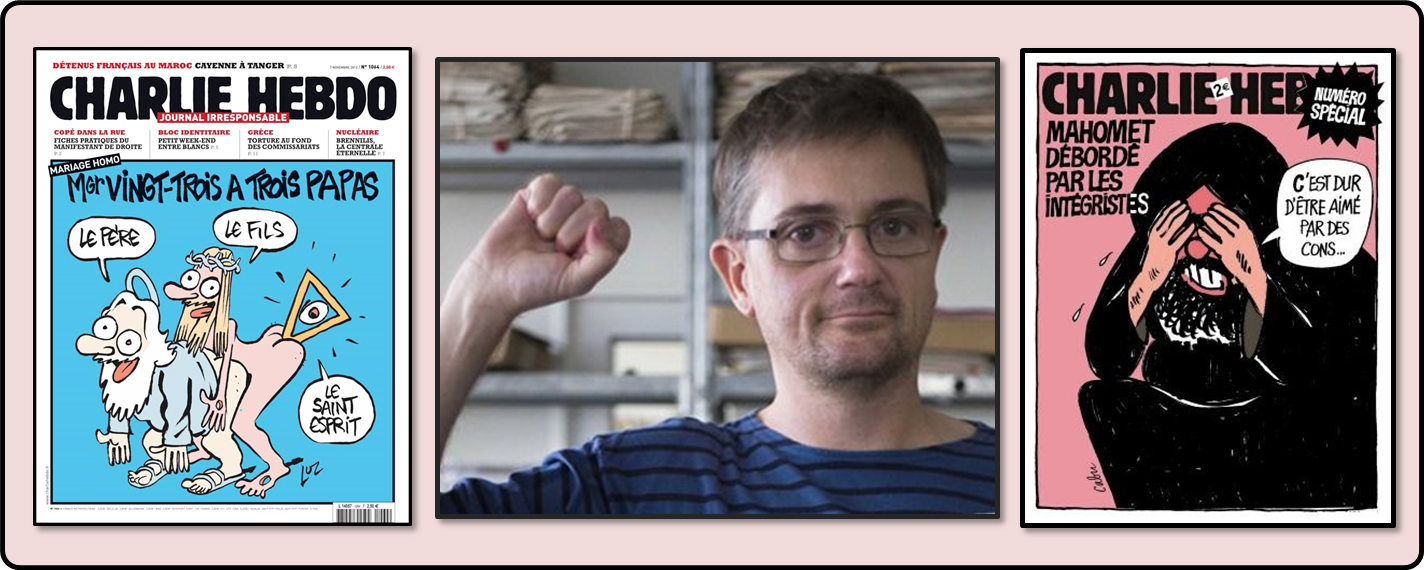
UNCUT: #NousSommesCharlie

07/01/2015, 09:21:22 PM

Hebdo

Facebook Twitter Digg Delicious StumbleUpon

UNCUT: What has changed on the deficit since general election 2010?

07/01/2015, 08:31:55 AM

by Jonathan Todd

This is the first of a series of pieces from Uncut on what has changed in respect of key political issues since the last general election. Looking over this timescale, we hope to distinguish the signal from the noise; what really matters from the day-to-day froth.

Liverpool played Burnley away on Boxing Day. The last time that happened was just before the 2010 general election when Rafa Benitez managed Liverpool. Roy Hodgson and Kenny Dalglish both did so between Benitez and the current reign of Brendan Rodgers. Hodgson’s tenure coincided with the near bankruptcy of one of the world’s great sporting institutions. Enter John Henry, deus ex machina. This American has invested in the club stadium and playing squad, including in Luis Suarez, who brought both disgrace and nearly a Premier League title. Life is easier off the pitch and harder on the pitch sans Suarez. Fans yearn to be made to dream again. And will soon have to hope to do so without talisman Steven Gerrard.

In summary, much has happened at Liverpool since the last general election. Soon after which, I wrote my first piece for Uncut on ‘the emerging politics of deficit reduction’. Since when, as much as politics feels like a rollercoaster, these politics have changed remarkably little. Around the time that piece was published, Peter Mandelson was fighting for airtime by launching his memoirs.

We would not convince the country, Mandelson conceded on the deficit, that the Tories were going too far unless we convinced them that we would go far enough. That reflection on the 2010 election exactly parallels the advice that both myself and Samuel Dale have recently given Labour’s current campaign. I called for ‘Don Miliband’ to show himself, Sam for a ‘carpe deficit’ moment. The terminology doesn’t matter, the point is the same. Mandelson returned to the debate before Christmas to make a similar point in a speech to a Progress and Policy Network conference. Labour, Mandelson advised, will only get a hearing on ‘what will the effect be on society and the economy?’ if we are clear on ‘how much must we cut public spending?’

Read the rest of this entry »

Facebook Twitter Digg Delicious StumbleUpon

UNCUT: Some gloomy general election predictions

06/01/2015, 08:55:06 AM

by Atul Hatwal

The next election is not too close to call. Neither is it a contest where the current party system is under threat nor one where voter volatility renders meaningful predictions impossible.

There are excuses wheeled out by pundits and pollsters who are frit. Here are my predictions.

The Conservatives are going to repeat their 2010 performance and secure 36% of the vote while suffering a small fall in their number of seats to the range 290 to 300.

Labour will struggle to 32%, boosting its seats by 20-25 to the high 270s or low 280s and the Lib Dems will exceed their current polling to get to 16% with seats in the high 30s or very low 40s.

Ukip will under-perform their current poll rating to achieve 7% with one seat (Douglas Carswell) while the SNP will lose to Labour in Scotland. However, they will make some progress, boosting their representation by taking 6-10 Labour seats and reducing the majorities for most of Labour’s Scottish MPs.

This is why.

As May 7th draws near, three shifts will take place in the way that the voting public go about their choice that will move the current polling.

These changes happen in every electoral cycle and are the reason that decades of forecasts of new settlements, moulds being broken and unprecedented uncertainty are usually wrong.

They relate to the nature of the decision that voters are making, the criteria they use to make it and how they judge the parties meet that criteria.

First, the way most voters perceive their choice fundamentally changes in the run up to a general election.

For the majority of the parliament, when pollsters (or indeed friends and family) ask about voting preference, the question is taken as a referendum on the government.

Read the rest of this entry »

Facebook Twitter Digg Delicious StumbleUpon

UNCUT: Back to the future – Labour set to rerun the 2010 election campaign

05/01/2015, 08:07:31 AM

by David Talbot

Labour, said Douglas Alexander, the party’s general election supremo, would tap in to voters’ “submerged optimism”. The coming election battle would be a “word of mouth” election fought street by street. Traditional mainstays of the election campaign – posters, leaflets and election broadcasts – would be usurped by the surge of digital campaigning. While the party would be heavily outspent by the Conservatives, Labour would instead focus on “community organisation and peer-to-peer communication”.

Announcing that the party had learnt heavily from the Obama campaign, Labour’s use of digital media would pioneer real-time defence against the opposition as well as digital attack ads, raising funds and recruiting volunteers. This was in comparison to the Conservatives  who would spend their considerable war chest on “posters and paid distribution”. Labour’s campaign wouldn’t spend flashy millions and would win not through “one-way communication, but one-to-one communication”. Labour’s approach could be summarised by Alexander’s view that “traditional methods of communication are just inappropriate”.

Sound familiar? Last week Douglas Alexander unveiled Labour’s central campaigning themes for the 2015 general election. But the quotes and context above are all taken from Douglas Alexander’s comments made in February, 2010. The similarity between what Alexander said in 2010, when Labour was to fall to its second worse electoral defeat in its history, and his comments last Friday, are striking. The comments are, in certain passages, in fact almost identical.

In this election Labour will, according to Alexander, engage with “the anger felt by so many in the only way a progressive party can.” In 2010 Labour would deal with “anxiety and anger over bankers’ bonuses, expenses and the recession, a general sense of grumpiness” in, infamously, a “future fair for all.” Labour will “fight this election conversation by conversation, doorstep by doorstep, community by community” whilst in 2010, borrowing from Obama, naturally, it would be “regular people briefing Labour’s message to their neighbours, serving as our ambassadors, block by block, throughout the battleground seats”.

Read the rest of this entry »

Facebook Twitter Digg Delicious StumbleUpon

UNCUT: 2015 is going to be a dangerous year

31/12/2014, 11:15:28 AM

by Rob Marchant

No, not because there is a general election coming and, given how balanced on a knife-edge the whole thing is, the stakes are unusually high and any false move will likely be enough to do for Labour’s hopes. Although that, too, is true.

At our year-end stocktaking, perhaps it behoves us to climb into the helicopter and look at where we are in time and place.

And if there were a year to bring home to European and US citizens that their current leaders do not really seem up the job of world statesmanship, 2014 was it. In terms of foreign events, it has been a fairly astonishing year.

First in the list of astonishing feats has been that the bullying leader of a major military power – and the world’s sixth largest economy – could take two sizeable bites out of a neighbour’s territory, with scant response from the developed world, other than an outbreak of gratuitous harrumphing and some fairly limited sanctions.

An action and reaction that reminded anyone with a sense of history of nothing so much as the gradual nibbling away of Czechoslovakia in 1938 by Germany, one of the main preludes to the Second World War. And of Chamberlain’s memorable response, that it was “a quarrel in a far-away country between people of whom we know nothing”.

Second, that the US should delude itself that there was a realistic hope of sensible negotiations with Iran over nuclear weapons, with the US negotiating hopefully that the country might see fit to give up something that international law said they were not supposed to have in the first place. The Iranians, surely, cannot believe their luck that it has gone this far.

Third, that the West’s abject failure to act in Syria three years ago has, predictably, come back to bite it in the horrific form of Islamic State, happy to assassinate the innocent merely to send us all a crazed message.

Read the rest of this entry »

Facebook Twitter Digg Delicious StumbleUpon

UNCUT: The Uncuts: 2014 political awards

31/12/2014, 10:01:09 AM

Politician of the year – Alex Salmond

The loss of the independence referendum was meant to be the end of the SNP. The Scottish public gave their verdict and the SNP’s raison d’etre was rejected. Cue internal ructions and a nationalist collapse.

That’s how it was meant to be.

But it wasn’t, largely because of Alex Salmond.

He made mistakes in the independence campaign – notably over nationalist plans for the currency – but Salmond’s easy charm and force of personality helped make the race much closer than many expected.

And following defeat, standing down as leader, his legacy to the SNP is to have taken them to the brink of holding the balance of power in next year’s Westminster election.

If the SNP register a general election result even vaguely in line with their current poll rating, then under Alex Salmond’s leadership, the Scottish nationalists will have fundamentally transformed British politics.

The SNP will have usurped the Liberal Democrats as the third party and Scottish independence will be a real prospect just a few months after it was meant to have been decisively rejected.

No other party leader or MP will have had such a profound impact and for these reasons, Alex Salmond is Uncut’s politician of the year for 2014.

Media misjudgement of the year – Nigel Farage’s leadership of Ukip

The common media narrative about Nigel Farage’s leadership of Ukip would not be out of place in a Mills and Boon novel. Charisma, personality and star quality are meant to be the Farage hallmarks.

He certainly generates good copy and has helped filled countless columns and reports with newsworthy content.

But away from the day to day photo-opps in pubs and quotable one-liners, Nigel Farage has made a catastrophic error. Through his words and actions he has helped confirm Ukip’s biggest negative, toxifying Ukip as the party for racists.

At the start of October, at the height of the largely positive publicity around the Clacton by-election, YouGov polling found that 55% of the public believed Ukip to be more likely to have candidates with racist or offensive views, while 41% believed the party to be racist (41% believed it not to be racist).

In a general election, Ukip’s vote will be squeezed as the choice is polarised between Labour and Conservative and being seen as extremists will amplify this effect.

In the biggest domestic election held this year, when millions voted in the local elections, Ukip’s national equivalent vote share actually fell compared to last year – from 23% to 17%.

Nigel Farage’s main task this year was to detoxify Ukip and make them a viable choice for all voters. By failing to redefine Ukip as an optimistic, unprejudiced party (along the lines that Douglas Carswell clearly wants to), Nigel Farage has ultimately doomed them.

Gaffe of the year – George Osborne for the Autumn Statement

George Osborne’s Autumn Statement is the political equivalent of the loud celebrations of AC Milan when 3-0 up at half-time in the 2005 Champions League final, the fatal conceit that opens the door to wounded opponents transforming into glorious victors. 2010’s “emergency budget” was Paolo Maldini’s goal in the first few minutes of the final, establishing an early advantage grounded in Conservative credibility and Labour profligacy. Everything Osborne has done since then, akin to the brace of Hernán Crespo goals that drove home Milan’s first half advantage, has sought to reinforce these perceptions.

Read the rest of this entry »

Facebook Twitter Digg Delicious StumbleUpon