




UNCUT: How serious are the threats to David Cameron?

22/01/2013, 03:25:24 PM

by Kevin Meagher

Last weekend, the Sunday Times ran a fairly extraordinary piece speculating that the pin-striped vultures of the Tory backbenches were eyeing up David Cameron’s carcass:

“For the first time, discussions about ousting Cameron before 2015 appear to be spreading beyond the so-called “usual suspects” – a hardcore of about 20 backbenchers who are hostile to his leadership.”

Europe and gay marriage are cited as concerns. There is also talk of a “rebel reserve” of “about 55” who would write to the backbench 1922 committee chairman, Graham Brady, demanding Cameron quits if the polls look so desperate that a change of leader becomes “urgent.”

Of course it’s not unusual for prime ministers to develop a cabal of detractors. On the way up, most senior politicians rub enough people up the wrong way to do that; but to learn that Cameron now has a nucleus of twenty hostiles against him, with dozens of “conditional enemies” is still significant.

Most obviously it seems Cameron simply isn’t conservative enough for many of his party’s faith and flag crowd. While Europe remains a celice truer Conservatives choose to punish themselves with, it is Cameron’s personal advocacy of gay marriage which is said to be the focal point for much of the current grumbling; percolating up from his party’s grassroots and through to his MPs. To them, he is a typical metro-liberal wet.

On the other hand though, Cameron is a son of privilege who doesn’t really gel with those earthier, cash-toting arriviste Tories either, the ones who had to buy their own furniture. Remember when Michael Howard said he was a grammar school boy who would take no lessons from public school-educated Tony Blair? It’s not a boast many on the Tory frontbench could make now. Nevertheless representing smart, hard-working people who have made their own money is an important part of the post-war Conservative identity.

Read the rest of this entry »

Facebook Twitter Digg Delicious StumbleUpon

UNCUT: Whip’s notebook: We are witnessing the death throes of the Cameron modernisation project

22/01/2013, 07:00:26 AM

by Jon Ashworth

I was a junior bag carrier in the in the dog days of the last Labour government. I remember too well the attempted coups; the sacked ministers seeking vengeance and the general air of resignation. My heart sank every time another MP in a marginal seat announced their retirement. Many of these MPs had been in the political frontline for 20 years plus and were no doubt genuine in wanting to move on but it inevitably of course contributed to a general sense we were in decline.

But this was a party which by 2010 had been in power for 13 long difficult years. Our Tory opponents were on their fourth leader and sixth shadow chancellor while the Lib Dems were on their fourth Leader too. By 2007 the Tory Party was spending huge amount of energy mimicking Labour election winning tactics in an effort to box off their deep seated weaknesses. So in a nod to Gordon Brown’s commitment in 1997 to match Ken Clarke’s overall spending levels, Osborne and Cameron made a similar pledge declaring support for every penny piece of Labour spending – not something they like to be reminded of now of course.

Fast forward to 2013 we are just over two and half years into David Cameron’s government. The Sunday Times this weekend informed us that an increasing number of backbenchers are privately discussing the possibility of attempting to unseat the prime minister before the poll in 2015 if the party continues to trail in the polls.

Meanwhile Labour MPs are enjoying the increasingly colourful outbursts from sacked ex-minister Tim Loughton who last week said of his former boss Michel Gove that,

“most officials have never met the secretary of state other than when he’ll troop out a few chosen people for the new year party, Mr Grace-like, tell us ‘you’ve all done very well’ then disappear. That’s no way to run an important department. It is terribly anachronistic, terribly bureaucratic, terribly formal.”

Read the rest of this entry »

Facebook Twitter Digg Delicious StumbleUpon

UNCUT: Heard of Alexis Soyer? For anyone worried about foodbank Britain, he’s the type of celeb chef we actually need

21/01/2013, 07:00:57 AM

by Ian Stewart

So the annual blow-out is over, and those who invested heavily in the usual orgy of food and booze that dominates the end of December are now hoping to stick to their new year’s resolutions.

In the la-la land of TV commissioning, amongst assorted cop shows, property porn and reality dross, the food programme seemingly has no equal. After all, it is a catch-all subject isn’t it? We all have to eat, and thus food can be used in almost any situation, and the genre can be whisked, diced, stirred and folded to fit almost any situation. If you enjoy seething, duplicitous competition – and lets face it, I do – then Come Dine With Me fits the bill. If your tastes are more towards middle-England and Midsomer Murders, then the Great British Bake-Off will have you in its thrall.

Then we have the TV chefs and food writers – really quite a varied category, as some do actually seem to want you learn something practical (Delia, Nigel, Jamie), whilst others are simply selling an impossible dream (step forward Nigella and Heston). Not to mention various restaurant owners and chefs with cookware and an image to sell – Raymond, Aldo, Gordon, James and others to spare. Of course there is the big daddy of them all… Masterchef.  Re-jigged into a competition where hopeful amateurs may, if very lucky, parlay victory on telly into an actual restaurant, possibly even a chain with the right backing.

Weekly, when in season, John Torode and Greg Wallace torture innocent people wearing white jackets for our entertainment. Greg Wallace… the man fascinates me to a slightly unhealthy degree. Having started his media career on Radio Four’s exciting “Veg Talk”, the sometime onion seller now earns a living by repeating whatever John Torode says, but in a different order. “I like your food” becomes “your food – I like”, and the inanity-meter goes into overdrive – “that is a serious plate of food” or “your flavours are your strength,” (disturbing, if you think about it too much!).

In an age where food prices are almost constantly rising across the world and when many children will go to school with nothing in their bellies, a plate of food can indeed be serious. Yet you will find no reference to food as sustenance in most food programming – Jamie’s campaigns and the odd cooking on a budget series excepted. Nope, it is all about ‘food porn’ and the aspiration, apparently, to own a Dualit toaster, and cook on an Aga. To find out the reality of food in modern Britain, you would do much better to listen to the odd snippet on the news.

So, when kids fall asleep by mid-morning, when that charming euphemism of malnutrition, “food poverty”, is on the rise, the foodie celebs are next to useless. It hasn’t always been this way – there have been great chefs, great showmen, who actually affected ordinary lives for the better.

Step forward Alexis Benoist Soyer – cook to princes, dukes and assorted mid-Victorian useless mouths at the Reform club, the kitchens of which he also designed, introducing refrigeration, adjustable heat stoves, and cooking with gas.

Read the rest of this entry »

Facebook Twitter Digg Delicious StumbleUpon

UNCUT: Sunday Review: the EU phantom menace

20/01/2013, 08:00:22 AM

by Anthony Painter

In the space of three years, the prime minister has moved Britain from the EU’s cautious awkward customer to the self-destructively preposterous. Let’s be clear, this has absolutely nothing to do with some irresistible popular clamour for a referendum on our membership of the EU. It is entirely self-inflicted. Realpolitik has been ditched in favour of pusillanimous capitulation. This whole thing is about the neuroses of the Conservative party. This is not leadership; it is fear – of a phantom menace.

In fact, there are three phantoms that appear in this whole sorry saga. The first is a speech – a phantom speech. It’s has been long in the gestation and from the unconfirmed sightings that have been reported, it is an utterly vacuous statement of the bleeding obvious about jobs, growth, competitiveness, and the democratic deficit .

So the EU has to change. We are very lucky to have this pointed out – who knew? Douglas Alexander had it absolutely right in his speech at Chatham House this week when he argued:

So significant are the potential consequences of this speech that it is tempting, indeed reassuring, to presume a degree of strategic thought or high public purpose in its preparation. The truth, I fear, is both more prosaic and more worrying. This speech is about politics much more than it is about policy. And its origins lie in weakness, not in strength.

The second phantom, is the monstrous ghoul that is the federal super-state waiting to sink its teeth into these poor defenceless northern European islanders. This is the one that has Tory eurosceptics waking up in a cold sweat in the middle of the night. Their problem though, if you look at the argument in its elements, is more with the “state” element than anything else. Tory eurosceptics believe the alternative to EU regulation is no regulation. On this, like so much else they are entirely wrong.

Regulation would in fact just carry over, as we would still need to access the European markets. To gain access to the EU on a free trade basis, anything we imported or produced for the domestic market would have to be EU regulation compliant. And why would business want two regulatory standards?

Even if we decided not to trade freely with the EU, then we would still need to ensure clean beaches, toys without toxic chemicals, workplace safety, fisheries that weren’t over fished, proper information for consumers, farming subsidies, and fresh water standards. A world without regulation of the eurosceptic’s dreams is an apparition. Even if it could be achieved it wouldn’t last the first scandal over food poisoning, cod shortages, lead poisoning, horsemeat in burgers, or horrific increase in deaths in the workplace.

Read the rest of this entry »

Facebook Twitter Digg Delicious StumbleUpon

GRASSROOTS: If we want to give our children the best start in life, Europe shows us the way

18/01/2013, 07:00:12 AM

by Robin Thorpe

In 2007 a UNICEF study ranked children in the UK as having the lowest levels of well-being in the developed world. When compared with 21 other industrialized nations in the OECD the UK ranked bottom on three out of the six dimensions of well-being and bottom overall.

A UNICEF UK report into this published in 2011 found that good relationships with family and friends are key to children’s long-term well-being. The report also found that relative wealth was a factor in a child’s well-being. Children who don’t have enough to fit in with their peers are less happy, as are children in households which have seen their income drop unexpectedly, or are uncertain about their economic future. Inequality is at the core of this issue;

“Where parents are paid at, or close to, the minimum wage, they often must work long hours or take several jobs in order to make ends meet and this can impact on their ability to spend quality time with their children.”

Paying for childcare is a significant factor in determining the working life of many parents in the UK. Some people are unable to work because they can’t afford child-care, many more choose to work fewer hours to minimize the cost of their childcare and some can’t find work that fits around the available child-care options and therefore don’t work.

Others work extra hours to pay for their child-care and therefore spend less time with their children then they would like. By comparison many French mothers return to work part-time within 3-6 months of giving birth; they can do this because the French municipal authorities provide subsidized crèches for infants from 2 ½ months old. For parents on low-incomes crèche is entirely free. In addition French municipal authorities provide free nursery provision for all children between the ages of 2 to 6. Most children do not attend full-time at 2; however by 3 most children attend at least 4-days a week.

Read the rest of this entry »

Facebook Twitter Digg Delicious StumbleUpon

UNCUT: Labour history uncut: Labour stands divided, but at least it’s still standing

17/01/2013, 05:05:42 PM

by Pete Goddard and Atul Hatwal

When war was declared on 4 August 1914, the Labour party found itself divided into three broad groups:  subscribers to Guns & Ammo, reluctant but resigned pragmatic supporters of the war, and outright opponents of the war (or “big pansies” as they were known to members of the first group).

Do you really need us to add the joke here? Good.

Fortunately, even though the party was only 14 years old, Labour knew its onions when it came to handling divisions. Although there had been one rather prominent resignation in the shape of Ramsay Macdonald’s August departure, this did not prove to be the start of a mass walkout.

War dissenters in general were tolerated and allowed to remain in the party, even retaining positions in any committees and NEC membership held.

In fact, even though Arthur Henderson had picked up the reins of leadership, he only took over the chairmanship of the PLP on a supposedly temporary basis. In the following months he regularly asked Macdonald to change his mind and come back, making him a mixtape of the special songs from their time together.

Macdonald and Henderson became the Gold Blend couple of the Labour party. “Will they or won’t they” was the number one topic of PLP tea room conversation. Finally, on 18th November 1914, Macdonald ended the suspense. He declared “It’s not you, it’s me. No, actually it is you,” and then asked for all his CDs back.

One tub of mint choc chip later, the Labour party decided it was time to move on and confirmed Henderson as Labour’s leader.

Read the rest of this entry »

Facebook Twitter Digg Delicious StumbleUpon

UNCUT: The Shergar burgers story tells us its time to look again at supermarket regulation

17/01/2013, 09:40:18 AM

by Peter Watt

This may end up being a bit of a rant so apologies.  Horsemeat, or rather horsemeat pretending to be beef in Tesco beef burgers; it was the rather shocking and grim story that we all awoke to earlier this week.  Much of the reaction surrounded the fact that the story related to the eating of horses – something we are culturally programmed not to do in our horse loving country.  I read several articles and countless tweets that explored the seeming contradiction inherent in our love of eating cows, pigs, chickens and sheep and so on – but not horses.  I also read a lot of jokes – my favourite being, “next time someone offers you a free burger, take it.  Never look a gift horse in the mouth.”

Now I don’t eat meat so I guess it’s easy to laugh, but then I saw this joke and it made me reflect:

“Those Aldi burgers were nice but I prefer my Lidl Pony”

It made me reflect because it suddenly clicked that the errant (mostly) beef burgers were part of the value range on offer by Tesco.  In other words they were from a range aimed at people on a budget.

I thought back a couple of weeks to a conversation I had had with a friend of mine who had hit a bit of bad luck recently.  As a result he and his family were seriously short of money and living on an incredibly tight budget.  He was telling me that they had bought some mince at a supermarket that was incredibly cheap and had used it to make a spaghetti Bolognese.  The meat was slightly odd looking raw and when cooked turned into a much reduced and gristly grey gloop.  It sounded pretty grim, but my friend had no choice but to buy this very cheap food if he was going to feed himself and his family.

But back to horsegate.  I started noticed that people were tweeting things like “this horse story is why I only ever make burgers from beef that I buy and mince myself.”  Or “it wouldn’t happen at Waitrose.” Now I have no idea whether it would happen at Waitrose but the point was that many people seemed pleased that they could pay to avoid eating that which they didn’t want to.  In this case horse.  Now I am certainly no class warrior (I suspect that this will not come as a shock to many!) but for me this pretty much misses the point of this story!  What are we saying here?  “It’s OK for poor people to eat crap as long as I don’t have to!”

Read the rest of this entry »

Facebook Twitter Digg Delicious StumbleUpon

UNCUT: The return of the confidence fairy could spell trouble for Labour

16/01/2013, 10:12:44 AM

by  Dan McCurry

The stock market has historically been a good barometer of future economic activity. It tends to be 6 months ahead of other indicators, representing the daily confidence of company bosses, either in their own investing, or in the conversations they have with institutional investors. However, the stock market has often been a poor tool for the policy maker, since it is so volatile that it is difficult to see the wood for the trees.

The FTSE100 recently broke through the 6,000 barrier. This may be volatility, but a comparison to the bond market may provide clarity.

UK gilts have been unusually expensive in the last few years. So expensive that a 10-year gilt yields less than inflation. This is partly a distortion caused by QE, but it is also indicative of capital preservation. Fear has governed the markets.

However, gilt prices have been falling recently, and the fall appears to correspond with the rise in the stock market. Are investors leaving safe-haven assets and returning to stocks? Are we witnessing the return of the confidence fairy?

Read the rest of this entry »

Facebook Twitter Digg Delicious StumbleUpon

UNCUT: Labour history uncut: It’s war!

15/01/2013, 06:54:22 PM

by Pete Goddard and Atul Hatwal

By 1914, Labour’s internal politics were in a well-worn rut. The routine was familiar: socialists complained about the party’s moderation, moderates complained that the socialists were making the party unelectable and strikers up and down the nation didn’t care what either of them had to say, they had a nationwide wave of industrial unrest to organise.

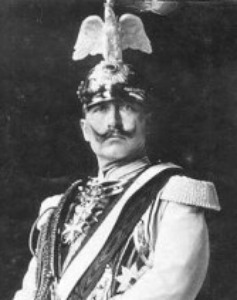
Then, in summer 1914, Germany’s Kaiser did his holiday planning. France looked nice, but he didn’t want to go abroad. So what better solution than to make France part of Germany? He was a problem solver, that Kaiser.

Kaiser’s top tip – recycle those leftover Christmas baubles into a stylish and practical outfit

So he gathered a few hundred thousand of his closest friends and began stockpiling sun cream, beach towels and heavy artillery.

On 29th July, alarmed by the accumulation of passports and spiky hats in Germany, Keir Hardie represented British labour at a meeting of the International Socialist Bureau (contrary to the title, not a dispensary for people looking to hire or purchase a continental socialist). They “resolved unanimously that it shall be the duty of the workers of all nations concerned not only to continue but to further intensify their demonstrations against the war, for peace, and for the settlement of the Austro-Serbian conflict by international arbitration…”

The problem was that, for many working class Brits, workers sticking up for workers was all very well, but these guys were foreigners, so surely they didn’t count. There was much enthusiasm for nipping over to Germany to stick it to the sausage munchers.

Read the rest of this entry »

Facebook Twitter Digg Delicious StumbleUpon

UNCUT: There is going to be a referendum in the UK, but not the one Cameron is thinking about today

15/01/2013, 03:55:07 PM

by Jim Murphy

The politics of a referendum is centre stage in parliament today. No, not as you may think. It’s not David Cameron’s continuing journey beyond Major’s euro-weakness and Mrs Thatcher’s Euroscepticism. Rather, it’s a Section 30 Order which, despite its anodyne-sounding title, will have a profound effect on our politics.

Section 30 relates to Scotland but could affect everyone in the UK. It focuses on the rules of the game for Scotland’s referendum on independence. Today the House of Commons will give a different parliament powers over the UK government regarding the 2014 vote. And because the SNP controls the Scottish parliament in a way that Cameron could only dream of in Westminster, we are transferring the powers to a political party as much as a parliament.

So what’s it all about? In short, Section 30 gives the Scottish parliament powers over how much can be spent by both sides, who gets to vote, what the question is and much more.  This is part of the compromise agreed by the government – the Scottish government accepted the vote would take place by the end of 2014 and there would be a single question in return for which the Section 30 order was granted.

This has come at a terrible time for the SNP. Labour’s new team north of the border and the Scottish public have pursued the Nats’ unanswered questions on an independent Scotland’s economy and role in the world and any other subject you care to mention. But the Nats also share the blame for their current predicament. Opposition to independence increased from 50% in January to 55% in June then 58% in the latest poll. At the moment, the nearer we get to the vote the further away the SNP look like winning it.

Read the rest of this entry »

Facebook Twitter Digg Delicious StumbleUpon