




Posts Tagged ‘Ed Miliband’

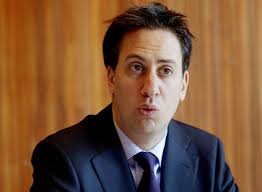
Three things we learnt about Ed Balls from his New Statesman interview that he probably didn’t intend

09/01/2014, 12:57:24 PM

by Atul Hatwal

Yesterday, George Eaton landed one of the most revealing interviews with a front rank Labour politician of the past few years.

The topline might have been about Ed Balls’ acceptance that he could work with Nick Clegg, but the broader content of the interview was actually far more interesting. Here are three things we now know about Ed Balls,

1. The relationship with Ed Miliband is as dysfunctional as suspected

One of the most revealing passages of the interview is when George asks whether Ed Miliband has guaranteed Balls will be shadow chancellor in 2015. The response is priceless,

“I’ve never had that conversation with him.”

Think about that for a moment. Despite the constant stream of articles discussing the potential for Ed Miliband to replace Ed Balls, and the endless tea room chatter in the Commons, neither man has felt able to address the elephant in the room in their discussions.

In any normal workplace, the union or staff representatives would demand some clarity if an employee’s position had been subject to so much public speculation.

But it’s not normal, it’s Westminster.

With an election rapidly approaching, Ed Balls would not be human if he did not wonder if he was still going to be in post over the coming months. As both Eds’ know from their time advising Gordon Brown in opposition, the effort involved for a shadow chancellor to prepare for an election, is enormous. It requires hard work, commitment and the full faith of the leader.

As a result of yesterday’s interview, we know that Ed Balls does not feel confident enough to ask for this backing and Ed Miliband is unwilling to give it voluntarily.

Labour’s shadow chancellor is essentially on a zero-hours contract.

2.       Ed Balls has shifted on spending cuts and is now a hawk

The Labour line has always been that the government’s approach to deficit reduction was beyond the pale. “Too far, too fast,” was the phrase in virtually every press release from 2010 through to 2012. For Ed Balls, even the spending reduction path set out before the last election by Alistair Darling was too aggressive. In 2010 he said,

“In government at the time in 2009 I always accepted collective responsibility, but at the time in 2009 I thought the pace of deficit reduction through spending cuts was not deliverable, I didn’t think it could have been done.”

But now, it’s all different.

(more…)

Facebook Twitter Digg Delicious StumbleUpon

Labour’s 2013 report card: relying on the kindness of strangers is not enough

08/01/2014, 07:00:18 AM

by Rob Marchant

Recently there seems to have been an odd acceptance by some right-wing commentators that Britain is to “sleepwalk to a Labour win”, as the Telegraph’s Matthew D’Ancona put it. It may be a genuine belief, rather than a way of giving Cameron a sly wake-up call. But if only that outcome were so sure from Labour’s current position.

On the contrary, when we look back on the third year of the Miliband project, we might struggle to see it as the success-filled year of the winning team.

For a start, any midterm year which an opposition ends with both a party and a leader less popular than at its start – as pollster Anthony Wells has observed – can hardly be declared an unqualified success.

This was a year in which a party going on to win a general election needed to be increasing its lead in both those categories, or at least holding them firm. If the near-halving of Labour’s poll lead had been down to some kind of surge for the Tories, it could have been acceptable. But the fact that both Labour and their leader are polling worse is discouraging news.

Pollster Deborah Mattinson’s noting that no party has ever gone on to win a majority from here is important, if not conclusive. And the answer is not, self-evidently, to simply lower our expectations and carry on as before, hoping to grasp at a deal with the Lib Dems, should such a thing one day be on the table.

When you are in a hole, stop digging, seems more appropriate. Or, put more simply, you do not tend to go down in the polls because the public thinks you are doing the right thing.

A second point would be the Syria vote: although Miliband managed to klutz it up fairly comprehensively, it is also fair to say that Cameron foolishly underestimated the lack of support in his own party. As a result, neither is cutting much of a figure of world statesman, as the bodies pile up in Syria at a higher rate than ever. “We stopped the rush to war” has a rather hollow ring to it, now it looks like the flimsiness of Western resolve means the murderer of thousands of children will stay in power after all.

(more…)

Facebook Twitter Digg Delicious StumbleUpon

Ed Miliband’s simply trying to end “brutish jobs for British workers”

06/01/2014, 07:00:48 AM

by Kevin Meagher

Every mention of immigration is pored over for what the person raising it really means.

Ed Miliband’s piece in yesterday’s Independent on Sunday is pretty clear. A Labour government will close the loophole in the EU’s Agency Workers Directive that allows some companies to undercut British workers by employing agency staff on less favourable terms. This is particularly an issue in sectors like food production and hospitality which use a lot of foreign workers, resulting in 300,000 people being paid less than the minimum wage.

Miliband’s is firmly a critique of neo-liberalism, not immigration per se. His ire is reserved for the excessive effects of labour market deregulation on people in the foothills of the economy. He isn’t saying British jobs for British workers in a chauvinistic way, he’s saying that for too many it’s a case of “brutish jobs for British workers” as a race to the bottom in terms of pay and conditions for the least protected undermines everything Labour should stand for.

As he put it yesterday:

“What chance of rising living standards for all when unscrupulous firms can exploit workers from abroad to get around the minimum wage?

What chance of giving everyone a fair shot when recruitment agencies are allowed to recruit only from overseas, excluding locals from even hearing about jobs?

What chance of skills for the next generation when too many employers can just import them without having to train people here? Who would have predicted that just 14 years into the 21st century IT apprenticeships would be falling? Not because we don’t need IT skills but because they are too often just brought in from overseas.”

(more…)

Facebook Twitter Digg Delicious StumbleUpon

The Uncuts: 2013 political awards

31/12/2013, 03:22:37 PM

Another year slides by. Historic figures shuffled off this mortal coil, the political pendulum swung back, then forth and we end with Labour holding onto a poll lead, albeit halved since last year.

Sorting through the detritus of the year that was, we’ve decided to revive our annual Uncut awards. These beacons of prestige are awarded on the basis of the skill and judgement of the team at Uncut. They represent our opinion, have your say in the comments

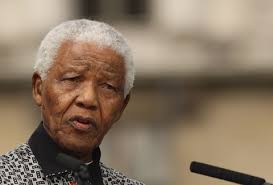
Politician of the year: Nelson Mandela

Even in death, Mandela reminded us of the power of politics to achieve great things. Contrary to the rose tinted reminisces for a secular saint that suffused so many obituaries, he was in many ways a typical politician. There’s ample evidence that he harboured the same deeply held personal emnities as most politicians, that in private he was far from the engaging avuncular figure of myth and that his family felt him to be distant.

But what distinguished him was his political judgement.

MandelaMandela knew what needed to be done and ruthlessly pursued it – almost regardless of his personal predilections or the cost.

This is what made him great and what could so easily distinguish so many of our politicians – no need for sainthood, just a bit more conviction, some hard-headed decision-making and a little less focus-grouped tinkering.

Political speech of the year: Ed Miliband at Labour conference

During the autumn of 2007, there was giddy talk of an imminent general election and an increase in Labour’s majority. Then came George Osborne’s speech to Conservative party conference, committing to cut inheritance tax. The waves of Labour excitement quickly turned to fear. This was the closest Gordon Brown ever came to winning a general election and he was fatally weakened thereafter.

Ed Miliband made the political speech of 2013 by delivering the conference speech with the biggest impact since Osborne’s. The steadily improving economy, Falkirk and Tory ascendancy over debates like immigration and welfare had Labour on the back foot throughout the summer.

The energy price freeze reversed fortunes as dramatically as inheritance tax 5 years previously. Back pocket calculations were central to both, as they will be in May 2015. It remains to be seen if Osborne will then be as hobbled as Brown was in May 2010.

Brass neck of the year: Ed Miliband over Falkirk

Chutzpah. Not a quality that immediately leaps to mind when thinking of Ed Miliband, but events in 2013 proved he has an abundance of it.

In July, the Labour party suspended the union join scheme, which had been used by Unite to recruit new members in Falkirk ahead of the parliamentary selection. The party statement claimed,

““In the light of the activities of Unite in Falkirk we will end the ‘union join’ scheme… due to the results of Unite in Falkirk it has become open to abuse but also open to attacks from our opponents that damage Labour.”

Ed Miliband launched his proposals to reform the union link that month, castigating Unite,

“‘I am here to talk about a different politics, a politics that is open. Transparent. And trusted. Exactly the opposite of the politics we’ve recently seen in Falkirk. A politics that was closed. A politics of the machine. A politics that is rightly hated…’

At the time, it seemed a principled stand. But appearances turned out to be deceptive.

Ed Mili

(more…)

Facebook Twitter Digg Delicious StumbleUpon

For too many working and middle class voters, Labour doesn’t value aspiration. This needs to change.

30/12/2013, 12:57:12 PM

by Renie Anjeh

Various theories are doing the rounds at the moment about why Labour is not performing as well as it should.  On the left of the party, they bemoan the fact that Labour is not nearly as leftwing as they think it should be.  On the right of the party, there is much concern about the party’s lack of credibility on the economy.   The left-wing Labour Representation Committee would argue that nationalising everything from the energy companies to children’s Christmas presents will deliver a crucial victory in 2015.  Progress would think otherwise (and rightly so).  But I still think that we have not asked a very important question.  Are we really standing up for all working class and middle class people?

During the Mayoral election in 2012, I canvassed a middle aged couple in Ilford who were less than pleased when they saw my ‘vote Labour’ sticker.  They worked hard all their lives and played by the rules but they didn’t think that we were on their side.  They felt that the odds were stacked against them and that we had no answers.  To them, we were completely out of touch with their aspirations and their concerns.

Unfortunately, people like the couple in Ilford have become objects of incomprehension at best, or derision at worst, for too many in our movement.  The idea that we should give them as much focus to as we give to the bedroom tax, is an anathema to some on the Left.

Part of the reason why Labour lost power is that we were seen to be a party exclusively for special interest groups such as public sector workers, single parents, immigrants and benefit claimants not a party for the generality of working class and middle class people.

(more…)

Facebook Twitter Digg Delicious StumbleUpon

Christmas special: It’s a wonderful Labour life

25/12/2013, 08:00:32 AM

by Rob Marchant

(With apologies to the late Frank Capra)

Christmas Eve, 2013: snow was falling fast in the small town of Leftford Falls, the stores were packing up for Christmas and Edward Bailey – known to his friends as Ed, and his detractors as “Red Ed” – had finished work for the day at his little family savings-and-loan business.

It had been a very difficult year: the business had been established a hundred years before, to provide help to “the many not the few”, as its slogan ran. This Christmas, it was just about keeping its head above water, in troubled economic times.

Meanwhile Lennie M. Potter, the power-hungry boss who owned half of Leftford Falls, was cooking up a plan to secure the one piece of the town he had never yet managed to get hold of – Bailey’s company.

Seeing that the savings-and-loan was in difficulties, Potter had decided to turn the screws further by declining to cooperate in Bailey’s clever new scheme to save his little business. The scheme was a bit complicated to explain, but Bailey’s idea was that the company would get more money, more power would go to ordinary people and less to Potter. Potter, needless to say, disagreed.

In fact, Bailey had never ventured much outside of his neighbourhood of Leftford Falls, because he always had the fear that, when he came back, Potter would have taken over the whole place.

To cap it all, Bailey’s own bank – a co-operative enterprise headed by the clownish “Uncle Billy” Flowers – had just gone bankrupt. Indeed, thanks in part to the foolish actions of uncle Billy, the financial base of the whole savings-and-loan business was now at risk.

So, on that last evening before the holidays, everything had come to a head. There was only one thing for it: he would have to go cap-in-hand to Potter, and beg him for a loan to get his business back on the straight and narrow. Surely Potter would see that ordinary people would be better off that way? He couldn’t see Bailey go to the wall, could he? It was Christmas, after all.

(more…)

Facebook Twitter Digg Delicious StumbleUpon

Labour is winning the economic argument? Pull the other one.

18/12/2013, 09:20:15 PM

by David Talbot

When the shadow chancellor declared on Sky’s Dermot Murnaghan programme that Labour was winning the economic argument, one can be forgiven for thinking that not even he believed the words he had just uttered.

He certainly hadn’t convinced the Commons the Thursday before, standing up to a wall of noise the previously iron-clad shadow chancellor delivered a puce-faced riposte that fell flat in the chamber and barely reverberated outside. Osborne, grinning and preening himself like his newly purchased cat, luxuriated in his adversary’s obvious discomfort – recognising not only the personal but the political challenges the shadow chancellor has to slay.

And, earlier today, at the year’s final PMQs, the sight of rows of silent, doleful Labour MPs, arms folded, as the prime minister ran through his stand-up repartee at Ed Balls’ expense, told its own story.

After three years of stagnation, the economy is showing tentative signs of recovery. Growth may be unbalanced and anaemic, but the threat of returning recession has been averted. A change of mood is altering the terms of political argument in British politics, and with it Labour’s much-heralded ‘cost of living’ campaign appears increasingly redundant.

To say the least, it remains highly questionable as to whether the living standards argument will enable Labour to make incursions into the electorate where the party’s appeal has so far been rather limited. The voters Labour have to win over to achieve outright victory in 2015 appear far less persuaded about its core arguments on the ‘cost of living crisis’, and are increasingly optimistic about the general state of the economy.

Labour has done nowhere near enough to address the basic charge of economic mismanagement; from the ludicrously long leadership hustings, which allowed the coalition government an unrivalled opportunity to set the political narrative for four whole months, to Balls’ stupid delight in his ‘flat-lining’ gesture, the damage has been done and is yet to be repaired. Voters may have been prepared to rethink some now entrenched assumptions about Labour’s responsibility for the economic crisis, but only if the party showed that it too was rethinking and reflecting, including being humble about its own failings.

(more…)

Facebook Twitter Digg Delicious StumbleUpon

For Labour, the “cost of living” debate is dead

17/12/2013, 09:53:44 AM

by Alex Chalmers

A month ago, the next election was going to be decided by “the cost of living crisis”; the electorate would see through the economic growth figures, feel the pinch, and elevate Ed Miliband, scourge of the energy fat-cats, to Downing Street. The government’s response to the energy price freeze was inconsistent and unintelligible, the public seemed to love the policy, and for a moment, the opposition looked like it had a leader. Yet within a few weeks, Labour’s poll resurgence had turned into full-on retreat. Today, YouGov has Labour’s lead down to 2 points.

So what went wrong? On a very simplistic level, elections are not won or lost on one policy. An idea, even a popular one, cannot hold media or public attention for more than a fairly short period of time. Unless it is part of a broader theme or narrative, and is followed by a series of other well-timed announcements, it will quickly become buried under a tide of other news stories. Labour cannot agree on one policy and prepare to collect the keys to Number 10. The public liked the sound of it, some other things happened, and then they moved on. If Miliband truly wishes to define the next election in terms of the cost of living, then he has to say a lot more about it.

Unfortunately, this is something of a recurring theme. At the height of the NHS reorganisation fiasco, the next election was going to be about that, but once the reforms started to be implemented, the party suddenly quietened down. A limp half-hearted campaign based on the Twitter hashtag #dropthebill unsurprisingly made little impact. Retweeting to the converted does not an election win. Nothing was made of the collapsing patient satisfaction ratings, whilst the attempts to focus on staffing levels were wrought with statistical errors and easily batted away by the government. The NHS is now in the headlines again, but Labour appears to be making no effort to communicate its message. In the days of New Labour, the media operation would have been ruthlessly hammering five key pledges home, trying to make sure the issue caught the public imagination. Ed Miliband’s “Zen-like calm” interspersed with cries of, “same old Tories” is simply no substitute.

The party’s strategy of choosing a key issue and promptly forgetting it is going to cost it dear come the next election. For the vast majority of its term in office, the coalition has managed to frame the main debates. It has managed to paint Labour as the public spending bingers and the friends of the scroungers.

(more…)

Facebook Twitter Digg Delicious StumbleUpon

Labour must hope that Cameron and Osborne do not have Merkel’s political nous

03/12/2013, 07:00:45 AM

by Callum Anderson

On Thursday, George Osborne will give his penultimate Autumn Statement before the 2015 general election. It is likely to be a highly political Autumn Statement. But whilst most of its content has yet to be leaked (at least at the time of writing), save for the likely rolling back of green levies – an attempt by the coalition to tackle the “cost of living” crisis – there is still scope for the prime minister and the chancellor to create huge problems for Ed Miliband and Ed Balls, if they can demonstrate that they are beginning to understand the economic concerns of voters, and shift to the centre ground.

Hopi Sen has already entertainingly set out how Osborne and the Conservatives could steal a march on the two Eds on the ‘cost of living crisis’. Increasing the minimum wage above inflation each year for the next five years, subject to the advice of the Low Pay Commission; raising the tax free personal allowance by £500 each year, and thus lifting millions of people from the burden of tax; reintroducing the 10p tax rate temporarily, benefitting all full-time workers on the minimum wage; and announcing an immediate cut in domestic energy bills, funded by a tax on overseas buyers of expensive property, are just a few measures that would leave the Labour hierarchy scratching their heads as to how to respond.

Indeed, such a strategy has been expertly executed by Angela Merkel, the German Chancellor, since she was elected in 2005. Her Christian Union party (CDU) – Germany’s conservative party – has been the lead partner in the previous two coalition governments: first with the Social Democrats (SPD) between 2005 and 2009, and second with the Liberals (FPD) between 2009 and 2013, and is set to enter another Coalition with the SPD within the next month.

Ms Merkel has been particularly adept in not only keeping the CDU resolutely on the centre ground of German politics, but also shifting the balance of responsibility disproportionately to her junior coalition partners. For instance, during her first term, Ms Merkel astutely took advantage of the unwillingness of SPD members to enter a coalition government with her own CDU to, in the first instance, solidify the “Hartz” labour market and welfare reforms of her SPD predecessor, Gerhard Schroeder, as well as ensure that both parties shouldered the responsibility for the substantial austerity measures taken in response to the 2007-08 financial crisis.

Likewise in her second term, Ms Merkel has been, perhaps too successful, in allowing the FDP to shoulder much of the blame in the slow response to the Euro crisis of the last few years. I say too successful because the FDP, who have traditionally had more in common with the CDU than any other party in the German parliament, crashed at the federal elections in September to such an extent that they have no seats for the first time since 1945.

(more…)

Facebook Twitter Digg Delicious StumbleUpon

The real reason why the Co-op saga is bad news for Labour

27/11/2013, 07:01:39 AM

by Rob Marchant

First, let’s get a few things straight. The Co-op Bank is not the Co-op Group, and is not the Co-op Party, a separate political party which sponsors MPs, among other things. Problems for one does not necessarily mean disaster for all three.

And there are two further stories currently being bandied around, both fallacies. And a third story, which no-one seems to be telling, which is the truth.

Fallacy one: the Labour Party is tainted with the scandal of Paul Flowers. Tosh.

It is no more Ed Miliband’s fault that his banker was found to have dodgy personal habits and was not apparently a very competent chairman, than it is any of the thousands of business or charitable customers of the bank who were similarly disappointed. No, the attempt to link Flowers to Labour is a rather desperate attempt by the Tories and right-leaning newspapers to succeed where they have largely failed in getting the public’s attention over Falkirk; a matter over which, in stark contrast to the Co-op, the party’s behaviour is open to serious question.

Fallacy two: the Labour Party will be broke because of the loss of donations from the Co-op. Wrong. There are currently 32 MPs sponsored by the Co-op Party who have been told, according to the Guardian, that they might face a 30% cut in funding. What is the worst that can happen to them? Well, it’s that they might have to do what other MPs do: raise funds themselves to fund their constituency offices. So what?

A bit of a back-of-the-envelope calculation: funding of the Labour Party during the first ten months of 2013, above the minimum donation threshold, from organisations containing the word “Co-operative”, amounted to the princely sum of £17,478.25 (by all means check my calculation at the Electoral Commission here). Even allowing for a margin for error, compare that to the millions the party receives annually from trade unions and you can see how ludicrous it is to think the party’s funding will be seriously hit.

The third point is not a fallacy, sadly, but it is the one no-one seems to be focusing on.

(more…)

Facebook Twitter Digg Delicious StumbleUpon