




UNCUT: Only Miliband can now lead Britain on Syria

30/08/2013, 12:00:35 PM

by Jonathan Todd

All changed, changed utterly. If politics is trench warfare, advancement by inch, especially now with our major parties seemingly so entrenched in their political and socio-economic citadels, with their safe seats and ideological comfort zones, then last night was a moment when the terrain dramatically shifted.

Ed Miliband led the Labour party out from behind the ghosts of Iraq. What emerges, however, is not a pacifist party. At the same time, the prime minister lost control of his most fundamental responsibility. “The people have spoken, the bastards,” he might lament.

The awful truth is that UKIP remain the party with a position closest to most of these people. Which is that we should stay completely out of a quarrel in a far-away country between people of whom we know nothing. There may be some who mistakenly think that this is Labour’s position.

The party’s position was, however, clearly set out in the 5 points that Miliband emailed to party members last night:

1.) We must let the UN weapons inspectors do their work and report to the UN Secretary Council;

2.) There must be compelling and internationally-recognised evidence that the Syrian regime was responsible for the chemical weapons attacks;

3.) The UN Security Council should debate and vote on the weapons inspectors’ findings and other evidence. This is the highest forum of the world’s most important multilateral body and we must take it seriously;

4.) There must be a clear legal basis in international law for taking military action to protect the Syrian people;

5.) Any military action must be time limited, it must have precise and achievable objectives and it must have regard for the consequences of the future impact on the region.

Read the rest of this entry »

Facebook Twitter Digg Delicious StumbleUpon

UNCUT: Labour history uncut: Arthur Henderson’s last chance for Labour and how maudlin Macdonald blew it

29/08/2013, 03:18:43 PM

by Pete Goddard and Atul Hatwal

After the initial shock of Ramsay Macdonald’s government leaving the gold standard wore off, a tide of anger started to rise across the Labour party.

Just a few weeks earlier, amid cataclysmic warnings from the economists, the Labour government had torn itself apart in its efforts to pass the severe cuts demanded by the markets. All this to prevent Britain coming off the gold standard.

Now the replacement national government had passed the cuts and then come off gold anyway. And the economic sky hadn’t fallen in.

The economists coughed and looked at their shoes. The only sound was Keynes’ gently banging his head against his desk, muttering, ‘I bloody told them’.

‘Was that it?’ wondered the people of Labour, ‘Was that what we sacrificed our government for?’

Someone had to pay.

First on the list, oddly, was new Labour leader Arthur Henderson.

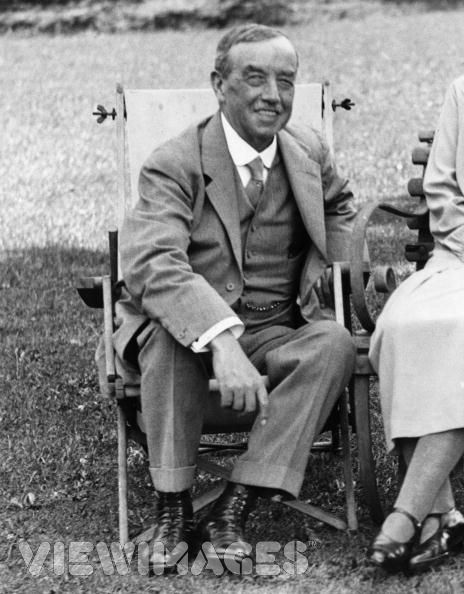
Arthur Henderson models the 1931 beachwear collection

His crime? He had spoken in a conciliatory way in parliament in the debate on whether to come off the gold standard. And he supported the government’s eminently sensible decision. The fool.

Read the rest of this entry »

Facebook Twitter Digg Delicious StumbleUpon

UNCUT: Ed gets it: the red line matters – but so does international legitimacy

29/08/2013, 08:34:51 AM

by Jonathan Todd

Daniel Finkelstein in the Times yesterday quoted Andrew Tabler, a Syrian expert, as saying: “What happens (in Syria) will not stay there.” Which makes it imperative that as large an international coalition as possible is built behind the evidence that the Assad regime used chemical weapons against its own people, constituting a violation of international law that must be punished.

This must not be Barack Obama “shooting an elephant” – the George Orwell analogy employed by Stephen Walt: the strong doing something only because it is expected. It must be the world coming together to protect the weak: those that have been gassed by Assad and those who may have WMD used against them by tyrants in future.

It is incontrovertible that an attack has occurred. It also seems highly likely that the Assad regime carried out this attack. Finkelstein is right that if this breach of the established red line passes without consequence, a green light is given to other evils. Iran and all world-be oppressors would note.

Enforcing that red line is vital. But so is enforcing it in the right way. Transparently drawing upon robust evidence, UN process and established precedent, to build both a watertight legal case against Assad and one that motivates wide support for the actions that follow. Failing to do this would degrade international law and weaken the capacity of the UK and our allies to positively influence the future of Syria and the wider region.

Under a scenario where the US and her supporters retaliate against Assad before UN processes have run their course, they would do so without the support of Russia, China and Middle Eastern states that might otherwise be brought on side. Whatever strikes are executed would be unlikely to remove Assad from power – and may do relatively little to undermine his capacities, while fortifying the resolve of his supporters and backers to resist The Great Satan. Hezbollah may well attack Israel. Western interests would crash under the force of the Electronic Syrian Army. Assad would launch further attacks against his own people – whether using WMD or not.

What would the US then do?

Read the rest of this entry »

Facebook Twitter Digg Delicious StumbleUpon

GRASSROOTS: Labour’s compulsory jobs guarantee offers hope for the long term unemployed

28/08/2013, 11:44:33 AM

by John Stephenson

Prior to 2010, Tory commentators often protested in harmony with tabloid headlines denouncing New Labour’s welfare policies as weak. In retrospect it is often acknowledged that the party’s work capability assessment was poorly designed and allowed people to take advantage of state hand-outs. Individuals in genuine need of incapacity benefits were often shunned on to job seekers allowance, leading to a toilsome cycle of temporary work while the support they needed was overlooked.

However, on the back of the coalition’s failures over unemployment and in the midst of pressure to reveal further policy proposals, Labour’s compulsory jobs guarantee offers a real alternative to the Tory-led government’s strategy to get people back to work.

Under the scheme, Labour would guarantee every adult who has been unemployed for a period of 24 months or more a work placement, with an aim to eventually reduce this time period over the long-run. Such an approach is regarded by many economists as being superior to a standard liberal economy, so long as political considerations – such as the wider ramifications for the disabled and the ratios between public and private sector employment – are carefully controlled.

While the policy would undoubtedly be costly – coming at a fee of around £1 billion for the taxpayer – there is plenty of room for manoeuvre within the current chancellor’s budget. For instance, the party are keen to stress that such funds could be acquired by reversing the coalition’s decision to stop tax relief on top earners’ pension contributions being limited to 20%, a move which is said would save the government around £2 billion.

Senior figures within Labour, such as Ed Balls and Liam Byrne appreciate that work should pay more than benefits as a matter of principal. However, the proposals indicate that benefits would be capped according to geographical location, taking into account the higher living costs associated with areas such as London and Manchester.

Read the rest of this entry »

Facebook Twitter Digg Delicious StumbleUpon

UNCUT: For the sake of Syria, tread lightly

27/08/2013, 03:39:39 PM

by Lee Butcher

In a sudden about turn Britain may well be heading into its second small Middle Eastern war since the Arab spring. It would appear that the use of chemical weapons is beyond the pale, a means of purveying death clearly far worse than the many others inflicted upon the Syrian people in the past two years.

What occurred in that attack in a Damascus suburb was an atrocity, indeed, perhaps even a crime against humanity? Our urge to help is a positive one, but it is an urge that needs to be controlled by sober analysis.

As in all cases of conflict and human rights violation the devil is in the detail. On Thursday the Government will have to detail to parliament what it feels we and our allies can do for the Syrians, and what our planning is for the ramifications of any actions that result. If that case cannot be made convincingly the breaks should be firmly applied to any march to war.

A number of reservations should be foremost in the mind of the parliamentarians. Firstly, what is the scale of our involvement? An Iraq style invasion is almost certainly out of the question, but will any involvement be limited to chemical weapons caches, or will it take the form of Libya and be a wide ranging operation against Syria’s air force, armour and artillery and will it include targeting communications and logistics infrastructure? If the latter than we can perhaps call it an enforcement measure against a certain form of warfare we disagree with, if it is the former the aim is clearly regime change.

That latter aim presents a number of problems, all of them already highlighted. If Assad goes who takes over? What contacts with and what confidence do we have in the rebels? In order to avenge one atrocity (the results of which no amount of military action can now remedy), and presumably in order to stop likewise happening again, we must consider any potential, and unintended, consequences.

Should the balance of power be tilted in favour of the rebels the international community needs to become concerned about those groups who remained largely in support of Assad, most notably the minority Alawite group. If by stopping one group being massacred we enable another group to be targeted the overall humanitarian impact will be neutral (that is to say, just as horrific as the present).

Read the rest of this entry »

Facebook Twitter Digg Delicious StumbleUpon

UNCUT: Ed is right to wait on policy, fixed term parliaments have changed the rhythm of politics

27/08/2013, 07:00:29 AM

by Ian Moss

In the summer of 2007 regional offices of the Labour party distributed leaflets to its constituencies and held briefing meetings with ward organisers to discuss the campaign plan for the forthcoming general election. Gordon Brown and his team kept open the possibility of going to the country whilst torturing themselves internally on whether to take the risk only two years into the third term Labour government.

As we all know this event is now commonly known as ‘the election that never was’. The point of regurgitating the painful memories of that story for everyone who watched it slowly reach its inevitable denouement is to emphasise one simple point: before the Fixed Term Parliaments Act of 2011 not even the government knew when the election was going to be and they were the ones that had the power to call it.

The Act has changed the rhythm of politics. At this time in the political cycle the government and opposition used to be playing a game of chicken over the election. Will they go the full term? Will they call early? How is the economic cycle looking? etc. etc. Instead, pretty much every major figure in politics went on a good long holiday.

This was sensible and calculated. They all know the election is in 2015, they all know next summer they will be in the middle of the long slog of a campaign that will last more than a year, starting in the autumn, and they all want to make sure they had a good break this summer so they can be prepared for it.

Why not?  The voters are switched off for the summer as well, and the political campaign over August is really an absurd prisoner’s dilemma. Every party thinks they have to do it because the other parties are. Every year the political parties spend their summers boxing shadows, or each other.  Every cabinet minister knows that this time next year they will be expected not to leave the country, to be on call, and to be attending campaign events across the UK.

Read the rest of this entry »

Facebook Twitter Digg Delicious StumbleUpon

UNCUT: Letter from Wales: the Welsh Language Society needs some decent PR!

23/08/2013, 09:00:13 AM

by Julian Ruck

I have been wrong.

And never let it be said that I will not listen to a fair and reasonable argument, albeit that I may well disagree with part of it.

On 21.8.13 I interviewed Tony Schiavone, a representative of the Welsh Language Society and I must say I was impressed. Indeed, the Society is to be commended for entering into a dialogue with me in the first place, which is more than can be said for Dyfodol, another Welsh language pressure group, but then they are associated with the taxpayer subsidised  Welsh publisher Y Lolfa, so say no more.

The thrust of the interview concentrated on the WLS’s views on planning policy in Wales in respect of its impact on the development and preservation of the Welsh language eg how far should a 62% Welsh speaking community be considered when planners examine housing needs, be it private or public sector?

Would not an influx of non-Welsh speakers result in the possible denigration of the language?

As you can imagine, my immediate response to this was one of “hold on, this stinks of minority protectionism on a grand scale?”

Not so, as was duly pointed out by Mr Schavione. He made it clear that the Society’s view was one of “consideration” not enforcement and he gave me no reason to doubt his sincerity in this. I must also stress that not once during the interview did I feel I was dealing with a gentleman of extreme and unrealistic inclination.

Read the rest of this entry »

Facebook Twitter Digg Delicious StumbleUpon

UNCUT: The farce of the “Bradford Spring” is over, but we should not forget its lesson for Labour

21/08/2013, 01:04:39 PM

by Rob Marchant

Ah, the excitement of the “the most sensational victory in British political history”, as its author so modestly put it, has all lasted a tragically short time, hasn’t it?

The surprising thing is not that George Galloway seems to have tired of Bradford after less than a year and a half in the job as its one of its MPs. It is that his five local Respect councillors, who resigned en masse last Thursday, ever thought that he had the slightest interest in the town; a town which he memorably referred to as “Blackburn” two days after winning the seat.

The reason for their unhappiness is that Galloway is reported to be considering leaving them in the lurch by running for London mayor in 2016; theBBC reports that his shocked colleagues “feel he is using Bradford as a platform for his wider political ambitions”. Having taken sixteen whole months to reach that insightful conclusion, one has to conclude that perhaps his party colleagues are not the sharpest tools in the box.

No, the hard work of local pavement politics – or even of showing one’s face in the Commons chamber from time to time – has all seemed a little much for dear old George. Especially when there were TV programmes to present for the propaganda mouthpiece of a repressive regime, or trips to President Assad’s little client state to make.

And that is even before we start talking about last Autumn’s semi-disintegration of the Respect Party triggered by Galloway’s comments on rape or, for that matter, the making of a tastefully-titled film called “The Killing Of Tony Blair”.

Read the rest of this entry »

Facebook Twitter Digg Delicious StumbleUpon

UNCUT: What is the point of today’s Labour party?

21/08/2013, 10:01:17 AM

by Dan McCurry

Way back in 1992, at the TUC conference, John Prescott stunned the socialist movement, by making a forceful speech in favour of John Smith’s proposed trade union reform. He attacked the unions for even questioning the motives of the Labour leader. He shamed them into submission. He showed that his loyalty is to the party over the unions and as a result, was rewarded with the deputy leadership when Tony Blair later rose to power.

He is the closest thing there is to Labour party royalty, and he just accused the party leader of being ineffective. This is not unreasonable. Everywhere I look I see the government’s economic policy being attacked. The Economist magazine calls the right to buy policy “A daft new government-subsidy scheme”, but what did we hear from Labour? Nothing. Not a dickie bird.

Look at the way the non-aligned commentators judge Osborne’s policy. Here’s Frances Coppola, an economics blogger, and academic of the Cass business school,

As my regular readers know, I am determinedly politically non-aligned, so what I am going to say now will probably shock a lot of people. Osborne’s behaviour both angers and frightens me. He is playing brinkmanship with the UK economy to achieve political ends. Nothing he does makes much sense from an economic point of view – which is why the flagship Help to Buy scheme has been universally panned, even by his own department and by people from his own party. But if you view his actions as entirely determined by his desire to secure a Conservative victory in 2015, it all makes perfect sense. He is dangerous.

Read the rest of this entry »

Facebook Twitter Digg Delicious StumbleUpon

UNCUT: The foolishness of “fairness”

19/08/2013, 07:28:08 PM

by Sam Fowles

Iain Duncan Smith has said he won’t apologise for trying to make our welfare state “fairer”. But “fairness” is both an impossible and irresponsible goal in public policy.

The “silly season” is upon us and, unlike Labour (who appear to have collectively gone on holiday to another dimension, so deafening has been their media silence) Ian Duncan Smith has decided to use it to sell (or resell) his welfare cap. Unfortunately, while – in keeping with the season – the policy itself is silly in the extreme, its effects will be terrifyingly serious.

But the welfare cap is merely symptomatic of a wider misconception, one which is endemic in both public policy and public discourse: that public policy can or should ever be “fair”. “Fairness” is an unachievable goal and aiming at it only leads to bad policy making. It encourages a skewed view of the role of government and the function of the individual in society. A government which aspires to make “fair” policy will always be reduced to distributing different shades of unfairness. A better conceptual framework for public policy is based, not on fairness but responsibility. Government should be a facilitator, allowing citizens to discharge their intrinsic responsibility to society.

The welfare cap offers an excellent illustration of the contradiction inherent in the idea of public policy “fairness”. Duncan Smith claims that he is eliminating the unfairness that some people on benefits have a higher income than the average working family. The power of this argument lies in its truth. If one is in the position of a lower middle class working man (Mr A) then it is not fair that you must pay taxes so that some people can live, without working themselves, on a larger income than your own family.

However if one takes a different perspective, for example, a child (Child B) in a large family whose father (the sole earner) has just become a victim of the civil service or army job cuts then it is unfair that your quality of life should plummet dramatically (perhaps just as you are taking A-levels, thus jeopardising your university place) because of this government’s attempts to impose the one ideology they can remember from their Oxford politics lectures. The total income of a family (regardless of the number of children or any special needs they may have) will be limited to £500 per week which will include, among others, carers allowance, child benefit and severe disablement allowance. The cap is patently unfair on those, such as the severely disabled, who require a larger income to maintain a basic quality of life.

When considered on this micro level, public policy will always be unfair on someone. The public debate is often distorted by a focus on the outlying data; the super rich or willfully unemployed. But this often distracts from the real impacts of policy on the majority of people which means we rarely get to see the big picture. When the public debate about welfare focuses on Mick Philpott it presents the misleading idea that the welfare cap is simply a matter of preventing abuse of the system. Actually it’s a matter of the government distributing unfairness.

Read the rest of this entry »

Facebook Twitter Digg Delicious StumbleUpon