




Labour history uncut: the Socialist League is sent packing

02/12/2013, 05:55:31 PM

by Pete Goddard and Atul Hatwal

When Stafford Cripps got up to speak to Labour students in Nottingham on the 6th January 1934, the reporters in attendance did not expect too much excitement. A brisk refresher on the Socialist League’s plan for an imminently Socialist Britain, then tea and biscuits if they were lucky.

Addressing the audience, Cripps declared,

“I do not believe in private armies, but if the Fascists started a private army it might be for the Socialist and Communist parties to do the same. When the Labour party comes to power, we must act rapidly and it will be necessary to deal with the House of Lords and the influence of the City of London. There is no doubt we shall have to overcome resistance from Buckingham palace and other places as well.”

The press sat up and took notice.

Because Cripps was airing the possibility of a Labour party private army? No. Because he was suggesting Labour join forces with Communists? No.

The Rubicon that Cripps had crossed was in voicing the great unmentionable, “Buckingham Palace.”

Outrage abounded. Within a day, Cripps had had to issue one of the finest political clarifications ever,

“There seems to have been some misconception of what I intended to convey by the term ‘Buckingham Palace’. I most certainly was not referring to the Crown…I cannot understand why anyone should have thought I was referring to the Crown.”

Indeed, the fools. Its obvious Cripps was talking about resistance to socialism from all those other people in Buckingham Palace. The servants maybe. Or the corgis.

Among the NEC there was a collective rolling of eyes at the gaffe. Dalton was apoplectic while Bevin was disgusted. Fortunately for Cripps though, one senior member of the party continued to back him – a member who also happened to be the acting leader – Clement Attlee. Thus Cripps swapped his red flag for a red face but remained free from formal censure.
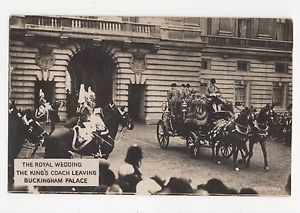
1934 – Riding out to battle the impending socialist army, Buckingham Palace wondered if it should maybe have modernised its forces

1934 – Riding out to battle the impending socialist army, Buckingham Palace wondered if it should maybe have modernised its forces

(more…)

Facebook Twitter Digg Delicious StumbleUpon

The questions facing George Osborne in the Autumn statement

02/12/2013, 07:00:20 AM

by Jonathan Todd

We all live in a George Osborne submarine. Or so he wishes. Doing his work beneath the surface, emerging periodically to bestride events, such as this week’s distinctly wintry Autumn statement.

Osborne saw Gordon Brown use these set piece occasions to determine the terms of political trade. He’s equally keen to exploit his bully pulpit. He faces, though, a number of challenges to doing so:

1.) Has the relationship between economic and Tory recovery broken?

The Autumn Statement is wintry in the sense that it’s being delivered in December. The economy, however, is more mid-March. The darkest days feel behind us and something better nearly upon us.

Given this, Benedict Brogan asked a pertinent question recently: Why are the Tories not doing better in the polls?

The Todd thesis – as Lewis Baston called it – appeared to break down as soon as it was expounded. This thesis was based on a regression analysis of economic sentiment and Labour’s lead over the Tories. It was expounded at the end of October and held that for every 1% increase in the proportion of the electorate reporting the economy as doing well, the Tories would close on Labour by 0.6%. Since then, there has been a 3% increase in the proportion of the electorate reporting the economy as doing well. But, while there is some fluctuation, Labour’s lead has held firm enough to prompt Brogan’s question.

It may be that the Todd thesis will reassert itself over a longer time horizon. If economic sentiment keeps improving, growth in Tory support will eventually catch up. Less positively for Osborne, it may be that the Todd thesis has collapsed because something has happened to disrupt the causality between improving economic sentiment and growing Tory support.

Ed Miliband’s focus on the cost of living may mean that even though people increasingly feel the economy is doing well, they don’t believe this improvement will benefit them, so it doesn’t translate into Tory support. Alternatively, the better people feel about the economy, the less Labour’s reputation for profligacy may trouble them. In better times, Labour becomes a risk worth taking.

(more…)

Facebook Twitter Digg Delicious StumbleUpon

Two impressions of Policy Exchange

28/11/2013, 07:50:03 AM

by Jonathan Todd

My two visits to Policy Exchange bookend the Tory modernisation project. Early in David Cameron’s leadership, I heard Daniel Finkelstein and Siôn Simon debate what this endeavour might learn from Labour’s own modernisation. Nick Boles, then director of the think-tank, dressed in suit jacket and vest, gave Simon some cheese as thanks for passing into centre-right territory.

Simon came not to praise Cameron’s efforts and Boles recently buried them. So hopeless is the Tory modernisers task that Boles, Cameron’s planning minister, now claims it cannot be accomplished within their own party. A more hospitable adjunct is required.

Perhaps things would have turned out differently had Tory modernisers heeded the insight that Simon gave them. He argued, essentially, that Tory modernisers were taking the wrong lessons from Labour modernisers. The Tories saw Alastair Campbell and thought that modernisation meant slick communication. Actually, it requires much more. What Campbell himself has called “heavy lifting”. Thinking through how traditional values can be applied in a contemporary context.

The values are the end, their policy application is the means, the heavy lifting builds new means to achieve timeless ends. This approach updated the revisionisms of earlier Labour pioneers, like Tony Crosland and Hugh Gaitskell. Cameron’s only fixed end, however, was to become prime minister. His lack of an animating purpose has left him seeming inauthentic and his administration bereft of ballast, easily knocked off its stride.

(more…)

Facebook Twitter Digg Delicious StumbleUpon

The real reason why the Co-op saga is bad news for Labour

27/11/2013, 07:01:39 AM

by Rob Marchant

First, let’s get a few things straight. The Co-op Bank is not the Co-op Group, and is not the Co-op Party, a separate political party which sponsors MPs, among other things. Problems for one does not necessarily mean disaster for all three.

And there are two further stories currently being bandied around, both fallacies. And a third story, which no-one seems to be telling, which is the truth.

Fallacy one: the Labour Party is tainted with the scandal of Paul Flowers. Tosh.

It is no more Ed Miliband’s fault that his banker was found to have dodgy personal habits and was not apparently a very competent chairman, than it is any of the thousands of business or charitable customers of the bank who were similarly disappointed. No, the attempt to link Flowers to Labour is a rather desperate attempt by the Tories and right-leaning newspapers to succeed where they have largely failed in getting the public’s attention over Falkirk; a matter over which, in stark contrast to the Co-op, the party’s behaviour is open to serious question.

Fallacy two: the Labour Party will be broke because of the loss of donations from the Co-op. Wrong. There are currently 32 MPs sponsored by the Co-op Party who have been told, according to the Guardian, that they might face a 30% cut in funding. What is the worst that can happen to them? Well, it’s that they might have to do what other MPs do: raise funds themselves to fund their constituency offices. So what?

A bit of a back-of-the-envelope calculation: funding of the Labour Party during the first ten months of 2013, above the minimum donation threshold, from organisations containing the word “Co-operative”, amounted to the princely sum of £17,478.25 (by all means check my calculation at the Electoral Commission here). Even allowing for a margin for error, compare that to the millions the party receives annually from trade unions and you can see how ludicrous it is to think the party’s funding will be seriously hit.

The third point is not a fallacy, sadly, but it is the one no-one seems to be focusing on.

(more…)

Facebook Twitter Digg Delicious StumbleUpon

The real reason Labour will never publish the Falkirk report

25/11/2013, 09:40:30 AM

by Atul Hatwal

Yesterday Labour members in Falkirk gathered for their annual general meeting. They elected a new party chairman, Gray Allan, and once again the party attempted to move on from the disastrous parliamentary selection process. The new chair’s first statement clearly frames the date for the new selection vote as the point where the party will try to claim closure,

“On 8 December, in Falkirk, we will select a candidate to fight this seat for the next general election. The priority for us is to work to regain the trust of the people of Falkirk so that we can be confident of a victory in this constituency.”

But no matter how much the party wants the Falkirk farrago to go away, there is a problem.

The constituency remains in special measures, Labour HQ is running the selection process and no CLP member who joined later than March 12th 2012 can participate in the vote. All of this despite the official party line being that no group or individual has been found to have broken any rules.

This contradiction is the reason the questions keep coming. The missing link is the unpublished report into the selection process conducted by Labour officials.

The report was the basis for the action taken in Falkrik and sets out the detail of what went wrong. The allegations contained in it ignited civil war within the Labour movement between the party leadership and Unite and have driven media coverage so catastrophic that Gray Allan was moved to talk about regaining “the trust of the people of Falkirk” if Labour is to win again in what should be a rock solid Labour seat.

Until the report is published, it will be impossible for Labour to successfully move on.

(more…)

Facebook Twitter Digg Delicious StumbleUpon

Letter from Wales: Welsh Labour is damaging Ed

22/11/2013, 10:12:21 AM

by Julian Ruck

The search lights of accountability and scrutiny will always make Welsh Labour dive for the blacked out sanctuary of its pleasure cruisers bobbing up and down in Cardiff Bay. For 98 years Welsh Labour has been able to wallow in a take for granted mandate that enjoys the unchallenged absolutism of a House of Saud princeling.

Almost every day in Wales, some political scandal or other hits the Welsh headlines, be it financial, be it authoritarian or be it just plain blazing incompetence. Wales has one of the lowest performing economies in Europe, it’s education system is cheating its young folk on a grand scale and awarding them qualifications that would shame a Zimbabwean Sunday school class and not to mention that only this week the Wales Audit Office has announced that the Welsh government has blundered (yet again!) over its financial projections on reduced student fees resulting in its populist flagship now being nothing better than a clapped out rowing boat.

And of course, its health service is worse than England’s on a good day – which really is saying something!

And what does First Minister Carwyn Jones say at the September Labour conference? That he leads a government that is ‘a living, breathing example” of what the party can achieve in in power!! How on earth Ed kept a straight face on hearing this startlingly complacent, Chamberlain letter waving delusion and swansong of profound idiocy is utterly beyond the keyboard of this humble Uncut scribbler.

The question then is this: Can Ed rely on the historical Welsh Labour mandates of the past? Hegel remarked that ‘governments never learn from history, or act on principles derived from it.’ The lessons of Welsh political history would instruct Ed to take the Labour vote for granted in Wales thus proving Hegel wrong but since when, like economic forecasts, do philosophical meanderings always get things right?

There is a view that our young are politically indifferent. This may well be true up to a point, but they are still a force to be reckoned with – technological whizz and bangs notwithstanding –  and cannot be ignored. Welsh Labour can no longer rely on the generational ‘My dad voted Labour so I’m going to do the same,’ or indeed the oft quoted ‘Stick a Labour donkey up in Swansea and it will still get the vote.’

(more…)

Facebook Twitter Digg Delicious StumbleUpon

Jeremy Hunt’s response to Francis will penalise patients while protecting the bureaucrats who cover up abuses

21/11/2013, 03:20:56 PM

by Sam Fowles

I really miss the days when the worst we thought Jeremy Hunt could do to the NHS was privatise it. At least you knew what you were getting with privatisation. But what Mr Hunt is doing, incredibly, manages to be worse. It is an act of legislative contortion which would have done credit to Mitt Romney on his most pliable days: In an (apparent) attempt to “get tough” on standards and ensure the high quality of the NHS, Mr Hunt has made certain that it cannot possibly offer anything but a substandard service.

At least one can see a logical argument of privatising the NHS. It may be exceptionally wrongheaded, but the case has a logical progression: Competing providers will force standards up as a result of their competition for consumers. The problem with this is, of course, that demand for healthcare is inherently almost completely elastic. As such, the impact of market forces on quality and price of provision will only ever be exceptionally limited, leading to monopolistic tendencies and, inevitably, substandard service. But at least there is a justification based on some sort of reasoned analysis.

Mr Hunt’s response to the Francis Report is a masterclass in irrationality.

One of the central issues in the report was poor patient care. Beds were not changed, patients were not fed; essentially the care and attention necessary for a decent quality of existence were absent. Unless the nurses at Mid Staffs spent their days playing scrabble and watching repeats of Monarch of the Glen (in my experience, pretty much the only thing on hospital television) one might perhaps assume that neglect is a function of understaffing. Stunningly this was also one of the conclusions of the Francis review.

Much of the review focused on governance issues, particularly regarding oversight organisations and community engagement (which Mr Hunt’s substantive proposals have singularly failed to address). Those sections which concentrated on the day to day running of wards recommended a more labour and resource intensive model. This is hardly surprising. One doesn’t have to be an expert in healthcare management to realise that if, as a patient, you get more focused attention more of the time, you’re going to have a better experience. The logical corollary of this is that, if everyone is to have more focused attention more of the time then the hospital might need to employ more people to provide it.

(more…)

Facebook Twitter Digg Delicious StumbleUpon

Unfortunately, no-one in British politics is serious about social mobility

20/11/2013, 07:00:20 AM

by Kevin Meagher

Everyone in British politics is interested in ending world hunger. Everyone is interested in saving the environment. And everyone, it seems, is interested in improving social mobility.

Barely a week goes by without someone sounding off about its importance. Ed Miliband makes weighty speeches about it. So does Nick Clegg. Michael Gove. David Cameron. Et cetera, et cetera.

But being interested in something is not the same as not being serious about it. Simply wanting to narrow the gap between the circumstances of someone’s birth and what they subsequently get to make of their life is hopelessly, pathetically, inadequate.

Especially when the scale of the problem is so daunting. Labour grandee Alan Milburn, the Chair of the government’s Social Mobility and Child Poverty Commission, describes social mobility as “the new holy grail of public policy”.

In a speech to the Resolution Foundation last week, he set out the dizzying scale of the challenge facing his commission:

“We conclude that the statutory goal of ending child poverty by 2020 will in all likelihood be missed by a considerable margin, perhaps by as many as 3 million children. We conclude too that the economic recovery…is unlikely to halt the trend of the last decade, where the top part of society prospers and the bottom part stagnates. If that happens social inequality will widen and the rungs of the social ladder will grow further apart. Poverty will rise. At best, mobility will stall. At worst, it will reverse.”

Unfortunately, no-one – absolutely no-one – in British politics is really serious about backing-up their pious invocations with practical action. An intermittent harrumph of indignation is followed well, by, nothing.

(more…)

Facebook Twitter Digg Delicious StumbleUpon

New revelations expose contradictions in the Labour leadership’s story on Falkirk

19/11/2013, 01:36:38 PM

by Atul Hatwal

Another week and yet more twists in the Falkirk story.

Over the weekend, Unite’s response to the Labour party’s internal report on Falkirk was published by the Sunday Times (£). It sheds more light on Labour HQ’s involvement in the affair as well as revealing an important new allegation of malpractice.

To understand what happened, we need to wind the clock back to last December.

Unite had sent large batches of new Falkirk membership applications to Labour head office for approval. The bulk of these were Unite members joining the party under the terms of the now defunct “union join” scheme. This allowed Unite, or any union, to pay the first year’s membership subscription for any of their members who wanted to join Labour, as long as the application included the new recruits’ direct debit details to cover future years’ subscriptions.

Rapid processing of these applications was required if these new members were to be eligible to participate in the selection. According to party rules, new members can only take part in picking the prospective parliamentary candidate if they have “six months continuous membership of the Labour party (any constituency) at the freeze date.”

The freeze date is the point at which the selection process is declared open. Given the Falkirk selection was expected to take place in May or June, timing was tight for Unite’s surge of new recruits from November and December 2012 to have built up “six months continuous membership”.

There was almost no margin for delay.

But delay is exactly what happened. Suspicious party officials flagged several applications, worrying that party processes were being manipulated and because direct debit details were frequently missing.

This presented two challenges for Unite and Labour.

First, adding the missing direct debits would have been very time consuming, significantly delaying registration of the new members.

Second, even if these memberships could be somehow quickly readied to be put on the system, late January would have been too late to qualify if the contest was held in the first half of the year.

Labour HQ’s role in fixing these problems reveals the depth of the party’s involvement in backing Unite’s strategy in Falkirk.

(more…)

Facebook Twitter Digg Delicious StumbleUpon

Livingstone: still there, still up to his old tricks

18/11/2013, 10:35:00 AM

by Rob Marchant

Now, Labour Uncut has never been a fan of Gordon Brown’s decision to leave the “Golden Rule” behind and stop balancing the books over the economic cycle. He borrowed more than he should have, with the result that Britain was rather caught with its trousers around its ankles when the global financial crisis came.

But it takes a certain kind of front for a politician on his own side to call the former prime minister a coward (although marginally better, one supposes, than asking for him to be tried as war criminal).

Especially if that politician (a) still holds office at national level (albeit on Labour’s NEC and not an office elected by the general public); and (b) wouldn’t know fiscal responsibility if it jumped up and slapped him in the face with a wet kipper.

It really could only be one person, couldn’t it? Step forward, our old friend Ken Livingstone, who told the Labour Assembly Against Austerity last weekend that the raising of debt was “an act of cowardice”.

Now, let’s examine that for a second as an exercise in multiple levels of irony.

First up in the irony stakes is the issue that he was speaking at the Labour Assembly Against Austerity. Yes, the anti-austerity movement. The primary function of this body, as far as anyone can understand, is the economic equivalent of the Flat Earth Society; that of fighting of any cut of any kind.

Now, although Livingstone later implied – disingenuously – in the same speech that he is open to cuts, this goes entirely against the whole ethos of the anti-austerity movement. No-one can possibly seriously buy that argument, least of all from him.

So, the equation is pretty straightforward: if you can’t cut and you can’t raise debt, you have to raise taxes. That is the clear conclusion of this kind of policy and the modus operandi which has followed Livingstone throughout his political life.

And there’s the second irony. You can certainly say that Livingstone has always been consistent about not wanting to raise debt and securing all revenue through tax-raising, but let’s look at the facts on that.

(more…)

Facebook Twitter Digg Delicious StumbleUpon