





UNCUT: Labour history uncut: Labour says “no but, yeah but, no but” to a Popular Front

10/06/2014, 09:19:27 PM

by Pete Goddard and Atul Hatwal

1937 might have seen the death of efforts to forge Labour, the Communists and Independent Labour Party into a leftist Unity Front, but the idea of Labour joining forces with other political groups had not gone away.

In fact, on the more moderate end of things, there was still plenty of support for a Liberal alliance, which the Lib-Labs called a Popular Front, because Lib-Labs sounded like a brand of penny sweet.

The electoral potential from a new dose of Lib-Labbery was demonstrated in campaigns such as the Fulham West by-election of April 1938 where Labour’s Edith Summerskill reaped the benefits of a Popular Front.

An ardent feminist and anti-fascist, Summerskill was pretty much the living embodiment of a scary lefty for the likes of the Daily Mail. Nevertheless, thanks to the support of Liberal activists, and absence of a Liberal candidate, she secured a 7.3% swing to overturn the Tory majority.
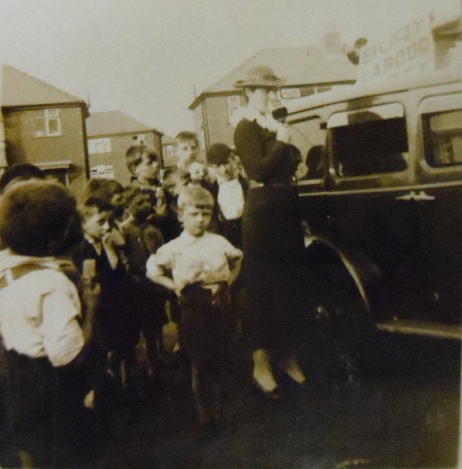
Edith Summerskill’s ability to levitate always drew a crowd on the campaign trail

Edith Summerskill’s ability to levitate always drew a crowd on the campaign trail

Summerskill subsequently took her seat in the House of Commons under her maiden name. This was scandalous behaviour for the time as it made it confusing for the gentlemen of the Commons to know whether or not they were allowed to goose her in the canteen.

Read the rest of this entry »

Facebook Twitter Digg Delicious StumbleUpon

UNCUT: Cameron wants to junk Juncker. He’s right and Miliband should support him

09/06/2014, 10:48:46 AM

by Renie Anjeh

In spite of his party’s victory in the Newark by-election, Cameron has been embroiled in yet another fight with his fellow European leaders. This time, it is over who becomes the next president of the European Commission.  Strangely enough, on this particular issue, Cameron is on the right side of the argument: Jean Claude Juncker is the wrong choice to become president and Ed Miliband should support Cameron in his efforts to block him from the presidency.

A fortnight ago, millions of voters across Europe voted for populist and far-right parties, something which should be of great concern to  all pro-Europeans and progressives. As Tony Blair told the CBI recently, the election results should serve as a “wake up call” for Europe and shows the need for pro-Europeans to press for reform.

To be fair, there have been other European politicians who have tried to come to terms with the results of the Euro elections, but Juncker is not one of them. Instead, he has arrogantly claimed that ‘entitled’ to become president of the Commission and that he is ‘more confident than ever’ that he’ll be the next president.

He is also the politician who told a group of finance ministers that politicians should ‘have to lie’ when economic situations become serious. His attacks on Britain in recent days, because of the Prime Minister’s opposition to his candidature, show that he is not serious about keeping the European Union together.

Juncker embodies the idea that the European Union by an out-of-touch, arrogant elite.  It may be an unfair perception but it is part of the reason why many voters have become disenfranchised. If European leaders appoint Juncker as the next Commission president, it would not just be a rejection of Blair’s sagacious advice but it would embolden extremists and populists such as Ukip and the Front National. That is not something that Europe can afford.

Read the rest of this entry »

Facebook Twitter Digg Delicious StumbleUpon

UNCUT: Letter from Wales: A Welsh Bonfire of Vanities

08/06/2014, 02:59:45 AM

by Julian Ruck

£300m of taxpayers’ money over the last 10 years for Welsh arts and Wales has some of the lowest literacy and numeracy standards in Europe!

Tom Wolfe has railed against the excessive and greedy vanities of New York society.

One cannot help but wonder what he would make of the flapping, arrogant, self-indulgent squawks and bloated vanities of the Welsh arts scene, full to the brim as it is, with taxpayer largesse and unable to write one word, bend one piece of metal, stretch one sweaty leotard or paint one plate without ‘financial assistance’ being attached.

Allow me to give you some recent examples:

This year’s ‘Creative Wales Awards’, courtesy of those jet setters at the Arts Council of Wales, airline tickets paid by Carwyn’s Team Druid of course (note the Biennale farce reported in previous columns):

£264,779 (FOI) ie 12 awards of £25,000 a pop to allow, and I quote, ‘an individual artist’s vision to be explored, tested and re-imagined without the need to create a ‘final’ performance or exhibition’. Indeed one recipient, a Welsh poet, has received his £25,000 of taxpayers’ money to go to America to improve his lyrical expertise – madness, and a profound abuse of the hard-pressed taxpayer.

The real beauty however must be Gareth Clark, who has been awarded £24,894 ‘to remove himself from everyday comforts and conventions of life and put himself in a place to contemplate and reflect’!!! Well he could do this at his local Job Centre, much cheaper, and I can’t quite see £24,894 forcing him to hawk the Big Issue on street corners either (readers should go to:  http://www.wai.org.uk/news/5990 to observe more of these ridiculous but supremely insulting taxpayer hand outs).

Over the years these Welsh Creative Awards have cost the taxpayer millions and what exactly do most of them achieve?

Nothing.

No exhibitions, no sales and an audience equivalent to the footfall at a garden centre flogging Japanese knotweed.

Creative Wales Awards? Gold plated dole more like, for Welsh artists and writers to stay at home and ‘re-imagine’ their artistic genius. Perish the thought, that like most writers and artists they should have to work to support their ‘art’ or achieve some kind of commercial success.

Read the rest of this entry »

Facebook Twitter Digg Delicious StumbleUpon

UNCUT: We’ve passed peak Ukip but Labour has yet to hit rock bottom

06/06/2014, 11:57:55 AM

by Atul Hatwal

Two lessons are clear from the Newark by-election result, one for Ukip and one for Labour.

First, we’ve passed peak Ukip. Despite the blitz of media around the European elections and the dutiful trotting out of tropes about “political earthquakes” by the likes of the BBC, Ukip failed in Newark.

They weren’t even close. Forget earthquake. Losing by almost 20% to an unpopular incumbent government doesn’t count as a tremor or even an HGV rumbling down the road.

Newark has exposed Ukip’s hopeless lack of ground organisation and the extent to which their brand was toxified in the recent European election campaign.

A couple of weeks ago, I wrote about how Ukip’s momentum was clearly reversed during the Euro-campaign; from a poll high of 31% before the racism furore, to 27.5% in the European election itself. And from a starting point of 23% equivalent national vote share in last year’s local elections, they fell to 17% in this year’s contests.

Despite the breathless media coverage that greeted Ukip’s results, their direction of travel was down at the point voters went to the polls. The Newark result confirms that they are still on this trajectory.

The enormous disparity between male and female voters in Survation’s final constituency poll – 36.8% of men backed Ukip versus 16.8% of women – illustrates the extent to which Ukip has a major problem with women and is indicative of how they are now seen as an angry, boorish, prejudiced party.

For the 80% of Britons who live in cities, for young people, for women and for anyone from a minority community – be it religious, ethnic or LGBT – Ukip are increasingly electoral poison.

At the general election next year, Ukip will discover that there simply aren’t enough old, angry white men for them to break through.

But in a sense, this was always going to happen. Ukip were and remain in large part, a media construct. When voters go to the polls at elections where they expect something from their representatives – as opposed to the European elections – time and time again, they have shown that they do not trust Ukip.

Read the rest of this entry »

Facebook Twitter Digg Delicious StumbleUpon

INSIDE: New analysis of post-election PLP erodes Yvette’s leadership front-runner status

05/06/2014, 05:29:20 PM

Signs that preparations are being made in earnest for a future leadership campaign. The talk at the fringes of the Progress conference last Saturday was of succession and as John Rentoul has noted, the likely Chuka versus Yvette contest, if Labour loses the next election. The universal consensus is that the one racing certainty is that the next leader will not be an A.W.M. – Another White Male.

Now, Uncut has seen a detailed analysis compiled by consultants involved in the last leadership election, but unaffiliated at this stage for 2015, which suggests that one of Yvette’s big advantages might not be quite so advantageous after all. While Chuka leads on almost all poll measures with voters and non-activist members, Yvette has been assumed to hold a commanding lead in the PLP.

Partially, this is a consequence of the residual strength of the Brownite machine and partially the time Yvette has had to lobby and persuade her parliamentary peers. As a member of the 1997 intake she has had far longer to build a personal base of support in the PLP than Chuka.

However, according to this new analysis, the likely influx of new MPs will erode some of this advantage. If Labour does not become the largest party, but still does make some progress – as is flagged the most likely scenario in the analysis – the party will likely win between 270 and 290 seats (it currently holds 257 seats). This is based on various permutations of Lib Dem, Labour and Conservative performance.

It would entail Labour gaining 13 to 33 new seats. Added to the 82 Labour MPs elected in 2010 or after this would mean 95 to 115 MPs were from Chuka’s intake or later. On this basis there would still be a significant pre-2010 PLP majority of 175 MPs.

But these figures do not incorporate the large numbers of Labour MPs who have either confirmed they will stand down, or are currently considering their position. At the next election 64 Labour MPs will have been in service for over twenty years with 30 or more current MPs expected to stand down.

Read the rest of this entry »

Facebook Twitter Digg Delicious StumbleUpon

UNCUT: A No for Scotland may not be as positive for Labour as we might think

04/06/2014, 09:33:15 AM

by Rob Marchant

The local and Euro-elections are done. As always happens in the unfailingly cyclical business of politics, we take a breather and start thinking about the next one.

This year, of course, our normal annual cycle is disrupted by that pesky little referendum. Yes, the one that could conceivably break apart the United Kingdom and throw politics-as-we-know it into convulsions, whose aftershock would last for decades, if not centuries.

Conceivably, of course, does not mean probably. While not impossible, it seems pretty unlikely that the Yes campaign will win (and if it does, all bets are clearly off).

Assuming it doesn’t, the scenario we might project is that Labour, which has largely spearheaded the campaign (in view of the little love the Scottish electorate at large has for the Conservative Party), comes off as the proxy winner and that that winning momentum rolls us through the following half-year until a close-run, but ultimately successful, general election result.

That, at least, is how we would like to see things. However, although we might have a pleasant moment in the sun as we enjoy having led the charge which defeated Salmond, it may also be neutralised by an effect few have even considered.

The annoying thing for us is that Cameron has, as John Rentoul observed in his Independent on Sunday column, actually done rather a good job on Scotland – it is a moment of bipartisanship, after all – and it is likely to be as much his moment as ours.

Let us now look at why he has done well (the areas of his leadership where he has done poorly are numerous enough). It is easy to say that he has done nothing; but take a look at the counterexample of his Spanish counterpart, Mariano Rajoy. Catalonia, which has had a nationalist government for most of the last forty years, is asking for a similar referendum.

Read the rest of this entry »

Facebook Twitter Digg Delicious StumbleUpon

UNCUT: At least Ukip’s EU and immigration policies are consistent. John Denham can’t even manage that.

03/06/2014, 01:47:18 PM

by Atul Hatwal

John Denham’s article about immigration on Labour List yesterday was a disgrace. Not because of his anti-immigration stance – it’s perfectly possible to disagree with a view without believing it to be disgraceful – but because of the incoherent politics at the heart of his argument.

Within the Labour party, two distinct groups have now emerged on the anti-immigration side of the debate.

One is consistent and has a coherent case, albeit with potentially major deleterious economic consequences. The other is muddled and guarantees a disastrous electoral denouement for Labour. John Denham’s post was a case study in the latter.

The starting point for the first group is scepticism about the EU. There is a legitimate case to be argued for applying the same entry rules to all migrants, whether from the EU or outside and that if the EU does not change on freedom of movement, Britain will withdraw.

Central to this argument is an acceptance that a British exit from the EU is likely.

When Angela Merkel visited Britain in February she made the German position on reform of freedom of movement abundantly clear, “freedom of movement is intended to allow people to work in different countries, not immigration into social systems.”

There might be some tightening of access to benefits and public services for EU migrants but no fundamental change in freedom of movement across the EU.

Given the government’s own figures indicate that only 4 in every 100 EU migrants claim Job Seekers Allowance, it’s a fair assumption that benefit restrictions will have virtually zero impact on the net flow of EU migrants into Britain.

It’s evident from what MPs like Frank Field, Kate Hoey and John Mann have said in the past that they are prepared for a British withdrawal from the EU and there is a small but growing group within the PLP who take this view.

This is broadly also the official Ukip position. Stripped of the inflammatory and racist language sometimes used by Ukip representatives, it has the merit, at least, of being internally consistent and demonstrates clearly how EU migration would be reduced.

Read the rest of this entry »

Facebook Twitter Digg Delicious StumbleUpon

UNCUT: Progress Annual Conference 2014: Labour slowly faces up to reality

02/06/2014, 09:26:36 AM

by Jonathan Todd

The Progress annual conference 2014 was a conversation in slow motion. The political context means there is little point in discussing much besides three questions: Is Labour on track to win next year? If not, why not? Given this, what strategy should Labour adopt?

Peter Kellner drew gasps in answering the first of these questions – even though he said little that he hasn’t elsewhere. Only fleetingly did we get on to two and three. However, being queasy about engaging with reality isn’t an anecdote to Labour’s building fatalism.

My view is that Labour is not doing as well as we might because we haven’t done enough in the past four years to respond to the messages of the 2010 general election. We now have less than 12 months till the next election. This implies a number of approaches to the period between now and then.

Keep going as we are – putting most of our eggs in the cost of living basket. I wrote for Progress magazine at the end of last year about my concern that this campaigning would be overtaken by events in advance of May 2015. I’m also not convinced that such focus on the cost of living does enough to show that Labour can rise to the national challenges that the governing parties are failing.

Another approach would be to attempt to do in one year what we might have done in five. 2010 confirmed that public trust in Labour as responsible custodians of public money has corroded, which undermines Labour’s capacity to win on other issues. In the book that we published for Labour party conference last year, Uncut set out a strategy for recovering this trust and building from this recovery to a credible and compelling Labour alternative.

Read the rest of this entry »

Facebook Twitter Digg Delicious StumbleUpon

GRASSROOTS: Labour should use the language of social justice and ambition to connect with voters

30/05/2014, 12:51:29 PM

by Glenn Edwards

It’s less than a year till the general election and there’s been a lot of talk about Labour alienating itself from business interests and lurching too far to the left. But even if Labour hasn’t been effective in courting corporate leaders this doesn’t mean that it is anti-ambition. Current policies actually seem to have a lot in common with Tony Blair’s once cherished idea of combining social justice with ambition, even if they differ from the ‘third way’ in practice. We just need to start thinking about ambition in a much broader light and therein could lie a key part of the Party’s message over the next year.

Labour is pursuing a political approach that views everyone as potential success stories and not just winners or losers, as people pursuing their own human development and not just static stereotypes and as having a stake in this economy rather than just being compensated for their loss. We need a country that doesn’t wield clout in the world simply through a privileged elite in London but on the backs of a vast army of clever and confident people. Labour’s aim to redirect the economy towards high-skill jobs and create a world-class workforce is a policy example par excellence.

There is a feeling that many politicians, particularly on the right, are pandering to the short term interests of a wealthy few at the expense of the long term prosperity of the nation. In no clearer way is this expressed than the political divide over the treatment of the banks. Labour’s policy of taxing banker’s bonuses in order to create jobs for the long term unemployed isn’t a tax on ambition, it’s a tax on greed. It’s a sensible way of bringing back confidence and self esteem to those who lost it so long ago whilst simultaneously helping expand business.

Read the rest of this entry »

Facebook Twitter Digg Delicious StumbleUpon

UNCUT: Shunning the EU will damage the prospects for foreign investment in Britain

29/05/2014, 06:39:48 PM

by Callum Anderson

With the dust just beginning to settle on the European election, it has become clear that only Labour can effectively present the case for the UKs EU membership in the run up to the 2015 General Election and beyond.

For those of us, who believe that Britain can only be prosperous by engaging with our EU partners and not isolating ourselves, this only highlights what we have known for months. That is, those of us who are in the incamp – regardless of party affiliation, must begin to illustrate the benefits of Britains EU  membership.

As you may have noticed, I have tried to do my part, and, this time round, lets look at foreign investment.

In 2011, the UK had the second largest stock of inward foreign direct investment (FDI) – attracting $1.2 trillion of investment – in the world, behind only the United States, was recognised the most attractive location for investment in the EU in the 2013 Ernst and Young European Attractiveness Survey. For example, the UK has been successful in attracting Chinese investment; from the EU27, only France attracted more Chinese FDI between 2003 and 2011.

Whats more, over 1,500 investment projects were set up by foreign businesses in Britain during 2012, creating and protecting 170,000 jobs. Investors from America, France, Germany and India saw Britain as a stable and exciting place to invest. For instance, the Tata Group, which owns Jaguar Land Rover, created thousands of jobs in Britain last year, whilst a Malaysia-led consortium led the £8 billion redevelopment of Battersea Power Station, which is expected to provide 20,000 construction jobs and 13,000 permanent jobs.

Similarly, the UKhas been the second most attractive place in the world (behind the United States for FDI in the aerospace sector, with EADS, Bombardier and General Electric heavily investing in Britain, as well as Europes top location for investment in pharmaceutical and biotechnology research and development (R&D), which is the largest contributor to R&D in both the UK1000 and the G1000 in 2008.

So, how would a so-called Brexitaffect investment from our European neighbours. Would it, as many Eurosceptics claim, change nothing? After all, Britain has so many other advantages, both economic and social, that it wouldnt be in the interest of no one to cease investing in the UK. Its difficult
Read the rest of this entry »

Facebook Twitter Digg Delicious StumbleUpon