




UNCUT: The Chávez tragedy turns to farce

05/03/2013, 12:20:19 PM

by Rob Marchant

While the elusive state of health of Venezuelan leader Hugo Chávez seems to have been delicate since at least 2011, it is finally starting to be recognised that he really is not very likely to return as leader, any more than Fidel Castro is ever likely to retake the reins in Cuba. But there is a great deal more to this tortuous tale.

The trouble is, accurate information is so difficult to come by, local media being highly polarised either for or against the man, that no-one can really quite work out the truth; even as to such a simple fact as whether or not the president is still alive.

The evidence that he might not be is circumstantial, yet substantial: he has not been seen in public since his cancer surgery on 11 December, and failed to turn up for his inauguration one month later, leading to severe constitutional speculation as to whether he could legally continue as president in such circumstances.

Things came to a head last week, when a former Panamanian ambassador, Guillermo Cochéz, gave a surprisingly detailed report. It claimed that Chávez had been in a vegetative state since 30 December and had finally had his life-support switched off two weeks ago, at the request of his family. While Cochéz certainly has an axe to grind against Chávez, as a public figure he has also staked his reputation on the claim, one that one simple public appearance by the Venezuelan president would obviously destroy. And, there has been no hard evidence from the administration to the contrary.

Something very odd is going on. The report also tallies with one from 2 January by Spanish newspaper ABC, quoting Cuban sources, that he was in a coma, on life support and a switch-off could happen “at any moment”. Demonstrators outside the presidential palace are now chaining themselves together, rightly demanding to know who is running their country, and under what authority.

Read the rest of this entry »

Facebook Twitter Digg Delicious StumbleUpon

UNCUT: The public’s fear of the future will frame George Osborne’s budget

04/03/2013, 04:10:05 PM

by Jonathan Todd

It is not only Charlie Brooker who thinks the future is broken. Businesses and households do too. This is why businesses are sitting on billions of pounds. They don’t think there is a future worth investing in. This is massively economically significant, but perhaps more politically significant is the resignation of the public to their grim economic fate.

Some of the public are drowning, few are waving, and most are shrugging their shoulders. George Osborne’s biographer, Janan Ganesh, recently noted in the Financial Times: “The regular focus groups that are conducted by Downing Street paint a picture of an electorate that is bleak about the economy, yes, but so bleak that they don’t believe things would much improve under an alternative policy.”

Those that aren’t drowning, waving or shrugging their shoulders, are getting angry, which increasingly means voting for UKIP. Not as a principled stand against the EU but, as Michael Ashcroft’s polling attests, an anguished cry against the established parties. UKIP recoils, as Matthew d’Ancona accurately puts it, not from Europe specifically but from change generally.

UKIP is an emotional spasm against the political class and the inadequate modernity that they represent, as well as an insatiable longing for an unrecoverable past. While a growing minority of the electorate fall for this spasm, most are bleakly indifferent.

Allister Heath on the right would sacrifice short-term deficit reduction for a dramatic cut in corporation tax and Will Straw on the left for increased public investment. There is, though, scant evidence that the public believe that the methods of either the left or the right will make much difference. And the public might have a point.

Given the piles of cash on which businesses currently sit, Heath’s policy may only deepen these piles. Straw is right to see the cuts to public investment as the most economically damaging of those inflicted by Osborne but only rapidly “shovel-ready” projects are likely to make a difference to GDP in the near-term.

While both left and right urge upon Osborne a focus on recovering growth, not short-term deficit reduction, there are reasons to be sceptical about the capacity of the policies of the left and right to secure their shared objective. And sceptical is certainly what the public feel about the ability of politicians to improve things.

Read the rest of this entry »

Facebook Twitter Digg Delicious StumbleUpon

UNCUT: Clegg has survived, but his party might not

04/03/2013, 07:57:39 AM

by David Talbot

It would be cruel to deny the Liberal Democrats some light relief from the two years of relentless drudgery they have had endured. Holding a seat they have held for some twenty years is seemingly a cause for wild celebration in today’s Liberal Democratic rump. Overly-excited, and optimistic, Lib Dem officials even audaciously briefed the Guardian that the party would now extend their sights to gaining Conservative seats at the next general election. The bravado is breathtaking, but one has to question the extent that the officials even believed it themselves. Still, it is a poke in the eye to their comrades in the coalition and a reminder to the electorate at large that they mostly still exist.

Let Nick Clegg enjoy his moment. Once lauded to the skies as another Churchill he surely must know that this is as good as it gets. Leading a party on the ascendance merely two and a half years ago he gives the appearance of a man horribly tormented by the reality in which he now finds himself. His party’s paradox ever since it was usurped by the Labour party over a century ago is that is has strove for influence in a hung parliament. Yet the moment they entered it, it hung them.

The Conservative’s masterstroke, having inexplicably failed to win an outright majority, was to in effect buy themselves a comfortable one with Liberal Democrat lobby fodder. The much-heralded Programme for Government, released all too beautifully in the Downing Street rose garden, was short term glory for the Liberal Democrats, but a longer-term suicide note.

Read the rest of this entry »

Facebook Twitter Digg Delicious StumbleUpon

UNCUT: Yes, Eastleigh was bad for Cameron but it wasn’t much better for Ed

01/03/2013, 07:00:56 AM

by Atul Hatwal

There’s spin, and then there’s self-delusion. This morning, Labour needs to remember the difference.

Publicly the party will be busy deflecting blame and attention from its result throughout the day. The spin cycle was already in overdrive last night: “Eastleigh wasn’t even close to being on our key seat list”, “constituency boundary changes moved Labour wards out of Eastleigh,” and “the real losers are the Tories.”

Presenting a positive front is a necessary part of the political process. Fair enough.

But, away from the cameras and microphones, Labour needs to reflect on reality. Forget the lines to take and just think for a moment: fourth. Over half-way through this parliament, we finished fourth.

A win would have been unbelievable. Literally. So this was never an expectation.

Second would have been the actual win. It would have shown that the one nation narrative had resonance with voters and Labour could compete anywhere in the country.

A close third would still have been a good performance and, given Labour’s lack of historical presence in the seat, provided a strong indication that Labour will be competitive in its 30 southern target seats in 2015.

A distant third would have been poor, but just about could have been explained away on the basis of past performance.

But fourth?

Two immediate lessons emerge from this result.

First, Labour fought the wrong campaign. Last week John O’Farrell said, “I’m surprised how much of the literature from the Conservatives and Liberals has been about local authority issues…I’m not standing for the council. I’m standing for Westminster.”

Unfortunately, the voter is never wrong, and it was obvious from the first week of the campaign that Eastleigh’s electors were focused on local issues.  Nothing Labour did could shift this.

That the Labour party campaign did not pick this up and pivot to fighting on issues that matter to voters echoes the disaster of Bradford West: a pre-packed campaign, running on auto-pilot, oblivious to voters’ views on the ground.

Read the rest of this entry »

Facebook Twitter Digg Delicious StumbleUpon

UNCUT: In praise of…the hardy souls that fight these by-elections

28/02/2013, 07:00:52 AM

by Peter Watt

Early this morning there will have been alarm clocks (or more likely alarms on mobile phones) going off in hotels and guest houses in Eastleigh and beyond.  Activists will have woken from their slumbers in order to do the polling morning delivery.  Ideally they’ll be delivered before the polls open at 7 but in many cases it will still be being delivered later.  Committee rooms will be being set up members and supporters houses as the culmination of a few weeks frantic campaigning is reached.

The parliamentary by-election is a very special event for all dedicated political activists.  It’s where you often learn your trade and hone new skills.  It’s where war stories are shared from previous electoral battles and new scars are earned.

My first by-election was the south east staffordshire by-election held in April 1996.  I was nursing in Dorset at the time but politics was my true love.  I used up four days of annual leave and pootled on up to Tamworth.  Angela Wilkins was the running the committee room that I was allocated to and Fiona Gordon was running the show.  I delivered leaflets, knocked on doors and glared at the odd Tory I saw on the streets.  And on my final day there I went to a local pub on my own to support Liverpool against Aston Villa in the FA cup semi.  I hadn’t realised until I walked in it was Villa country!

Every by-election that I have been involved in has had a core team of staff and volunteers who become a little community.  They share a space and share an experience that bonds them.  The early days are the best when like pioneers you arrive and need to learn about the alien environment that you have moved into.  You print the maps and find a campaign HQ.  Wards are allocated and the leafleting and door knocking begins.  Maybe you get the odd frontbencher turning up and perhaps even a few local members get involved.  But it’s you against the Party HQ and the hours are long.  And then others start arriving and you pretend to be pleased but secretly it’s irritating that others are intruding.  Experts start arriving to help with press and writing copy.  The campaign HQ fills up with the great and the good whilst the real work is still going on from the campaign centres dotted across the constituency.

Then there are the by-election characters, every by-election has them.  There are the geeky students who turn up on day three and stay right until the end.  They somehow always find somewhere to stay and people always buy them drinks.  They are incredibly enthusiastic and will do whatever is asked.  There is the local member (or whole groups of members) who hates the whole by-election team as outsiders who ‘don’t what it’s like around here’.  They have never needed all of this fancy nonsense before and they certainly don’t need it now!  They probably wanted to be the candidate but were blocked by the NEC.  Then there is the local member who simply can’t do enough for the campaign.  They open up their house and put people up; they share local intelligence and translate the local political spats.

There is always at least one romance, and generally more, the campaign pub and everyone’s favourite Indian restaurant.   The campaign stories develop as they are retold; the dog that nearly bashed down the door when leafleting, the Tory who was persuaded to switch and the government minister that was lost in the labyrinthine estate.

Read the rest of this entry »

Facebook Twitter Digg Delicious StumbleUpon

UNCUT: Dear liberals, political correctness needs to extend to Catholics too

27/02/2013, 11:18:56 AM

by Kevin Meagher

It’s a strange time to be a Catholic in Britain. Beset by internal turmoil and out of kilter with liberal-left thinking on a range of issues; my co-religionists can be forgiven for circling the wagons in the face of what feels like incessant hostility.

Yesterday’s Daily Mirror front page photo showed Cardinal Keith O’Brien stood next to a reclining Jimmy Savile, posing at some charity photo opportunity more than a decade ago. The photo was used gratuitously and bore no relation to the news report which focused on O’Brien’s resignation – amid accusations of “improper conduct” towards a number of priests. But the snide implication was clear enough. Clear – as well as tawdry and unjustified.

There is something happening to British Catholics at the moment; a growing sense among the poor bloody infantry that they need to justify their faith in the face of a pervasive threat. Friends in a range of workplaces and professions now complain of casual verbal insults – snide digs and asides – that would never be countenanced (rightly) against any other minority community. For many Catholics these days, it pays to keep your head down.

Liberal Democrat MP David Ward was pilloried recently for stupidly holding “the Jews” accountable for the actions of the Israeli government. The accusation of Islamophobia is enough to reduce any self-respecting liberal a fit of the vapours. Yet Catholics are now fair game – worthy targets of scorn – as the Mirror’s front page testifies.

But we’re a minority too. We’re not the ones with representatives in the House of Lords, or the ones with all those nice stone churches people want to get married in. We’re the other lot. The elderly Irish widows. The lonely young Polish girls, over here working for buttons. The family of Eritrean asylum seekers. For them and many others like them, the church provides a spiritual and social lifeline. It supports and inspires and, if needed, feeds and clothes.

Not to forget the plucky bands of English, Scots and Welsh believers whose forebears faced 250 years of outrageous state-sponsored persecution after the Reformation. This church is not the powerful, privileged monolith of liberal misconception.

Read the rest of this entry »

Facebook Twitter Digg Delicious StumbleUpon

UNCUT: Labour history uncut: the moment Labour replaced the Liberals

26/02/2013, 04:44:11 PM

by Pete Goddard and Atul Hatwal

Labour’s new constitution had radically reformed the party. Re-founded it, even. The party entered spring 1918 busily setting up new constituency organisations and selecting candidates.

The war may have still been going, but Britain had been more than 7 years without an election and millions of new voters had just been empowered by the recent extension of the franchise. As a result, all the parties were like a householder waiting for the builder – they knew a poll was on the way.

By April Labour had selected 115 candidates with 131 selections pending. At the start of the month there was a slight hitch when it appeared candidates might soon require a good grasp of German – the allies were forced back 60 miles in German spring offensive. But by May the tide had been turned back and everyone could pack away their Rosetta Stone CDs.

For the first time since the start of the war, thoughts across the parties began to turn to what might happen after victory.

To that end, in June 1919, Sidney Webb released his policy document “Labour and the New Social Order”. Although it didn’t exactly trouble the bestseller lists and the planned sequel, “Labour and the Chamber Of Secrets” was put on hold, it did set out a policy platform which would become the core of Labour manifestos for most of the next century.

This included Labour staples such as comprehensive free education, the establishment of separate legislatures for Scotland and Wales, generous provision of health services, nationalisation of mines, railways and electrical power, a commitment to full employment and a living wage, a major housebuilding programme and regular conflicts between the leadership and the left.

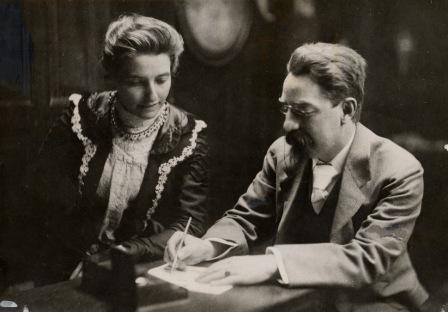
Sidney Webb teaches his newly-enfranchised wife how to vote

This was an important document for the party, but as the end of the war approached, Labour faced a decision even more important than the platform. They had to decide whether to fight the election as part of the coalition or to stand in opposition?

Read the rest of this entry »

Facebook Twitter Digg Delicious StumbleUpon

UNCUT: No one should be making political capital out of what’s happening to the Lib Dems

26/02/2013, 09:34:58 AM

by Ian Stewart

Over the past two years or so a succession of awful scandals have come to light regarding sex and politics. Julian Assange and the defence of him by George Galloway have hit Respect hard. Then the truly horrific parody of “justice” SWP style as regards the “Comrade X” affair, along with other long standing members, including possibly a late leading member, and the scandal in its German affiliate party.

Then the Liberal Democrats. First the list of allegations of abuse by the late Cyril Smith, going back decades finally saw the light of day – remember that only Private Eye had kept up any pressure to have these looked into in the national media – after all Sir Cyril was a national treasure. Now Lord Rennard faces allegations of inappropriate behaviour within party HQ.

There is a temptation within politics to use any and every bit of bad news to give our opponents a knock. Those of us who remember John Major and “Back to Basics” also remember various cabinet ministers subsequently being caught having affairs – much hilarity ensued as hypocrites were caught out. True enough, some lives and families were ruined, but they were Tory lives, so who cares eh? Lets face it, those scandals of the eighties and nineties seemed to fit the Profumo template that seemingly has no end – Tory bigwig playing away whilst promoting family values. A bit of slap and tickle for the tabloids. Of course as in so many things, New Labour triangulated itself into the mix after 1997.

The recent allegations levelled at Liberals and leftists are far more serious. We are talking about the abuse of power by older men perpetrated on younger women and in some cases boys. We are talking about the use of idealism and loyalty to a cause or a party to shut the victims up. In some cases, we are talking about bullying and rape. This should never in any way be used to make political capital.

When Julian Assange fled from allegations of rape in Sweden, too few on the left made the point that the real victims were probably the two women who went to the police. After Galloway made his infamous comments, this number grew, Salma Yaqoob and others left Galloway in disgust. Recently, other high-profile supporters of saint Julian have distanced themselves from him, although some, like Jemima Khan still seem ready to defend him in extremis.

Read the rest of this entry »

Facebook Twitter Digg Delicious StumbleUpon

UNCUT: Labour must be careful: Osborne wasn’t downgraded for cutting, but cutting the wrong way

25/02/2013, 07:00:53 AM

by Jonathan Todd

John Moody first offered credit rating services in the US in 1909. By this time, Dutch investors had been buying bonds for three centuries, English investors for two, and American investors for one century. Investors have, therefore, prospered for long periods without credit rating agencies.

Many would argue that they could again. The agencies did not facilitate wise investment by giving triple A ratings to the collateralized debt obligations (CDOs) that were at the heart of the financial crisis. CDOs are, however, complex financial instruments. While the ratings were misplaced, it is understandable that financiers would place value on independent assessment of credit worthiness in the face of such complexity.

The UK is less complicated. We are, obviously, struggling. National wealth has not increased since George Osborne became Chancellor. But national debt has increased by over 30 per cent, taking it over one trillion pounds for the first time in history.

Osborne likes household analogies. His UK is a household with no more wealth than it had almost three years ago and little likelihood that this wealth will significantly increase in the near term. But ballooning credit card debts. This is the kind of household that finds it very difficult to get a mortgage in Osborne’s Britain.

Osborne has not practised the “arithmetic” that Bill Clinton beautifully described and praised in his speech to the Democratic National Convention last year. And we hardly need credit rating agencies to tell us this. Those trading in UK debt certainly don’t. This is why – like France and the US before us – a downgrade may have little impact upon the cost of UK debt. The factors that have led to the downgrade have already been factored into the price.

While the downgrade told us what we already knew, Osborne might privately lament: “The agencies told me to cut or be downgraded, so I cut. Then we didn’t grow and they downgraded me, anyway.” Not only are agencies discredited after their poor assessments of instruments like CDOs, they also urged cuts upon Osborne and welcomed his willingness to go further and faster than Alistair Darling had proposed. Osborne may be frustrated for being punished for following this path.

Up to a point, Chancellor, more balanced counsel would insist. What matters is not only that cuts are made but what is cut. The composition of public spending matters, as well as its level. Net public investment for 2015-16 was cut to just 1.1 per cent of GDP from 3.5 per cent in 2009-10 in Osborne’s 2010 budget.

Read the rest of this entry »

Facebook Twitter Digg Delicious StumbleUpon

UNCUT: Let the bastards be bastards and builders be builders

22/02/2013, 12:09:37 PM

by Dan McCurry

What character from the history of film and literature most reminds you of an ordinary member of the Labour party?

For me, it’s Michael Palin’s character in the Life of Brian, whose job is to direct prisoners to their crucifixion. “Out of the door, line on the left, one cross each.”

This is a man who has a horrible job to do, but he’s still diligent and treats each prisoner with respect. He’s a nice guy. He cares. He’s the kind of bloke you or I might hang out with. You can easily imagine him as secretary of your local branch. If we brought a motion calling for crucifixion to be banned, the idea would be so radical that he’d initially be shocked, but once he realised that such a thing is possible he would become a passionate advocate.

Read the rest of this entry »

Facebook Twitter Digg Delicious StumbleUpon