UNCUT: Why our politicians’ cracks need careful probing

14/09/2011, 09:19:54 AM

by Kevin Meagher

THERE is no roadmap. No right and wrong about how “down with the kids” our politicians are allowed to be. No clear indications about where the “line” is that they should not cross when it comes to humour.

Wit is allowed, that much is clear. Disraeli, Churchill, even Wilson were exponents. Sarcasm too; but after that it go all blurry.

Last week both the prime minister and chancellor found themselves in trouble after foraying across these invisible demarcations with faltering attempts at mirth. David Cameron’s description of Nadine Dorries as “frustrated” during a reply to her at prime minister’s questions drew hearty guffaws at her expense. “Frustrated. Ha! He means she hates the coalition – but he also means she isn’t getting any! Hilarious”.

His pregnant pause gave lie to his subsequent protestations that it was merely a slip of the tongue, so to speak. It seemed deliberate. All he had to do was tee-up the gag and let the dirty minds of our Parliamentarians finish it off. They ignobly obliged.

He is said to have form. Cameron has what earlier generations would have called a “blue” sense of humour. Not a denotation of political allegiance on this occasion, but a predilection for making nob and fart gags.

Read the rest of this entry »

Facebook Twitter Digg Delicious StumbleUpon

UNCUT: Three little words: why Tom Harris is serious about being first minister

13/09/2011, 01:00:18 PM

by Tom Harris

Ah, the working class disease!

A couple of weeks ago a radio interviewer asked me if I was serious about being a candidate to succeed Iain Gray as leader of the Scottish Labour party. Ever mindful of the tendency of Scots to mutter, “I kent his faither” – in other words, “Who does he think he is?” – I mumbled something about only wishing to smoke out Westminster’s “big beasts”, Jim Murphy and Douglas Alexander.

Understandably, the SNP issued a gleeful press release stating that I was my own third choice for leader. Only ten minutes into my campaign and I had already made a rookie mistake. You have to want the position you’re going for. You have to want it bad.

And I do.

When, in 2007, Labour lost power at Holyrood by the slimmest of electoral margins possible, I realised that Labour’s position as the traditional repository of working class votes was going the same way as our briefly-held reputation as a safe haven for middle class voters – down the tubes. I felt strongly then that I could do more good for my country/countries and my party by relocating from Westminster to Holyrood at the first available opportunity. I talked it over with some journalist friends, all of whom were entirely encouraging. I also talked it over with my closest political confidante at the time, David Cairns. He was less encouraging. I’ll leave further details of our many conversations at that for the time being.

Read the rest of this entry »

Facebook Twitter Digg Delicious StumbleUpon

UNCUT: Good home offered to custard pie throwing entryists

13/09/2011, 09:08:25 AM

by Dan Hodges

Recall the name of  the leader of the Militant Tendancy? Me neither.

We remember Derek Hatton, of course. All sharp suits and scouse wit. But he wasn’t the leader. Hell, he wasn’t even leader of Liverpool council.

That’s the thing about political entryists. They’re sneaky like that. They don’t hold formal positions, or hold elected office. Wear name badges and carry business cards; “Hi, I’m Derek, I’m here to infiltrate you and divert you from the path of moderate democratic socialism. Please enjoy the canapés”.

In fact, many of them don’t even think of themselves as entryists at all. They’re just honest to goodness “new members”.  A bit of fresh blood and innovative thinking for a battered and beleaguered movement.

I’m a bit of an entryist myself. A “Blairite” or a “Thatcherite”; apparently they’re interchangeable. I know this because people tell me so every time I write something outrageous, like suggesting we should try and get more seats at the next election than the Tory party. Read the rest of this entry »

Facebook Twitter Digg Delicious StumbleUpon

UNBOUND: Tuesday News Review

13/09/2011, 07:48:54 AM

Osborne-Coulson relationship under spotlight

George Osborne faces questions over his relationship with Andy Coulson after it was suggested that he might have helped the former editor to get a job as David Cameron’s media adviser because he owed him “a favour”. A solicitor representing victims of phone hacking by the News of the World during Mr Coulson’s time as editor suggested Mr Osborne was “almost indebted” to Mr Coulson because of the way the newspaper had covered allegations made by a prostitute that the MP had taken cocaine with her. Mark Lewis said the newspaper had put “a gloss” on its reporting of Natalie Rowe’s claims that the Chancellor took the class A drug in the early 1990s, before he became an MP. “Andy Coulson had done George Osborne a favour,” he said. “Perhaps it was time for George Osborne to reciprocate and do a favour back.” The Chancellor’s aides yesterday dismissed any suggestion that Mr Osborne had felt obliged to Mr Coulson, and also denied a series of other lurid allegations made by Miss Rowe in an interview with Australia’s ABC television network. – the Telegraph

Boundary changes cause panic

George Osborne, Ed Balls and Vince Cable are among the most senior MPs to be hit by boundary changes, according to leaked reports of the proposals. Chancellor George Osborne’s Tatton seat is abolished, with many wards moving into Northwich constituency. Much of the safe Twickenham constituency of Lib Dem Business Secretary Vince Cable is merged with the Richmond wards of Zac Goldsmith’s Richmond Park – with remaining wards going to a new Teddington and Hanworth seat, as Feltham and Heston is abolished. Justice Secretary Ken Clarke’s Rushcliffe constituency is scrapped, part of it joining a new marginal seat of Nottingham South and West Bridgford, which could have strong potential for the Conservatives. The majority of Nick Clegg’s Sheffield Hallam moves to a new Sheffield West and Penistone seat, which is still likely to be notionally Liberal Democrat. Shadow Chancellor Ed Balls sees his constituency split between new Leeds South West & Morley and Leeds South & Outwood seats. Former First Secretary to the Treasury, Liam Byrne, sees his Birmingham Hodge Hill seat split between Birmingham Ladywood, Birmingham Yardley and Meriden. – PoliticsHome

Chris Huhne, the Energy Secretary, will face a significant change in his Eastleigh seat, raising questions about his future in the Commons. Vince Cable, the Business Secretary, Steve Webb, the pensions minister, and Norman Baker, a transport minister, could also come under threat from moves to cut the number of MPs. The Coalition has promised to reduce the number of Commons seats from 650 to 600 in 2015, as part of a pledge to “cut the cost of politics”. Ministers say the changes will save £12?million a year and make the Commons fairer by standardizing the size of constituencies, giving them all around 75,000 voters. The changes will force some sitting MPs to fight one another for newly created constituencies. – the Telegraph

A series of clashes between high-profile MPs from the main political parties will take place at the next general election, after the boundary review unveiled bigger than expected changes to England’s parliamentary constituencies. As anxious Conservatives warned their whips on Monday night of a rebellion against the changes, which will have to be approved by the Commons, MPs across the house were ready for bruising battles. Vince Cable leads a list of senior Liberal Democrat MPs who face major changes to their constituencies. Large chunks of Cable’s Twickenham will be joined with Richmond, setting up a possible clash at the election between the business secretary and Zac Goldsmith, Tory MP for Richmond Park. Cable may decide to stand in the new seat of Teddington and Hanworth which takes in much of his old seat of Twickenham. – the Guardian

Miliband to confront the TUC

The Labour leader Ed Miliband will on Tuesday urge union leaders not to rush into premature strikes over government plans to cut their members’ pensions, as he warns unions in the private sector they risk irrelevance unless they can recruit more members. His remarks in a speech to the TUC annual conference in London will anger some leaders of public sector unions not affiliated to the party, following his disavowal of the strike action they mounted in June. Miliband knows he faces an acutely difficult political challenge if he disowns strike ballots organised by the main unions affiliated to the party such as Unite and Unison. He is already locked in talks on reforming the union role inside the party, which are due to come to a head next week. Those big unions are likely to call ballots on industrial action if talks with government fail at the end of next month. Miliband will defend Labour’s historic link with the unions, saying: “Of course, there are times when you and I will disagree. You will speak your mind. And so will I.” He will claim the union party link “is secure enough, mature enough, to deal with disagreement”. – the Guardian

Facebook Twitter Digg Delicious StumbleUpon

UNCUT: Banking Commission: Only Labour can save capitalism

12/09/2011, 09:18:07 AM

by Jonathan Todd

When the global financial crisis struck, as John Kay recently noted:

“The political left offered no diagnosis or new ideas, and it gained no electoral advantage. Instead, across Europe, the parties that had waited a century for capitalism to collapse under its own contradictions congratulated themselves that such collapse had been averted by the injection of incredible amounts – trillions of dollars – of taxpayer funds into the banking system”.

Gordon Brown and Alistair Darling were right to bring us back from the brink. The left’s failure is the dearth of explanation as to how we came to be in this position or prescription as to where we go next. The explanation is a precondition of the prescription. If you can’t say how the crisis came about, then you can’t say how repetition should be averted.

The left’s explanations have tended to be personalised (e.g. “greedy bankers”), in spite of the left’s historic mission being to identify and correct structural explanations. We don’t think people are born wretched (even “Fred the shed”); we think that injustice and circumstance makes them so. The left’s explanation, therefore, shouldn’t be the banker’s greed but the structures that create and sustain this greed.

The left, for the most part, was no more analysing these structures than anyone else in 2008. Such analysis would have revealed a paradox: what we thought was high capitalism was anything but. Well functioning markets wouldn’t have allowed the banker to be so greedy. Effective competition would have restrained wages to merit-based levels.

Read the rest of this entry »

Facebook Twitter Digg Delicious StumbleUpon

HOME: The week Uncut

11/09/2011, 05:24:25 PM

In case you missed them, these were the best read pieces on Uncut in the last seven days:

Atul Hatwal reveals that troop morale is plunging at the hands of the government

Dan Hodges says we may as well erect a statue of Peter Hain

Kevin Meagher calls for a Barnet formula for the north

Jonathan Todd asks: why can’t the West believe in itself?

Peter Watt thinks the Tories still have the best tunes

Dave Talbot asks: who’s the nasty party now?

Facebook Twitter Digg Delicious StumbleUpon

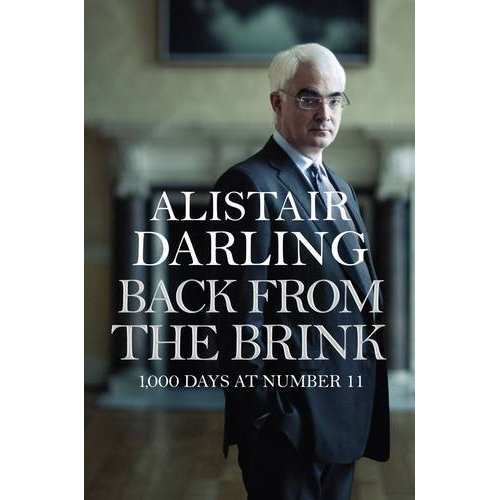
UNCUT: Sunday review: Back from the brink, by Alistair Darling

11/09/2011, 11:16:44 AM

by Anthony Painter

Like the Kennedy assassination, new camera angles on the decline and fall of Labour in office will be discovered for many years to come. What’s more, each new piece of undisclosed footage will end with the same dreadful, bloody result. So why do we do it to ourselves? We just can’t help it.

The latest offering from a senior Labour figure, the ‘never knowingly over-optimistic’, Alistair Darling’s Back from the

"A wise voice of reason"

brink has the same literary merit as the others in the genre: structure and style are put in the service of proving a point. But like the chick lit, executive biography or self-help genres (the political memoir may be a subset of this latter category- for the author) it is not full-throttle, florid prose that is the attraction. The author gets to have their say, settle a few scores and we get to vicariously sit in the room while momentous decisions are made.

Perhaps only Chris Mullin’s diaries would be worth recommending to a non-Westminster obsessed friend amongst the New Labour memoirs. For the rest, twenty minutes in the company of exclusive in the Sunday Times would be enough. None of this is particular to Darling; it should be clear by now that this is not my favourite genre. If it’s your taste then Back from the Brink is no better or worse than most of the others.

The Alistair Darling who emerges from these pages is decent, honourable, intelligent, courageous, and resolute. He’s rather like Alistair Darling in fact: very likeable and engaging. When events have subsequently proved him right, he makes his point and then moves on. There is no great crescendo of self-justification. But there’s no real mea culpa either. We simply see things- most of which we knew already- from his perspective. Kennedy gets shot and dies. Read the rest of this entry »

Facebook Twitter Digg Delicious StumbleUpon

UNBOUND: Sunday News Review

11/09/2011, 06:33:19 AM

10 years on

On this 10th anniversary of the terrorist attacks of ­September 11, 2001, we remember that 9/11 was not only an attack on the United States, it was an attack on the world and on the humanity and hopes that we share. We remember that among the nearly 3,000 innocent people lost that day were hundreds of citizens from more than 90 nations, including 67 from the United Kingdom. They were men and women, young and old, of many races and faiths. On this solemn anniversary we join with their families and nations in honouring their memory. We remember with gratitude how 10 years ago the world came together as one. Around the UK, entire cities came to a standstill for moments of silence. People offered their prayers in churches, mosques, ­synagogues and other places of worship. And we in the United States will never forget how the people of Britain stood with us in ­solidarity in candlelight vigils and among the seas of flowers placed at our embassy in London. We are touched that the UK will honour the victims again today – including by breaking with protocol and flying the Union Flag at half-mast at its ­embassy and consulates in the United States. – Barack Obama, the Mirror

Manhattan is always a hectic place. It is frequently gridlocked and its citizens are used to hustling their way through crowded streets and subways. But on Saturday it was different. As New York prepared to mark the 10th anniversary of the 9/11 attacks, a new terror alert provided a grim reminder that a decade of war and struggle has not removed the threat. The visible evidence was all over New York. In the wake of an unconfirmed but scarily specific threat that three terrorists, likely to be aiming to use a car or truck bomb, had entered the country to attack the Big Apple, the city went into a kind of security lockdown. Yet, through it all, New Yorkers were urged to keep calm and carry on. “If you do lock yourself in your house because you’re scared, they’re winning,” Bloomberg said on his weekly radio show. Most people seemed to agree. Even with a wary eye on the security efforts, people seemed to feel it was still business as usual. “They look like they know what they are doing. I’m going to keep acting normal,” said Izzie Garcia as she arrived in Manhattan’s Union Square for an early start to a morning of shopping in her favourite stores. Bloomberg was also leading by example. It was he who had appeared on the nation’s TV screens to give the first official public details of the new terror threat. At a press conference in New York he had warned of the dangers and had urged New Yorkers to keep taking the subway. – the Observer

In America they speak of the “lost decade”. The moment it began is obvious: the morning of 11 September 2001, when the world’s lone superpower fell victim to the most devastating terrorist attack of modern times. Its end, however, is harder to date. One answer is 1 May this year, when a team of Navy Seals tracked down and killed Osama bin Laden at his hideaway in Pakistan. A circle was complete; after almost 10 years of frustration, false leads and continuous war, the master planner of 9/11 had finally paid for his crime. But look at it another way and the answer is not so obvious. In these 10 years America has lost much, in terms of lives, treasure and reputation. Most of all, perhaps, it has lost its illusions. One, that its home territory was invulnerable, beyond the reach of hostile foreigners, vanished on that terrible Tuesday morning. But a decade on, another no less cherished illusion has disappeared as well: the certainty that whatever happened in the world beyond, America was a place of infinite opportunity and ever-growing prosperity. – the Independent

New Scottish Labour

The Scottish Labour Party has put in place the first building block for its fightback in Scotland. It decided that Iain Gray’s successor as leader will not, as now, just be leader of Labour’s MSPs but leader of the whole party in Scotland. The review group recognised that for an individual to have the authority to lead Labour in Scotland all sections of the party must be involved in his/her selection and know their views will count. So the base from which a future leader can be drawn has been expanded. No longer will a candidate have to be an MSP, instead any Labour parliamentarian will be free to stand – MPs, MSPs and MEPs. However, it will be clear that whoever becomes leader will be Labour’s candidate for First Minister of Scotland. Expanding the gene pool from which a future leader is drawn is a first but insufficient step. The basic building block of Labour Party organisation has always been its Constituency Parties (CLPs). These are based on Westminster boundaries. The consequence has been that gearing up to fight a general election has been much easier than preparing to fight a Scottish Parliament election. Often MSPs or candidates have had to deal with two, three or even four CLPs, wasting time, effort and money on internal organisation when their time would have been more productively spent linking into their local communities. The new organisational base for Labour in Scotland will be based on Scottish Parliamentary boundaries reflecting our determination to have an organisation fit for purpose to fight the Scottish Parliament elections in 2016. – Scotland on Sunday

Proposals by MP Jim Murphy will go before their ruling executive committee today which could “transform” the party. The blueprint is the result of a four-month review led by Murphy and MSP Sarah Boyack following Labour’s crushing defeat in the Holyrood election. Insiders who have seen secret presentations by the pair say the plans amount to Labour’s biggest shake-up since 1918. But some changes could prove so controversial with sections of of the party that there are no guarantees the committee of MPs, MSPs, union leaders, local party bosses and others will give their approval when they meet in Glasgow today. Under the radical plans, Scottish Labour would: Loosen ties with the UK party, Appoint a Scottish leader – who might not be an MSP – with unprecedented powers to shape policy and plan strategy north of the Border, Kick out long-serving MPs and MSPs and train a new generation of “top notch” candidates, Reconnect with the business world and Haul themselves into the 21st century by using social media for campaigning. – Daily Record

Don’t cut the 50p rate

One of the biggest names in British business has told the government not to scrap the new 50p rate of income tax. The former head of Marks & Spencer, Sir Stuart Rose has not only said he opposes the move but is happy to pay more tax to help the country out of its current financial difficulties. Rose is the biggest name so far to oppose the move which has been backed by a group of 20 economists on Wednesday, who feel the levy is hurting the UK’s competitiveness. Rose told BBC Radio 4’s Hard Talk yesterday: ‘I don’t think that they should reduce the income tax rate. How would I explain to my secretary that I am getting less tax on my income, which is palpably bigger than hers, when hers is now going down?’ Rose’s comments are in stark contrast to former Conservative Chancellor Nigel Lawson who urged George Osborne to axe the 50p top rate of income tax, warning it is ‘dangerous’ and ‘foolish’ to leave it in place. – Daily Mail

Facebook Twitter Digg Delicious StumbleUpon

UNBOUND: Saturday News Review

10/09/2011, 06:16:03 AM

The world prepares to remember

Two thousand seven hundred and fifty three Flags of Honor – each baring the names of 9/11 victims in patriotic stripes of red and blue – are standing at the tip of Manhattan today as New York City prepares to mark the tenth anniversary of the terrorist attacks. The NYC Memorial Field, part of a five-day installation, was erected to give New Yorkers a public place to gather in remembrance of those who were killed in the horrific acts of September 11, 2001. It is among dozens of memorials, vigils and events organised throughout New York City this weekend, as citizens stand united, honouring their pledge to ‘never forget’ that tragic day. Yesterday in midtown Manhattan, 2,753 empty chairs, representing the lives lost on 9/11, were set to face south toward the World Trade on Bryant Park’s lawn for part of a project called Ten Years Later, A Tribute 9/11. The world will undoubtedly cast its eyes on the World Trade Centre memorial site on Sunday morning, when New York City Mayor Michael Bloomberg will join President Barack Obama and former President George W Bush for the reading of the names of the nearly 2,753 victims killed in New York, Washington, DC and Shanksville, Pennsylvania. The National September 11 Memorial and Museum memorial service will see family gather from 6:30am to 4pm.A moment of silence will be held at 8:46 a.m., when the first plane crashed into the North Tower, and then the names of the victims will be read.  Moments of silence will be held to mark the other attacks in New York, Washington, DC, and Pennsylvania at 9:03am, 9:36am, 9:59am, 10:03am and 10:28am. The annual ‘Tribute in Light’ will begin from the WTC site at sundown, visible for more than 60 miles. Two blue beams, made up of 7,000 watt bulbs, were switched on for the first time this year on Tuesday night. – Daily Mail

A terror threat against the United States planned to coincide with this weekend’s tenth anniversary of 9/11 may be traceable to al-Qa’ida and possibly to Ayman al-Zawahiri who assumed the network’s leadership after the killing of Osama bin Laden, US terror officials indicated last night. Security precautions were being ramped up in New York and Washington DC yesterday as preparations were under way for tomorrow’s remembrance ceremony at Ground Zero in lower Manhattan to be led by both President Barack Obama and his predecessor George W. Bush. President Obama, who tomorrow will also travel to the Pentagon and to Shanksville, Pennsylvania, the other two sites where hijacked plans came down, ordered a redoubling of security in the wake of the new terror warning. There will be six moments of silence at the Ground Zero ceremony tomorrow marking when the two airliners struck the Twin Towers and when they fell down but also the exact moments when the other two planes involved in that day’s tragedy crashed at the Pentagon and in Pennsylvania. Tomorrow will also be the first time that families of the victims will see the new memorial at the World Trade Center site. The day of remembrance will finish with a memorial concert in the Kennedy Centre in Washington where Mr Obama will also speak. The White House said none of his travel plans had so far been affected by the terror threat. – the Independent

Blair’s Arab Spring

Mr Blair said he had no regrets about setting aside decades of hostility between Britain and Libya and holding out an olive branch in 2004. In return, Col Gaddafi agreed to give up his programme of weapons of mass destruction (WMD). “No,” he said in an interview with the Reuters news agency to mark the tenth anniversary of the 9/11 attacks. “I always say to people it is absolutely simple – the external policy of Libya changed.” New details of the close relationship forged between the Blair government and Libya after MI6 negotiated the scrapping of the WMD programme in 2003 have emerged in Tripoli since the fall of the Gaddafi regime. But Mr Blair said it was a “great thing for the world” that Col Gaddafi had agreed to give up the weapons programme and, in addition, co-operate against terrorism. He added that in February as the uprising began he attempted to persuade Col Gaddafi to step down. “The trouble was in the end they weren’t prepared to reform internally,” he said. “They were less of a threat to the outside world, but inside they were a threat to their people and then when the uprising happened, again, there was a big choice. I remember actually speaking to Colonel Gaddafi at the time it happened and saying this is the moment to realise you are going to have to go and be the person that gives it up.” – the Telegraph

Tony Blair, the international statesman most closely tied to the response to the Sept. 11 attacks, believes the decade-long struggle to contain the threat from Islamic extremism is far from over, despite the killing of al-Qaida chief Osama bin Laden. The former British prime minister, who famously vowed to stand “shoulder to shoulder” with the United States and took a leading role in the invasions of Afghanistan and Iraq in the face of domestic unease, told The Associated Press that potent threats still persist — including in nations swept by the revolutions of the Arab Spring. “It’s completely wrong,” to think the struggle to defeat extremist ideology is won, Blair said in an interview. “We shouldn’t be under any doubt about this at all. Unfortunately, as I say, this ideology is far broader than the methods of al-Qaida.” Blair also expressed concern over the uprisings which have shaken the Middle East and North Africa, insisting that the West must act as “players and not spectators” to help democracy flourish from the Arab Spring. – Washington Post

History in Northern Ireland

The first Presbyterian minister to address a Sinn Fein party conference last night praised Martin McGuinness as one of the “great leaders of modern times”. On his arrival at the Waterfront Hall for the conference, the Rev David Latimer said: “I haven’t come here for soundbites.” But he was undoubtedly the star turn of the first night of the first Sinn Fein ard fheis to be held in Northern Ireland. Delegates asked to have their pictures taken with Mr Latimer on mobile phones and many shook hands with him. “I am among friends,” he said, stressing that people could work together whatever view they took of the border. Despite his protestation he did manage a few soundbites in the course of his speech. He was greeted with tumultuous applause when he borrowed the words of the Queen in Dublin to address delegates as “a chairde” (my friends). Mr Latimer was greeted at the door of the conference by Mr McGuinness with whom he has formed a friendship. He told how the Deputy First Minster supported the opening of his Church on Londonderry’s walls, overlooking the Bogside, and helped him secure a £1.6m grant for the historic building’s refurbishment. – Belfast Telegraph

Rev Dr David Latimer described Sinn Féin Deputy First Minister Martin McGuinness as “one of the true great leaders of modern times” when he addressed the Sinn Féin ardfheis in Belfast last night. History was made on the double in the Waterfront Hall in that this was the first time an ardfheis has been held north of the Border, and the first time a northern Protestant religious minister addressed the conference. Dr Latimer, who three years ago served for a period as a British army chaplain in Afghanistan, was enthusiastically received at the conference, earning a standing ovation at the end when he finished with what he called a “Celtic blessing” on all the delegates. He delivered a relatively short address without what journalists would call any major news content. But it was his simple presence on the stage with the likes of Mr McGuinness and Gerry Adams sitting behind him that made his speech, delivered with some evangelical verve, notable and newsworthy. Learning his lesson from Queen Elizabeth, his description of delegates as “A chairde” and his final Irish good luck wish of “Adh Mór Ort” demonstrated that here was a minister who knew how to work an audience. His description of Mr McGuinness as a great modern leader will infuriate some unionists. Dr Latimer nonetheless insisted it was a strong and genuine friendship he has developed with the Deputy First Minister. – Irish Times

Facebook Twitter Digg Delicious StumbleUpon

UNCUT: Fox’s cuts bite as new figures reveal plunging troop morale

09/09/2011, 07:00:28 AM

by Atul Hatwal

As the findings of the Baha Moussa inquiry cast a shadow over the British army, new figures sneaked out by the MoD in the last week lay bare the slump in morale across the armed forces in the past year.

44% of personnel reported low morale in their service – army, navy, royal air force (RAF) or royal marines – according to the 2011 forces survey, a rise of 11% since 2010.

It reverses a five year trend of improving morale in the forces since the survey began in 2007.

The figures were slipped out by the government last Thursday, via the office of national statistics website. Unlike previous surveys, the ministry of defence did not issue a press release or give any indication the survey was being released. Read the rest of this entry »

Facebook Twitter Digg Delicious StumbleUpon