UNCUT: Abuse of vulnerable adults: why no inquiry?

23/06/2011, 07:21:44 AM

by Peter Watt

Imagine if there had been a succession of child abuse stories in the media during the last six months. There would be an outcry. Every Baby Peter story that emerges, in all its grisly detail, somehow diminishes all.

The abuse of and suffering by the vulnerable affects all decent people deeply. We find ourselves asking, “how could this happen”? And “why did no one notice”? And worst of all, “what does this say about us and society”? Parents fear for their children and their children’s future. We collectively demand that something is done. Those involved become tabloid hate figures. Ministers condemn the perpetrators as evil and establish commissions to look at lessons to be learned. Our response is horror at the pain, misery and humiliation. We have a shared feeling that this abuse shames us all. And we have an angry determination that this abuse must stop.

The result is that over the years, there has been a succession of official commissions and investigations into the abuse of children. The Maria Colwell inquiry, the Cleveland inquiry, the Broxtowe inquiry, the Victoria Climbié inquiry (the Laming report) and most recently the Baby Peter inquiry.

Read the rest of this entry »

Facebook Twitter Digg Delicious StumbleUpon

UNCUT: Commons sketch: PMQs

22/06/2011, 01:54:28 PM

by Dan Hodges

David Cameron is for turning. We know this because he spent the whole of PMQs telling us he is.

Would the prime minister, Kerry McCarthy asked, consider changing his evening viewing plans to watch a BBC documentary on child poverty? Oh yes, he most certainly would.

He would? Blimey. Poor Samantha. “Sorry love, I know we’re supposed to be going for dinner and a show, but I promised some Labour back bencher from Bristol East I’d stay in and watch a programme on impoverished children. All part of my new pragmatic leadership style I’m afraid”.

Ed Miliband sensed an opportunity. The country was at war. The defence chiefs were raising concerns about the mission in Libya. Quite serious issues like not having any planes, ships or guns. Would the prime minister look again to see whether our brave boys and girls had the tools to finish the job?

Look again? Was Ed Miliband kidding? This was pragmatic Dave he was talking to. “We’ve had a review of the national security and defence review”, said the PM proudly.

Reviewed the review? Labour’s leader looked astounded.

Perhaps he was toying with the image of a former Tory Prime Minister standing at that same dispatch box; “We will review them on the beaches. We will review them in the fields and on the landing grounds. We will never stop reviewing”. It would come as news to the military and defence community that all these reviews were flying around, Ed Miliband said. Why hadn’t the results been shared with the experts?

Share the reviews? With experts? David Cameron looked perplexed. He had set up the national security council. It sat weekly, something that came as a relief to those of us worried the defence of the realm took a break for Wimbledon. Its’ role, he said, “was all the time to ask have we got the right resources, do we have the right strategy”. He could have added that the answer to those questions was invariably no, but there wasn’t time. There were more u-turns to me made.

Would the prime minister look at the closure of the post office in Wick asked John Thurso? Stupid question. Of course he would.

Then Ed Miliband sprung his trap. OK, if the PM was so open to persuasion, what about his decision to let rapist run amok on our streets? Actually, it was a little bit more nuanced than that, something about retaining a DNA database of totally innocent people, on the off-chance they turned into crazed rapists at a later date.

David Cameron looked nervous. How pragmatic could he afford to be? More importantly, how pragmatic would George Osborne, sitting menacingly beside him, allow him to be? Stopping rapists costs money. Stopping innocent people who might one day become rapists would cost even more.

He glanced to his left, as if looking for help from someone who understood the intricacies of your average DNA database. Then he realised the man in the know, justice secretary Ken Clarke, wasn’t in his usual place, but jammed right at the end of the government front bench, away from prying eyes. That made his mind up for him. “There’s always room to see if the system can be improved”, answered the prime minister.

The ground for a new u-turn had been laid. By this time next week anyone accused of so much as shoplifting will have their DNA retained for posterity.

It’s called the politics of pragmatism. And it’s working. For now. But every u-turn leaves another tiny, imperceptible chink in the prime minister’s authority.

David Cameron cannot run away from his own decisions  for ever.

Dan Hodges is contributing editor of Labour Uncut.

Facebook Twitter Digg Delicious StumbleUpon

UNCUT: Cameron’s sleight of hand distracts from sentencing reform shambles

22/06/2011, 12:00:19 PM

by Matt Cavanagh

Cameron fools the tabloids into thinking he’s delivered his promises on ‘jailing knife thugs’ and ‘bashing burglars’ to distract from the shambles on sentencing reform.

Two weeks ago on Uncut I criticised Cameron’s cynical opportunism over knife crime: exploiting the moral panic in summer 2008 by promising to send everyone caught carrying a knife to jail, a promise he clearly had no serious commitment to delivering. As the latest figures show, never mind everyone caught carrying a knife going to jail, in fact a smaller proportion are going to jail now than under Labour.

In a now familiar pattern, Cameron had managed to escape direct personal damage for this broken promise, shifting the blame on to his coalition partners and cabinet fall-guys – this time Ken Clarke, who has come under sustained and vicious attack from the Sun. But it must have worried Cameron, and when he needed a tough-sounding announcement to distract from the shambles of the U-turn over 50% jail discounts for guilty pleas, it was knife crime he reached for.

He still had no intention of actually delivering his pre-election promise, even if he fooled some, including the Spectator, into thinking he had. What he proposed was different: a new offence of ‘aggravated knife possession’, carrying a mandatory minimum 6 month sentence – but applying to a much narrower category of cases, around 10-15% as many as are caught carrying a knife.

‘Aggravated knife possession’ means using a knife to threaten someone. This is, of course, already a crime – and not one which needs much clarifying. Not only is it already a crime, the sentencing guidelines – dating from that summer of 2008 – already recommend a minimum prison sentence of 6 months. So what Cameron actually announced, was a way to wriggle out of his original promise by narrowing it down to a small minority of cases, an unnecessary new offence to distract from this, and – the only genuine change – a new mandatory minimum in place of a recommended minimum sentence.

Luckily for Cameron, the Evening Standard among others ignored all this boring detail, and fell nicely into his trap with the hoped-for front page splash: “ALL KNIFE THUGS TO GET 6 MONTHS as David Cameron Cracks Down on Crime”.

So far so good. But Cameron had clearly been worried enough about how the day would go, to feel he needed more than one diversion. The second, splashed across today’s Mail and Express front pages, was his plan to “put beyond doubt that home owners and small shop keepers who use reasonable force to defend themselves or their properties will not be prosecuted”. This predictably sent the Mail and Express into raptures (the Express wins the prize with its “NOW YOU CAN BASH A BURGLAR”) but again, a longer memory – or a few minutes searching the web – would again have revealed Cameron’s history on this issue, and raised questions about how new this announcement really is.

In early 2010, Cameron successfully courted the front pages with another promise, to change the law on self-defence, to allow anything short of a “grossly disproportionate” reaction to a burglar or robber to escape without charge. That would have been a genuine change – albeit an unwise one. Yesterday’s proposal, which retains the quite different test of ‘reasonable force’ for people protecting their lives or their families or their property, appears simply to restate the existing legal position.

When Labour did this kind of thing – announce a new offence, or new legislation, seemingly to distract from how effectively or severely existing laws were being enforced – both the Tories and the Lib Dems complained. In 2008, for example, the then Tory shadow Home Secretary Chris Grayling derided it as “using legislation as a public relations exercise”, while Nick Clegg sniffed that “weighing down the statute book with new laws is no substitute for good government”.

But leaving aside the politicians’ hypocrisy and the journalists’ gullibility over these diversionary tactics, what about the U-turn itself – should Labour gloat with the tabloids, or join the Guardian and Independent in mourning it as a setback for liberal reform? As usual, this is a false choice. Today’s impassioned Guardian editorial is right to call Ken Clarke’s original sentencing proposals “the revolution that never was”, but wrong in its analysis.

It is right to criticise Cameron for “backing the Clarke plans in private, then emerging to trash them in public”, but wrong to pretend that Clarke “stood ready to unlock 20 years of failed thinking”. I support sentencing reform, but these were the wrong reforms: carelessly thought out, badly framed, confusingly argued, and ineptly and weakly handled. Rather than lamenting their demise, we should charge Clarke along with the rest of his colleagues with clumsily wasting a once in a generation opportunity, and reinforcing the general assumption among the political class that reforming sentencing is impossible. It isn’t – but it is difficult, and that means careful thought, and careful handling. A smarter approach would have kept Labour onside and spiked the worst of the tabloid attacks. Instead we got an incoherent mix of Clarke’s view that “prison is an expensive way to make bad people worse” (which you can call liberal if you like, though I tend to see it as old-fashioned Tory pragmatism), Osborne’s cuts, and Cameron trying to be all things to all people.

Until yesterday, when Cameron came down against reform, and for the status quo. When he intoned at the press conference that “we will always pay the costs necessary to protect the public and to punish criminals, and we will not reduce the prison population by cutting prison sentences,” you wondered where he was in October, when his Justice Secretary and Chancellor announced that his government would do precisely that. You also wondered if you had slipped back in time to the Labour era. Blair Gibbs of Policy Exchange noted approvingly that “the objective now seems to be to ‘stabilise’ the prison population at around 85,000, not reduce it” – back to the Labour position. Mandatory minimum sentences – favoured by Labour, dismissed by Clarke as “ill-thought out, overly prescriptive, and over-used” – are back.

Cameron’s “three principles” were lifted straight from a New Labour script: “the first duty of government is to protect the public… Serious and dangerous offenders must go to jail and stay there for a long time … breaking the cycle of reoffending needs to be at the heart of the criminal justice system” (yes, even the third: Labour had a target for cutting re-offending, not for increasing the prison population).

We heard the same tired bromides we’ve had from successive Prime Ministers, Home Secretaries and Justice Secretaries about prisons being full of foreigners, and people with mental health issues and drug problems. We heard that the ‘drug free wings’ which were being piloted in a handful of prisons in 2009 have been renamed ‘drug recovery wings’ and are being piloted in a (different) handful of prisons. We were reminded about the Peterborough pilot for getting innovative social investment into schemes for tackling re-offending – a pilot started by Jack Straw.

It is not all bad news. There are sensible proposals which take forward the New Labour approach, including taxing the earnings of prisoners working on licence in the community, and channelling the money to victim support services. And Clarke still plans to go further than Straw or any other Labour minister in tackling the rising legal aid bill. This is both necessary and overdue, and those who oppose the detail of the planned cuts should suggest alternative savings, ideally within the legal aid budget itself. But overall this is a confused, confusing, and hobbled set of proposals.

The Ministry of Justice rather pathetically continues to describe it as ‘radical’, and Cameron gamely asserted yesterday that it would still somehow ‘transform’ the system. But the truth is, having talked up the problems – society was broken, crime rising, the justice system a failure and Labour’s policies hopeless – the Government has abandoned most of the radical solutions, with no replacement in sight. Even the solution urged on Cameron last night by his favourite think tank, Policy Exchange, expanding private prisons, they admit is “a continuation of a process that began under Jack Straw”.

Cameron wants to slip back into the Labour narrative and policies he spent years trying to discredit, and hope that everyone will forget this ever happened. But it’s not so easy. The budget cuts which drove the previous proposals remain in place, and the U-turn has done real damage. For all the ambitious talk, what we are left with for the remainder of this parliament is a cautious nervy incrementalism, implemented by a confused and demoralised department, living under the shadow of future budgetary crises. It reminds me of the Ministry of Defence in recent years – hardly the most reassuring parallel.

Matt Cavanagh was a special adviser on crime and justice under the last Labour government. He writes in a personal capacity.

Facebook Twitter Digg Delicious StumbleUpon

INSIDE: The unravelling of the deficit strategy

22/06/2011, 10:12:16 AM

Labour had a strategy for cutting the deficit – it was called GROWTH. The government’s strategy was to cut spending. The consequence of those cuts is undermining growth, and that now risks blowing apart the deficit reduction.

In last week’s figures, retail sales for the month of May slumped to their lowest level in 16 months.  There is a risk that growth is about to stall.

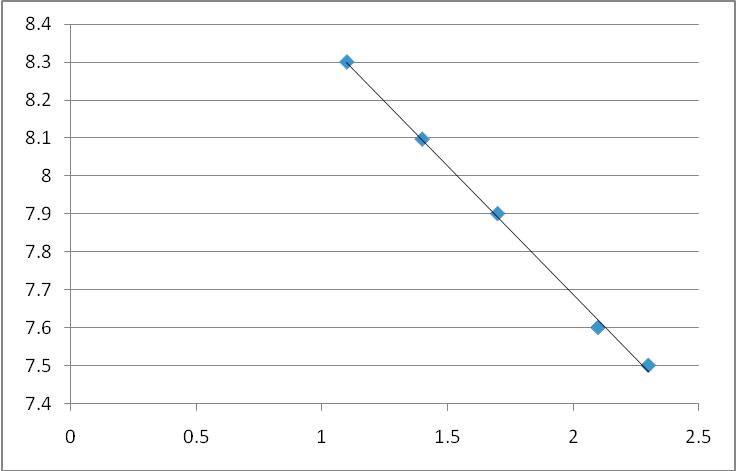
The OBR provided a pre-June Budget prediction of the 2011 budget deficit under Alistair Darling’s budget. So, with our libraries still open, with EMA, with future jobs fund, no VAT rise etc, the borrowing in 2011 would have been 8.3%.

OBR June 2010 predictions based on Labour’s deficit reduction plan

2010 2011 2012 2013 2014
Growth 1.3 2.6 2.8 2.8 2.6
Borrowing 10.5 8.3 6.6 5 3.9
Unemployment 8.1% 7.9% 7.4% 6.8% 6.3%

Since the June emergency budget, the OBR has consistently downgraded 2011 growth, and increased its prediction of government borrowing. The graph shows the changes.

The current predictions for growth of 1.4% will result in borrowing of 8.1% of GDP, just below that predicted for Alistair Darling’s budget. But, if growth falls to 1.1%, then the government’s cuts will not only all have been in vain, the cuts could plunge the economy into a Japanese-style high deficit deflation.

Facebook Twitter Digg Delicious StumbleUpon

UNBOUND: Wednesday News Review

22/06/2011, 06:57:54 AM

Please no return to the bad old days

Several hundred people gathered near interfaces close to the Newtownards Road. There were reports that three shots had been fired and a photographer had been shot in the leg. Michael Copeland, a member of the Ulster Unionist Assembly, said missiles had been hurled between the opposing sides. Police were also attacked with petrol bombs and stones. A major riot on Monday night in which police were shot at by loyalists in Northern Ireland was blamed on the Ulster Volunteer Force yesterday, despite the paramilitary group being on ceasefire. Before last night’s violence, political leaders appealed for calm. On Monday, about 500 people were involved in disturbances when there was hand-to-hand fighting and petrol bombs were thrown. Police said there were gun shots from the republican Short Strand area, while loyalists also opened fire. UVF members were blamed for starting the violence by attacking homes in the Roman Catholic enclave. – Daily Telegraph

Northern Ireland First Minister Peter Robinson and deputy First Minister Martin McGuinness have condemned the riots, as well as a separate bomb attack aimed at police in west Belfast. Mr Robinson said: “At this time when many are working hard to build a better and brighter future for all in Northern Ireland, it is disappointing and deeply concerning to see this level of violence return to our streets. We have given clear commitments to continue to deliver progress for all within the community including in those areas most at need. This type of behaviour damages the local economy and unfairly mars the reputation of the community.” Mr McGuinness said: “A small minority of individuals are clearly determined to destabilise our communities. They will not be allowed to drag us back to the past. I call on all those involved to take a step back and to remain calm. I support the efforts of community leaders on all sides who have been working on the ground to restore calm in east Belfast.” The sudden upsurge in violence is being described as the worst the city has seen in years and loyalist community workers blamed simmering tensions at the notorious sectarian interface. – Belfast Telegraph

Cameron’s tough stance in tatters

Mr Cameron’s promise of automatic six-month sentences for anyone using a knife to intimidate or threaten also falls far short of his election pledge to jail anyone caught with a blade. But there was a bigger shock buried in the fine print of the reforms as it emerged that more than 3,000 criminals and suspected offenders will avoid jail each year as part of the Conservative-led coalition’s package. About 1,300 would have been jailed on remand but will now remain at liberty until their case is tried in a bid to save money. Around 250 ex-cons who would currently be put back in jail each year for reoffending or breaking the terms of their release will also be allowed to stay at large. Up to 800 foreign criminals will be freed early or let off with a caution on the condition that they go home, raising fears they could simply slip back into the country. Mr Cameron was desperate to talk tough yesterday after an internal Downing Street poll showed that the sentencing U-turn row has destroyed public faith in the Tories’ ability to tackle crime. – Daily Mirror

Ed’s message to Murdoch

Ed Miliband has told business leaders that Labour wants a “strong relationship” with them but there must be “responsibility” on pay at the top. The Labour leader told the Times CEO Summit in London: “I want to celebrate wealth creation in this country.” But he said there was an “issue about rewards at the top” while people on lower incomes had seen wages stagnate. He also backed his shadow chancellor Ed Balls’s call for a temporary VAT cut to help boost the economy. But he said scrapping the 50p top rate of income tax – paid on earnings over £150,000 – was “not a priority for us”. Mr Miliband addressed an audience including News Corporation chairman Rupert Murdoch and chief executives of Goldman Sachs, Santander and Vodafone, among others. – BBC News

Labour leader Ed Miliband has called for “responsibility” on pay from those at the top of society as he addressed a summit of business leaders in London. Mr Miliband said Labour wanted a “strong relationship” with business and promised there would be “no going back to the penal tax rates of the 1970s” if he won power. But he warned that the credibility of the free enterprise system was under threat if middle and lower-income workers see their living standards stagnate while the richest continue to enjoy ever-increasing wealth. Speaking at The Times CEO Summit to an audience including News Corporation chairman Rupert Murdoch and chief executives of companies such as Goldman Sachs, Santander and Vodafone – as well as Lord Mandelson, who famously said New Labour was “intensely relaxed about people getting filthy rich” – Mr Miliband warned that there was “an issue about rewards at the top” in Britain. – Daily Mirror

Labour Lords take on Clegg’s plans

Nick Clegg’s plans to create an elected House of Lords suffered a big setback last night when Labour vowed to oppose the shake-up and peers from all parties lined up to attack it. Labour was accused of playing politics as it rejected Liberal Democrat pleas to set aside the differences between the two parties to force through Mr Clegg’s proposal for the first elected peers to be chosen in 2015. The Coalition Government wants the 828-member House replaced by 240 elected members, 60 appointed crossbenchers, 12 bishops and a small number of appointed ministers. But Labour favours a 100 per cent elected second chamber. The Deputy Prime Minister has led the charge for Lords reform. Although David Cameron has backed the change, there are doubts that the Conservatives will devote the energy and Parliamentary time needed to force through Mr Clegg’s Bill before the next general election against strong opposition in both Houses of Parliament. – the Independent

Mandelson shows his support

Ed Miliband needs to show more courage as a leader if he is to unite the Labour party behind him, Peter Mandelson has suggested. Speaking at a meeting of the Labour pressure group Progress, the former first secretary of state warned his party against returning to the infighting which characterised the Labour party during the 1980s. He said: ‘We need to take a few risks; talk more directly to the country; be more innovative and courageous. Our leader is a leader of the country, not of the party’s sections and factions, and it is to the country he needs to be given the space to prove himself.” Lord Mandelson’s support comes despite his backing of David Miliband during the Labour leadership election. – politics.co.uk

Facebook Twitter Digg Delicious StumbleUpon

UNCUT: David’s story

21/06/2011, 08:19:15 AM

by Dan Hodges

History is written by the victors. Just ask David Miliband.

He’s been plotting. Briefing. Generally making an embittered nuisance of himself.

We know this thanks to Ed,  the racily entitled stab ‘n tell biography by James Macintrye and Mehdi Hasan, trailed last week in the Mail on Sunday. Not that all of these allegations are actually contained within the book itself, but its serialisation unleashed the biggest frenzy of speculation, allegation and recrimination since…well… the last lot.

Supporters of David Miliband had been bracing themselves for fall-out from the book’s publication for several weeks. Although they cooperated with the authors, and received assurances that it would be a balanced look at the leadership election, they were under no illusions: “Ed won and David didn’t”, said one insider, “That sets its own narrative”.

The narrative has basically three elements. An enraged elder brother, his political ambitions thwarted by his younger sibling, has been actively plotting his revenge and preparing a bold Blairite counter-coup.

Exhibit A in the case for the prosecution has been the speech-that-never-was, the address, leaked to the Guardian on the eve of the book’s publication, that David would have delivered had he himself been crowned leader.

“The idea that speech was leaked by David is bollocks”, says an insider. “Do you think he’s stupid? If he really wanted to damage Ed would he do it in a way that tied himself so directly to the act”? Other sources point out that, contrary to popular belief, the speech had quite a wide circulation. The Labour party was furnished with a final draft. A copy was left on a teleprompter after a leadership announcement rehearsal, although some former Miliband  staffers say it was an early version. External advisors, such as Jonathan Rutherford and Maurice Glasman, worked simultaneously on both David and Ed Miliband’s victory speeches. And Ed Miliband’s team approached David Miliband after the result to ask if they could have a copy to assist in producing their own address. David Miliband is said to have considered this, though his team reacted angrily to the idea, with selected passages eventually being passed across instead.

The fact is that, whatever the intent, the leaking of the speech damaged David Miliband more than his brother. “It didn’t do David any good to have that floating around”, said a friend, “It just hyped the story and made it look like he was agitating”. The result was the release of a statement by David urging people to “move on” from the leadership election, and calls from senior DM supporters such as Jim Murphy to rally around Ed.

That said, there’s no doubt that David Miliband has himself found moving on a difficult thing to do. “He’s been in a dark place”, said one friend. To be fair, even members of his own campaign team reject some of the more fanciful charges laid at the door of his brother, such as the claim that David wasn’t aware of Ed’s final decision to stand until it appeared in the media. “That’s rubbish”, said one source, “There were extensive discussions, involving both of them and the wives. David knew Ed was running, and when he was going to announce”.

But what David Miliband did apparently find hard to take was the nature of that campaign once the contest was underway. “David thought they had an understanding”, said one former aide, “They weren’t going to brief against each other. They were going to steer clear of personalities. He stuck to that agreement. Ed’s team didn’t”.

This is confirmed by a journalist who attended an editorial dinner with David Miliband during the campaign. “We’d been getting some pretty heavy briefing from Ed’s people against David. When we asked him about it his face fell. He obviously didn’t know it was going on”. “That really hurt him”, said a shadow cabinet colleague, “He couldn’t believe Ed would allow that sort of thing to happen”.

Members of his team urged him to hit back. But he refused,  not just out of a sense of propriety, but also through a fear of what would happen to both campaigns if they become engaged in a destructive briefing war. “David thought it would be a catastrophe”, said a source, “If the whole contest had descended into a bitter and public family feud it would have been the end for both of them. They’d have taken each other off the cliff”.

Although the briefing hurt David Miliband  personally, those around him acknowledge the political impact was relatively minimal: “We’re talking Ed Miliband and Polly Billington”, said an insider, “Not Gordon and Damian McBride”. Perceived as much more significant was Ed Miliband’s astute repositioning as the anti-New Labour and change candidate, keen to move on from an election manifesto that actually he’d written himself.

“David was too slow to appreciate the danger”, a former advisor acknowledges, “You have to remember, he and Ed had been part of the New Labour project all their political lives. An attack like that, from the left, he just didn’t see it coming”.

Key supporters urged him to move away from his safety first messaging. Jon Cruddas never told David Miliband to punch his brother. But he did warn him that he had to stop running such a conservative, mechanistic campaign, and begin  to make some bold, eye-catching statements. “David, I don’t think you’re winning this”, he told him in one meeting, “You’ve got to open up. Stop nuancing and start painting in primary colours”.

David responded with a speech at the Keir Hardie lecture that was regarded as his best of the campaign. But by that point Ed had the definition and the momentum. David’s team, nervous that the contest was slipping away, urged him to reach out to Ed Balls and try to secure his second preferences.

Again, he hesitated, “The problem was Balls’ Bloomberg speech”, said an insider, “David thought it was much too weak on deficit reduction. It made it very hard for him to offer Balls the position of shadow chancellor”. By the time David Miliband began to tentatively  court Balls it was too late. Key members of Balls’ team had already begun to mobilise behind his brother, along with Gordon Brown, who personally telephoned selective wavering MPs. Their intervention proved decisive.

It did not help that David had allowed himself to be characterised as the last living Blairite. As the contest developed Miliband’s team became desperate to put distance between themselves and the other living Blairites. They sought, and received, assurances from Blair himself that he wouldn’t intervene directly in the contest. But they failed to elicit a similar guarantee from Peter Mandelson, whose claim that Ed Miliband would lead the Labour party “into a cul-de-sac”, proved to be a crucial turning point. “It was a disaster”, said one David supporter, “Those MPs who were sitting on the fence all started shifting towards Ed. David was furious with Peter. In fact, he still is”.

So is all this history as ancient as some would claim? Since “bloody Sunday”, which saw the revelations in the book, the leaking of David’s victory speech and broader concerns about Ed Miliband’s leadership collide, both brothers have been making efforts to stress that the tensions of the past will remain there.

Some insiders are, to put it mildly, sceptical. “Perhaps we’re all just going to get along now”, said one David Miliband supporter, tongue pressed firmly to his cheek. Others claim that both brothers peered into the abyss, and recoiled at the sight. “David and Ed witnessed what happened to Tony and Gordon at close quarters”, said a shadow cabinet colleague. “They saw how, in the end, it destroyed them both. They know the party can’t afford a repeat of that”.

David Miliband has not relinquished his leadership ambitions. But those closest to him are adamant, in a  pointed way, that he doesn’t intend to trample over his brother to fulfil them. “Look”, said a friend, “what’s David supposed to do? If he stays on the outside he’s plotting and scheming. If he comes back in he’s a distraction and a back seat driver. He can’t win”.

He’s certainly not at a loss for advice. “It’s time for him to return to the shadow cabinet”, says one former aide. “I’ve been arguing that for a while. It’s the only way to begin to draw a line”. “He’d be crazy”, says another shadow cabinet insider. “Every statement would be set against what Ed had said. He needs to stay precisely where he is”.

So will he? “Look, the defeat hurt him personally”, says a friend, “And Ed hurt him personally. But he’s not under any illusions. A lot of the problems and criticisms Ed’s facing are problems and criticisms that would have been directed at David even if he’d won. Yes, he’s still angry. But there’s also a little bit of him that thinks, ‘there but for the grace of God’”.

History is indeed written by the victors. And for the moment David Miliband can do little except hope their verdict isn’t undly harsh. But that doesn’t mean he has given up all thoughts of eventually penning a chapter or two of his own.

Dan Hodges is contributing editor of Labour Uncut.
Facebook Twitter Digg Delicious StumbleUpon

UNBOUND: Tuesday News Review

21/06/2011, 04:40:44 AM

Cameron gets his way

David Cameron will today ditch plans to halve jail terms for offenders… after complaining his Lib Dem Coalition partners are stopping him being as tough as he wants to be. The Premier will humiliate Deputy Prime Minister Nick Clegg by killing off plans to offer 50 per cent sentencing discounts for criminals who plead guilty. The move, following weeks of public wrangling, comes after Mr Cameron suggested in a radio interview that the Lib Dems are preventing him from taking stronger action to bear down on immigration and benefit scroungers. His move on sentencing suggests he is concerned about cheering the Right-wing of his party, which was left seething last week by a retreat on NHS reform in the face of Lib Dem opposition. Tory MPs had expressed anger that the stance was undermining the party’s traditionally strong position on law and order.  Drawn up by Justice Secretary Ken Clarke, and initially signed off by Mr Cameron, the policy was enthusiastically backed by the Lib Dems. Mr Clegg rowed in behind Mr Clarke as controversy raged, arguing that scrapping increased sentencing discounts would leave a large black hole in the Ministry of Justice budget. The proposals were designed to save £130million a year. It had been widely expected that the Coalition would end up offering a ‘fudge’ which would see rapists, sex offenders and those convicted of serious violence excluded from increased sentencing discounts, but less serious criminals included. But a Ministry of Justice source last night told the Daily Mail that the Prime Minister had overruled Mr Clegg and Mr Clarke and scrapped the scheme altogether. It is expected that deeper cuts to probation services will now help make up the funding difference. – Daily Mail

David Cameron has accused the Lib Dems of blocking tougher action on immigration and stripping the workshy of benefits. The Prime Minister rejected claims only Nick Clegg was being forced to compromise in the Coalition. He said: “We’ve all had to make compromises. If I was running a Conservative-only Government we would be making further steps on immigration control or welfare reforms.” Mr Cameron’s comments on BBC Radio 2 came as a report from Oxford University’s Migration Observatory dismissed the Government’s chances of cutting net migration to “tens of thousands” in four years. Annual net migration to the UK is currently 242,000, but the group predicts Coalition policies will reduce that number by 75,000 “at best” by 2015. Shadow Home Secretary Yvette Cooper said the report showed that the Government has “no workable policies” to meet its promise. She said: “David Cameron pledged to cut net migration. He’s not being straight with people.” – Daily Mirror

David Cameron has made his clearest admission yet that the coalition has clipped his party’s wings, saying that being in government with the Lib Dems has curbed Conservative plans on immigration and welfare. In an interview on BBC Radio 2 with Steve Wright he said: “If I was running a Conservative-only government I think we would be making further steps on things like immigration control or making sure that our welfare reforms were absolutely making sure that if you’re not prepared to work you can’t go on welfare – I think we’d be tougher, but we make compromises. “We make compromises, we make agreements, but as a government I think we’re delivering a lot of good things for the country.” The prime minister previously emphasised that being in coalition had improved policymaking. On immigration, the Conservatives are attempting to reduce net migration from outside the EU to “tens of thousands each year, not hundreds of thousands” over the lifetime of the parliament, while the Lib Dems had wanted to see an earned “amnesty” for illegal migrants who have been in the country for a decade. The coalition document committed the government only to introducing an annual limit on non-EU migrants through a mechanism yet to be determined, but in the interim Cameron and the home secretary Theresa May have consistently used harder language. Pressure from the business secretary, Vince Cable, also meant the Tories have been far less tough in placing annual limits on skilled work permits and overseas student numbers than they would have first liked. – the Guardian

No return to the bad old days

They’ve done it again this weekend – announcing big changes to pensions for nurses, teachers, dinner ladies and other low-paid workers before talks with their unions had even finished. Everyone agrees public sector pensions need to be reviewed as people live longer. But the Government should be getting round the table and talking changes through. They should not be pulling the rug from under people who have dedicated themselves to teaching, nursing or ­policing for 20 years. Last year, the number of working days lost because of strikes hit a record low because in this day and age – and thanks to 13 years of Labour insisting on it – both employers and unions want co-operation, not ­confrontation. The Tories want to wreck that ­approach. Let’s be clear what George Osborne’s game is. He knows the economy has flat-lined over the last six months. He knows he’s losing the economic argument on the deficit and jobs, and needs to change course. But instead he’s trying to pick a fight about ­pensions, provoke strikes and persuade the public to blame the stalling economy on the unions. That’s why trade union leaders must avoid George Osborne’s trap. He wants them to think that going on strike is the only option and the best way to win the argument. – Ed Balls, Daily Mirror

A seismic event early in your career usually resonates throughout the rest of your working life. This is exactly what happened to Ed Balls when he had a ringside seat for the debate about British membership of the European Exchange Rate Mechanism in the early 1990s. Balls had recently arrived at the Financial Times when John Major took Britain into the ERM in October 1990 – against the instincts of Margaret Thatcher – a month before he succeeded her as prime minister. The then 23-year-old Oxford PPE graduate was one of a handful of people at the FT who were sceptical about British membership of the ERM. Major hoped that joining the ERM would help tame inflation. In September 1992 Balls was still a leader writer at the FT when Britain was ejected from the ERM in dramatic circumstances. David Cameronwas shaped by Black Wednesday as well. As a 25-year-old special adviser, he stood near Norman Lamont in the Treasury Circle on a balmy September evening as the then chancellor announced that Britain was leaving the ERM. – the Guardian

Another popularity contest

David Cameron‘s personal popularity has dropped, and the Liberal Democrats‘ poll rating has hit its lowest level for 14 years, a Guardian/ICM survey has revealed. But while the poll offers no joy for the coalition, it gives scant comfort forLabour: the party retains a narrow lead among voters in a hypothetical general election, but Ed Miliband‘s personal rating has slumped again and he is now competing with Nick Clegg for the title of most unpopular leader. Overall, hostility to the coalition has grown sharply, with 50% of voters saying the government is doing a bad job and only 35% saying it is doing a good job – a net rating of -15%. That is 10 points worse than March and 38 down on June last year, when the coalition was enjoying a honeymoon. The poll was carried out at the weekend after a difficult few days for the coalition, dominated by the relaunch of the NHS plans and announcements of industrial action by several public sector unions. Cameron remains more popular than either his party or the coalition, but only just, and he is in negative territory for the first time. While 42% say he is doing a good job, 47% say bad, a score of -5. In March his score was +5 and last June it was +23. – the Guardian

Labour leader Ed Miliband suffered a fresh blow last night when an ICM poll revealed that he was even more unpopular than Liberal Democrat Deputy Prime Minister Nick Clegg, despite his party being ahead in the polls. The poll of 1,000 adults taken between 17 and 19 June gave Mr Miliband a rating of minus 21, down eight points since March and a point behind Mr Clegg, who has been under fire over cuts and student tuition fees.   Prime Minister David Cameron hit a new low of minus five, but was still 16 points ahead of his rivals.  The result comes after internal criticism that Mr Miliband, who beat his brother David in last year’s leadership contest despite polling lower among MPs and party members, is not managing to land any punches. There are concerns he is not making ground at a time of major U-turns on health and justice by the coalition. Labour is also struggling to stay ahead in the polls, with 39 per cent, just two points ahead of the Tories on 37. – the Scotsman

Facebook Twitter Digg Delicious StumbleUpon

UNCUT: “Not a lot” – Cameron’s grasp of detail

20/06/2011, 09:15:42 AM

by Michael Dugher

At last week’s prime minister’s questions, David Cameron was asked a very specific question by Ed Miliband. Namely, “when the prime minister signed off his welfare bill, did he know that it would make 7,000 cancer patients worse off by as much as £94 a week”?

Cameron denied that this was the policy, replying that this was “simply not the case”, when of course it jolly well was the case. As Ed Miliband continued to batter away at the prime minister, it was blindingly obvious that Cameron did not have the faintest idea what was in the bill that was before the House that very day. Not for the first time, it exposed the fact that David Cameron doesn’t do detail.

One of Cameron’s more desperate comments last Wednesday, was to say to Ed Miliband that he should “check his facts before he comes to the House”. But by the afternoon, Downing Street and the DWP were confirming that the government were pressing ahead with plans to remove out of work benefits from people with cancer if they don’t find work within a year. No 10 said it would not be making any changes to the bill that might provide exemptions for cancer patients.

Cameron is usually an assured Commons performer. He is rarely short of self-confidence (expensive public school education instils this in people). But Cameron, like so many Conservatives, also believes that he was “born to rule”. As such, his performances in Parliament can be breezy, he is light on his feet and has an easy manner in the chamber. He has also improved with experience.

But his over-confidence is his greatest weakness. You get the impression that he never bothers to do his homework. Labour members complain that the prime minister rarely answers their questions. I am convinced that one of the reasons for this is that he simply doesn’t know the answer.

This is not the first time that Cameron has failed to have a grasp of detail. Only a few months ago, he got his facts wrong on the number of black students studying at Oxford university. He also famously accused two private schools of being established by an “extremist Islamist foundation”, which later turned out to be completely unfounded. Another clanger was his confident assertion that Iran has already “got a nuclear weapon”. And last year he appeared to belittle the efforts of British veterans by saying that the UK was the “junior partner” in the allied fight against Germany in 1940, neglecting the fact that the US didn’t enter the war until 1942.

There are further examples. Cameron was caught out in an interview with the Gay Times before the election. It became apparent that he was unaware that his Tory MEPs had abstained on a vote about a motion to condemn a new homophobic law in Lithuania.He also appeared unable to say if Tory peers would get a free vote on a Lords move to allow civil partnerships in places of worship. At one point during the interview he asked, “can we stop for a second”? How he must have wished he had been able to say that to Ed Miliband during the PMQs last week.

Labour shadow minister Ian Austin, who was a parliamentary private secretary to Gordon Brown when he was PM, and was often involved in preparations for PMQs, said to me last week: “can you imagine Gordon Brown, Tony Blair, John Major or Margaret Thatcher not knowing about a key measure in their own reforms”?

Prime ministers spend hours in the cabinet room at No 10 preparing for PMQs. In truth, when you think of all the important things that prime ministers could be spending their time doing, they probably spend too long being briefed for one 30 minute parliamentary set-piece. But the public are right to expect that the person in charge of their government has at least a vague idea about what is going on in the government. Similarly, prime ministers ought to think through their reforms very carefully before they introduce them.

But the truth is Cameron does not think things through. His government is not only callous, it is careless. This is one of the reasons for the abundance of u-turns of late. Cameron may well be being urged to work rather harder at mastering some of the detail of his own government’s policies, not least after his mauling by Ed Miliband last week. Certainly Labour should use prime minister’s questions to find out what David Cameron knows what is going on in his government. To quote Paul Daniels’ famous catchphrase, I suspect the answer might be “not a lot”.

Michael Dugher is Labour MP for Barnsley East, a shadow minister and parliamentary private secretary to Ed Miliband.

Facebook Twitter Digg Delicious StumbleUpon

UNBOUND: Monday News Review

20/06/2011, 06:25:26 AM

Hutton urges Labour to back his pension reforms

The former Labour business secretary charged by the coalition with overseeing its contentious pensions reforms has called on his party leader to back his plans and ask union leaders to stop threatening strikes. Lord Hutton said people had to face the “reality” that public sector pension reform was necessary and that strikes would not “make this problem go away”. When asked if Ed Miliband should oppose the threat of industrial action by the unions that backed him to become party leader, Hutton said “of course”. He also said he would like to see Miliband endorse his report. The government and unions have been at loggerheads since the end of last week when ministers went public with plans to extend the retirement age and increase pension contributions for millions of public sector workers. Union leaders felt that ministers had pre-empted negotiations with the announcement. The head of Unison, Dave Prentis, and other union leaders threatened the biggest wave of industrial action since the general strike of 1926 after the chief secretary to the Treasury, Danny Alexander, made the announcement on Friday. The Treasury later said that Alexander was articulating proposals for reform, not settled government policy, but Prentis said that Alexander’s speech had effectively rendered the talks meaningless. – the Guardian

Lord Hutton, the Labour peer who drew up proposals for slashing the cost of state-sector pensions for the Government, yesterday pressed the Labour leader to use his influence to call off the disastrous strike. His intervention came after increasing criticism of the Labour leadership for failing to condemn the one-day national strike planned by teaching and civil service unions on June 30. Lord Hutton, a Cabinet colleague of Mr Miliband in the last Labour government, said: “Strikes won’t make this problem go away, we have to act now. If we don’t, it’s our kids who are going to pick up the tab and it’s not right.” Asked whether he would like to see Mr Miliband back his recommendations, Lord Hutton replied: “I’d like him to endorse the report I produced, yes, because I think it does strike the only fair balance.” Pressed on whether Mr Miliband should “call off” industrial action over pensions, he said: “Of course.” Unions yesterday intensified their rhetoric against the Government in the increasingly bitter dispute. Dave Prentis, general secretary of Unison, insisted the unions would “win” by using “smart” tactics of frequent short strikes rather than the mass confrontations of the 1980s. Mark Serwotka, general secretary of the Public and Commercial Services Union representing civil servants, said: “I think if the Government isn’t prepared to change course in the negotiations that we are having after that strike, we will see unions representing millions more move to ballot members for strikes in the autumn.” – Daily Express

Cameron’s bad dad rant rebuked

DavidCameron hit out at fathers who run out on their children yesterday and said absent dads deserve to be shamed in the same way as drink drivers. The Prime Minister described family life as the “cornerstone of our society” and said fathers had a ­financial and emotional duty to support their kids. But experts called his comments an extraordinary “contradiction” because new Government rules will actually make it harder for single parents to chase up errant fathers. Not only will they have to pay £100 simply to apply to the Child Support Agency, they then face losing between 7% to 10% of the money they receive in charges. Sadly, Mr Cameron and his ­Government are making life harder for single parents at the moment. They propose making single parents pay a fee and ongoing charges for the Child Support Agency to collect money from runaway dads. It would consist of an upfront ­application fee of £100 plus an extra ongoing charge of between 7% and 12% of the money paid. The proposals will act as a ­disincentive to using the CSA. The people who use it at the moment are the people who need it. They can’t make private arrangements, either as they don’t know where the dad lives or because he is deliberately avoiding and refusing to pay. Sometimes there is a lot of conflict and the mother doesn’t feel able to negotiate an agreement. In those situations, you need help from a statutory agency but £100 is a big chunk of money to pay just to start using the CSA. The people more likely to use the agency are those in more difficult circumstances. They tend to be poorer and to have more difficult ­relationships with the other parent. They are disadvantaged single parents. We need the CSA to be there for exactly those type of parents. The proposals make Mr Cameron’s comments yesterday all the more extraordinary. – Daily Mirror

David Cameron was accused of double standards after calling for fathers who abandon their families to be “stigmatised”, while backing policies which could make it more costly for mothers to pursue them for financial support. In an article yesterday, the Prime Minister said “runaway dads” should feel the “full force of shame” in a similar way to drink drivers. Labour said government reforms would make it easier for fathers to escape their financial responsibilities, by charging mothers to use the Child Support Agency. Earlier this year, the Government announced a consultation on proposals to encourage parents to reach their own arrangements for child maintenance – rather than relying on the state – by introducing a fee. The shadow Chancellor Ed Balls said Mr Cameron’s approach was deeply flawed.”Fathers should take their responsibilities seriously, but he is charging mums when the father leaves now to go into the CSA [Child Support Agency],” Mr Balls told the BBCs’ The Andrew Marr Show. “He is going to make it harder with his marriage tax cut [which] will disadvantage the woman left behind and give the tax break to the father who goes off.” – the Independent

Huhne attacks Coalition partners over green laws

The energy secretary, Chris Huhne, has attacked his Conservative colleagues in government as “rightwing ideologues” and “deregulation zealots” for placing environmental regulations on a list of red tape to be considered for scrapping. In comments made at the weekend to a conference of social democrats in his party, Huhne made it clear he is opposed to environmental protection laws such as the Climate Change Act, the Wildlife and Countryside Act and the National Parks Act being included in the government’s review of regulations in force in the UK. His views are thought to reflect a range of opinion within Liberal Democrats in government. A source close to Huhne said he was supported by the business secretary, Vince Cable, and Lib Dem ministers were braced to do battle over hundreds of regulations they believe their Tory colleagues will be inclined to discard. The move is part of a Lib Dem strategy to fight their corner more aggressively that has been evident in the party leadership’s successful opposition to the NHS changes. Huhne said: “Between the obsession with micro-management and target-setting displayed by the Labour party, and the fixation with deregulation and scrapping rules just because they are rules on offer from some rightwing ideologues, we Liberal Democrats have a real chance to define an evidence-based, intelligent and distinctive approach.” – the Guardian

Ed’s Maggie fixation

Ed Miliband was denounced for ‘naked and cynical positioning’ last night after his aides said he ‘admires’ Margaret Thatcher and is using her as his inspiration to become Prime Minister. The Labour leader is reportedly studying the methods she used to remove Labour from power in 1979, and based his recent pledge to crack down on welfare scroungers on similar moves by Lady Thatcher. However, his claims to be a ‘fan of Maggie’ were dismissed as a stunt by Tory MPs. And they are undermined by a new book which reveals his ‘glee’ when she was forced out of Downing Street in 1990. A new book, Ed: The Milibands And The Making Of A Labour Leader, by Left-wing journalists Mehdi Hasan and James Macintyre, reveals that the future Labour leader spent 24 hours celebrating her downfall and wrote of his ‘elation’. At the time, Mr Miliband was a 20-year-old at Corpus Christi College, Oxford, where he earned a reputation as a Left-wing firebrand student leader in his role as president of the Junior Common Room (JCR). The book describes his reaction to Mrs Thatcher’s downfall: ‘Like so many Labour students, Ed couldn’t contain his glee, referring in the JCR president’s newsletter to the “elation among many Corpus undergraduates.”’ ‘He was ecstatic,’ said a friend. ‘All of us were. We didn’t leave the college TV room for 24 hours. It was the biggest event of our lives.’ – Daily Mail

Facebook Twitter Digg Delicious StumbleUpon

UNCUT: Sunday Review: New British Fascism: rise of the British National Party by Matthew J Goodwin

19/06/2011, 02:00:33 PM

by Anthony Painter

The BNP has overreached itself. In an attempt to make the political big time, it stretched its resources and organisational capability beyond the point of elasticity. Triumph for the forces of hope over the forces of hate? Yes. But, as Matthew J Goodwin argues in the New British Fascism, the extreme right is a more permanent phenomenon than we wish to admit. This has deeper consequences for our politics than we seem to want to face up to.

Where this book succeeds is in tying together narrative history, survey and statistical evidence, and interviews gleaned from BNP activists themselves. It gives us both a sense of context and continuity. The rise of the BNP was down to a different way of communicating hate – focused more on culture and nation than race per se – and it was also dependent on community based organisation. However, the BNP tapped a reservoir of support that was particular and politically instrumental.

Whether the BNP is still with us at the next election or not, it will have a successor. Its exodus is latching onto other groups and parties – the English Democrats and the English Defence League seem obvious places for disillusioned BNP activists to head. Indeed, ex-BNP London Assembly, Richard Barmbrook, was invited to join the English Democrats. It remains to be seen whether they can survive their transformation into the successors to the BNP as their existing membership base revolts.

Two substantive factors have changed over the last decade or so. Racially driven extremism has been rejected. They are still racist but the BNP and others have evolved their argument into a more sophisticated critique of cultural threat, political betrayal, and economic desolation. This is what has enabled the BNP, falsely, to claim that they are the “Labour party that your father voted for”.

Read the rest of this entry »

Facebook Twitter Digg Delicious StumbleUpon