Posts Tagged ‘Atul Hatwal’

Fear and loathing in the PLP: what really happened in Labour’s reshuffle

17/10/2013, 12:25:45 PM

by Atul Hatwal

The cracks are beginning to show. Over the weeks since Ed Miliband reshuffled the shadow cabinet, Uncut has been contacted by a range of different sources, seeking to tell their side of the story about what is going on beneath the slowly fracturing façade of PLP unity.

Piecing together the various accounts, a rather different picture emerges of the reshuffle, to the one commonly reported.

At the heart of it is a leader’s office dominated by fear.

Not fear of what the Tories are doing to the country, or for the electoral battle to come, but a fatalistic conviction that Ed Miliband will either be toppled as Labour’s leader before the next election, or so destabilised as to be incapable of fighting effectively.

This fear framed the reshuffle as Ed Miliband attempted to deal with Blairites, Ballsites, the new hero of the soft left, Andy Burnham and even the young pretender, Chuka Umunna.

The cull of the three Blairites – Jim Murphy, Liam Byrne and Steven Twigg – has been widely discussed, but what is less well known, Westminster sources suggest, is that when faced with Ed Miliband’s concerted move against them, the three discussed their options.

Collective resignation was the first impulse but two factors are said to have changed their minds: the sense that this was their party too and they could still exert some influence on policy; and that any resignation would simply have been written up as sour grapes from the snubbed.

(more…)

Facebook Twitter Digg Delicious StumbleUpon

40% strategy? Nope. Fabian analysis suggests Labour’s current ceiling is actually 32%

14/10/2013, 07:00:49 AM

by Atul Hatwal

There has been some excited Labour chatter in the past few weeks following the launch of a Fabian report: “Labour’s next majority: the 40% strategy.” The author, Marcus Roberts, is a smart guy with a persuasive line in reasoning. For a Labour party that has seen its poll lead dwindle over the past months, a clear numerical path to a substantial majority is like picking up a trail back to civilisation after being lost in the jungle.

George Eaton in the New Statesman and Jeremy Cliffe in the Economist lauded the analysis and it’s empowered leadership loyalists with a response to charges that the ceiling of Labour’s ambition is 35% of the vote.

In his analysis, Marcus breaks down the different blocks that could make up a Labour vote of 40%: 27.5% from Labour’s core vote, 6.5% from people who voted Lib Dem in 2010, 5% from non-voters and 1% from 2010 Tory voters.

At first glance it all seems reasonable if a shade optimistic. But there’s a problem.

The numbers aren’t right.

(more…)

Facebook Twitter Digg Delicious StumbleUpon

Labour history uncut: Bye bye ILP

13/10/2013, 05:23:31 PM

by Peter Goddard and Atul Hatwal

After the October 1931 election, the Labour party survivors surveyed the smoking battlefield and counted the casualties.

Labour in Parliament had been almost entirely wiped out. Every member of the cabinet was gone, apart from the old stager George Lansbury and a young chap called Clement Attlee.

The men who had founded the Labour party had been removed wholesale from the leadership of the movement. And just for good measure, most of their most immediate successors had been culled too.

So, thanks to his unique qualification of ‘still being there’, 72 year old George Lansbury, seemed the natural, choice to take up the reins of leadership.

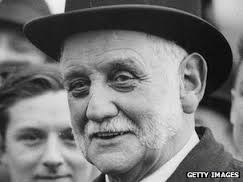
George Lansbury looks forward to having loads of space in the PLP common room

So imagine his surprise when, in a mark of the deep suspicion the party harboured for the emotional Lansbury, Arthur Henderson was elected unopposed as Labour leader despite not even being an MP.

Lansbury, for his part, became PLP chairman.

In practice however, the parliamentary platform meant the elderly Lansbury increasingly assumed the role of de facto leader over the even more elderly Henderson. This was partly because Henderson himself was often abroad, becoming more and more pre-occupied with international disarmament and the idea that Socialism wouldn’t be much use if Europe had been bombed to a charred ruin first.

More significantly for the party’s future was the appointment of Clement Attlee as Lansbury’s deputy chair in parliament.

(more…)

Facebook Twitter Digg Delicious StumbleUpon

Today the Tories are happy. That’s all you need to know about Ed’s speech.

25/09/2013, 12:08:40 PM

by Atul Hatwal

And so it begins. Last night’s doubts about the leader’s speech, widely expressed in the bars and receptions of Labour conference, are crystallising into a genuine fear on what happens next for Labour. The newspaper headlines were appalling, the party is on the defensive and the Tories are jubilant.

In his address to Labour party conference, Ed Miliband answered the widespread pleas for policy substance with two eye catching announcements – a two year price freeze on energy prices from 2015 and a target to build 200,000 homes. Both were well received in the hall, but are unravelling at an alarming pace.

The urge to act in a clear and unequivocal way on energy prices is understandable. It hardly bears repetition that soaring energy bills are an enormous problem for households. But at the moment the public don’t believe that either the Tories or Labour will do anything to help.

Polling conducted for Labour Uncut by YouGov shows that voters narrowly place greater trust in Ed Miliband and Labour over David Cameron and the Tories, to keep gas and electricity prices down, by 21% to 15%. However, the majority – 51% – trust neither to help with these bills.

In this context, a firm pledge to freeze prices will likely persuade sceptical voters that Labour will take effective action.

But, it is a big step to impose price controls even for a limited period. Such a move is redolent of the prices policies of the 1970s Labour government and has sparked another argument with business.

The public might be supportive of a price freeze that punishes unpopular energy companies, yet equally wary of a party that is happy to intervene so heavily in the market and fearful of the threats of blackouts.

In the 2005 election, the Tories found that although voters liked their punitive rhetoric on immigration, it validated Labour’s broader charges that the Tories were a hard-right party who would merrily privatise the NHS and cut benefits for pensioners.

(more…)

Facebook Twitter Digg Delicious StumbleUpon

Exclusive Uncut poll: Over 1 in 4 2010 Lab voters have been lost. Here’s what can be done to win them back

21/09/2013, 01:16:40 PM

by Atul Hatwal

Forget “too far, too fast.” With less than two years until the next election, Labour has chosen its new line of attack: the cost of living crisis.

We might have a nascent recovery, but for most people, life keeps getting tougher as prices continue to rise much faster than wages.

It’s powerful, but Labour needs to be careful.

Exclusive YouGov polling conducted for Uncut reveals that almost as many people blame the last Labour government for today’s cost of living crisis as they do the Tories. 66% of respondents said they blamed the Labour government either a little or a lot for the problem while 71% blamed the Tories.

Even among Labour supporters, 37% blamed the last government. Simply attacking the Tories and saying the words “cost of living crisis” will not be enough for Labour.

Worse still, the polling shows that since the last election over a quarter of 2010 Labour voters (26%) have decided not to vote Labour in 2015.

Although the party’s poll rating is buoyed at the moment by new support, the danger is that this could be soft – voting is a habit and a quarter of Labour’s voters are on the way to breaking theirs’. The erosion of Labour’s opinion poll lead over the past year is indicative of what could happen in the run up to the next election.

Out of Labour’s lost 2010 voters, almost 1 in 5 are now supporting the Conservatives (18%) and 1 in 10 (10%) the Lib Dems. Add-in those who’ve switched to UKIP and over a third of these lost voters have shifted to parties to the right of today’s Labour party.

In contrast, just 1 in 20 have moved left to the Greens, with most of the rest (41%) undecided.

The political need is pressing. Labour needs to show wavering supporters and potential switchers how life would be better with Ed Miliband in Number 10. Actions, or in this case, policies, speak louder than words.

The announcement of Labour’s intention to repeal the bedroom tax will have lifted activist spirits. This government policy is incompetent (clearly there was never going to be enough accommodation for people to move to) and generates arrears and misery in abundance. It is the right thing to do, but whether it is the right commitment to roll-out first, is another matter.

Labour is already blamed for excessive welfare spending (as Uncut reported last week, 54% of those who think welfare spending is too high blame the last Labour government, just 5% the current government, a margin of 10 to 1) and the Tories are rubbing their hands in glee at labeling Labour as the “welfare party.”

Labour needs a broader offer, where policies like repeal of the bedroom tax sit within a prospectus that shows how everyone will benefit from a Labour government.

Next week at Labour conference, Uncut will launch a book, “Labour’s manifesto uncut: how to win in 2015 and why” that gives a fully costed, centrist vision of a progressive Labour alternative.

In it, Uncut sets out the five steps Labour need to take for Ed Miliband to become the new occupant in Number 10 on 8th May 2015.

(more…)
Facebook Twitter Digg Delicious StumbleUpon

Labour history uncut: Arthur Henderson’s last chance for Labour and how maudlin Macdonald blew it

29/08/2013, 03:18:43 PM

by Pete Goddard and Atul Hatwal

After the initial shock of Ramsay Macdonald’s government leaving the gold standard wore off, a tide of anger started to rise across the Labour party.

Just a few weeks earlier, amid cataclysmic warnings from the economists, the Labour government had torn itself apart in its efforts to pass the severe cuts demanded by the markets. All this to prevent Britain coming off the gold standard.

Now the replacement national government had passed the cuts and then come off gold anyway. And the economic sky hadn’t fallen in.

The economists coughed and looked at their shoes. The only sound was Keynes’ gently banging his head against his desk, muttering, ‘I bloody told them’.

‘Was that it?’ wondered the people of Labour, ‘Was that what we sacrificed our government for?’

Someone had to pay.

First on the list, oddly, was new Labour leader Arthur Henderson.

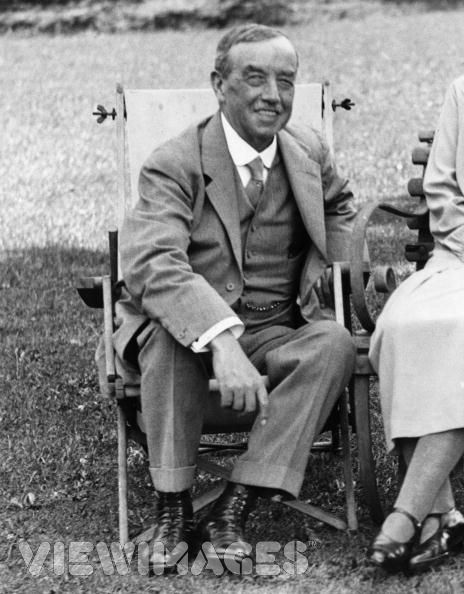
Arthur Henderson models the 1931 beachwear collection

His crime? He had spoken in a conciliatory way in parliament in the debate on whether to come off the gold standard. And he supported the government’s eminently sensible decision. The fool.

(more…)

Facebook Twitter Digg Delicious StumbleUpon

Union backed change to Labour rules set to wipe out party groups like Labour Women’s Network

12/08/2013, 07:29:58 AM

by Atul Hatwal

It started as an attempt by sections of the union movement to target Progress. But Uncut understands that a rule change, submitted by ASLEF and initially intended to outlaw Progress, has been drafted so broadly that it would in fact wipe out a range of Labour party groups.

These include Labour Women’s Network, all of the Labour Friends groups (such as Labour Friends of Israel and Labour Friends of India) and even TULO – the trade union and Labour party liaison organisation.

Under the terms of the amendment, all of these organisations would have to transfer half of donations received, above the first £25,000 per annum, to the central party, crippling their ability to operate. The amendment states,

“Delete rule 5.B and insert:

B. Political organisations not affiliated or associated under a national agreement with the party, but whom engage in internal activity, shall be required to:

(i) Notify the national party of all legally reportable donations received.

(ii) Transfer 50% of all donations received beyond the first £25,000 per annum to the national Labour Party.

C. Incorporated organisations that engage in internal activity shall be required to provide upon request all legal, constitutional, and financial documentation to the National Executive Committee to ensure that they meet acceptable standards of democracy, governance and transparency.  These organisations are expected to abide by the authority of the NEC in such matters.

D. The NEC shall be responsible for the interpretation, implementation, and enforcement of these rules.”

Labour party officials have confirmed that this drafting has an extremely broad application. On this basis, if the rule change were passed, thousands of pounds would be slashed from groups, as funds would be appropriated by the national party.

This would have a major impact on the operation of the Labour party.

(more…)

Facebook Twitter Digg Delicious StumbleUpon

Labour history uncut: “They didn’t tell us we could do that”

09/08/2013, 06:14:56 PM

by Pete Goddard and Atul Hatwal

“We are like marooned sailors on a dreary island”

Not a Morrissey lyric, but the upbeat analysis of Ramsay Macdonald, leader of the new national government, as he pondered the position of the small group of Labour ministers who had stood with him.

They had reason to feel lonely. Macdonald was still prime minister, but when Parliament returned, his government benches would be dominated by Tories and Liberals. Across the floor of the house, former Labour friends and colleagues would glare at him in angry opposition.

Meanwhile, over at Transport House, headquarters of the Labour party, the Transport Union (T&G) and the TUC, the mood was punchy. Ernest Bevin of the T&G declared, “this is like the general strike, I’m prepared to put everything in.” Although if it was like the general strike, he’d then take everything out again after a week and experience total defeat.

On the 27th August, two days after the fall of the Labour government, the party issued a manifesto. Something that clarified Labour’s position on the big issues.

It said, “We oppose the cuts.”

It then said, “Yes, the same cuts we were actually proposing two weeks ago. What? What? Shut up.”

Montagu Norman, governor of the Bank Of England – never trust a man whose names are the wrong way round

On the 28th, the parliamentary party was due to meet to ratify the manifesto and elect a new leader.

As a meeting of the PLP, invites went to all Labour MPs. In a moment of supreme administrative awkwardness, this included Macdonald and the rest of the splitters

It was a pivotal moment.

(more…)

Facebook Twitter Digg Delicious StumbleUpon

Labour history uncut: Splitters! The fall of the second Labour government

31/07/2013, 10:24:04 PM

by Pete Goddard and Atul Hatwal

Panic gripped the Bank of England.

By the 7th August 1931, just a week after the publication of the doom-laden May report on Britain’s finances, unhappy foreign investors were selling sterling at a record pace.

The Bank of England reported that its gold and foreign exchange reserves had lost £60m in the past few weeks in its attempt to prop up the value of the nation’s currency and keep Britain on the gold standard.

A first-ever Brexit seemed imminent. Although nobody actually used the word “Brexit” because these were more civilised times.

Only a hastily arranged £50m credit from French and American bankers was keeping the Bank of England solvent. This wouldn’t last long and future loans were in doubt – it’s hard to take a payday loan when you’ve got no payday in sight.

In order to secure more international loans to sustain the currency, a plan to pay down the deficit was needed.

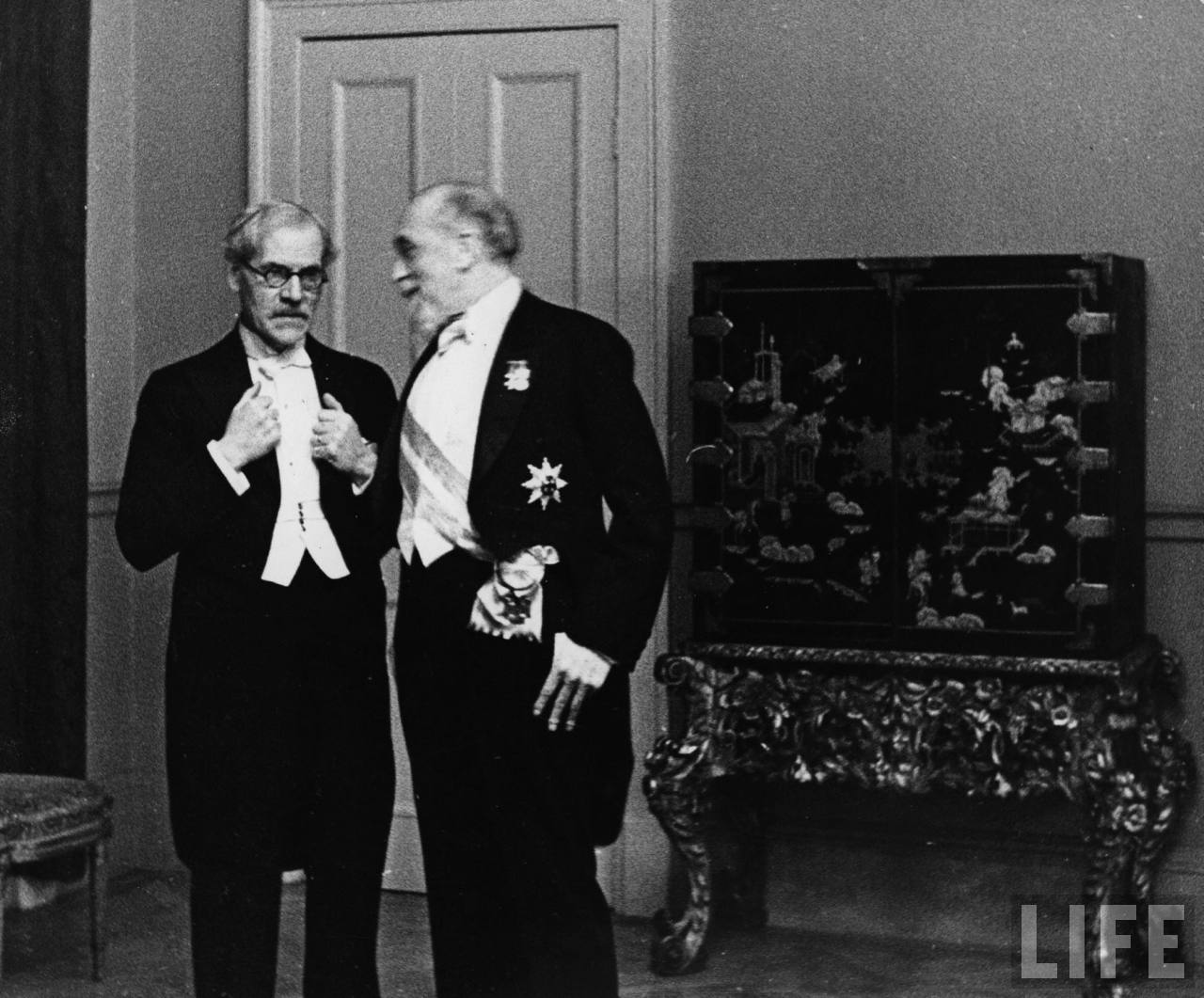
Governor of the bank of England, Montagu Norman talks to Ramsay Macdonald who has chosen, appropriately, to dress as an undertaker for the occasion

The bankers wanted £80m of cuts. So prime minister Ramsay Macdonald and chancellor Philip Snowden put together a programme to deliver them, including a painful reduction of over £40m to unemployment benefit.

(more…)

Facebook Twitter Digg Delicious StumbleUpon

Labour history uncut: How the man from the Pru turned an economic drama into a Labour crisis

30/07/2013, 04:19:25 PM

by Pete Goddard and Atul Hatwal

By 1931, prime minister Ramsay Macdonald had made his choice: he was going to cut his way out of Britain’s financial crisis. Austerity beckoned.

But first, as ever, a committee.

The national expenditure committee was set up on February and was due to report in July. So obviously it became known as the May committee. Admittedly this was because the committee chair was Sir George May, recently retired as company secretary at the Prudential, but did they have to make things so confusing?

Sir George May, formerly of Prudential Assurance. “I assure you, the nation is screwed.”

Oswald Mosley, who had been unsuccessfully touting his alternative, spending-based recovery plan around the party, couldn’t take it anymore. In February 1931, he voted with his feet, resigning from the Labour party completely.

Mosley then gathered a handful of his closest MP friends to form a new party. He showed that his new party had the imagination and vision that Labour lacked, by calling it the New party.

The New party betrayed a few hints of what was to come for Mosley by forming its very own militia. This might have been frightening had it not been for their choice of nickname: the “Biff Boys” sounded less a jackbooted menace and more a carefree gay subculture.

(more…)

Facebook Twitter Digg Delicious StumbleUpon