




Posts Tagged ‘Atul Hatwal’

Labour history uncut: the Socialist League is sent packing

02/12/2013, 05:55:31 PM

by Pete Goddard and Atul Hatwal

When Stafford Cripps got up to speak to Labour students in Nottingham on the 6th January 1934, the reporters in attendance did not expect too much excitement. A brisk refresher on the Socialist League’s plan for an imminently Socialist Britain, then tea and biscuits if they were lucky.

Addressing the audience, Cripps declared,

“I do not believe in private armies, but if the Fascists started a private army it might be for the Socialist and Communist parties to do the same. When the Labour party comes to power, we must act rapidly and it will be necessary to deal with the House of Lords and the influence of the City of London. There is no doubt we shall have to overcome resistance from Buckingham palace and other places as well.”

The press sat up and took notice.

Because Cripps was airing the possibility of a Labour party private army? No. Because he was suggesting Labour join forces with Communists? No.

The Rubicon that Cripps had crossed was in voicing the great unmentionable, “Buckingham Palace.”

Outrage abounded. Within a day, Cripps had had to issue one of the finest political clarifications ever,

“There seems to have been some misconception of what I intended to convey by the term ‘Buckingham Palace’. I most certainly was not referring to the Crown…I cannot understand why anyone should have thought I was referring to the Crown.”

Indeed, the fools. Its obvious Cripps was talking about resistance to socialism from all those other people in Buckingham Palace. The servants maybe. Or the corgis.

Among the NEC there was a collective rolling of eyes at the gaffe. Dalton was apoplectic while Bevin was disgusted. Fortunately for Cripps though, one senior member of the party continued to back him – a member who also happened to be the acting leader – Clement Attlee. Thus Cripps swapped his red flag for a red face but remained free from formal censure.
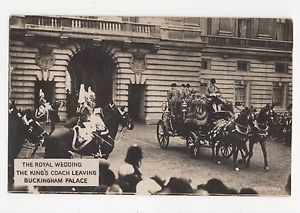
1934 – Riding out to battle the impending socialist army, Buckingham Palace wondered if it should maybe have modernised its forces

1934 – Riding out to battle the impending socialist army, Buckingham Palace wondered if it should maybe have modernised its forces

(more…)

Facebook Twitter Digg Delicious StumbleUpon

The real reason Labour will never publish the Falkirk report

25/11/2013, 09:40:30 AM

by Atul Hatwal

Yesterday Labour members in Falkirk gathered for their annual general meeting. They elected a new party chairman, Gray Allan, and once again the party attempted to move on from the disastrous parliamentary selection process. The new chair’s first statement clearly frames the date for the new selection vote as the point where the party will try to claim closure,

“On 8 December, in Falkirk, we will select a candidate to fight this seat for the next general election. The priority for us is to work to regain the trust of the people of Falkirk so that we can be confident of a victory in this constituency.”

But no matter how much the party wants the Falkirk farrago to go away, there is a problem.

The constituency remains in special measures, Labour HQ is running the selection process and no CLP member who joined later than March 12th 2012 can participate in the vote. All of this despite the official party line being that no group or individual has been found to have broken any rules.

This contradiction is the reason the questions keep coming. The missing link is the unpublished report into the selection process conducted by Labour officials.

The report was the basis for the action taken in Falkrik and sets out the detail of what went wrong. The allegations contained in it ignited civil war within the Labour movement between the party leadership and Unite and have driven media coverage so catastrophic that Gray Allan was moved to talk about regaining “the trust of the people of Falkirk” if Labour is to win again in what should be a rock solid Labour seat.

Until the report is published, it will be impossible for Labour to successfully move on.

(more…)

Facebook Twitter Digg Delicious StumbleUpon

New revelations expose contradictions in the Labour leadership’s story on Falkirk

19/11/2013, 01:36:38 PM

by Atul Hatwal

Another week and yet more twists in the Falkirk story.

Over the weekend, Unite’s response to the Labour party’s internal report on Falkirk was published by the Sunday Times (£). It sheds more light on Labour HQ’s involvement in the affair as well as revealing an important new allegation of malpractice.

To understand what happened, we need to wind the clock back to last December.

Unite had sent large batches of new Falkirk membership applications to Labour head office for approval. The bulk of these were Unite members joining the party under the terms of the now defunct “union join” scheme. This allowed Unite, or any union, to pay the first year’s membership subscription for any of their members who wanted to join Labour, as long as the application included the new recruits’ direct debit details to cover future years’ subscriptions.

Rapid processing of these applications was required if these new members were to be eligible to participate in the selection. According to party rules, new members can only take part in picking the prospective parliamentary candidate if they have “six months continuous membership of the Labour party (any constituency) at the freeze date.”

The freeze date is the point at which the selection process is declared open. Given the Falkirk selection was expected to take place in May or June, timing was tight for Unite’s surge of new recruits from November and December 2012 to have built up “six months continuous membership”.

There was almost no margin for delay.

But delay is exactly what happened. Suspicious party officials flagged several applications, worrying that party processes were being manipulated and because direct debit details were frequently missing.

This presented two challenges for Unite and Labour.

First, adding the missing direct debits would have been very time consuming, significantly delaying registration of the new members.

Second, even if these memberships could be somehow quickly readied to be put on the system, late January would have been too late to qualify if the contest was held in the first half of the year.

Labour HQ’s role in fixing these problems reveals the depth of the party’s involvement in backing Unite’s strategy in Falkirk.

(more…)

Facebook Twitter Digg Delicious StumbleUpon

When Ed Miliband condemned Unite’s “machine politics” in Falkirk, did he forget his office had signed-off on their tactics?

13/11/2013, 07:14:31 PM

by Atul Hatwal

The Times today carried some revelatory new details on Falkirk (£). Strangely, they seemed to miss the real significance of what they’ve got (assuming the Ineos e-mails are as reported and what they say is true).

Their story focuses on a deal agreed between Iain McNicol, Labour’s general secretary, and Len McCluskey to ensure Unite members who were recruited into the party via the old “union join” scheme, where the union pays the first year of subs, were all moved onto direct debit so future payment could be assured.

The prospect of Labour’s general secretary cutting a deal with a union boss is hardly edifying but it’s not the big story. More interesting are the implications of an e-mail  from 21st January this year that is cited in the piece.

The mail is from Steve Hart, Unite’s political director at the time, to Karie Murphy, the Unite candidate and Tom Warnett, Unite’s political co-ordinator.  In it, Hart refers to delays by a sceptical Labour membership department, in processing the mass of new Unite recruits, stating,

“I was advised the week before Xmas that these had all been processed — advised by Jenny Smith [Ed Miliband’s union adviser at the time] and Scott Landon [Iain McNicol’s chief of staff] — but it is for the party to confirm authority, not us.”

Originally, the Sunday Times published the mail, but the names had been redacted. The inclusion of the names tells us that the leader’s office not only knew about Unite’s plans, they agreed them.

Dan Hodges picked up on the real importance of the revelations earlier today when he wrote,

“Back in July he [Ed Miliband] had said: ‘I am here to talk about a different politics, a politics that is open. Transparent. And trusted. Exactly the opposite of the politics we’ve recently seen in Falkirk. A politics that was closed. A politics of the machine. A politics that is rightly hated…’

But all the time his office had been supporting a deal with Len McCluskey to enable him to rig the selection.”

Think about it for a moment.

(more…)

Facebook Twitter Digg Delicious StumbleUpon

Labour history uncut: A party caught in two minds

12/11/2013, 11:53:24 PM

by Pete Goddard and Atul Hatwal

By late 1932 the recession had become a depression. Unemployment was stuck at 3 million and more austerity seemed the government’s only answer.

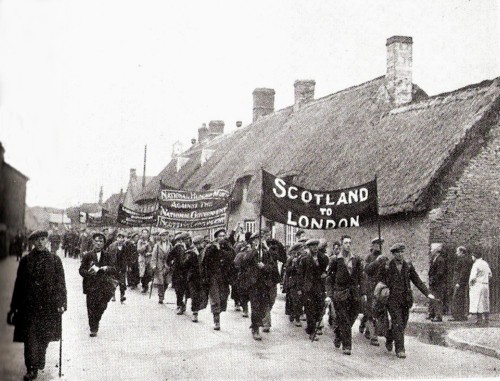
The communists responded through their National Unemployed Workers’ Movement (NUWM), which was like a union for the unemployed, with the slight drawback that when they went on strike, nobody could tell. The NUWM organised hunger marches to highlight the plight of the workless.

“Scotland to London, seriously? This is why we need a Scottish government.”

“Scotland to London, seriously? This is why we need a Scottish government.”

The government reacted by doing some organising of their own, arranging for 70,000 policemen to meet the hunger marchers and welcome them to London.

For its part, the Parliamentary Labour Party organised to stay in that evening with a cup of tea, peeking through the office curtains at the ensuing violence and hoping those nasty communists would just go away.

No such luck.

The deteriorating economic situation had helped membership of the Communist Party of Great Britain (CPGB) surge from 2,300 in 1930 to 9,000 by the end of 1932.

Meanwhile in Germany, the election in January 1933 of new chancellor with a hilarious Charlie Chaplin moustache and a less hilarious set of beliefs, led many on the left to seek common cause with the communists.

Moscow agreed, recognising an opportunity when they saw one.

(more…)

Facebook Twitter Digg Delicious StumbleUpon

The real reason Labour is petrified of re-opening the Falkirk inquiry

05/11/2013, 02:16:13 PM

by Atul Hatwal

Tomorrow is prime ministers’ questions. At the despatch box, when David Cameron faces Ed Miliband, political reality will collide with the la-la land Labour is living in on Falkirk.

As in July, David Cameron will use the fiasco to hammer Ed Miliband.

Labour MPs are dreading it. The Tory backbench barrackers can barely wait. Journalists are gleefully expecting great copy.

Already today, George Osborne crow-barred Falkirk into Treasury questions, such is the Tories’ eagerness to use it as a means of attacking Labour.

Come what may, the post-PMQs story tomorrow won’t be about energy or the living wage, but Ed Miliband’s leadership and the power of Unite over the Labour party.

Over the past few days the shrieks of “nothing to see here” from Labour’s high command have become ever louder and more desperate. We are long past the stage where rationality seems to drive the party’s actions.

It is politically unsustainable for the party to continue insisting all is well when figures as senior as Alistair Darling are calling for the inquiry to be re-opened and news reports related to Labour are increasingly dominated by this one issue.

And on the evidence that has emerged from the cache of over 1000 Ineos mails that were passed to the Sunday Times, the party appears to be wilfully averting its gaze. Ed Miliband was wrong today when he said that no new information had come to light on Falkirk.

Quite apart from whether key witnesses have or have not withdrawn their original complaints, if the Sunday Times e-mails are true there are several other potential rule breaches now in the public domain that merit further examination by the party.

For example, the Sunday Times reports,

“Separately, an email from Karie Murphy, the hard-left candidate Unite was trying to parachute into Falkirk, reveals a secret system that gave Labour members colour-coded star ratings based on their perceived loyalty to Unite.

It gave red stars to those considered the union’s opponents, yellow stars to female members who might back it and double green stars to those the union had specifically ‘recruited for the selection’.”

If the last phrase, “recruited for the selection” is accurate, then it seems Labour party procedures have been broken. The party rule-book is quite clear that members cannot just be recruited for selections. In Appendix 2 NEC procedural guidelines on membership recruitment and retention, the rule-book states,

“The health and democracy of the party depends on the efforts and genuine participation of individuals who support the aims of the party, wish to join the party and get involved with our activities. The recruitment of large numbers of ‘paper members’, who have no wish to participate except at the behest of others in an attempt to manipulate party processes, undermines our internal democracy and is unacceptable to the party as a whole.”

If the party was serious about its own rules then this one potential breach alone would have been cause at least for some further investigation.

But clearly the party is not interested, regardless of the damage or the new evidence that has emerged.

The question is why? Why would the Labour leadership indulge in such an apparent act political of self-harm by pretending nothing has changed on Falkirk?

The answer is that there is a far greater fear of the consequences for Ed Miliband if the inquiry is re-opened and a civil war with Unite ensues.

Beyond the potential financial cost to the party of withheld union donations, the leader’s office is scared about what will happen at the special conference next year on Ed Miliband’s proposals to reform the union link.

(more…)

Facebook Twitter Digg Delicious StumbleUpon

If the Mail was wrong on Ed Miliband’s dad, then Unite are wrong to target Ineos managers’ families. And Labour needs to say so

31/10/2013, 12:20:02 PM

by Atul Hatwal

Another day and yet more revelations from Grangemouth. This morning’s Daily Mail carried details of how Unite targeted Ineos executives at home as part of a strategy called “leverage campaigning.” While most members of the Labour movement will read anything in the Mail about unions with a level of scepticism, on this occasion the basic facts seem to be incontrovertible.

The Mail reports that as part of “leverage campaigning” 30 Unite members descended on the home of an Ineos executive during the school holidays to stage a protest on his drive. In response, Unite haven’t denied any details of what happened, but have defended the actions as “legitimate in the context of an industrial dispute.” On their website there is a section that describes “leverage campaigning,”

“Leverage is a process whereby the Union commits resources and time to making all interested parties aware of the treatment received by Unite members at the hands of an employer. Those interested parties may include shareholders of the employer; competitors of the employer; communities within which the employer operates; customers of the employer and the market place of the employer.”

Many in the Labour movement will simply shrug and think “so what.” But that’s not good enough. Its time for a bit of consistency.

If the Daily Mail was wrong to go after Ed Miliband’s father, then its wrong for Unite to target senior managers’ families.

It was despicable of the Daily Mail to attack Ralph Miliband to hurt his son. It’s equally disgraceful to harass peoples’ families and neighbours simply because they happen to be managers at a firm in an industrial dispute.

The outrage from the Labour party on the Daily Mail’s piece on Ralph Miliband was voluble and justified. Silence on Unite’s antics now will abrogate any moral authority the party had in criticising the Mail. Morality isn’t a one-way street. Principles don’t apply selectively. Either everyone connected with an adversary is fair game, or they’re not.

Labour needs to decide whether it believes in total war, where the families and friends or political opponents are justified targets. Or if it still holds to the values so loudly declared over the Ralph Miliband article, where they are off limits.

If it is the former, then the fathers, mothers, wives, husbands, sons, daughters, friends and neighbours of Labour politicians should make sure they have never done anything that might merit a news story.

But, if it is the latter, then the Labour party should condemn Unite’s tactics.

Facebook Twitter Digg Delicious StumbleUpon

The realpolitik behind Labour’s energy price freeze

29/10/2013, 03:04:11 PM

by Atul Hatwal

In the run up to Labour conference, a new policy to tackle rising energy costs was widely anticipated. After a summer of atrocious headlines, and with an Autumn of fuel price hikes in prospect, Ed Miliband needed a rabbit to pull out of his policy hat at conference.

For many within Labour, the natural solution seemed to be a new windfall tax on the utilities. It had worked well in the 1990s, when Labour was last in opposition, forcing the Tories to defend the largesse of the fat cats while generating funds to help tackle youth unemployment.

So when Ed Miliband announced the energy price freeze it was a genuinely striking political moment. There had been no pre-briefing or preparation and media and party alike were stunned.

While the media have subsequently focused on the mechanics and implications of a price freeze, from an internal Labour party perspective, politically the more interesting question is: why was a windfall tax rejected?

After all, it draws the same dividing line as the price freeze without any connotations of a 1970s style price control policy and given the windfall tax’s previous successful implementation, the public would be more likely to believe it would be enforced (the ComRes poll today found that 52% of the public do not think Labour will enact the price freeze, with 41% believing it will).

Even centrist Tories like John Major and Rob Halfon think a windfall tax would be justified.

The answer is to be found in the deteriorating relationship between Labour’s leader and his shadow chancellor, a dysfunction which is increasingly defining policy-making within the party.

(more…)

Facebook Twitter Digg Delicious StumbleUpon

Is the average Labour party salary really £43k per year?

24/10/2013, 02:34:20 PM

by Atul Hatwal

Last week Uncut carried news of another restructure at Labour HQ, with the party’s executive directors now reporting to Spencer Livermore instead of general secretary, Iain McNicol. It prompted one member of the team at Brewer’s Green to get in touch and draw our attention to something very peculiar: the strange case of the Labour party wage bill.

Normally a political party’s wage bill rises in the run-up to a general election as new staff are taken-on to gear up for battle. It then falls immediately following the contest, with parties’ reverting to their core staff team, until the election drum-beat sounds again later in the new electoral cycle.

Or, at least that’s how things used to be. Since 2010, Labour has taken a very different path.

After the general election, rather than the numbers in the staff team falling, they went up. In 2010, according to the Labour party accounts it employed an average of 247 full time equivalent employees (assuming part-time staff are 0.5 of a full time equivalent or fte). One year later, the number had risen to 288 fte with the party wage bill rising from £12.2m in 2010 to £13.1m in 2011.

Partially this was a result of moving from government to opposition, with large numbers of advisers moving from the civil service payroll onto the Labour party’s books. But even then, it was quite striking for numbers and costs to rise so steeply.

By way of comparison, in 2010, according to the Conservative party accounts, the average number of staff employed was 221 at a cost of £11.7m.

This means in 2011, at the point in the electoral cycle when costs should have been at their lowest, Labour was employing 67 more staff than the Tories had had to fight the general election and spending £1.4m more on its wage bill.

(more…)

Facebook Twitter Digg Delicious StumbleUpon

Labour history uncut: All change! Labour gets a new set of factions

22/10/2013, 10:27:30 AM

by Pete Goddard and Atul Hatwal

In the run up to the 1932 Labour party conference in Leicester, memories of the previous year’s electoral wipe-out were still raw, not to mention the festering resentment at Ramsay Macdonald’s betrayal.

Everyone was in the mood for change.

But just how that change might end up looking remained to be seen. Was the party Clark Kent striding into a phone booth, or Leslie Ash popping into the lip clinic?

One prominent change had already occurred on the left. The ILP had recently decided to disaffiliate from Labour and remain, in the words of Aneurin Bevan, “pure, but impotent.”

This meant there was no rebellious left wing to cause friction and everything at conference was going to run nice and smoothly.

Ha! Just kidding.

In fact a selection of ILP members had opted to remain with the Labour party, allowing the ILP to drift off into irrelevance without them. Their opting for impure potency meant that they were still in the party, but that didn’t mean they’d suddenly changed their socialist beliefs.

Understandably, these ex-ILP socialists under Frank Wise decided that, with the ILP gone, they ought to get organised. And perhaps find some new friends in the process.

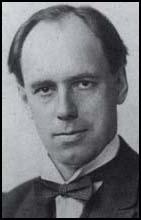
Frank Wise – the only man in the party whose name consisted solely of adjectives

Flowers and chocolates were despatched to the somewhat sinister-sounding Society for Socialist Inquiry and Propaganda (SSIP). This socialist pressure group was known by founder GDH Cole as the Zip – presumably because nobody wanted to get their policies caught in it.

The SSIP’s aims were, on the face of it, identical to those of the ILP leftovers. So, after the briefest of courtships, on the eve of Labour’s 1932 conference, a new faction was born- the Socialist League.

(more…)

Facebook Twitter Digg Delicious StumbleUpon