Posts Tagged ‘Atul Hatwal’

Latest YouGov figures show over 1 in 4 2010 Labour voters have defected. Tories have higher core vote.

11/02/2014, 01:55:07 PM

by Atul Hatwal

Important new analysis from YouGov today. Peter Kellner has looked at all of YouGov’s polls across January – a sample of over 37,000 voters – and crunched the numbers to understand the shifts in voting intention for those who voted in 2010.

This is important because it gives a good idea of the core support for a party and the volatility of the electorate.

For Labour, the common refrain is that our core support is near the level of the vote at the last election. Last year, Marcus Roberts at the Fabians produced an interesting analysis which exemplified this view – he pitched Labour’s core vote at 27.5%.

Around the same time, Uncut commissioned some YouGov polling which found that Labour had lost 26% or just over 1 in 4 of its 2010 vote. Today’s findings from YouGov confirm this figure.

This places Labour’s core vote at 21.5%. The Fabian analysis suggests generational churn (e.g. older Tory voters dying and younger Labour voters coming into the electorate) could add roughly 2% to Labour’s core total, but even allowing for this, a Labour core vote of 23.5% does not set the party up for victory.

In fact, if all other elements of the Fabians analysis were proved to be correct (and this includes a debatable target of attracting an extra 3% of support from the ranks of non-voters ), the absolute maximum Labour could hope for at the next election would be 35.5%.

If this is the ceiling, its not difficult to see a potential, even likely, outcome where Labour posts a result in the low 30s.

(more…)

Facebook Twitter Digg Delicious StumbleUpon

The power of Labour’s left means Ed Miliband’s speech on public service reform has already been neutered

10/02/2014, 04:43:34 PM

by Atul Hatwal

This evening Ed Miliband will make speech mentioning Labour’s great unmentionable, a policy area that has been mothballed since Tony Blair’s departure from Number 10: public service reform.

The new left inquisition which dominates much of today’s Labour party views Blairism as the most egregious of all the possible heresies. To openly suggest our public services are in need of reform is dangerously Blairite.

It virtually invites the type of twitter auto-da-fé experienced by those hardy Labour souls who have had the temerity to call for a tougher line on welfare or public spending.

The only criticism of public services permissible in the current orthodoxy is funding: everything would be better if there was more money and the Tory cuts were reversed. All else is doctrinally suspect.

As a result there is some excitement in anticipation of what Labour’s leader will say.

It is also why we know that Ed Miliband’s foray into new territory will only advance Labour’s thinking in the most nugatory manner.

Public service reform has always had two inextricably linked aspects: shifting power from providers to service users and improving efficiency. One leads to another: as power is shifted, and resources allocated to better reflect demand, so cost is driven down and quality, up.

(more…)

Facebook Twitter Digg Delicious StumbleUpon

Party reforms hang in the balance as Collins fails to resolve the big question

05/02/2014, 10:37:22 AM

by Atul Hatwal

The NEC has spoken. By a vote of 28 to 2 the Collins report was accepted and will now go to the special conference next month. Much of the reception to the report has been warm, and there is much to commend it, but lurking in the detail of the report is an important unanswered question.

There are to be two separate “opt-ins” for individual trade unionists: the first to give permission for political fund contributions to be used by the union in supporting Labour, and the second for the trade unionist to join Labour as an affiliate member.

The latter would give the right to participate in Labour’s leadership election, though not parliamentary selections. Only trade unionists who have agreed to their political fund contributions being used to support Labour can then opt-in to become an affiliate member of the party.

Underpinning both opt-ins is a single requirement: consent. This is where the problem lies.

What constitutes consent should be easily defined. When Ed Miliband started this process last July, he gave a very clear statement,

”Individual Trade Union members should choose to join Labour through the affiliation fee, not be automatically affiliated.”

To most people, this would mean members of trade unions signing a form to show their choice. In the context of the double opt-in, it would be a form with two boxes to tick – one to say yes to commit political fund contributions to Labour and the other to say yes to join Labour as an affiliate member.

But in the Collins report there is no such definition. Instead, it deliberately avoids clarity.

(more…)

Facebook Twitter Digg Delicious StumbleUpon

Exclusive: One-off rules for next Labour leadership election mean OMOV electorate to be dominated by 2.3m union members

31/01/2014, 11:43:26 AM

Update 18:43: Uncut’s source are now telling us that the only trade union voters in Labour’s next leadership election will be those who have opted-in as associate members. Events have been fast moving and over the week and the shape of the final proposals is thought to have been evolving in the past few days. Given the potential for a contest in 2015, this would likely mean that only a small number of trade unionists would take part.

10% is often cited as the proportion of trade unionists that will opt-in, but many suspect the reality will be lower. The comparatively short time period between when the rules are ratified at the special conference in March and a potential leadership election in late 2015 means the unions will only have a narrow window to recruit associate members from the ranks of their 2.3m affiliates.

Estimates of the potential number of trade union voters for a 2015 leadership election that have been suggested to Uncut range from 25,000 to 80,000. This would mean trade union votes would be below the third guaranteed by the electoral college and if so, would represent a major concession from the leaders of the trade unions.

Had the 2010 leadership election been run with the electorate likely in 2015, David Miliband would most probably be leader of the Labour party today.

 ***

by Atul Hatwal

Uncut has learned that the next Labour leadership election, expected in 2015 if the general election is lost, will be conducted under a one-off mix of existing and new rules. The result will be that this electorate will be dominated by 2.3m union members – over 13 times the number who are full Labour party members (180,000).

At the special conference in March, a new set of rules on trade union members’ relationship with the party will be passed. A new category of member, “trade union associate” will be created. This will be for trade unionists that actively opt-in to supporting Labour and will be phased in over 5 years.

New trade union members will be given the choice of opting-in to the Labour party and becoming an associate immediately with discussions ongoing on how the existing base of affiliates will be transitioned over – if at all.

The big change to be passed straight away will be the move to OMOV for the Labour leadership election. The difference in timing between the roll-out of the associate member category and the shift on leadership election will have far reaching implications for Labour.

It means that the at the next Labour leadership election the electorate will be the same as at the last election, but the rules will be OMOV.

Just as at the last leadership election, the Labour party will not have any access to the 2.3m affiliates membership details and candidates will not be able to communicate with these voters directly.

This is because the affiliates will not have had a chance to opt-in to supporting the Labour party and so, under data protection rules, their personal details will not be allowed to be passed to Labour.

Everything will have to go through the union.

(more…)
Facebook Twitter Digg Delicious StumbleUpon

How does Labour secure a majority in 2015? Find out on Monday February 3rd

30/01/2014, 12:45:01 PM

As the polls narrow and Labour nerves begin to jangle, it’s the question many are thinking: how does the party secure a majority in 2015? What seemed comfortable 13 months ago, when the poll lead was regularly in double digits, is now in the balance.

Fortunately, for those of a nervous disposition who do not simply want to wonder in silence, the good people at Progress have organised a series of events where answers can be provided. Uncut will be taking part in the next one

6-7.30pm, Monday 3 February 2014

Boothroyd Room, Portcullis House, House of Commons

Atul Hatwal Editor, Labour Uncut
Peter Kellner President, YouGov
Marcus Roberts Deputy general secretary, the Fabian Society
Polly Toynbee Columnist, the Guardian
Chair: Siobhain McDonagh MP Member, education select committee

If you can make it, come along. If not, follow it (and the other events) on twitter at #labmaj.

As a teaser for the debate, over the coming days, we will be publishing a series of short pieces that look at the key issues for Labour to win majority in 2015, where the party is and what needs to be done. So look out for them and we’ll see you on Monday.


Facebook Twitter Digg Delicious StumbleUpon

Three things we learnt about Ed Balls from his New Statesman interview that he probably didn’t intend

09/01/2014, 12:57:24 PM

by Atul Hatwal

Yesterday, George Eaton landed one of the most revealing interviews with a front rank Labour politician of the past few years.

The topline might have been about Ed Balls’ acceptance that he could work with Nick Clegg, but the broader content of the interview was actually far more interesting. Here are three things we now know about Ed Balls,

1. The relationship with Ed Miliband is as dysfunctional as suspected

One of the most revealing passages of the interview is when George asks whether Ed Miliband has guaranteed Balls will be shadow chancellor in 2015. The response is priceless,

“I’ve never had that conversation with him.”

Think about that for a moment. Despite the constant stream of articles discussing the potential for Ed Miliband to replace Ed Balls, and the endless tea room chatter in the Commons, neither man has felt able to address the elephant in the room in their discussions.

In any normal workplace, the union or staff representatives would demand some clarity if an employee’s position had been subject to so much public speculation.

But it’s not normal, it’s Westminster.

With an election rapidly approaching, Ed Balls would not be human if he did not wonder if he was still going to be in post over the coming months. As both Eds’ know from their time advising Gordon Brown in opposition, the effort involved for a shadow chancellor to prepare for an election, is enormous. It requires hard work, commitment and the full faith of the leader.

As a result of yesterday’s interview, we know that Ed Balls does not feel confident enough to ask for this backing and Ed Miliband is unwilling to give it voluntarily.

Labour’s shadow chancellor is essentially on a zero-hours contract.

2.       Ed Balls has shifted on spending cuts and is now a hawk

The Labour line has always been that the government’s approach to deficit reduction was beyond the pale. “Too far, too fast,” was the phrase in virtually every press release from 2010 through to 2012. For Ed Balls, even the spending reduction path set out before the last election by Alistair Darling was too aggressive. In 2010 he said,

“In government at the time in 2009 I always accepted collective responsibility, but at the time in 2009 I thought the pace of deficit reduction through spending cuts was not deliverable, I didn’t think it could have been done.”

But now, it’s all different.

(more…)

Facebook Twitter Digg Delicious StumbleUpon

The Milibelievers are destroying Labour’s chances for victory in 2015

06/01/2014, 10:47:37 AM

by Atul Hatwal

The polls are fine. Labour’s rating is holding firm in the high thirties, it will stay there because Lib Dem defectors will boost Labour’s core vote from 2010 and UKIP will squeeze the Tories’ vote.

This is the litany of the Milibelievers.  A group that is distinctly under-represented in the PLP but more vocal in the media community and believes Ed Miliband’s gameplan is working.

It was neatly summarised by George Eaton before Christmas and represents one the greatest threats to Labour success in 2015. Because unless Labour radically changes course and accepts the current gameplan is failing, defeat is increasingly likely.

There are two flaws to the Milibeliever prospectus.

First, Labour’s base is not the 29% achieved 2010.

Given how appalling Labour’s performance was in 2010, it’s tempting to believe that it represents rock bottom. 29% was derisory, but Labour can fall further. In polling for Uncut by YouGov in early September, just over 1 in 4 (26%) of Labour’s 2010 voters said they did not intend to vote for the party at the next election.

There may have been some minor movement in the attrition rate since Autumn, but given the broad similarity in the polls between then and now, it is unlikely to have changed significantly.

This means Labour’s current base is actually nearer 22% rather than 29% and unless something major changes, Labour will not even be the largest party, let alone a majority government, no matter how solid the block of Lib Dem defectors.

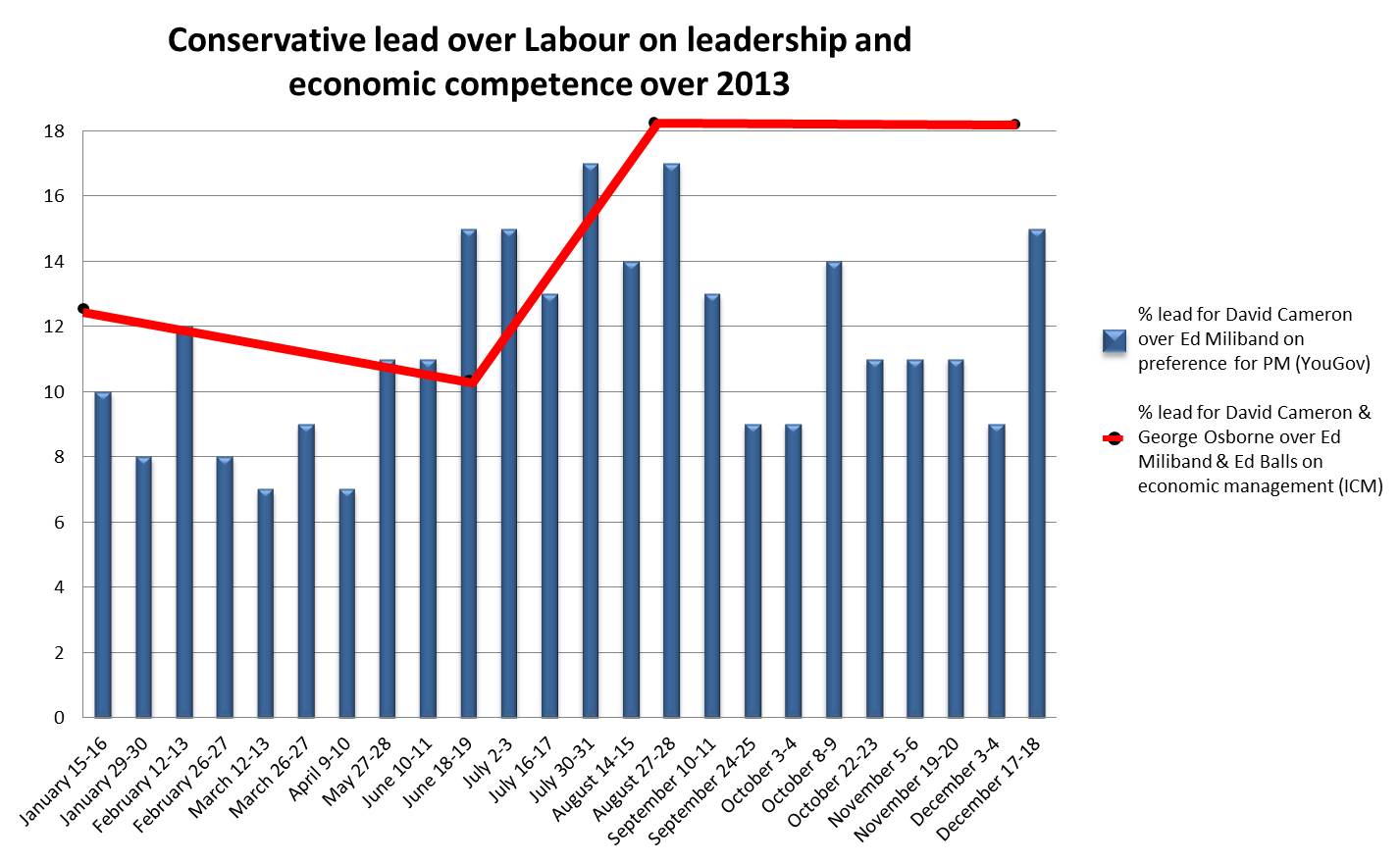
Second, Labour is losing the argument in terms of leadership and economic competence. This is the underlying reason why the party’s base vote has eroded since 2010, why it is overly optimistic to believe Labour can rely on legions of 2010 Lib Dem voters backing the party into the high thirties and why many UKIP converts are likely to lapse back into the Tory fold.

The chart below sets out the scale of Labour’s problem. No opposition has ever won while being behind on both leadership and the economy, and Labour now trails by double digits on both.

Con lead over Lab on PM and econ (more…)

Facebook Twitter Digg Delicious StumbleUpon

Labour history uncut: Ernie Bevin “hammers George Lansbury to death” and changes the course of party history

02/01/2014, 02:18:31 PM

by Pete Goddard and Atul Hatwal

Labour might have spent most of 1934 duelling between the leadership and the Socialist League but it didn’t seem to cause too much harm at the ballot box. The party picked up two seats from the Conservatives in by-elections, they nicked one from the Liberals and they also beat the splitters of the ILP to win back Merthyr – a great boost to the party’s Scrabble score.

In a world without opinion polls, these by-election successes seemed to point the way to a Labour resurgence at the next election, expected sometime in late 1935.

The case for optimism was boosted in June 1935 when the ailing Prime Minister, Ramsay Macdonald retired, to be replaced by Tory Stanley Baldwin.

Although the Labour movement was agreed that Macdonald was Satan incarnate, the rest of the country couldn’t see the horns and pitchfork and he had remained popular as the head of the national government. With his resignation, the government’s fake moustache and glasses were removed and it suddenly looked like the Tory outfit it had been all along.

Everything was falling into place. The election would now be a clear choice between the Tories and Labour.  Yes the Liberals were lurking around too, but everyone just assumed they’d support whoever won to form a majority government because, well, Liberals right?

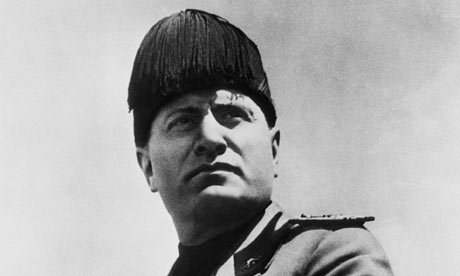
But beneath the surface trouble was being stirred up for the party by, oddly enough, Benito Mussolini.

Benito Mussolini gazes into the future, fails to spot the meat-hooks

Benito Mussolini gazes into the future, fails to spot the meat-hooks

Over the past two years, fascism had spread across Europe. The prospect of international conflict topped the political agenda and Mussolini’s threats to forcibly plant spaghetti trees throughout Abyssinia brought matters to a head.

This was the defining issue of the day. And on it, Labour was conflicted.

(more…)

Facebook Twitter Digg Delicious StumbleUpon

It’s a white man’s world in the lobby

20/12/2013, 10:38:02 AM

by Atul Hatwal

Since 1884 the cosy club of the lobby has shaped political journalism in Britain. With privileged access to MPs in the lobby outside the Commons’ chamber and a remit to report politicians’ views on “lobby terms,” (e.g. without naming the source), their judgement on what merits reporting and how it is written, frames the political debate.

However, for such an influential institution, relatively little is known about its members. For most other parts of Britain’s governing elite, such as MPs or the judiciary, there is a basic level of transparency. The gender balance and proportion from minority communities are a matter of public knowledge and debate.

But not with the lobby.

Uncut has analysed the membership of this august body to see how it measures up. The results paint a depressingly familiar picture.

In all, there are 155 accredited members of the lobby. Out of this total, 33 or 21% are women and just 7 or 5% come from minority communities.

For minorities, the reality is a little worse than even the raw numbers suggest. Only 5 of the 7  lobby journalists are employed by the types of news organisation to which aspirants will routinely apply in the hope of one day receiving the honour of a lobby pass.

Take a bow Rajeev Syal, the Guardian and Observer’s Whitehall correspondent, Samana Haq, ITN’s Westminster news editor, John Piennar, 5 Live’s chief political correspondent, Kiran Stacey political correspondent of the FT and Anne Alexander, Daybreak’s politics producer. You are the lucky ones.

Team diversity is completed by Adel Darwish, a longtime lobby hand now plying his trade for Middle East News, and Ahmed Versi who edits and publishes the Muslim News.

If the lobby looked like the country there would be over double the number of women journalists and three times as many from minority communities.

This institution has the dubious distinction of being about as representative than the House of Commons on which it reports where 23% of the MPs are women and 4% are from an ethnic minority.

(more…)

Facebook Twitter Digg Delicious StumbleUpon

Labour’s poll lead is slipping again. Here’s why

10/12/2013, 12:28:22 PM

by Atul Hatwal

In a momentous week for news, one development has understandably slipped by without major comment: the shift in the polls since the Autumn Statement.

The Sunday Times YouGov poll had Labour’s lead at 5 points, today’s Sun YouGov poll similarly has the lead at 5 points and today’s ICM poll in the Guardian also registers a lead of 5. In comparison, the average YouGov lead in the week before the Autumn Statement was 8 while the November’s ICM poll also had Labour 8 points up.

A drop of 3 points in Labour’s lead, across 3 different polls suggests something has changed since the Autumn Statement.

Although caution is advisable given it is just a week’s polling, this shift has been expected by many and if confirmed in the coming weeks, will presage significant problems for the party.

In the two months since Ed Miliband’s conference speech, politics has been defined by Labour’s energy price freeze commitment.

Regardless of the economics, it has been politically successful in driving debate within the Westminster bubble. Countless column inches and interview minutes have been expended on the fall-out from the announcement. So much so that politics became polarised around support or opposition to the price freeze.

And this is part of the problem.

Labour’s year long slide in the polls appeared to have been arrested in October and November, but the profile of the price freeze has been such that the polls in these months virtually became referendums on whether action should be taken to reduce energy prices rather than predictions of voting at the next election.

The shift in the polls over the past week suggests the impact of the energy price freeze is now diminishing.

There is a precedent for this type of development.

In September 2000, for one month, politics was turned upside down. William Hague’s Conservative opposition reversed months of double digit ICM poll deficits to leap into a 4 point lead. The cause was the fuel crisis.

(more…)

Facebook Twitter Digg Delicious StumbleUpon