




UNCUT: Chilcot will wag a long bony finger at Labour, but his report may miss the general election

14/04/2014, 03:50:25 PM

by Kevin Meagher

Like scorpions, official inquiries are unpredictable, require careful handling and invariably come with a sting in the tail.

The news that Sir John Chilcot’s much-anticipated Iraq inquiry will not now report until at least next year causes Labour some obvious difficulties. Clearly, reminiscing about why the country went to war at the start of the general election campaign wouldn’t be much fun.

Then there’s the question of how all those fickle Lib Dem switchers Labour is relying on will react when the report finds fault – as surely it will – in the case made for war and its subsequent prosecution.

Before the last election, the timing of Lord Justice Saville’s inquiry into the Bloody Sunday killings was a cause of similar consternation after officials in the Northern Ireland Office realised that his mammoth report would have to be stored while Parliament was prorogued during the election campaign.

The families of the victims were not happy at the thought of ministers or officials having access to it during the interregnum, preparing their defences or leaking extracts to the newspapers.

Read the rest of this entry »

Facebook Twitter Digg Delicious StumbleUpon

UNCUT: Labour should put the Lib Dems out of their misery

14/04/2014, 11:07:36 AM

by Jonathan Todd

When was the last time a Labour leader uncompromisingly made the pro-EU case in a head-to-head dual with Nigel Farage? Or floated licensing “head shops” for the sale of drugs? Or offered free sex to everyone in the former Yugoslavia?

It’s the Liberal Democrats, not Labour, that have reached out to liberal left voters on these issues. Their desperation to recover some of these voters, lost to Labour since forming a government with the Conservatives, has not extended to sexual favours. I just have a memory of Chris Morris “reporting” that Bono Vox, as he called the U2 singer, had made this proposition to the peoples of the former Yugoslavia. And I wonder whether the Liberal Democrats will get to that stage.

Because, while their tactics are getting more exotic, their poll ratings steadfastly refuse to get off the floor – in fact, the latest Comres poll sees them at 7 per cent, falling below the floor. Paradoxically, the polls also indicate that there is a decent chance that they’ll be in government in the next parliament. It can be debated whether Labour or the Tories are most likely to win the largest number of seats. But they both face a steep challenge to win a majority.

The battlefield is akin to World War I. Lions slogging it out on #labourdoorstep and the like. Donkeys unable to break out of their cultural and political citadels. Unless Labour can convince enough voters, predominantly in the south, that we have the competence to govern or the Tories can persuade sufficient, particularly in the north, that they have the heart to do so fairly, then neither will hold a majority. And the largest party in such a hung parliament may be tempted to come to an arrangement with the Liberal Democrats, creating the likelihood of them being in government for a decade.

Read the rest of this entry »

Facebook Twitter Digg Delicious StumbleUpon

GRASSROOTS: Where now for Labour on pensions?

11/04/2014, 11:12:39 AM

by Samuel Dale

It has been a chastening month for Britain’s pensions industry as regulators and the government have finally cracked the whip on its excesses.

In a series of policy announcements the government has launched a self-proclaimed “full frontal assault” on the industry. Pensions providers have entered the realm of banks, energy firms and politicians with a special place of distain in British hearts.

To tackle the problems, the government has ripped up the existing rules on annuities in the Budget sending insurers’ share prices south. It has imposed a 0.75 per cent cap on pension charges from next April and imposed full transparency of all costs.

And in a further blow to the sector the Financial Conduct Authority is launching a review into close-book pension funds to make sure savers are being treated fairly. Again, this sent insurers’ share prices tumbling.

No one can seriously accuse the government of bowing to vested interests in the pensions industry. They are at open war.

Former chancellor Nigel Lawson tells me the pensions industry is “the most powerful in the land” and he found it difficult to take on so this is no mean feat.

For Labour this creates a major political headache. Shadow pensions minister Gregg McClymont has been one of the most effective opposition ministers. He has a superb command of his brief and has made the political weather on pensions regularly.

Read the rest of this entry »

Facebook Twitter Digg Delicious StumbleUpon

UNCUT: As Labour attacks Sajid Javid’s appointment, new figures reveal how the party is failing on ethnic minority representation

10/04/2014, 02:37:01 PM

by Atul Hatwal

It’s not been a good twenty-four hours for Labour on diversity.

First, there was the ludicrous attack on the appointment of Sajid Javid to the equalities brief because he was a man, totally ignoring the fact he is the first British Asian to become a secretary of state as well as being someone who comes from a genuinely working class background.

Then there was the attack on him for having the temerity to be successful , so acutely dissected by Dan Hodges over at the Telegraph.

Now Uncut can reveal that Labour is failing on ethnic minority representation.

An analysis of selections in Labour’s 106 parliamentary target seats, and the 12 seats where current Labour MPs are standing down reveals that the party has managed to select just 13 candidates from minority backgrounds out of a total of 118 contests.

This means just 11% of Labour’s candidates in winnable seats will be from black and minority ethnic communities, compared to an ethnic minority population in the UK of 18% at the time of the 2011 census.

By the time of the next election, as the UK’s minority population approaches 20%, Labour’s best case scenario in the new intake will be non-white representation of just over 10%.

This is in stark contrast to the party’s performance in selecting women where shortlists have helped guarantee that 50% of all winnable seats will have female candidates.

Labour’s immediate response yesterday to Sajid Javid’s appointment was to complain that he wasn’t a woman. This mindset, where women seem to be considered more equal than ethnic minorities, clearly extends through the party into local selections.

Its a sad testament to the poverty of minority representation in the parliamentary Labour party that such a poor performance in selecting new candidates is still better than the current position where just 6% of the PLP is from a minority.

How the party addresses this abject failing is difficult: quotas are rife with problems, not least their political manipulation by those in control of which seats are designated as an exclusive short list.

However, what is undeniable is that Labour has a major problem.

Perhaps a little more attention to the party’s own record on minority representation and less flailing about to attack Sajid Javid is in order.

Atul Hatwal is editor of Uncut

Facebook Twitter Digg Delicious StumbleUpon

GRASSROOTS: Respect for Tony Benn is right, completely rewriting history is not

10/04/2014, 02:00:16 PM

by Kevin Feeney

When any controversial public figure dies, it is both normal and entirely natural for their followers and those inspired by them to whitewash their image a little in an effort to smooth out their rough edges.

Like most of those within the Labour Party who were rather less enamoured of the legacy of the late Tony Benn than other colleagues, I was entirely prepared to overlook the rather telling gaps in his more sympathetic obituaries. It was fine that they passed over his views on Mao, fine that they ignored his practical impact on Labour’s electability in the 1980s, fine that they left unquestioned his own claims as a tribune of democracy.

These were eulogies in the heat of the moment after a figure who they admired had passed on; the time for full and balanced reflections was later. Equally fine were those seemingly obligatory lists of “Issues where they were right” which we expect with any such figure; Benn certainly many of those, from Mandela to gay rights.

Except after a while, I started noticing something else creeping into that last list in Benn’s friendly obituaries. Owen Jones celebrated him not only for all of the above but also for ‘calling for peace talks when it was controversial to do so’ in Northern Ireland; praise he has reiterated in more than one place. It may be no surprise for Jones to rewrite history in such a manner, but less stridently left-wing voices have done so too; the editor of one prominent Labour website claimed that the presence of Gerry Adams and Martin McGuinness at Benn’s funeral was a ‘reminder of the difference he made’ as though this were a positive thing.

Indeed, “Northern Ireland” has begun inexplicably to seep into several lists of the man’s positive contributions. These claims cannot be allowed to endure unchallenged; nor can they be allowed to become part of that acceptable list of “good things” we all agree Benn stood for.

Read the rest of this entry »

Facebook Twitter Digg Delicious StumbleUpon

UNCUT: Miller’s gone but expenses are still toxic. What’s Labour’s plan?

09/04/2014, 11:18:59 AM

by Atul Hatwal

So Maria Miller has resigned and Sajid Javid has replaced her, meh. Contrary to some of the over-heated reports, Miller’s particular passing will have little lasting impact.

True, there’s one less woman in the cabinet, but Javid is from a minority community, an area where the Tories and Liberals are even less representative of Britain – let’s not forget that while there were previously 4 women in the full cabinet of 22 Ministers, there was no-one from a minority community.

The circus will soon  move on and there will be another crisis over which politicians and media can hyper-ventilate.

However, while Maria Miller’s political demise is ultimately unremarkable, there is a legacy from the affair; one that will persist regardless of whether she had stayed, resigned, or did the hokey-cokey daily on College Green.

The expenses issue is back as a fixture in British politics.

It won’t be as toxic as in 2009 (how could it be?), but as Andrew Lansley suggested on Newsnight last night, there are likely to be other Miller-type transgressions which come to light, that predate the new expenses regime.

And just as with Miller, each time the parliamentary standards committee (which is dominated by MPs) waters down or even changes the punctuation in a ruling by the parliamentary standards commissioner, the same battle-lines pitching media against politicians will be drawn.

The press will be in full cry and the most resonant soundbite to emerge in the past week will be repeatedly trotted out: “politicians should not be allowed to mark their own homework.”

The outrage of the fourth estate is understandable: a variant on this line was central to defining the public’s perception of the Leveson debate. In that case, it was the media who were not to be allowed to mark their own homework. 

Then, as now on expenses, the line also happens to be true.

Self-regulation doesn’t work. The experience across financial services, politics, media and schools everywhere is quite clear: teacher needs to mark the homework.

So politicians from all parties face a quandry.

Read the rest of this entry »

Facebook Twitter Digg Delicious StumbleUpon

UNCUT: Devolving £20bn is a big deal. Is Labour sure local councils can handle it? Really?

08/04/2014, 01:08:30 PM

by Atul Hatwal

Implicit in Ed Miliband’s big devolution speech today was a very, very large assumption.

When he promised that a Labour government would devolve £20bn of funding to partnerships of local authorities in the English regions, the Labour leader was assuming that local authorities are the best vehicles to distribute and administer the new funds.

This is far from proven.

It’s notable that the speech was made in Birmingham and marks the interim stage in Lord Adonis’ growth review. 

The track record of Birmingham council in typifies the sorts of problems that can occur when regional revival is left to traditional local authorities. Here’s none other than Lord Adonis on the subject, from earlier in this parliament,

“Let me give you my frank opinion, as one who has dealt with Birmingham City Council a good deal in recent years. The city needs to raise its game significantly in terms of leadership, performance and strategy…the city council has had…Weak strategic leadership alongside average (at best) improvement in the public services under its direct control.

Take education, which I know only too well from constant interaction with the city council…promoting reform to secondary education in the city has been like pulling teeth.”

Lord Adonis made these comments in a speech to the Lunar Society in March 2011, as Birmingham was preparing for a referendum on whether to move to a Mayoral system of local government.

Although the referendum was lost, the points made by Lord Adonis in favour of reforming the current system of local government still stand; all the more so if Labour is considering devolving such substantial amounts of funding to groups of local authorities.

Read the rest of this entry »

Facebook Twitter Digg Delicious StumbleUpon

UNCUT: A referendum on Europe would undermine our constitution (and yes, we do have a constitution)

07/04/2014, 01:11:01 PM

by Sam Fowles

By now tens of thousands of words have been written about the Nick Clegg vs Nigel Farage debates but I think you can sum them up in just three: They were rubbish. While no one was expecting either man to be an Obama (or even a Romney) we deserved a higher standard than what was essentially a playground spat.  The sheer absence of analysis, reasoned argument or basic factual accuracy was just embarrassing.

Nowhere was this more true than on the question of a referendum. Most commentators agreed that this was where Farage really scored points arguing “you (meaning the amorphous political/business/academic elite – i.e. anyone who happens to disagree with Farage) don’t want a referendum because you’re afraid of the ‘wrong answer’”. They’re right, Clegg couldn’t answer it. But that’s probably because the answer involves engaging with big, complex ideas like constitutional law and democracy. (Incidentally Nigel shouting “all the foreigners are making decisions for us” and Nick shouting back “they’ll take more if we leave the EU” doesn’t count as an adult debate about democracy).

Contrary to popular belief, we do have a constitution in the UK. It’s even written down (mostly). It’s just not all written down in one place. In the first instance the referendum debate isn’t about giving people a say it’s about being true to the constitution. Helpfully, if we are true to our constitution then, in the bigger picture, individuals will have much more of a say than they otherwise would. our constitution isn’t perfect but it has achieved a rare quality in constitutional law: It’s being mostly right most of the time.

Read the rest of this entry »

Facebook Twitter Digg Delicious StumbleUpon

UNCUT: Embracing the contributory principle for public services is how Labour’s offer can be big, bold and affordable

07/04/2014, 08:27:11 AM

by Jonathan Todd

In early January, Uncut reported on Andy Burnham’s “defining vision for health … pooling central government health budgets with local authority social care budgets to offer a joined-up approach to looking after our elderly. It makes eminent sense but carries with it a big uncosted price tag”.

Given that Ed Balls is responsible for making Labour’s sums add up, we speculated that this tag would prevent him from supporting this vision; a view subsequently affirmed by those who speak for the shadow chancellor and Labour leader.

There is a growing clamour for Labour to be big and bold. These calls, though, lack specifics. As was the case when leading thinkers wrote to the Guardian recently. Integrating health and social care, as in Burnham’s vision, is a specific example of bigness and boldness.

Balls’ nervousness about its’ price tag, however, is typical of the concerns of those who wish to “shrink Labour’s offer”. It’s thought that advocates of this strategy wish to minimise the risks that may attach to voting Labour, anticipating that if voting Labour becomes as riskless as possible, the unpopularity of the Tory-led government will secure Labour general election victory. An important source of political risk for Labour being the extent to which Labour creates opportunities for Tories to have justification in saying things like, “Labour policies are an uncosted risk to the government’s long term economic plan.”

Read the rest of this entry »

Facebook Twitter Digg Delicious StumbleUpon

UNCUT: Labour history uncut: The Communists come knocking

06/04/2014, 05:35:57 PM

by Pete Goddard and Atul Hatwal

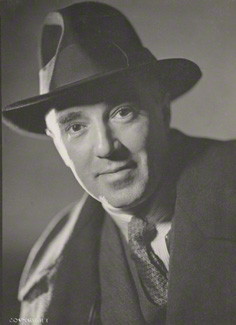
In November 1935, a letter flopped onto the Labour party doormat.  It was from Harry Pollitt, boss of the Communist Party of Great Britain, wondering if the time was right for a left-wing super team-up.

In the application to affiliate his party to Labour, Pollitt stated the Communists were prepared to work, “honestly and sincerely,” as part of Labour, “not as a manoeuvre or for any concealed aims.”

NPG Ax136094; Harry Pollitt by Howard Coster

Harry Pollitt – Communist leader and G-man

He was half right – he certainly wasn’t concealing his aims. The following week Pollitt made a speech saying that the Communists wanted to join the Labour party to “transform it into a real broad federal organisation in spite of the intentions of the most reactionary Labour leaders.”

“The most reactionary Labour leaders,” turned out to be basically all of them. The NEC responded to Pollitt curtly with a missive that included the twin sentiments of “off” and “sod”, not necessarily in that order.  

Pollitt wasn’t so easily discouraged though and set a target of forcing a vote on affiliation at Labour’s conference in October 1936.

He had some grounds for optimism. While Labour’s leaders were implacably opposed to mucking in with commies, the grassroots were not so sure.

Fascism was on the march on the continent and Labour’s response was hardly a model of vigour.

Read the rest of this entry »

Facebook Twitter Digg Delicious StumbleUpon