




Archive for 2010

Alan Sugar is right. Nick Clegg is wrong. It’s people that matter, not “progress”.

24/11/2010, 03:30:09 PM

by Anthony Painter

Lord Alan Sugar couldn’t care less where you’ve come from or what university you’ve been to. All he cares about is how you acquit yourself both personally and professionally. Your individual performance matters, but so does your emotional intelligence and ability to work in a team. He judges people on their merits as he sees them. To impress him you have to think on your feet, adapt yourself to the task in hand. It’s not merit in a formal sense. It’s about creativity and worth.

Nick Clegg has sought refuge in “social mobility”. Politicians at a low ebb of creativity and imagination tend to. Let’s take social mobility to mean ending up with a higher status or in a more elevated social class than your parents. In this regard, Lord Sugar is highly socially mobile. Nick Clegg is pretty static. The former was luckily enough to be born into a north London working class family; Clegg had nowhere to go really, but good for him in maintaining his family’s class and status.

Straight away we are seeing how ludicrous social mobility can be as a concept. It gets worse. By focusing on social mobility we exacerbate that very British bad habit of obsessing with class and status. Do we really want the measure of “success” to be your class (economic position) or status (social standing)? In measuring success in this way you only exacerbate social division and stigmatise “failure”. In a highly mobile society, anyone who doesn’t end up with a higher status or in a higher class has failed. And to achieve the supposed idyll of perfect social mobility implies a monumental and brutal task of social engineering, the like of which won’t be contemplated- rightly, because it’s monstrous.

Just before the left gets too smug, it has a similarly divisive view of the world. Nick Clegg’s Hugo Young speech has been adversely criticised by some on the left for failing to appreciate the link between inequality and diminished social mobility. This is just as bad. First, it accepts the end of social mobility unquestioningly. Second, it reduces the means to that end to greater “equality” (a lower Gini coefficient). The attitude is basically “we’ll set you the goal and give you help to fly up the social ladder and when you don’t we’ll compensate you anyway then we’ll play the game again with your kids and their kids”. Politically, it’s a nonsensical proposition. (more…)

Facebook Twitter Digg Delicious StumbleUpon

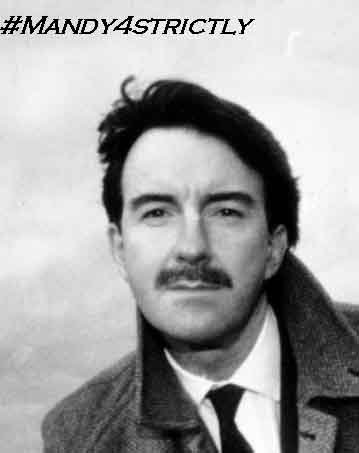
Mandelson tells friends he would love to do Strictly

24/11/2010, 08:35:11 AM

Scandal! Peter Mandelson has told close friends that, contrary to reports, he has never been approached to appear on Strictly Come Dancing.

According to a close confidente of the granddaddy of the Labour movement, if Peter were to be invited to trip the lacquered boards he would readily accept.

This news directly contradicts assurances given to Uncut by the BBC that the dark lord of the dance had been given a chance to embrace his inner Widders.

Something here is amiss. Someone is being economical with the actualité.

Whom does one trust? Lord M, renowned the world over for his candour. Or the BBC? Less an aunty, these days, than a punch-drunk uncle.

Uncut is on the case. Our intrepid journalistic team will leave no stone unturned. We have a source close to the heart of the controversy. We shall call him Brucethroat. We will follow the sequins.

Uncut vows to  get to the bottom of Strictlygate. There will be no whitewash at White City…

Facebook Twitter Digg Delicious StumbleUpon

Wednesday News Review

24/11/2010, 08:25:16 AM

Clegg pleads with students

Clegg said he would defend the planned trebling of tuition fees, despite campaigning for their total abolition during the election: “I will defend the government’s plan for reforming the funding of universities, even though it is not the one I campaigned for. It is not my party’s policy, but it is the best policy, given the choices we face.”

His remarks came as it emerged that threats to Clegg’s personal safety had led his security advisers to review his travel arrangements. He has been told by his protection officers it is no longer safe for him to cycle from his south London home to Downing Street, and that he must travel by car. He has also dropped plans to visit university campuses, once the heartland of his support base, until emotions have subsided. – The Guardian

Nick Clegg, the deputy Prime Minister, is expected to be handed a letter by a group of students who claim “no amount of twisted reasoning” can hide the fact the party lied to young voters. It will read: “In the general election hundreds of thousands of young people, many voting for the first time, chose your party … they identified in particular with your public pledge to oppose raising tuition fees.”We call on you to withdraw Lib Dem support for Conservative cuts to our education system, or face the disappointment and anger of a generation that has been betrayed.” Nick Clegg on Tuesday night urged students to call off the protest, claiming the coalition’s plans were “even fairer” than the graduate tax supported by the National Union of Students. – The Telegraph (more…)

Facebook Twitter Digg Delicious StumbleUpon

The Tories can’t have the Irish crisis both ways

23/11/2010, 03:00:55 PM

by Pat McFadden

The UK government has been determined to paint our economic situation as a domestic one, blaming the Labour government for the deficit and thus for their response to it in terms of the spending cuts set out in the CSR. This politically-led approach to the crisis also requires them to play down or ignore the international nature of it. After all, the more they talk about common problems being faced by countries across the world, the more threadbare their case against the previous government becomes. It can’t all be Labour’s fault if a number of countries are going through the same difficulties.

You could see this approach reflected at the recent G20 summit. Instead of shaping the agenda as Britain did when Gordon Brown chaired the G20 summit in London last year, we appeared to play a marginal role, with little to say about how countries should work together, or what the response should be to the exchange rate tensions and the discussion of trade imbalances that dominated the summit. When the prime minister was asked what he had been doing at the summit, he said that he had been lobbying for England to host the 2018 world cup – a good goal to aim for but not the reason he was there.

Enter Ireland, with a flight of deposits causing a crisis of confidence in the country’s economy – and this after the country has implemented the kind of austerity programme the UK government is setting out on. Yet when government ministers talk of the Irish economy’s problems, they don’t want to talk about the Irish government’s fiscal policies. No. They insist that In Ireland the issue is all about banks, not the actions of the government.

This contradictory stance exposes their political strategy in the UK. How can it be all about banks in Ireland but all about Labour government profligacy in the UK? The truth is that the last few years has seen the unfolding of a banking crisis across the world to which governments of all stripes have had to respond. In the UK, the Labour government responded in a way that was determined not to let recession turn into depression. That’s the reason for the deficit, not government profligacy. And in the same way, it is a banking crisis that lies at the core of Ireland’s economic problems.

I hope the Irish economy recovers. It is true that as neighbours and trading partners, it is in the UK’s interests to have a healthy and stable Irish economy. But it does no one any good for our government to offer one version of events when it comes to talking about our own economy and another one entirely when talking about others.

Pat McFadden is Labour MP for Wolverhampton South East and a former BIS minister.

Facebook Twitter Digg Delicious StumbleUpon

Time is not on Ed Miliband’s side

23/11/2010, 10:00:57 AM

by Dan Hodges

Were Ed Miliband ever to tear himself away from the poetry of his shadow minister for political and constitutional reform, an admittedly tough ask, he should try a little Kipling. The youngest ever recipient of the Nobel prize for literature knew a thing or two about the virtue of patient fortitude.

“If you can keep your head when all about you
Are losing theirs and blaming it on you,
If you can trust yourself when all men doubt you,
But make allowance for their doubting too;
If you can wait and not be tired by waiting”.

To many around the Labour leader, those words could serve as a political mission statement. You have time, they argue. Definition is important. But early mistakes will prove more definitive than early successes. Tread carefully. No slip-ups. Trade time for political space.

Words of caution invariably fall upon keen ears when addressed to politicians. They are by nature risk-averse. Our senior statesmen occupy precarious positions; their office windows overlook an imposing drop. The decisions they take have consequences few of us will replicate in our own working lives. (more…)

Facebook Twitter Digg Delicious StumbleUpon

Coulson’s imminent departure is just the beginning

23/11/2010, 07:00:12 AM

by Tom Watson

Andy Coulson will resign as Downing Street communications director within the next few weeks. When the moment comes, his powerful but embarrassed friends will breathe a sigh of relief. They want it to be the end of the phone hacking scandal. It is just the beginning.

For, as any investigative journalist will tell you, it’s always the cover up that sinks you. Senior executives have been clinging onto the line that “Clive Goodman was a rogue reporter” like it was a life belt on the Titanic. The unanswered questions are pouring in.

There is a police investigation and at least three court cases. There are two Parliamentary enquiries on top of a damning report by the media select committee. There are whistleblowers. Insiders are breaking ranks, beginning to talk. Shareholders are asking questions. Coulson may be on his way, but the story won’t go away, despite hardly being reported in some of the best-selling newspapers.

There will be adverse criticism of the Prime Minister’s judgement, but, frankly, that’s a side show. In the degenerate world of Westminster politics, Coulson was a “success”. He got Cameron into number 10. He served his master well. Now it’s over, a lucrative, if unrewarding, career in PR awaits him, whatever the various enquiries hold for him in the short term. (more…)

Facebook Twitter Digg Delicious StumbleUpon

Tuesday News Review

23/11/2010, 06:55:21 AM

Tory right anger over Ireland bailout

The Euro-sceptics in the Conservative party including John Redwood and Douglas Carswell believe Britain is becoming embroiled in a situation which is likely to only get more expensive and fear it will damage their ability to take political power back from Brussels. In addition, the Adam Smith Institute said that the Government’s decision to offer around £7 billion in aid, including direct loans to Dublin, was a “bad deal” for Britain. Ireland has been forced to take the £77 billion economic bail-out in a deal designed to save the euro. As a non-Euro country, the UK was not obliged to contribute but decided to offer support amounting to the equivalent of £300 per household because of the close trading relationship with Dublin. – The Telegraph

The Eurosceptic pressure on the government was highlighted when Douglas Carswell, a prominent backbencher, criticised plans for Britain to provide around £7bn in loans to Ireland. “We shouldn’t be paying to help keep Ireland in the euro,” Carswell told BBC Radio 4’s Today programme. “If we are going to pay to solve this crisis we should be helping to pay Ireland to quit the euro.” Osborne reached out to the Eurosceptics shortly after Carswell’s appearance on Today by indicating that Britain’s help for Ireland was on a bilateral basis and that he was hoping to withdraw Britain from a €60bn EU (£51.34bn) fund. “It is a bilateral loan to Ireland to reflect the fact that we don’t want to be part of a permanent bailout mechanism for the euro,” the chancellor said. – The Guardian

Ed’s back

Returning from two weeks of paternity leave, the Labour leader said shadow Wales secretary Peter Hain would lead a review which will report to next year’s annual conference. The commission will look at policy, the party’s organisation and its relationship with the trade unions. Explaining why he did not enjoy being out of power, Mr Miliband told MPs: “You see the Tories and the Liberal Democrats doing terrible things and it is frustrating. But opposition is about the long-haul and digging in.” Shortly after the weekly meeting of Labour MPs, an ICM opinion poll for the Guardian put support for Labour at 38% – the highest it has been since October 2007. The Conservatives are down three to 36% and the Liberal Democrats dropped to 14%, their lowest result in an ICM poll for nearly 10 years. – Sky

Labour has pulled ahead sharply in the latest Guardian/ICM poll, as both coalition parties lose support. The findings, published as Ed Miliband returns to Westminster after paternity leave, suggest only a minority of voters believe the coalition is taking Britain in the right direction. Labour support in a theoretical immediate election has risen to 38%, two points higher than last month and the best in any ICM poll since Gordon Brown cancelled the planned 2007 general election. Between them the coalition parties have shed five points. Conservative support has dropped three since last month to 36%, while the Liberal Democrats have fallen two points to 14%. The Lib Dem score is the lowest in the Guardian/ICM series since May 2001, and the lowest in any ICM poll since October 2007. – The Guardian (more…)

Facebook Twitter Digg Delicious StumbleUpon

Seven (deadly) tests for Ed Miliband

22/11/2010, 04:30:49 PM

by Nick Pearce

Returning from paternity leave, Ed Miliband has set out his stall on how Labour will rethink its policies under his leadership. Most leaders of the opposition establish policy reviews of one kind or another, to wipe the policy slate clean. David Cameron set up a number of policy review groups that produced little but headaches for him, in contrast to his wider brand repositioning, which was largely successful. In his first two years in the job, he established a clear character for his leadership of the Conservative party: liberal, green and centrist. In those early days, the direction of travel was much more important than the detail.

Referring to Cameron’s scene-setting Arctic jaunt, Mr Miliband has said he ‘won’t do huskies’. So what will be the character of the Labour party under his leadership? What will be the core components of its political identity? To help work this out, here are seven character tests for the Labour leadership.

1. Will Labour be a liberal party?

As the shadow of 9/11 has receded, British politics has become more liberal. Barring a catastrophe, it will remain that way. Parties are also more liberal in opposition than when they exercise the levers of power for themselves, and in this Labour will be no different. Younger cohorts of voters are more tolerant and diverse than older ones and so the underlying trend is towards a more liberal polity.

Ed Balls’ weekend comments confirm the liberal direction of travel set out by Ed Miliband when he became leader. The challenge for Labour is to reconcile this liberalism with currents of small ‘c’ conservatism among the electorate, which is now both increasingly liberal and more conservative in unpredictable ways. In particular, it will want to respond to the public’s desire for swift and tough action to be taken against incivility and antisocial behaviour, which spans the social classes but is particularly acute in Labour-held seats. No political party can safely allow itself to be seen as indifferent or unresponsive on low-level crime and antisocial behaviour. (more…)

Facebook Twitter Digg Delicious StumbleUpon

Have some ministerial jobs become too hot to handle?

22/11/2010, 02:00:41 PM

by Kevin Meagher

PHIL Woolas’ current predicament owes at least something to his being a tough immigration minister in the last government. With a large Muslim population in his Oldham backyard and with boundary changes making his marginal seat more ethnically diverse, his day job hardly endeared him to a big chunk of his local electorate. The rest is history.

Would Woolas have faced the same little local difficulty if he had not been immigration minister? And would he then have run the campaign he ran?

However this story eventually plays itself out, what it serves to remind us is that there are certain ministerial jobs that are not for the faint-hearted. Immigration minister is the obvious role that is always difficult for Labour politicians. It is the type of posting where you are not going to get any thanks, whatever you do. Too hardline for some, too wishy-washy for others.

Ironically, for such a complex issue, there are, ultimately, only three positions you can have on immigration. There is too much of it. Not enough of it. Or the balance is just right. You can discount the last option because no-one is ever happy with the status quo. Most people in the country opt for the first. Many in the Labour party for the second. On this issue, more than just about any other, you will never please all of the people all of the time.

Labour is, of course, instinctively sympathetic to the plight of refugees and immigrants. And justly so. But the hard reality is that not all deserve to stay. Most rational people accept that. Some, however, do not want to follow through the brutal logic. (more…)

Facebook Twitter Digg Delicious StumbleUpon