Letter from Wales: “Wales will cease to exist!”

03/01/2014, 09:00:40 AM

by Julian Ruck

This is the view of one of the Welsh government’s own education adviser’s, Professor David Reynolds, following last month’s PISA report (Programme for International Student Assessment, published by the OECD on 3.12.13). In the past he has also commented that “Wales is in the last chance saloon” and will be “economically dead”, if it doesn’t start taking seriously the abysmal state of education standards in Wales.

The PISA report referred to confirms unequivocally every word I have been saying both here and elsewhere, about the crisis of opportunity that is facing Welsh children in a modern, global world. Wales really is the supreme dunce of dunces in the UK when it comes to the Three R’s, let alone anything remotely resembling academic excellence. One might not agree with Michael Gove and his free for all policies but his comment in respect of Wales and its primitive state of academic learning, “You only have to look across the Severn bridge to see a country going backwards,” undoubtedly has enough decibels to drown out a punk rock band blasting away at Glastonbury!

Every year Welsh education gets worse and what does Carwyn and his Team Druid have to say about this disgraceful state of affairs ? The usual plaintive and nauseating wails of “It’s all everyone else’s fault and give us time!” The only thing our Carwyn ever gets passionate about sources tell me, are the dreams of an infatuated love affair with an obliging rugby ball.

Give them time?!! They’ve had 14 years to put things right and to stop giving Welsh school children a fourth class education.

Complacency! Complacency! Complacency!

(more…)

Facebook Twitter Digg Delicious StumbleUpon

Labour history uncut: Ernie Bevin “hammers George Lansbury to death” and changes the course of party history

02/01/2014, 02:18:31 PM

by Pete Goddard and Atul Hatwal

Labour might have spent most of 1934 duelling between the leadership and the Socialist League but it didn’t seem to cause too much harm at the ballot box. The party picked up two seats from the Conservatives in by-elections, they nicked one from the Liberals and they also beat the splitters of the ILP to win back Merthyr – a great boost to the party’s Scrabble score.

In a world without opinion polls, these by-election successes seemed to point the way to a Labour resurgence at the next election, expected sometime in late 1935.

The case for optimism was boosted in June 1935 when the ailing Prime Minister, Ramsay Macdonald retired, to be replaced by Tory Stanley Baldwin.

Although the Labour movement was agreed that Macdonald was Satan incarnate, the rest of the country couldn’t see the horns and pitchfork and he had remained popular as the head of the national government. With his resignation, the government’s fake moustache and glasses were removed and it suddenly looked like the Tory outfit it had been all along.

Everything was falling into place. The election would now be a clear choice between the Tories and Labour.  Yes the Liberals were lurking around too, but everyone just assumed they’d support whoever won to form a majority government because, well, Liberals right?

But beneath the surface trouble was being stirred up for the party by, oddly enough, Benito Mussolini.

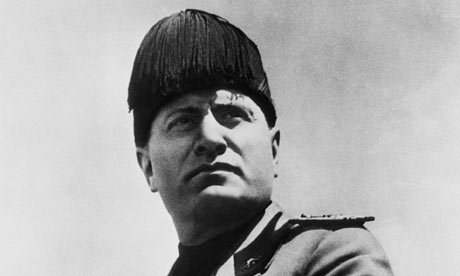
Benito Mussolini gazes into the future, fails to spot the meat-hooks

Benito Mussolini gazes into the future, fails to spot the meat-hooks

Over the past two years, fascism had spread across Europe. The prospect of international conflict topped the political agenda and Mussolini’s threats to forcibly plant spaghetti trees throughout Abyssinia brought matters to a head.

This was the defining issue of the day. And on it, Labour was conflicted.

(more…)

Facebook Twitter Digg Delicious StumbleUpon

The big ideas of 2014 and what they mean for Labour: summing up

01/01/2014, 07:16:21 PM

by Jonathan Todd

I might be perverse and deficient to have enjoyed finding time during Christmas week to assess what Prospect’s big ideas of 2014 mean for Labour. I worry, though, that this is all the time that anyone in Labour has spent on some of these ideas. Larry Summers may, for example, be asking big questions about monetary policy but Labour still has precious little to say on this economically central topic.

Labour not only needs to get our thinking caps on in 2014 but convince the electorate that we have solutions to the big challenges that will face the UK of May 2015. This is a divided electorate. Between the 99% and the 1%, global London and the provincial shires, and those that see government as the problem and those that see it as their safety net.

Another division emerges beyond some of Prospect’s ideas. Between the doers and the downers. The doers are collaboratively consuming, popping up everywhere and making new news. In other words, seizing for themselves the opportunities of our times. Public policy appears barely relevant to much of this, except perhaps to the extent that it has facilitated the digital revolution. Certainly, politics feels marginal to the doers, who are too busy doing to have much care for it.

In contrast, the downers – those fuelling the politics of rejection – are angry with politics. As they are angry with much else. As the doers grasp fresh possibilities, the downers feel all their possibilities have closed down.

Successful politicians must make themselves relevant to the doers, while pacifying the downers. These are very different people, best suited to very different messages. The doers are only interested in politicians if they can enable them to do more. Maybe extending access to devices of more measured lives, while tackling the new risks identified by cloud sceptics, are some means by which this might be done.

(more…)

Facebook Twitter Digg Delicious StumbleUpon

A party preparing for government forgets gesture politics and focuses on what really matters

01/01/2014, 02:13:01 PM

by Kevin Meagher

The relative lack of female train drivers may well be an issue that could do with rectifying, but is it really a “national scandal?”

Mary Creagh thinks it is. The Shadow Transport Secretary gave a quixotic interview with the Daily Telegraph over the Christmas break where she blamed children’s television programme Thomas the Tank Engine for “negative stereotypes,” arising from the lack of women choo-choos.

“The only female characters are an annoyance, a nuisance and in some cases a danger to the functioning of the railway” she said, as the internet rocked with mirth.

When passengers are ruing New Year fare increases while enduring the misery of another year of overcrowded trains it seems indulgent – and unfocused – to alight on gender stereotyping – if indeed it is such a thing –  in a single kids television show (a period one at that) as the top issue for Labour’s frontbench transport team to bother about.

And, it would seem, pointless too. Has the decision of haulage giant Eddie Stobart to name its entire fleet of wagons after women had any appreciable effect on female recruitment into long-distance lorry driving? (Answer: only 0.5% of the UK’s 300,000 truck drivers are women, so, no).

In fairness, Creagh was simply backing a campaign led by train drivers’ union, Aslef. It’s not that the general point about the lack of women in the rail industry is not a worthy one, but it is an undeniably marginal one when Labour is so flaky on the big transport issues like HS2.

(more…)

Facebook Twitter Digg Delicious StumbleUpon

The big ideas of 2014 and what they mean for Labour: international challenges

31/12/2013, 07:30:45 PM

by Jonathan Todd

Yesterday, we had a look at the Prospect big ideas for 2014 that will impact domestic policy. Today, it’s the turn of international arena; Prospect identify 3 key challenges.

1. Secular stagnation

What if Larry Summers is right? And what if he is wrong?

The global economy has, according to Gavyn Davies’ summary in Prospect of the argument recently made by the former US Treasury Secretary, been grappling with problems of excess savings and under-confidence for well over a decade, raising profound questions about monetary, fiscal and exchange rate policy in the US and the rest of the world.

In lay terms, Summers is saying that this recovery from recession is different and will not kick in as recoveries from previous recessions have done. Gloomy days are here to stay. If he’s right, it will be harder for Osborne to say in May 2015: “Haven’t I done well?” Equally, the obstacles between an incoming Miliband government and securing its economic objectives may be insurmountable. Still, if this is hand that Miliband is dealt, he should reflect how he’d play it.

Secular stagnation is a term usually associated with the 1930s depression and was revived by Summers. His argument that this is caused by a dearth of investment opportunities reminds me of the latest Robert D. Atkinson and Stephen J. Ezell book, which provides an original and convincing analysis of the failings of western capitalism.

But Summers stretches credulity in the incredibly basic sense that the 1930s ended and the post-war boom arrived. It need not take another world war for a similar cycle to occur. The digital revolution and the rise of the rest create tremendous opportunities. While they also pose challenges, their potential and inherently cyclical nature of capitalism makes Summers seem too downbeat. Labour should focus on overcoming these challenges – which may require the slaying of some Labour sacred cows – and not presume that we are stuck in an inescapable secular stagnation.

2. The new Cold War

How does Labour see the future of the Middle East?

Beyond the Arab Spring, it seems ever less likely that we shall arrive at a Middle East of liberal democracies and ever more likely that we’ll confront a region polarised between Shia Iran and Sunni Saudi Arabia. This is the new cold war, which is as hot as hell in Syria. If Labour wants to confront the Middle East as it is, rather than as we would wish it, we need to think through the implications of the ever more encompassing and visceral rivalry between Iran and Saudi Arabia.

(more…)

Facebook Twitter Digg Delicious StumbleUpon

The Uncuts: 2013 political awards

31/12/2013, 03:22:37 PM

Another year slides by. Historic figures shuffled off this mortal coil, the political pendulum swung back, then forth and we end with Labour holding onto a poll lead, albeit halved since last year.

Sorting through the detritus of the year that was, we’ve decided to revive our annual Uncut awards. These beacons of prestige are awarded on the basis of the skill and judgement of the team at Uncut. They represent our opinion, have your say in the comments

Politician of the year: Nelson Mandela

Even in death, Mandela reminded us of the power of politics to achieve great things. Contrary to the rose tinted reminisces for a secular saint that suffused so many obituaries, he was in many ways a typical politician. There’s ample evidence that he harboured the same deeply held personal emnities as most politicians, that in private he was far from the engaging avuncular figure of myth and that his family felt him to be distant.

But what distinguished him was his political judgement.
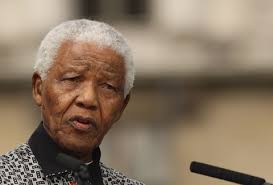
MandelaMandela knew what needed to be done and ruthlessly pursued it – almost regardless of his personal predilections or the cost.

This is what made him great and what could so easily distinguish so many of our politicians – no need for sainthood, just a bit more conviction, some hard-headed decision-making and a little less focus-grouped tinkering.

Political speech of the year: Ed Miliband at Labour conference

During the autumn of 2007, there was giddy talk of an imminent general election and an increase in Labour’s majority. Then came George Osborne’s speech to Conservative party conference, committing to cut inheritance tax. The waves of Labour excitement quickly turned to fear. This was the closest Gordon Brown ever came to winning a general election and he was fatally weakened thereafter.

Ed Miliband made the political speech of 2013 by delivering the conference speech with the biggest impact since Osborne’s. The steadily improving economy, Falkirk and Tory ascendancy over debates like immigration and welfare had Labour on the back foot throughout the summer.

The energy price freeze reversed fortunes as dramatically as inheritance tax 5 years previously. Back pocket calculations were central to both, as they will be in May 2015. It remains to be seen if Osborne will then be as hobbled as Brown was in May 2010.

Brass neck of the year: Ed Miliband over Falkirk

Chutzpah. Not a quality that immediately leaps to mind when thinking of Ed Miliband, but events in 2013 proved he has an abundance of it.

In July, the Labour party suspended the union join scheme, which had been used by Unite to recruit new members in Falkirk ahead of the parliamentary selection. The party statement claimed,

““In the light of the activities of Unite in Falkirk we will end the ‘union join’ scheme… due to the results of Unite in Falkirk it has become open to abuse but also open to attacks from our opponents that damage Labour.”

Ed Miliband launched his proposals to reform the union link that month, castigating Unite,

“‘I am here to talk about a different politics, a politics that is open. Transparent. And trusted. Exactly the opposite of the politics we’ve recently seen in Falkirk. A politics that was closed. A politics of the machine. A politics that is rightly hated…’

At the time, it seemed a principled stand. But appearances turned out to be deceptive.
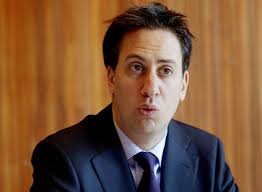
Ed Mili

(more…)

Facebook Twitter Digg Delicious StumbleUpon

If Labour really wants more working class MPs, it should insist more candidates are local

31/12/2013, 10:25:05 AM

by Kevin Meagher

The Labour party has always been a strange brew. Intellectual leftists have rubbed up alongside middle-class progressives and gesture politics poseurs. But the party’s strength remains the support it draws from the industrial, urban working-class of the north and midlands.

Yet while the former groups remain heavily in evidence in today’s party, there are now a decreasing number of people on the Labour benches in parliament that look and sound like the majority of working class people who actually vote Labour.

It’s part of a wider problem. A recent report by the Policy Exchange think tank looking into the public appointments system found that “socio-economic background…is neglected by most governmental bodies responsible for public appointments and for equality policies” and recommends addressing the “forgotten dimensions of diversity”.

The report cites the example of magistrates who, as volunteers, “do not need to achieve legal qualifications or a particular career level” before being appointed and yet are still overwhelmingly drawn from a narrow middle-class professional elite. In Manchester and Salford, nearly nine out of ten lay magistrates are from higher managerial and professional backgrounds. Justice, like politics, fails to look like the people it serves.

Plus ça change. The party of working-class heroes Ernest Bevin and Nye Bevan was still led by public schoolboys like Clement Attlee (Haileybury) and Stafford Cripps (Winchester College), Hugh Gaitskell (ditto) and Hugh Dalton (Eton).

At this point it’s important to caveat the whole line of argument about Labour and its diminishing working class-ness (as Eric Joyce recently pointed out). Rather than a single group, ‘working class’ vis-à-vis Labour politics, now has two meanings.

The first definition covers the sons and daughters of manual workers who have gone on to university and if not a career in our most august professions, (which remain defiantly nepotistic) at least had office jobs (often, courtesy of politics) before becoming MPs.

(more…)

Facebook Twitter Digg Delicious StumbleUpon

The big ideas of 2014 and what they mean for Labour: domestic policy

30/12/2013, 06:21:01 PM

by Jonathan Todd

Nothing says Christmas like the Prospect feature on the big ideas of the year ahead. At least in the bedrooms of geeks. Thinking about them, especially when there is turkey to be eaten and mulled wine to be drunk, is the preserve of the pointy-heads.

At the same time, nothing says unprepared like a Labour party that hasn’t thought through the implications of these ideas. Uncut is here to help. The turkey and mulled wine were untouched for long enough for us to identify and discuss the most important question raised for Labour by the pot pourri of ideas.

Prospect’s annual feature is a bit of lugubrious beast, so we deal with them in three posts looking first at domestic challenges, then international issues and finally drawing together the conclusions for Labour next year.

So, first up is domestic policy, where there are 9 big ideas:

1 Rejectionist politics

How will Labour react to UKIP’s likely strong performance in 2014’s European Parliament elections? And the election to this parliament of more nationalists than ever before?

The beltway consensus is that the anti-beltway chief, Farage, will be the big winner of the 2014 European elections. It’s virtually factored into the political stock prices of 2014. The bigger doubt is whether Farage’s stock price can remain high till May 2015.

While my suspicion is that UKIP will be back around 5% by May 2015, their strong performance in the European elections will put pressure on David Cameron, as his strategy for containing UKIP will seem to be failing. Labour should note, though, that Farage is part of a broader rejectionist trend uniting UKIP with both the Tea Party in the US and populist parties of the left and right across the EU.

This trend sees all politicians as being as bad as each other and is expected to result in more nationalists than ever before ending up in the European parliament. The only way for Labour MEPs to defeat them may be to align with Conservative and Liberal MEPs – potential validation of the UKIP charge that they are all the same.

Labour needs a strategy for the EU that is both far-sighted and imbued with popular resonance. What part may be played in this by supporting an EU referendum is a related debate.

2. Beginning of the end of QE

What’s Labour’s view on monetary policy?

Quantitative Easing (QE) is “the biggest monetary policy experiment in the history of the planet,” according to Richard Lambert, a former member of the Bank of England’s monetary policy committee. It’s an unfinished experiment of central banks in the US, UK and the rest of the EU. It seems to have averted depression. But if it is withdrawn too quickly, it may trigger recession or worse, while if it is withdrawn too slowly, it may sustain destructive inflation.

(more…)

Facebook Twitter Digg Delicious StumbleUpon

Christmas special: It’s a wonderful Labour life

25/12/2013, 08:00:32 AM

by Rob Marchant

(With apologies to the late Frank Capra)

Christmas Eve, 2013: snow was falling fast in the small town of Leftford Falls, the stores were packing up for Christmas and Edward Bailey – known to his friends as Ed, and his detractors as “Red Ed” – had finished work for the day at his little family savings-and-loan business.

It had been a very difficult year: the business had been established a hundred years before, to provide help to “the many not the few”, as its slogan ran. This Christmas, it was just about keeping its head above water, in troubled economic times.

Meanwhile Lennie M. Potter, the power-hungry boss who owned half of Leftford Falls, was cooking up a plan to secure the one piece of the town he had never yet managed to get hold of – Bailey’s company.

Seeing that the savings-and-loan was in difficulties, Potter had decided to turn the screws further by declining to cooperate in Bailey’s clever new scheme to save his little business. The scheme was a bit complicated to explain, but Bailey’s idea was that the company would get more money, more power would go to ordinary people and less to Potter. Potter, needless to say, disagreed.

In fact, Bailey had never ventured much outside of his neighbourhood of Leftford Falls, because he always had the fear that, when he came back, Potter would have taken over the whole place.

To cap it all, Bailey’s own bank – a co-operative enterprise headed by the clownish “Uncle Billy” Flowers – had just gone bankrupt. Indeed, thanks in part to the foolish actions of uncle Billy, the financial base of the whole savings-and-loan business was now at risk.

So, on that last evening before the holidays, everything had come to a head. There was only one thing for it: he would have to go cap-in-hand to Potter, and beg him for a loan to get his business back on the straight and narrow. Surely Potter would see that ordinary people would be better off that way? He couldn’t see Bailey go to the wall, could he? It was Christmas, after all.

(more…)

Facebook Twitter Digg Delicious StumbleUpon

Letter from Wales: Worried about public service cuts? Never mind, Carwyn’s splashing taxpayer cash on pubs instead

23/12/2013, 09:00:02 PM

by Julian Ruck

You think I’m joking?

According to the Wales Eye investigative website (fronted by former BBC Wales reporter and presenter Phil Parry) Carwyn’s government dished out £700,000 of taxpayers’ hard earned to an up-market boozer, The Cross Foxes, in Dolgellau Gwynedd – which naturally went to the wall. The Welsh government tends to prioritise businesses that are likely to fail.

As if this isn’t bad enough, Carwyn’s Welsh Labour also gave £250,000 of taxpayers’ money to the Fire Island pub in Westgate Street Cardiff while another £189,000 was given to Jolyons, a ‘boutique’ boozer on the city’s Cathedral Road – funnily enough I had a glass or two of wine in Jolyons a couple of months ago. No wonder the prices were top drawer, Carwyn and his Crony Cabinet of Tafia incompetence trying to screw the Welsh again!

I bet it’s freebies all round every time they go in there.

The insanity of it all however doesn’t end here. If you remember my column of a few weeks ago, Carwyn and his team druid has blown £10m on nonsensical health initiatives trying to get the Welsh to stop boozing and scoffing!

Of course the real outrage is the fact that Carwyn is bunging the bucks into wealthy areas of Wales instead of seeing to the areas that actually need it, like the Welsh valleys. For example Wales Eye reminds us that ‘ The Welsh Government spent a further £356,000 persuading food manufacturer Halo to relocate to Newport, one of the wealthiest parts of Wales, when it was formerly in Tywyn, Gwynedd, one of the poorest.’

(more…)

Facebook Twitter Digg Delicious StumbleUpon