




Labour history uncut: All change! Labour gets a new set of factions

22/10/2013, 10:27:30 AM

by Pete Goddard and Atul Hatwal

In the run up to the 1932 Labour party conference in Leicester, memories of the previous year’s electoral wipe-out were still raw, not to mention the festering resentment at Ramsay Macdonald’s betrayal.

Everyone was in the mood for change.

But just how that change might end up looking remained to be seen. Was the party Clark Kent striding into a phone booth, or Leslie Ash popping into the lip clinic?

One prominent change had already occurred on the left. The ILP had recently decided to disaffiliate from Labour and remain, in the words of Aneurin Bevan, “pure, but impotent.”

This meant there was no rebellious left wing to cause friction and everything at conference was going to run nice and smoothly.

Ha! Just kidding.

In fact a selection of ILP members had opted to remain with the Labour party, allowing the ILP to drift off into irrelevance without them. Their opting for impure potency meant that they were still in the party, but that didn’t mean they’d suddenly changed their socialist beliefs.

Understandably, these ex-ILP socialists under Frank Wise decided that, with the ILP gone, they ought to get organised. And perhaps find some new friends in the process.
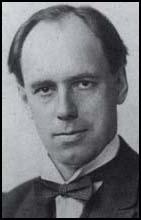
Frank Wise – the only man in the party whose name consisted solely of adjectives

Flowers and chocolates were despatched to the somewhat sinister-sounding Society for Socialist Inquiry and Propaganda (SSIP). This socialist pressure group was known by founder GDH Cole as the Zip – presumably because nobody wanted to get their policies caught in it.

The SSIP’s aims were, on the face of it, identical to those of the ILP leftovers. So, after the briefest of courtships, on the eve of Labour’s 1932 conference, a new faction was born- the Socialist League.

(more…)

Facebook Twitter Digg Delicious StumbleUpon

If Labour adopts the proposals of the Fabian spending commission, it will pay the price at the next election

21/10/2013, 11:11:21 AM

by Jonathan Todd

David Cameron – as, for some reason, he is always quick to do – taunted Labour thus in PMQs last week: “More spending, more borrowing, more debt. It is the same old Labour.” On the same day, a Fabian Society commission on the future of public spending reported that Labour could spend £20bn more in 2017-18 than the government currently plans.

If Labour were to adopt the recommendations of the Fabians, then the reaction of the prime minister is all too obvious. What is, though, more important to Labour’s 2015 chances is how the voters would react.

Polling by YouGov to support the book published by Labour Uncut at party conference gives us some indication.

This polling found that if Labour were to promise to keep most of the present government’s spending plans, but to borrow more specifically for public works such as building more homes, those who say this would make them more likely to vote Labour outnumber those who say it would make them less likely by 4% (17% more likely versus 13% less likely).

In contrast, a net 4% of voters say they would be less likely to vote Labour (12% more likely versus 16% less likely) if the party rejected any public spending cuts and instead allowed borrowing to rise.

The difference between these two strategies could be the difference between Labour winning and losing the election.

The Fabian proposal seems to fall somewhere between these two strategies. It doesn’t reject entirely spending cuts – a position that our polling indicates would be likely to cost Labour the election. Nor does it only go beyond the government’s plan exclusively for certain forms of investment – a strategy that our polling sees as compatible with Labour victory.

(more…)

Facebook Twitter Digg Delicious StumbleUpon

The price of credibility for the Left is accepting welfare and immigration are real concerns

18/10/2013, 03:34:18 PM

by Kevin Meagher

One of the more depressing aspects of the Labour’s 2010 general election campaign was the party’s pledge to bring in an “Australian points-based system” to curb illegal immigration.

This was the party’s “line-to-take” on the doorstep – a subterfuge to be deployed when asked what Labour would do to as a fig-leaf for actually having a working immigration policy in the first place.

It was, of course, disingenuous tosh. Having presided over a decade of mass immigration, with net three million migrants coming to live here during the noughties, the real, unspun view of most people on the left is pretty clear: immigration simply doesn’t matter.

Worse, it’s a solely a hobby-horse of the angry and ignorant. It’s a view that was perfectly encapsulated in Gordon Brown’s unguarded dismissal of Rochdale pensioner Gillian Duffy as “that bigoted woman” when she posed an entirely reasonable question to him about the effects of high levels of migration during that same election campaign. One, if we remember, Labour didn’t win.

Others on the left believe people like Mrs. Duffy, and the million like her, are victims of black propaganda peddled by the Tory press. Strip away the right-wing “scaremongering” about immigration reveals there to be no problem whatsoever. Instantly, the first-person experiences of those at the sharp end of competing with newcomers for jobs and houses are rendered invalid. They’ve simply got it wrong. Unless they really are bigots, of course.

And yet the public doesn’t see it that way. Poll after poll tells us that the British public are concerned about the stresses mass immigration it can have on jobs, public services and community relations.

(more…)

Facebook Twitter Digg Delicious StumbleUpon

Letter from Wales: Should policing really be devolved to the Welsh Assembly Government?

18/10/2013, 01:49:06 PM

by Julian Ruck

Warwickshire police commissioner Ron Ball is not quite a marauding Genghis Khan of police accountability, is he? More the sweet talking muse of old Bill romantic verse, it seems. His line, you must admit, of “let’s wait and see” certainly tends to disappoint when the evidence is clear and unequivocal in respect of the Andrew Mitchell debacle: the police lied….again.

But all is not lost. These bold outriders for public accountability, though somewhat mired in mystery where the general public are concerned, do enjoy a modest degree of virtue as I recently discovered when interviewing the Dyfed Powys police and crime commissioner Christopher Salmon.

The thrust of my interview concerned the devolving of police powers to Carwyn’s Team Druid in Cardiff Bay.

Before going any further, I must remind readers that the first minister was “roasted” by Welsh Labour MP’s back in March over this very issue, as originally reported by the Western Mail and then taken up by BBC Wales.

Talk of the tea room in Westminster, apparently. Indeed one senior politician compared Rhodri Morgan (Carwyn’s mentor in public sector studies) with Ramsay Macdonald and another loyalist Valley’s MP told Carwyn directly that it was a pity that he didn’t pay more attention to health and education in Wales instead of devolving police powers, with criminal justice to follow.

Yet another Westminster Welsh politico complained, “He didn’t consult anybody. He didn’t discuss his proposals with his own cabinet or even Labour AMs’.”

(more…)

Facebook Twitter Digg Delicious StumbleUpon

Labour’s “Wonga levy” is a good start, but more is needed

17/10/2013, 05:36:25 PM

by Matthew Lawrence

Labour must be bigger and bolder if they are to tame the payday lending industry and make affordable credit a reality for all.  Today’s announcement that it will impose a “Wonga levy” to fund the expansion of credit unions is a good step forward, particularly when combined with its commitment to cap the total cost of credit.  However, as with other consumer markets that are currently failing, much more must be done to build a financial system that is more locally rooted, democratic and focused on value creation, not rent extraction.

Size matters.  Miliband’s proposal to introduce a levy on the profits of payday lenders – which would double public funding to £26m for credit unions and other alternative low-cost providers – simply isn’t enough. Whilst the levy itself is a useful mechanism (and one that IPPR in its on-going research into the sector would recommend)  in a market that is now worth over £2bn it risks being a drop in a ‘legal loan shark’ infested ocean.

This is particularly the case given that, as the ONS announced yesterday, the UK’s long wage squeeze is set to continue, the industry and its predatory practices are only set to grow.  To be worthwhile, the levy must be set at a level to make a real difference within the market.  But Miliband’s argument is sound: payday lenders should accept their responsibility for ensuring ‘affordable credit is available’.  But Labour can go bigger and properly capitalise on alternative lenders through a windfall levy on the industry that has made hay whilst the sun has failed to shine on the average British household.  After all, a “windfall levy” didn’t work too badly in 1997.

(more…)

Facebook Twitter Digg Delicious StumbleUpon

Fear and loathing in the PLP: what really happened in Labour’s reshuffle

17/10/2013, 12:25:45 PM

by Atul Hatwal

The cracks are beginning to show. Over the weeks since Ed Miliband reshuffled the shadow cabinet, Uncut has been contacted by a range of different sources, seeking to tell their side of the story about what is going on beneath the slowly fracturing façade of PLP unity.

Piecing together the various accounts, a rather different picture emerges of the reshuffle, to the one commonly reported.

At the heart of it is a leader’s office dominated by fear.

Not fear of what the Tories are doing to the country, or for the electoral battle to come, but a fatalistic conviction that Ed Miliband will either be toppled as Labour’s leader before the next election, or so destabilised as to be incapable of fighting effectively.

This fear framed the reshuffle as Ed Miliband attempted to deal with Blairites, Ballsites, the new hero of the soft left, Andy Burnham and even the young pretender, Chuka Umunna.

The cull of the three Blairites – Jim Murphy, Liam Byrne and Steven Twigg – has been widely discussed, but what is less well known, Westminster sources suggest, is that when faced with Ed Miliband’s concerted move against them, the three discussed their options.

Collective resignation was the first impulse but two factors are said to have changed their minds: the sense that this was their party too and they could still exert some influence on policy; and that any resignation would simply have been written up as sour grapes from the snubbed.

(more…)

Facebook Twitter Digg Delicious StumbleUpon

With Labour’s lead narrowing, the next election is now too close to call

16/10/2013, 07:00:02 AM

by Rob Marchant

Setting aside for the moment the fact that the Westminster lobby seems to be yet to clock the political turmoil in store for Labour over the next six months as it approaches its special conference, there is another issue to which Labour must pay attention if it is serious about winning: its polling.

As we start to edge towards the home strait of the electoral cycle, new polling tells us some interesting things.

The conventional wisdom has become, owing to its consistent poll lead since early 2012, that “Labour is on course to win”. Meaning that, even if it means winning as part of a coalition, it would be hard for it to lose the election from here.

This is rather dangerous thinking, for two reasons.

The first is that it overlooks a statistical fallacy, in extrapolating a poll lead in a hypothetical election tomorrow directly out to an equal poll lead in eighteen months’ time. A lead now is patently not the same as a lead then.

If you ask someone the question “if there were an election tomorrow, who would you vote for”, this is not the same as calculating the expected value of their future answer in 2015, for the simple reason that there is not an election tomorrow, nor will there be, barring the “political lightning” of an unexpected no-confidence vote.

(more…)

Facebook Twitter Digg Delicious StumbleUpon

40% strategy? Nope. Fabian analysis suggests Labour’s current ceiling is actually 32%

14/10/2013, 07:00:49 AM

by Atul Hatwal

There has been some excited Labour chatter in the past few weeks following the launch of a Fabian report: “Labour’s next majority: the 40% strategy.” The author, Marcus Roberts, is a smart guy with a persuasive line in reasoning. For a Labour party that has seen its poll lead dwindle over the past months, a clear numerical path to a substantial majority is like picking up a trail back to civilisation after being lost in the jungle.

George Eaton in the New Statesman and Jeremy Cliffe in the Economist lauded the analysis and it’s empowered leadership loyalists with a response to charges that the ceiling of Labour’s ambition is 35% of the vote.

In his analysis, Marcus breaks down the different blocks that could make up a Labour vote of 40%: 27.5% from Labour’s core vote, 6.5% from people who voted Lib Dem in 2010, 5% from non-voters and 1% from 2010 Tory voters.

At first glance it all seems reasonable if a shade optimistic. But there’s a problem.

The numbers aren’t right.

(more…)

Facebook Twitter Digg Delicious StumbleUpon

Labour history uncut: Bye bye ILP

13/10/2013, 05:23:31 PM

by Peter Goddard and Atul Hatwal

After the October 1931 election, the Labour party survivors surveyed the smoking battlefield and counted the casualties.

Labour in Parliament had been almost entirely wiped out. Every member of the cabinet was gone, apart from the old stager George Lansbury and a young chap called Clement Attlee.

The men who had founded the Labour party had been removed wholesale from the leadership of the movement. And just for good measure, most of their most immediate successors had been culled too.

So, thanks to his unique qualification of ‘still being there’, 72 year old George Lansbury, seemed the natural, choice to take up the reins of leadership.

George Lansbury looks forward to having loads of space in the PLP common room

So imagine his surprise when, in a mark of the deep suspicion the party harboured for the emotional Lansbury, Arthur Henderson was elected unopposed as Labour leader despite not even being an MP.

Lansbury, for his part, became PLP chairman.

In practice however, the parliamentary platform meant the elderly Lansbury increasingly assumed the role of de facto leader over the even more elderly Henderson. This was partly because Henderson himself was often abroad, becoming more and more pre-occupied with international disarmament and the idea that Socialism wouldn’t be much use if Europe had been bombed to a charred ruin first.

More significantly for the party’s future was the appointment of Clement Attlee as Lansbury’s deputy chair in parliament.

(more…)

Facebook Twitter Digg Delicious StumbleUpon

Letter from Wales: Lobbying, CBI Wales style!

11/10/2013, 10:55:26 AM

by Julian Ruck

It is fair to say that the lobbying of MPs and Lords  is a process of, “this is what we want, so let’s have it.” And nothing wrong with this, except when corporate interests get too close to government and brown envelopes are passed across the occasional parliamentary desktop.

Bearing the above in mind and accepting that ‘influence’ forms part of the usual ebb and flow of decision making, one is compelled to consider the position of CBI Wales’ own director and indeed the antecedents of her back up team.

Emma Watkins, said director, originally worked as a political researcher for two different Assembly members in the National Assembly for Wales during its first four years – nothing like starting on the shop floor for a career as a fully paid up aspirant of the Taffy political class, is there? She is now a member of the secretary of state for Wales’ business advisory group, the Welsh government’s council for economic renewal, Carwyn’s airport taskforce (I’m told the director is about to close a deal on a reconditioned fleet of Sopwith Camels for  the new ‘Carwyn’s Carriers Airline’), the Wales employment  and skills board as well as a number of other Welsh establishment bodies. Certainly gets about does our Emma and I wonder how many of these ‘memberships’ are voluntary?

You would be forgiven for thinking that maybe this is taking “influence” and “big tent” politics a little too far and a tad ‘too close’ to the Welsh government, particularly when one bears in mind the so-called, and often operatic claims, by the CBI of independent lobbying in the interests of UK industry and business or in this case Wales plc?

High up sources in the Federation of Small Businesses Wales, have expressed their frustrations and anger at what they see perceive as special treatment being meted out to Carwyn’s CBI Wales in respect of taxpayer grant and subsidy (I can’t imagine why?) but then they are just the trinket stall holders outside the big tent, so what can they expect?

The Crachach virus strikes again then.

(more…)

Facebook Twitter Digg Delicious StumbleUpon