



Posts Tagged ‘Atul Hatwal’

Labour history uncut: Labour gets its first taste of government

25/01/2013, 06:48:07 PM

by Pete Goddard and Atul Hatwal

It was the start of 1915 and something wasn’t quite right. Contrary to the confident predictions of the press, the government and most of the Labour party, Fritz had not been sent packing and the government began to regret printing quite so many invitations to “1915’s big victory conga through no man’s land”.

In fact, to the uninformed bystander everything seemed to have ground to a halt in a bloody stalemate of trench-based slaughter.
Fortunately, the British public were very well informed by a national press that was still insisting victory was just around the corner.

For example, when the British attacked Neuve Chapelle at the start of March the Daily Express headline boomed “German’s routed…great victory at Neuve Chapelle”.

Which was sort of true, if your idea of victory was the loss of 13,000 men to gain two pocketfuls of French gravel. The offensive advanced 2km and then was abandoned due to the catastrophic losses.
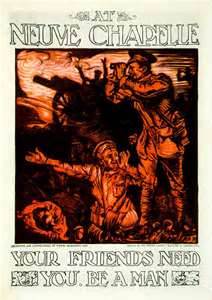
Who could resist this upbeat plea to join the fun at Neuve-Chapelle?

With successes like these, it was no wonder the worry-o-meter in government was swinging towards the red. No-one had planned for war that devoured resources at such a rate. Not only were more troops needed, demand for munitions was outstripping production.

(more…)

Facebook Twitter Digg Delicious StumbleUpon

Today, Ed Miliband was damaged by Cameron’s speech, but the pain is coming for the Tories

23/01/2013, 05:50:40 PM

by Atul Hatwal

Judgement is a precious commodity. If a politician is seen to have it, they receive the benefit of the doubt from the media and colleagues alike. Their moves are viewed as part of a grand strategy, their competence taken on trust.

When they are seen to lose it, everything is questioned, loose threads are pulled and more often than not, much unravels.

Today, both Ed Miliband and David Cameron demonstrated desperately bad judgement. Both will pay a price. The immediate damage is to the Labour leader’s position, but over the coming months Cameron will be the one who suffers most.

For Ed Miliband, it is now a matter of when not if. When will he do a U-turn and commit Labour to an in/out referendum? The three options he has available leave him little choice.

Inside the leader’s inner circle there might have been some that still believed Labour’s current position of neither backing nor ruling out an in/out referendum was sustainable, but reality will be dawning. Witness Miliband’s own reaction in the heat of PMQs today when he seemed to rule out a referendum, only for Douglas Alexander and John Denham to walk back the commitment within hours.

Having no line to take is no way to run a party. Labour politicians trying to defend this position will be mercilessly skewered.

Alternately, permanently ruling out a referendum, as Miliband looked to have done, has the merit of certainty, but brings the certainty of unpopularity. Refusing to let the public have a say on such a contentious issue hardly locates Labour on the side of the people.

Which leaves supporting an in/out referendum as the only viable option.

Back in October I argued for a Labour commitment to a referendum to make the political weather and cast Cameron as weak when he was forced follow suit. Now Miliband will follow Cameron and will be the one to look weak.

(more…)

Facebook Twitter Digg Delicious StumbleUpon

Labour history uncut: It’s war!

15/01/2013, 06:54:22 PM

by Pete Goddard and Atul Hatwal

By 1914, Labour’s internal politics were in a well-worn rut. The routine was familiar: socialists complained about the party’s moderation, moderates complained that the socialists were making the party unelectable and strikers up and down the nation didn’t care what either of them had to say, they had a nationwide wave of industrial unrest to organise.

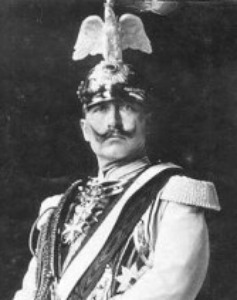
Then, in summer 1914, Germany’s Kaiser did his holiday planning. France looked nice, but he didn’t want to go abroad. So what better solution than to make France part of Germany? He was a problem solver, that Kaiser.

Kaiser’s top tip – recycle those leftover Christmas baubles into a stylish and practical outfit

So he gathered a few hundred thousand of his closest friends and began stockpiling sun cream, beach towels and heavy artillery.

On 29th July, alarmed by the accumulation of passports and spiky hats in Germany, Keir Hardie represented British labour at a meeting of the International Socialist Bureau (contrary to the title, not a dispensary for people looking to hire or purchase a continental socialist). They “resolved unanimously that it shall be the duty of the workers of all nations concerned not only to continue but to further intensify their demonstrations against the war, for peace, and for the settlement of the Austro-Serbian conflict by international arbitration…”

The problem was that, for many working class Brits, workers sticking up for workers was all very well, but these guys were foreigners, so surely they didn’t count. There was much enthusiasm for nipping over to Germany to stick it to the sausage munchers.

(more…)

Facebook Twitter Digg Delicious StumbleUpon

Forget strivers vs skivers, it’s the uncosted spending that will hurt Labour on welfare

09/01/2013, 07:00:51 AM

by Atul Hatwal

Yesterday Labour voted against the welfare uprating bill after a debate in the House of Commons dominated by the four horseman of the welfare apocalypse, “scrounger,” “shirker,” “striver” and “skiver.”

These are highly charged, emotive terms, laden with implicit meaning. The focus of the debate in the run up to the vote has been on the values inherent in these words. The Tories are slapping a tax on strivers. No, Labour wants to sign a blank cheque for scroungers. Back and forth it has raged.

But amidst the sound and light about who was actually on the side of the hard working majority, the real impact on voter perceptions, and damage to Labour, has received comparatively little attention. Only yesterday, as the Tories rowed back from the sharper exigencies of their scrounger rhetoric did they alight on the most pointed attack on Labour.

Voters were already pretty clear that Labour will by and large try to protect benefits for the less well-off while the Tories are tougher on cheats. The values debate will not have altered this perception, except maybe to entrench it for both sides: the Tories cut with too much relish and Labour is more likely to fall for a hard luck story.

The one incontrovertible fact of Labour’s vote against the welfare uprating bill is that the party has now backed higher spending on benefits than the government.

(more…)

Facebook Twitter Digg Delicious StumbleUpon

Labour history uncut: Labour sets a new record for by-election losses

09/01/2013, 12:21:31 AM

by Pete Goddard and Atul Hatwal

“Do something!”

This was the message to Ramsay Macdonald from the unhappy troops in his the party. Having become leader in 1911, Macdonald had arrived to find the workers of the nation ready for a Millwall wave of industrial unrest rippling across dockers, miners and rail-workers. This was like a Mexican wave, but with less cheering and more broken noses.

It left Macdonald in a tricky position as, at the same time as being the representatives of the working man, he was determined to establish Labour as a “respectable” party (as opposed to a Respect party, which is something different). Consequently, he was less than keen to be seen to be on the side of rioters and militant strikers.

As part of his plan to establish Labour, Macdonald had operated an informal electoral pact with the Liberals since 1903, each giving the other a clear run at the Tories. For Labour it had helped build the parliamentary party to 42 seats.

With the Liberals now in government, it also meant Labour could get scraps of their legislation through in return for continued support.

While this did rather make them the dog at the Liberal party banquet, that was of more practical benefit than being the starving man outside, watching everybody else eat.

But on the other hand, who wants to be a dog, aside from people with a burning desire to lick their own genitals? Certainly not the party rank and file, who quite reasonably felt that being on the side of the workers sort of came with the job description for Labour – the clue is in the name after all.

If all Labour was doing was backing the Liberals, what was the point of setting up a different party in the first place?

So Macdonald subtly shifted strategy. He didn’t turn his full rhetorical fire on the government, but he did change the approach on by-elections. After 1911, Labour’s leadership exercised a little more willingness to run candidates where a Liberal was standing.

Partially Macdonald’s hand was forced by pressure from within the party, but there was also merit in gauging Labour’s strength. Even if they didn’t beat the Liberals, a strong electoral showing might strengthen his hand when negotiating with the government – after all the Liberals weren’t even the largest party.

So, between 1911 and summer 1914, out of 50 by-elections in Liberal seats, Labour contested an unprecedented 14 seats.

“Say ‘cheese’? Whilst workers are starving? Never.” ’William Cornforth Robinson, Labour candidate in the 1911 Oldham by-election

(more…)

Facebook Twitter Digg Delicious StumbleUpon

Labour history uncut: no strikes please, we’re Labour

01/01/2013, 09:06:01 PM

by Pete Goddard and Atul Hatwal

New year, new leader. That was Labour’s motto at the start of 1911 as it set about electing its fourth leader in four years. This time, the lucky front-runner (also middle runner, and back runner – he was standing unopposed) was Ramsay Macdonald.

An able organiser and pragmatic strategist, he also had a background with the socialist Independent Labour party (ILP), so the left approved. For now.

Macdonald was to be supported by Arthur Henderson who would take over his old job as party secretary and de facto deputy where he could help look after the low politics of Westminster.

If it wasn’t quite the dream ticket, it was certainly closer than the dog-eared bus tickets of previous leaderships.

On the 6th of February 1911, the new leadership team were confirmed in their roles and hit the ground running. The dynamic duo set to work tackling the number one priority facing the country: MPs’ pay.

More than unemployment or Irish home rule, a government-funded salary for members of parliament was the burning issue of the day. Well, it was for Labour MPs anyway, and not in an “expenses” way either.

Before 1911, MPs had to be supported by their party, by a union or, for the Tories, whichever chunk of Shropshire they managed to inherit. For Labour, thanks to the Osborne judgement which prohibited unions from funding the party, finding a way to maintain the £200 per year stipend was increasingly difficult.

So Ramsay Macdonald used MPs’ wages as his chief demand for continued support of the Liberal government. In 1911 provision for a state-funded payment of £400 per year was agreed and inserted into the parliament act limiting the Lords powers. This was a victory for Macdonald, although it can’t have been that hard to convince Liberal MPs to vote for more money for MPs.

Critics suggested this document was a fair summation of the parliamentary Labour party’s socialism

Macdonald was a hero to the parliamentary party. Doubling their wages and freeing union resources to spend on party campaigns meant he commanded a united and supportive parliamentary party.

Unfortunately, outside the gilded corridors of Westminster, pay rises for everyone was not the order of the day.

(more…)

Facebook Twitter Digg Delicious StumbleUpon

It’s still the economy, stupid, which is why the two Eds should be worried about 2013

31/12/2012, 08:00:15 AM

by Atul Hatwal

The Christmas break will have been a time for some self-congratulation in Labour leadership circles. A solid poll lead, a divided coalition and high hopes for the coming year.

Ed Miliband had a passage in his stump speech on the circuit of pre-Christmas Westminster receptions where he talked about the unprecedented position of strength Labour is in for a new opposition, with such a lead at this stage in the parliament. He is factually right, but then the competition for most effective new opposition is not terrific. In the past 33 years, there’s a choice of two: either William Hague’s Tories or Michael Foot’s Labour party.

And at this point in Mrs.Thatcher’s first term, two and a half years after the election, even Michael Foot managed an average lead over the Tories of 3% (averaging the four polls in November 1981 – h/t Mark Pack and his magnificent polling spreadsheet).

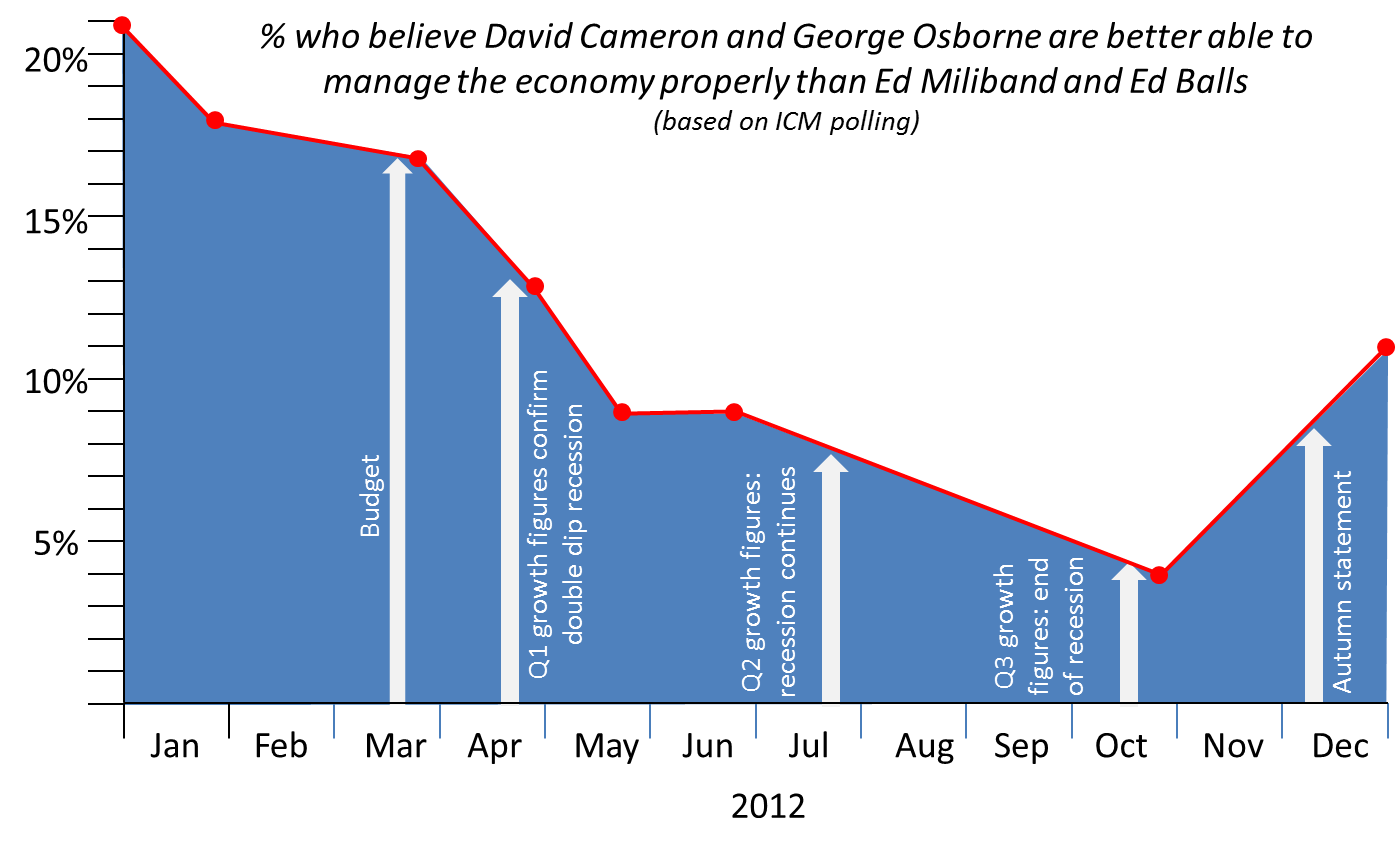
When considering unprecedented political phenomena, Ed Miliband, and indeed Ed Balls, might want think more carefully about where the party stands with voters on economic competence.

Decades of polling gives a very clear message: no opposition has won an election without a commanding lead on the economy.

In 1979, voters preferred Jim Callaghan to Margaret Thatcher as PM by 50% to 31%, but still elected the Tories who led on economic issues by an average margin of 10%. In 1997, Labour led by 10% on the economy at the election, while in 2010 the Tories led by 8%.

Currently. Labour is 11% behind on economic competence and no opposition has gone on to win the next election when trailing the government on the economy, after two and half years.

Typically, there just isn’t the time left in the parliament to overhaul the government lead and build a sufficient cushion prior to the inevitable narrowing of the polls as election day draws near. Based on the polling facts, a Labour victory in 2015, from this position, would truly be unprecedented.

(more…)

Facebook Twitter Digg Delicious StumbleUpon

Labour history uncut: 358 days with George Barnes

27/12/2012, 10:33:51 PM

by Pete Goddard and Atul Hatwal

After the January 1910 election, Labour had, if anything, moved slightly backwards. But that was as nothing compared to the disaster the Liberals had experienced.

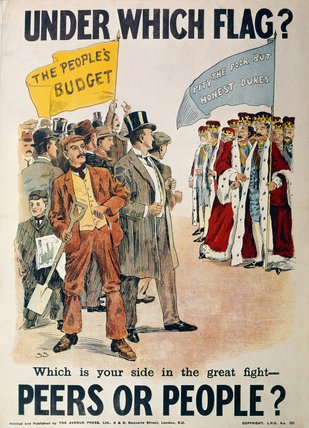
They had asked the country “who governs this nation: the peers or the people?” The voters of Britain had responded saying, “democracy is nice but ooh, feel that lovely soft ermine and listen to those posh voices. Can we phone a friend?”

This 1910 election poster foolishly pits the Liberals against a coalition of Santas

From 1906, when the Liberals enjoyed a landslide of 397 seats with a majority of more than 130 over all the other parties combined, they had slumped to just 274 seats – smaller than the Tories.

Parliament was hung (not “like a horse” but “like a legislative body where no clear majority exists on any side”) and the Liberal government was now a coalition, with the Liberals reliant on the support of the Irish nationalists to retain a majority in the House of Commons. If they could keep Labour on side too, so much the better.

The inconclusive nature of the election result meant another poll was surely around the corner.

That made for a tough year for Labour, waiting for this inevitable election. It was particularly hard for one George Barnes. He was the man in the hot seat as the new leader of the Labour party, a job that came with few perks and a dress code that included a pair of trousers with “kick here” embroidered on the seat.

(more…)

Facebook Twitter Digg Delicious StumbleUpon

Labour history uncut: bye bye uncle Arthur

25/12/2012, 08:00:32 AM

by Pete Goddard and Atul Hatwal

“Is the parliamentary Labour party a failure?”

This was the upbeat title of a 1908 pamphlet from Ben Tillett. Presumably feeling he’d run out of capitalists to agitate against, he had turned his talents to stirring things up in his own party.

As well as being possibly the first #QTWTAIN in Labour’s political history, it was a cunning title on Tillett’s part. He had only to change the date on the front and he could re-publish it and still find an audience every year from then until, approximately, today.

Tillett’s central moan was that Labour was not doing enough to combat unemployment on account of the fact that its leaders were just re-purposed Liberals.

This was an outrageous accusation. Just because the majority of Labour’s MPs were either former Liberals or ex-union officials with strong Lib Lab sympathies, and just because Arthur Henderson, the new leader of the Labour party was a former Liberal agent and just because the party had actually agreed not to contest elections where a Liberal was standing and… ok, he had a point.

The Arthur Henderson paint-by-numbers kit proved surprisingly popular

There was quite a lot of common ground with the Liberals, but Labour inaction on unemployment was not policy – the truth was that party just didn’t have the votes in parliament to enforce its will.

They had tried. Labour had introduced the “right to work” bill in 1907 establishing every man’s right to employment. If work was not available the bill proposed that it was the responsibility of society to maintain the unemployed.

(more…)

Facebook Twitter Digg Delicious StumbleUpon

Labour history uncut: party divisions deepen as Keir Hardie stands down

18/12/2012, 09:50:22 PM

by Pete Goddard and Atul Hatwal

At the start of 1908, the Labour party was divided: visionary socialists on one side;  limited, practical union men on the other: two mis-matched groups forced to work together, like 1970’s undercover cops. Though fortunately in this case they did have more than 24 hours to solve the problems of global capitalism and centuries of inequality, before the DA took their badge.

With Keir Hardie away on an eight month cruise for his health, leadership of the MPs had fallen to PLP vice-chair David Shackleton, a union man and friend of the Liberals. Everything the party’s left disliked.

Shackleton was Keir Hardie’s opposite in almost every respect.

Keir Hardie was a powerful symbol of socialist zeal, particularly for the independent Labour party (ILP). He was unbending, principled and socialist to the core. The flip side of this was a lack of consultation with colleagues and a tendency to be so focussed on high-minded principles, he’d neglect the more mundane details, such as showing up to meetings on time.

Shackleton, in contrast was moderate, consensual, organised and just not that bothered about socialism.

Everyone loved David Shackleton’s Alfred Hitchcock impression

When Keir Hardie was in charge, the ILP and the left were prepared to give the party the benefit of the doubt and tolerate such impurities as the pact with the Liberals. With Shackleton running the show, it was a different matter.

In summer 1907, the discontent bubbled over in the form of a charismatic young man named Victor Grayson.

(more…)

Facebook Twitter Digg Delicious StumbleUpon