




Posts Tagged ‘Atul Hatwal’

Yes, Eastleigh was bad for Cameron but it wasn’t much better for Ed

01/03/2013, 07:00:56 AM

by Atul Hatwal

There’s spin, and then there’s self-delusion. This morning, Labour needs to remember the difference.

Publicly the party will be busy deflecting blame and attention from its result throughout the day. The spin cycle was already in overdrive last night: “Eastleigh wasn’t even close to being on our key seat list”, “constituency boundary changes moved Labour wards out of Eastleigh,” and “the real losers are the Tories.”

Presenting a positive front is a necessary part of the political process. Fair enough.

But, away from the cameras and microphones, Labour needs to reflect on reality. Forget the lines to take and just think for a moment: fourth. Over half-way through this parliament, we finished fourth.

A win would have been unbelievable. Literally. So this was never an expectation.

Second would have been the actual win. It would have shown that the one nation narrative had resonance with voters and Labour could compete anywhere in the country.

A close third would still have been a good performance and, given Labour’s lack of historical presence in the seat, provided a strong indication that Labour will be competitive in its 30 southern target seats in 2015.

A distant third would have been poor, but just about could have been explained away on the basis of past performance.

But fourth?

Two immediate lessons emerge from this result.

First, Labour fought the wrong campaign. Last week John O’Farrell said, “I’m surprised how much of the literature from the Conservatives and Liberals has been about local authority issues…I’m not standing for the council. I’m standing for Westminster.”

Unfortunately, the voter is never wrong, and it was obvious from the first week of the campaign that Eastleigh’s electors were focused on local issues.  Nothing Labour did could shift this.

That the Labour party campaign did not pick this up and pivot to fighting on issues that matter to voters echoes the disaster of Bradford West: a pre-packed campaign, running on auto-pilot, oblivious to voters’ views on the ground.

(more…)

Facebook Twitter Digg Delicious StumbleUpon

Labour history uncut: the moment Labour replaced the Liberals

26/02/2013, 04:44:11 PM

by Pete Goddard and Atul Hatwal

Labour’s new constitution had radically reformed the party. Re-founded it, even. The party entered spring 1918 busily setting up new constituency organisations and selecting candidates.

The war may have still been going, but Britain had been more than 7 years without an election and millions of new voters had just been empowered by the recent extension of the franchise. As a result, all the parties were like a householder waiting for the builder – they knew a poll was on the way.

By April Labour had selected 115 candidates with 131 selections pending. At the start of the month there was a slight hitch when it appeared candidates might soon require a good grasp of German – the allies were forced back 60 miles in German spring offensive. But by May the tide had been turned back and everyone could pack away their Rosetta Stone CDs.

For the first time since the start of the war, thoughts across the parties began to turn to what might happen after victory.

To that end, in June 1919, Sidney Webb released his policy document “Labour and the New Social Order”. Although it didn’t exactly trouble the bestseller lists and the planned sequel, “Labour and the Chamber Of Secrets” was put on hold, it did set out a policy platform which would become the core of Labour manifestos for most of the next century.

This included Labour staples such as comprehensive free education, the establishment of separate legislatures for Scotland and Wales, generous provision of health services, nationalisation of mines, railways and electrical power, a commitment to full employment and a living wage, a major housebuilding programme and regular conflicts between the leadership and the left.

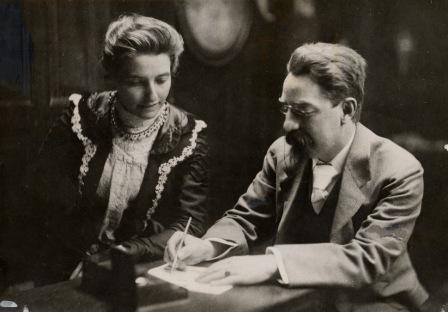
Sidney Webb teaches his newly-enfranchised wife how to vote

This was an important document for the party, but as the end of the war approached, Labour faced a decision even more important than the platform. They had to decide whether to fight the election as part of the coalition or to stand in opposition?

(more…)

Facebook Twitter Digg Delicious StumbleUpon

Labour history uncut: Labour’s first clause four moment

21/02/2013, 08:18:08 PM

by Pete Goddard and Atul Hatwal

September 1917 was a new beginning for the Labour party. A month earlier, Arthur Henderson had experienced an unceremonious ejection from the wartime cabinet.

Free from having to toe the government line and support the latest innovations in war strategy aka new and efficient ways to squander human life (the battle of Passchendale was days away), Henderson was able to devote his time to the Labour party.

It provided an opportunity to bridge the gulf at the heart of the party which had pitted Arthur Henderson, master of the party machine and supporter of the war, against Ramsay Macdonald’s anti-war alliance of radicals and socialists.

Henderson and Macdonald make their way to the 1917 Tin Tin convention

Henderson was determined to make changes. In September 1917, he set up two sub-committees of the NEC. One was tasked with developing Labour’s alternative approach to ending the war and the other was established to reorganise the Labour party so that it was fit to fight the next election.

Yes, even in 1917 the modernisers were at work, creating the new Labour. Or Old New Labour. Or New Old Labour. Or something.

Both sub-committees included seats for the perennial favourites including Arthur Henderson, Ramsay Macdonald and the Fabians’ Beatrice and Sidney Webb. So basically it was just the same people, but every now and then they’d change the sign on the door. (more…)

Facebook Twitter Digg Delicious StumbleUpon

Revealed: How the Tories watered down their original Leveson proposals under pressure from the press barons

15/02/2013, 09:54:43 AM

by Atul Hatwal

It’s taken an age. The Tories’ proposals for establishing a press regulator through a royal charter have been mooted for months but were only published earlier this week. After David Cameron’s commitment to swift action in the Commons debate, following the publication of the Leveson report last November, they had been expected at the start of January. But weeks passed and nothing emerged. Why the delay? What took so long?

Uncut can exclusively reveal that the Conservatives were in fact ready to publish proposals several weeks ago. A team operating under cabinet office minister Oliver Letwin prepared a draft setting out how the royal charter would operate, in December. This draft was personally authorised by Letwin and cleared at the highest levels in Number 10. It represented the Conservatives’ view of what was needed to establish an effective regulator without statute.

But even this proved to be too much for the press barons and under private pressure from the industry, the Tories have further watered down their proposals. The result has left the cross-party negotiations on Leveson in chaos.

Two changes have been made to the Tories original proposal, weakening regulation beyond the levels even David Cameron and Oliver Letwin felt necessary.

In the December draft of the proposals, seen by Uncut, Letwin’s team enshrined the independence of the recognition body that underpins the press regulator, to protect it from interference by government.

The body could only have its terms of reference altered if backed by a  two-thirds “super-majority” in the House of Commons and it could only be dissolved by an act of parliament. A whole section of the draft document was devoted to this topic:

The Recognition Panel

(1) (An amendment of the Recognition Panel’s Charter has no effect until each House of Parliament has by resolution by the required majority directed that the amendment is to have effect.

(2) The Recognition Panel may not be dissolved otherwise than by way of Act of Parliament.

(3) The reference to an amendment of the Recognition Panel’s Charter is a reference to —

(a) the addition of a provision to the Charter,

(b) the variation of a provision in the Charter, or

(c) the omission of the whole or part of a provision from the Charter.

(4) A resolution under this section is to be regarded as being by the required majority if at least two-thirds of the members of the House in question who vote on the motion for the resolution do so in support of it.

(5) A motion for a resolution under this section may be made by any member of the House in question.

(6) “The Recognition Panel’s Charter” means the Royal Charter dated [ ] 2013 under which the Recognition Panel was incorporated.

Sources within the newspaper industry have suggested that publishers were panicked about safeguarding the remit of the recognition body in this way because it effectively removed their ability to pressure  future governments to amend the terms of reference.

The feedback to the Tories from the press camp was robust and unequivocal: preserving the independence of the recognition panel with these protections was unacceptable.

(more…)

Facebook Twitter Digg Delicious StumbleUpon

A good day for Ed Miliband but the elephant is still in the room

14/02/2013, 01:44:26 PM

by Atul Hatwal

The roll-out of the 10p tax rate pledge was a reminder of how things should be done. Expectations were expertly managed in the run-up to the speech, the announcement was genuinely striking, and the government was caught on the hop. There was no abstract talk of responsible capitalism, no uncosted black holes opening up and the distinction with Gordon Brown’s tarnished brand was clear.

This was good economics and even better politics.

Yes, it might be better if the coverage 10p tax rate band was broader but it needs to be affordable and importantly this is a powerful signal of where the party stands.

The headlines tomorrow will be pleasing and the pressure is now on George Osborne to produce an equivalent rabbit out of his hat for next month’s budget. It’s the type of bold move by Labour that could force the chancellor into a rushed response that then unravels: “Pasty tax” redux.

But, and there is big but, as good as the delivery and content of today’s policy launch was, it doesn’t address the fundamental fear the British public have about Labour.

Earlier this week the Guardian’s ICM poll gave Labour a 12 point lead over the Tories, the biggest since May 2003. Yet, below the topline, was evidence of Labour’s lack of progress on the central issue of economic competence.

Asked to identify the main reason for our current economic problems, 29% opted for Labour’s “debts … racked up to finance unsustainable spending.” This is same as last May. In comparison 23% blamed government cuts and 21% bankers for failing to lend to business.

Labour’s problem with voter perceptions on the economy is often described in terms of the deficit, but this isn’t quite right. As far as the public are concerned, the deficit is the symptom, Labour’s spending is the problem.

(more…)

Facebook Twitter Digg Delicious StumbleUpon

Labour history uncut: How Uncle Arthur’s trip to Russia saved the Labour party

12/02/2013, 05:49:47 PM

by Pete Goddard and Atul Hatwal

Ramsay Macdonald was not happy.

Labour’s decision in January 1917 to remain in Lloyd George’s new coalition was unacceptable. For Macdonald, this was no government of national unity. Asquith’s retreat into opposition with the majority of the Liberals, meant Labour was now in alliance with a Tory government, with Lloyd George nothing more than a figleaf leader.

Macdonald would have never allowed something like that to happen to the Labour party on his watch. Oh no.

For their part, the Tories weren’t mad keen on Ramsay Macdonald and his various anti-war groups either. The fall of the Russian Tsar in March 1917 had stoked Tory fears of the lower orders getting uppity, while a major bout of industrial unrest in May convinced many that a revolution was coming.

In their view, Macdonald was the archetypal leader of the malcontented masses. Celtic, working class, and not even a member of a golf club, for goodness sake. Admittedly, this last point wasn’t entirely his fault, since his local club had expelled him on account of of his opposition to the war. Then again, to lose a golf ball might be considered unlucky, but to lose a whole club looks like carelessness.

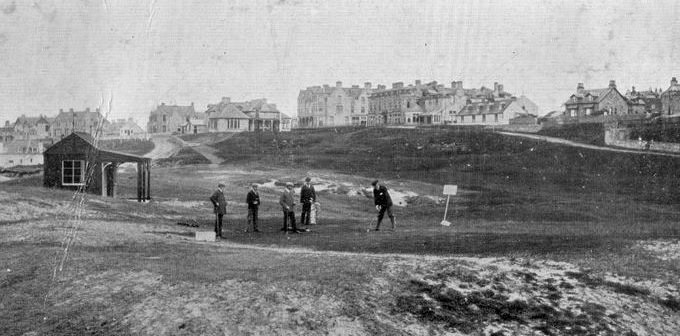
Lossiemouth Golf Club – no socialists, no pacifists, no dogs

Further anti-Macdonald feeling was stirred by Lord Milner, a Tory member of Lloyd George’s inner cabinet who had valuable experience of war, having helped start one in South Africa while he was high commissioner.

(more…)

Facebook Twitter Digg Delicious StumbleUpon

Labour history uncut: Lloyd George topples Asquith as Labour sit tight in government

10/02/2013, 03:28:22 PM

by Pete Goddard and Atul Hatwal

On the 13th November 1916 the battle of the Somme finally ended. Since its launch at the start of July, the British army had suffered 420,000 casualties to advance a grand total of 5 miles.

This rate of attrition revealed that the army’s brilliant “more men forward” approach would indeed get us to Berlin, just as long as we didn’t mind taking another 48 million casualties on the way.

A quick head count of the British population (46 million) led people to suspect the wisdom of this military strategy, despite the resolute self-confidence of generals.

Even Arthur Henderson and the Labour party, however much they tended to go weak at the knees for a man in uniform, had doubts. But as minor members of the government, there wasn’t a whole lot they could do. The sight of Labour men questioning the war effort could easily be mistaken for a lack of patriotism and they were getting enough criticism on that front already thanks to the barbs of Ramsay Macdonald and his anti-war chums.

Instead, Labour opted to stay quiet and look hopefully to prime minster Asquith for some inspiring leadership.

Unlucky.

What they got instead in November 1916 was Asquith asking the cabinet to jot down any ideas they might have about what to do for “Herbert’s big book of war-winning notions.” As leadership goes, it wasn’t exactly “Once more unto the breach dear friends.”

Things got worse when Tory grandee Lord Landsdowne, did jot his ideas down. They weren’t exactly what Asquith was hoping for.

“[the war’s] prolongation will spell ruin for the civilised world, and an infinite addition to the load of human suffering which already weighs upon it.”

He put this upbeat prognosis in a letter he offered to the Times, to perhaps publish for a bit of fun alongside the horoscopes and sudoku. The Times was appalled by what they saw as the anti-British letter and refused to publish it, as they believed any decent paper would.

The Telegraph happily ran it.

Lord Landsdowne shows the sunny demeanour that inspired his famous letter

(more…)

Facebook Twitter Digg Delicious StumbleUpon

Labour history uncut: More men for the meat-grinder please!

06/02/2013, 05:20:49 PM

by Pete Goddard and Atul Hatwal

In January 1916, when Labour was wobbling over whether to stay in a wartime coalition that wanted to introduce conscription, prime minister Asquith had made a promise that his proposals would exclude married men.

Admittedly, just 7 months earlier, when the Labour party was wobbling about whether to join the wartime coalition in the first place, the same Asquith had said there would be no need for conscription at all. But surely this time Asquith meant it, having pinkie-sworn it and crossed his heart and hoped to die?

In April 1916, Asquith’s government brought forward a new conscription bill to call up married men.

Bugger.

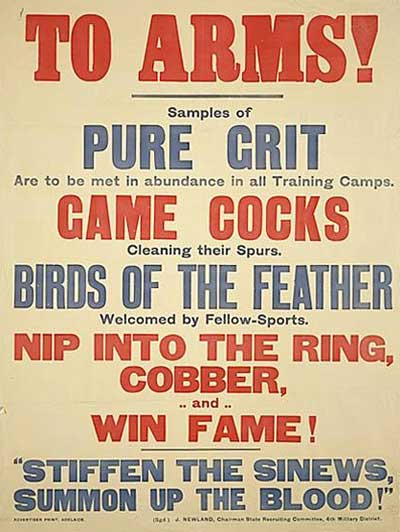
This Australian war recruitment poster, handily doubles as a Soho cinema listing

After the usual “we do. we don’t.” hokey cokey from Labour on whether to support the bill, the leadership of the unions swung decisively behind the measure.

And so the bill passed with fulsome Labour backing.

Conscription had been (and continued to be) a difficult issue for Labour,  and the party may have changed their minds more frequently than they changed socks, but in one sense it was just a symptom of a more deep seated problem: the position in the war.

Bloody stalemate on the continent was devouring Britain’s resources. It had made conscription necessary and the resulting manpower shortages were fomenting rebellion within the Labour movement against the leadership.

In March 1916, shop stewards at Beardmores engineering works on “red Clydeside” in Glasgow went on strike in objection to the “dilution” of labour. This involved semi-skilled labour and unskilled labour, and often, god forbid, women being used to fill roles normally occupied by skilled labour. It enabled the skilled labour to be freed for more important activities, such as getting blown up at the front. (more…)

Facebook Twitter Digg Delicious StumbleUpon

The conventional wisdom is wrong, David Cameron has been strengthened by the Tory rebellion on gay marriage

06/02/2013, 07:00:42 AM

by Atul Hatwal

Tory splits, MPs in open revolt and a beleaguered Conservative prime minister; it all seems rather 1990s. Labour tacticians are rubbing their hands in barely concealed glee. The political fall-out will be devastating, or so the conventional wisdom goes.

Weak leadership, political incompetence and an out of touch party do indeed dominate today’s news stories. And Labour does seem to be receiving a poll boost from this latest bout of Tory fratricide.

But David Cameron is not John Major, and in the medium term he will be strengthened by the rebellion.

Three points differentiate what happens next for the current prime minister from the fate of his Conservative predecessor.

First, the vote was won. Even with the Tory rebellion, this bill which David Cameron has staked so much upon, will become law. Yes, it was only won with Labour and Lib Dem votes, but to the general public this is a nuance: the prime minister emerged triumphant.

In the 1990s, the truly memorable occasions were when John Major was defeated.  Think Maastricht or VAT on fuel, few remember the countless near defeats where Major somehow squeaked through. A win is a win and Cameron will now have a genuine legacy achievement to point to.

Second, by taking on his party, Cameron has defined very clearly that he is a different type of Conservative to most of the rest of his colleagues. While many of his MPs do their level best to live up to the billing “same old Tories”, Cameron is vividly showing how he isn’t.

One of the mistakes the Tories made under both William Hague and Michael Howard was failing to understand how their stance on individual issues impacted the public’s overall view of the party.

Their obsession with Europe and immigration might have made for good day to day headlines, and been popular with sections of the electorate, but at election time, mainstream voters looked at the Tories and concluded that if they were this right-wing on Europe and immigration, then they would probably also privatise the NHS and laugh as pensioners starved in their freezing homes.

By taking a liberal stand on gay marriage, David Cameron has helped buy himself the benefit of the doubt from voters on all the other issues where they might suspect a traditional Tory.

(more…)

Facebook Twitter Digg Delicious StumbleUpon

Labour history uncut: Labour gets conscripted

29/01/2013, 10:53:57 PM

by Pete Goddard and Atul Hatwal

“Conscription? Why would we need that? Who wouldn’t volunteer for a free trip to Europe and the chance to shoot foreigners?”

This was the comforting assurance given to Labour leaders, by prime minister Asquith as they trooped into the coalition government in May 1915. Surely a Liberal leader wouldn’t make a pledge and then do the absolute, exact opposite?

To be fair to Asquith, whatever he personally believed was largely irrelevant. Losses were outstripping recruitment at a staggering rate thanks to the British army’s patented “run through that withering hail of bullets and bombs would you old chap?” technique for conducting modern warfare.

At the start of the war, Britain was the only major European power to not have conscription in place. Having to compel your army to maintain an empire seemed a trifle arriviste, un-British and, frankly, the sort of thing the French would do.

Then again, as the war dragged on, it was clear more men were needed, and losing a major European war was definitely un-British too, and most certainly the sort of thing the French would do.

In the press, calls for conscription were growing in volume, with the Times leading the charge condemning Britain’s “great army of shirkers,” identifying, even then, the mortal threat to national well-being from a fifth column of skivers undermining the strivers.

At the end of September 1915, worries across the Labour movement that conscription might become reality prompted the party’s national executive committee (NEC) to summon a special meeting. Labour Parliamentarians and union officials were addressed by prime minister Asquith along with Lord Kitchener, the chief of staff and, quite literally the poster boy for World War One.

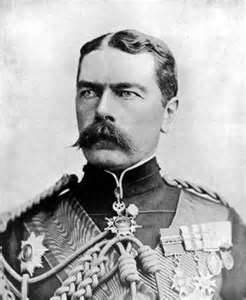
Lord Kitchener models Edwardian smart casual

(more…)

Facebook Twitter Digg Delicious StumbleUpon