




Posts Tagged ‘Atul Hatwal’

Labour history uncut: Labour conference turns on Keir Hardie

13/12/2012, 01:50:02 PM

by Pete Goddard and Atul Hatwal

The Labour party in 1906 had experienced some success, notably with the repeal of Taff Vale. However, the parliamentary party was divided between the limited, immediate goals of the union faction and the more visionary, nation-changing, red-flag-singing socialist contingent.

To focus on the practical and attainable, or attempt the wholesale overthrow of the capitalist system? That was the question.

“Or”, said Keir Hardie, “how about we forget that stuff and concentrate on women’s suffrage?”

Hardie was a committed believer in votes for women in general, and of the Pankhursts and their campaigning organisation (the women’s social and political union or WSPU) in particular.

Either that or he was pretending to be a “new man” to impress the chicks.

The suffragettes’ jack in the box was that year’s Christmas best seller

Hardie’s fixation managed to annoy both the union types and the socialists.

For the union brothers, personified by leadership contest runner-up David Shackleton, the issue of votes for women was a complete distraction. Workers were starving, unemployment was rampant and union rights under threat. Compared to these problems, female suffrage was little more than drawing room conversation for women in fancy frocks – a political After Eight mint.

For the socialist comrades, normally staunch supporters of the impeccably socialist Hardie, the WSPU were a) not radical enough and b) sounded like a sneeze (WSPU. Bless you).

(more…)

Facebook Twitter Digg Delicious StumbleUpon

Labour history uncut: Labour discovers the fun in factions and the value of big friends

11/12/2012, 10:19:55 PM

by Pete Goddard and Atul Hatwal

Following the 1906 election, a new dawn seemed to have broken. 29 Labour MPs had been swept into parliament, a huge step forward.

Even the monarchy noticed the Labour influx. “I see,” wrote the prince of Wales to Edward VII, “that a great number of Labour members have been returned which is a rather dangerous sign, but I hope not all are socialists.”

Which just goes to show why princes of Wales shouldn’t be allowed writing desks

Nonetheless, the prince did have a small point.

Critics suggested the Labour Party’s 1906 version of Reservoir Dogs suffered from too many characters

It was true, there were a number of actual socialists in the Labour party. These were generally idealists, who had entered the movement via the independent Labour party (ILP) or social democratic federation (SDF).  They had spent years discussing big ideas like smashing capitalism and now in parliament, were eager to get cracking on the new workers’ utopia that was just around the corner.

On the other side were pragmatic union folk. They had spent a similar number of years getting up in the morning to go to work, so hadn’t had much time to think about economic systems, although they did know you couldn’t feed the wife and kids on big ideas.

(more…)

Facebook Twitter Digg Delicious StumbleUpon

Ignore the headlines, Leveson will still pass…if Nick Clegg wants it to

30/11/2012, 07:00:59 AM

by Atul Hatwal

It’s quite simple really. The decision on whether Leveson is implemented is not exclusively in the gift of the prime minister. He does not, to quote today’s Telegraph headline, have a veto because the Tories do not command a majority in the House of Commons. Ed Miliband has committed to bringing forward a vote on the judge’s recommendations so it will be down to the 650 members of parliament to determine the future of press regulation.

Here’s how the arithmetic stacks up: the coalition normally has a working majority of 82. This is the number by which the 360 coalition MPs (303 Tory and 57 Liberal Democrat) exceed the combined strength of all the other parties – 278 MPs – less the speaker and his three deputies who don’t vote and the five Sinn Fein MPs who similarly don’t vote.

If the Lib Dems were whipped to support a vote on implementing Leveson (albeit an amended version to address Clegg’s misgivings on Ofcom’s role in verifying the new watchdog and on data protection), the working majority over the Tories would be 35 (303 Tories versus a new combined total of 335 of the rest).

There is the potential that one of the Lib Dems, John Hemming, will defy the whip, given he signed the anti-Leveson letter organised by Conor Burns and David Blunkett. Similarly there are a handful of anti-Leveson Labour MPs who may defy the whip, including Blunkett, Gisela Stuart, Frank Field, Kate Hoey, Gerald Kaufman and Eric Joyce (yes, I know Eric Joyce is nominally an independent).

Taking these dissenters and adding them to the Tory total gives a reduced pro-Leveson majority in the Commons of 18 (a combined total of 328 MPs versus 310 Tories and anti-Leveson defectors.)

As whips office veterans of the knife edge votes in the 1990s and late 1970s can attest, this is where it gets complicated. The remaining 23 votes are made up of a hotch potch of minor groups and parties.

(more…)

Facebook Twitter Digg Delicious StumbleUpon

Labour history uncut: By-elections beckon and the fixers get fixing for the LRC

29/11/2012, 07:37:20 PM

by Pete Goddard and Atul Hatwal

It was early 1902 and times were tough for the Labour representation committee. They had a worryingly low bank balance, only 2 MPs and not enough members to deliver leaflets.

The parliamentary Labour party couldn’t even descend into proper factionalism as Keir Hardie and Richard Bell got on quite well.  This wasn’t what the left was about at all.

The Taff Vale ruling by the Lords had thrown the LRC a much needed lifeline, forcing more unions into the arms of the party, but support wasn’t growing quickly enough. Although more were affiliated by 1902 than 1901, numbers were still down on the founding conference in 1900.

Something needed to be done.

Fortunately, Ramsay Macdonald was on hand. He was a sharp operator and he had a cunning plan.

As party secretary, Macdonald had a key role in developing the party machine and fixing things about which the saintly Keir Hardie didn’t have to ask too many questions.

Secondary duties included taking minutes, making the tea and, eventually removing his glasses, shaking his hair out and waiting for Keir Hardie to say “why Mr Macdonald, you’re beautiful.”

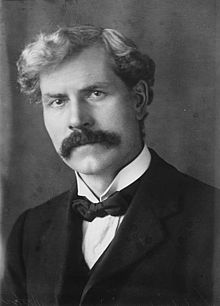
Movember was a way of life for Ramsay Macdonald

(more…)

Facebook Twitter Digg Delicious StumbleUpon

Labour history uncut: the LRC finds its feet

27/11/2012, 05:56:40 PM

by Pete Goddard and Atul Hatwal

After the 1900 election, the Labour representation committee had managed to get two MPs into parliament: James Keir Hardie and Richard Bell.  Not a huge number, but at least they could hold party meetings on the omnibus to work.

Whipping was a much simpler affair too. No need to issue papers every week, Richard Bell just had to make sure that, when they went through the lobby, he was holding Keir Hardie’s hand.

For his part, Hardie was returning to parliament for the first time in five years. The time away had not dented the sense of proportion and willingness to compromise that had served him so well the first time round.

Early in 1901, he put down a motion calling for legislation, “inaugurating a Socialist Commonwealth founded upon the common ownership of land and capital, production for use and not for profit and equality of opportunity for every citizen.”  It would have included a free puppy for everyone too, but there wasn’t enough room on the order paper.

Hardie laid out his proposal to the commons.

‘”Who’s with me?” he asked.

“I am,” cried Dickie Bell.

“Anyone else?”

“Anyone?”

“Guys?”

The parliamentary equivalent of taking a shot on goal from kick-off had failed. Shocker. Clearly it was time for the LRC to get over the excitement of being in parliament, and face some difficult facts.

“You, at the back. Perhaps you’d like to share what’s so funny with the rest of the mob?” Keir Hardie addresses the crowd.

(more…)

Facebook Twitter Digg Delicious StumbleUpon

Whisper it quietly, the government maybe about to back Leveson

23/11/2012, 10:32:09 AM

by Atul Hatwal

So now we know, it’s next week. Lord Leveson will finally publish his long delayed report on Thursday 29th November, complete with recommendations on the future of press regulation.

For many months now, the conventional Westminster village wisdom has been clear: Ed Miliband and Nick Clegg will back the report while David Cameron will demur.

The prime minister will kick the report into the long grass and accept the public’s opprobrium because (a) backing the newspapers’ position will guarantee better coverage for his government as the next election approaches; and (b) most people already think the worst of him on this issue with few swing voters likely switch their allegiance on the basis of press regulation.

But, as Lord Leveson’s report goes to the printers, this wisdom is looks increasingly askew. It fundamentally misreads the credibility of the newspaper owners’ blandishments and threats – and the evidence suggests number ten knows this.

The owners might privately brief the government in warm terms about better coverage tomorrow if Leveson is blocked today, but word are cheap; would they really follow through?

There is a deep scepticism within number ten that the attack dogs of the Daily Mail, Telegraph and Sun will meekly roll over and give the government a pass for the next three years.

A story is a story and in the cutthroat competition of the newspaper market, few will refuse the opportunity to hurt the government if it drives sales.  At the margins, perhaps some stories might be soft pedalled, but collectively supressing major news would be commercially counter-productive.

(more…)

Facebook Twitter Digg Delicious StumbleUpon

Labour history uncut: Labour fights its first election

22/11/2012, 03:30:22 PM

by Pete Goddard and Atul Hatwal

The 129 delegates’ votes were counted at the Memorial Hall in Farringdon. Keir Hardie’s motion had been carried and a new movement was born.

The squabbling assortment of socialists and union representatives that had trooped into the hall that fateful morning on the 27th February 1900, had decided to come together to form “a distinct Labour group in parliament”.

There was little time to waste. The working class was in need and now they had a new, thrusting champion, ready to tackle the iniquities of the late Victorian world. It was time for action.

So they formed a committee.

The Labour representation committee (LRC) to be precise, comprising 2 members of the Independent Labour Party, 2 members of the Social Democratic Federation and 7 union members.

Well, you can’t just rush into things can you? A political meeting without a committee – that’s just anarchy.

In the beginning, membership was relatively limited and funds even more so.  Quite how tight the finances were is indicated by the party’s choice of Ramsay MacDonald for their first secretary.

Why did they choose MacDonald? His vision? His passion? His integrity?

No. It was his wealthy wife.

Thanks to the income of Margaret MacDonald, Ramsay was able to work for nothing more than a subsidised sandwich at lunchtime and a stack of Labour representation committee business cards.

Ramsay MacDonald was, in fact, the Labour party’s very first intern.

(more…)

Facebook Twitter Digg Delicious StumbleUpon

New unionism, not at all like New Labour

20/11/2012, 03:30:32 PM

Pete Goddard and Atul Hatwal continue their look at the development of the unions and their role in founding the Labour party

By the mid-1880s, the establishment had got over the initial panic stirred by the emergence of unions. Civilisation had not collapsed and revolution, like coffee in tiny, tiny cups and the ability to pass a football for more than 30 seconds before launching it into orbit, remained strictly a continental phenomenon.

Even the arrival of a couple of actual, real live working class people in Parliament in 1874 hadn’t been too traumatic. From the vantage point of the Tory benches, the Lib-Labbers’, Alexander Macdonald and Thomas Burt, looked respectable enough and it made a nice change to have someone around who could do something about that squeaky door in the lobby.

The calm was not to last.

A new, angry, voice was about to make itself heard on behalf of the unskilled workers. This new unionism was exemplified by three significant groups: the match girls, the gas workers and the dockers

At the Bryant and May factory in Bow, East London, the workers were largely young women who were casual workers. This did not mean that every day was a dress-down Friday. It meant they worked 14 hour days for less than five shillings a week, and had even fewer rights than most other workers.  So less fun even than dress down Friday, then.

On the other hand, they did get to experience one of the period’s most advanced motivational programmes – a range of harsh, arbitrary fines for tiny infractions. For example, turning up late for work meant a fine of a half day’s pay.

On top of all this, the work itself was unusually hazardous. The phosphorous used to make the matches caused yellowing of the skin and hair loss. Worse still was phossy jaw, which may sound like a popular hip hop artist, but is actually a form of bone cancer. The whole side of the face would turn green and then black, discharging foul-smelling pus. And then you died.

Even by Victorian standards, this was a bit much.

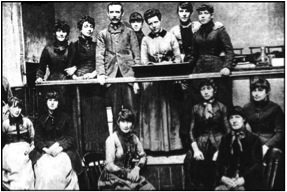
Annie Beasant and the match girls strike committee. Yes, they are judging you

(more…)

Facebook Twitter Digg Delicious StumbleUpon

Labour history uncut: “I’m alright Jack” say the skilled working classes

15/11/2012, 04:15:53 PM

Pete Goddard and Atul Hatwal continue their look at the development of the unions and their role in establishing the Labour representation committee (LRC) in 1900

By 1866 the Tories had been out of power for 18 of the past 20 years and were pretty ticked off. What’s the point of being a Tory if you can’t lord it over the little people by being in government?

In the meantime working people had started to organise in earnest. Unions were springing up, Duncan’s horses were eating each other and civilisation was teetering on the brink of the abyss – at least as far as the landed gentry saw things.

Worst of all, there was pressure to extend the vote to the working classes. The Tories failed to see why anyone should be allowed to vote if they didn’t even have enough sense to be born into a wealthy family. But apparently, some people thought otherwise.

Throughout the 1860s various attempts by Liberals to broaden the franchise were defeated by a combination of Liberal splits and Tory opposition.

But it was only a matter of time.

In 1866 the Tories squeaked back into government as a minority administration. After so many years out in the cold, and with a toxic electoral brand, the Tories’ first moderniser, Benjamin Disraeli had a plan.

Previous approaches to voting reform had involved saying “no”, and then when pressed, shouting “NO!” much louder and storming out in a huff.

Core Tory supporters loved this approach and it always went down a storm in the House of Lords, which incidentally was where the core Tory support sat, literally. But, out in the electorate, enthusiasm was rather lacking.

Disraeli’s big idea was to stop saying “no” and start saying “sort of.”

It was going to happen at some point anyway, so the Tories might as well be the ones to do it. They could then claim the credit and still only implement low-calorie suffrage, thus averting the risk that the Liberals might implement something bonkers like votes for everyone. Those Liberals were crazy.

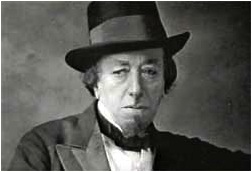
Disraeli, shortly after his appearance on "Pimp my Tory"

Disraeli, shortly after his appearance on "Pimp my Tory"

(more…)

Facebook Twitter Digg Delicious StumbleUpon

Labour history uncut: the union road from Tolpuddle

13/11/2012, 03:40:50 PM

Pete Goddard and Atul Hatwal continue their tour through Labour history with a look at the role of the unions in establishing the Labour representation committee (LRC) in 1900

For the unions, the road to the Labour representation committee started in a field in Dorset. Not an actual field, obviously. A road starting in a field wouldn’t be very useful, and nobody had yet invented EU infrastructure funding.

In 1832, six agricultural labourers from Tolpuddle gathered together and founded a friendly society. They aimed to protest against the lowering of wages in the area in the hope that they could afford the little luxuries in life, such as food.

The name friendly society was appropriate to the gentle pace of protest in the region. West country militancy had reached its peak a couple of years earlier, in nearby Wroughton in Wiltshire.

In response to cuts to welfare administered by the local church under the poor laws, working men marched along to the church’s graveyard and began smoking. Not in a Tibetan monk-protest type way. They simply lit their pipes and puffed away.

Outrageous.

The local gentry thought so anyway. As far as they were concerned pipes in the graveyard was the thin end of a wedge that inevitably led to mob rule and the guillotine. Sure, they called it a friendly society, but wasn’t that just marketing? In 1789 Parisians had probably been invited to the “unexpected open day of the Bastille” too. (more…)

Facebook Twitter Digg Delicious StumbleUpon