Posts Tagged ‘Atul Hatwal’

Labour history uncut: Fabians – don’t get mad; get pamphleting

08/11/2012, 01:30:56 PM

Pete Goddard and Atul Hatwal turn their attention to the Fabians as they look at the organisations that set up the Labour representation committee (LRC) in 1900

The Fabians germinated from very modest seeds.

In October 1883 Edith Nesbit, her husband Hubert Bland and their Quaker chum Edward Reese decided to set up a debating society. That was it. They were the first Fabians.

Nesbit was something of a J K Rowling of her day, mixing easily in political and literary worlds. Not content with founding the Fabians, Britain’s first political think tank, she also wrote a series of best-selling books.

Most pertinently for the modern generation, she wrote the Railway Children and thereby can claim the credit for introducing a generation of young men to Jenny Agutter. Thank you, Edith Nesbit.

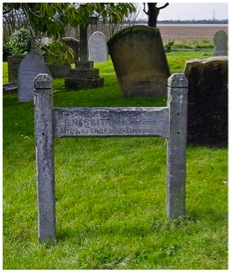
Helping others even after death, Edith Nesbit’s grave doubles as a handy boot scraper

(more…)

Facebook Twitter Digg Delicious StumbleUpon

Labour history uncut: Labour’s original hard left – the social democratic federation

06/11/2012, 02:01:28 PM

Pete Goddard and Atul Hatwal continue their stroll through the organisations that set up the Labour representation committee (LRC) in 1900. Today, it’s the turn of the social democratic federation (SDF)

The SDF was founded in June 1881 by Henry M Hyndman, a journalist and world traveller. On reading the communist manifesto, rather than just agreeing with everything then going back to watching X-Factor, he decided that he was the very man to form Britain’s first socialist party and transform the nation into a socialist idyll.

Very sure of himself was Henry M Hyndman.

Initially, many socialists were sceptical. Hyndman had a history of opposing democracy (including home rule in Ireland) and, worse, he was the son of a wealthy businessman.

Still, after some time, a selection of socialist thinkers and luminaries came around and joined the organisation. This was because Hyndman managed to convince them of the heartfelt sincerity of his beliefs. Also he was the son of a wealthy businessman.

Well, socialist clubs need funds too.

Thus began the long and honourable tradition within the labour movement of taking much-needed funds from a friendly businessman, hoping there are no strings attached.

Henry Hyndman supported the SDF with the proceeds of his work as a shopping centre Santa

(more…)

Facebook Twitter Digg Delicious StumbleUpon

Labour history uncut: the Hardie boys

01/11/2012, 03:00:45 PM

Continuing our series on the history of the Labour party, Pete Goddard and Atul Hatwal look at the runners and riders who founded the Labour representation committee (LRC) in 1900. First up, the Independent Labour party.

Before the Labour party there was the Independent Labour party.

In January 1893, 120 delegates met in Laycocks temperance hotel, Bradford (now new Guiseppe’s restaurant “Nice home made food in a relaxed atmosphere”, TripAdvisor) to found the Independent Labour party.

The socialist intent of this group was evident from the start. It’s aim was to “to secure the collective ownership of the means of production, distribution and exchange”. The Bradford Observer recorded that “The number of socialists among them was apparent from the large proportion of wideawakes (stand up collars).”

A fact which raises the intriguing notion that Saturday mornings on ITV in the 1980s were part of a cunning socialist indoctrination programme for children. Sadly, records do not show if there was a Comrade Mallett at this first meeting of the Wide Awake Club.

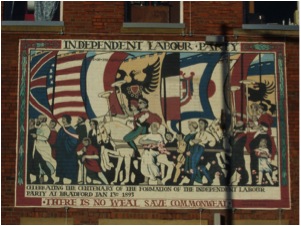
A Bradford mural celebrating the ILP depicting their twin passions of workers solidarity and plate-spinning

The inaugural meeting was lit up by the left’s glitterati such as James Keir Hardie, Tom Mann and George Bernard Shaw.

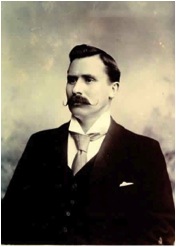
ILP Founder Tom Mann could impale two capitalists at once on his deadly moustache

Hardie had been elected MP for West Ham South a year earlier thanks to combining a broad message that appealed to radicals, trades unions and the local Irish community alike, effective organisation and, perhaps most significantly, his Liberal opponent conveniently dying just before the election.

Rather than turning up to Parliament, as all new MPs have through the ages, with shiny shoes and slicked-down hair, Hardie did things differently. He rocked up riding a wagonette, accompanied by a trumpeter playing La Marseillaise, rather alarming the older generation of Tories who assumed that Napoleon was on the march again.

(more…)

Facebook Twitter Digg Delicious StumbleUpon

Labour history uncut: in the beginning

30/10/2012, 03:00:44 PM

by Peter Goddard and Atul Hatwal

Education. Education. Education. You don’t have to be Blairite to believe in it. Here at Uncut we support the old dictum “those who don’t know history are destined to repeat it.” A solid understanding of the our past is important to understand where the party is today and what we need to do tomorrow.

But it occurred to us, aside from comparatively recent events, we didn’t actually know that much about Labour history. To summarise: there was a splendid fellow called Keir Hardie, a bad’un called Ramsay Macdonald, the glorious founding of the NHS, something about the pound in your pocket and then we’re all singing “things can only get better.”

Tragically we cannot look to the education system to fix our ignorance. The national curriculum devotes little time to the history of the party. Nor does it contain much in the way of jokes. And there are exams.

Labour Uncut would like to remedy these manifold problems so we are pleased to present an uncut history of the Labour party.  This will be an ongoing series of articles taking us from the birth of the party and the circumstances behind it, right up to the present day. Prepare to be educated.

***

The Labour website declares that the Labour party was created in 1900. And who are we to disagree?

This milestone in political history was not some random event. It came about because the demographics, political climate and industrial landscape of Britain were being transformed.

First, the working classes were just beginning to realise there was more to life than forelock-tugging and starvation. Conveniently, increasing numbers of them were also being given the vote, although not the female ones, obviously, for fear that their feeble thinking should lead to a kitten being elected prime minister.

Second, there was increased interest in socialism in Britain. A number of left wing groups were springing up with various aims ranging from having a bit of a think about social progress to storming barricades and kicking off the revolution.

And finally, there was a rise in union activity as the new mass of urban workers began to flex their industrial muscle.

Unions had enjoyed increasing membership and legitimacy over the previous 50 years, but they were well aware that their position was far from secure.

A successful dock strike led by Ben Tillett had made the Conservatives nervous. As a result, they had been busy doing what Conservative governments like doing best; using the full force of the law to mount an offensive against unions.

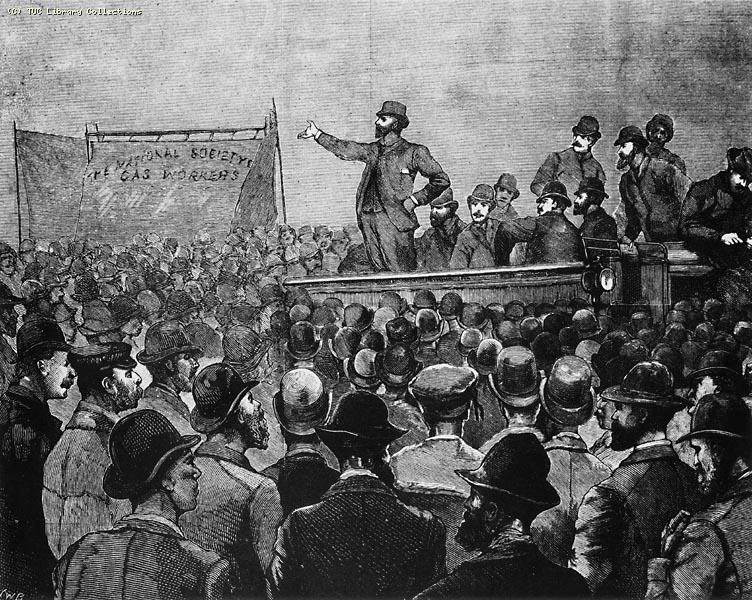
Gas workers’ union meetings traditionally finished with a rousing rendition of “I’m a little teapot”

(more…)

Facebook Twitter Digg Delicious StumbleUpon

Is the Leveson Inquiry about to re-open?

24/10/2012, 07:00:25 AM

by Atul Hatwal

On Monday night a big news story broke. Yet it received scant coverage in the print media.

The first claims were filed at the High Court against  Mirror Group for hacking. While this story was running number two on the BBC website through Monday night into Tuesday morning, it was accorded considerably less prominence on the websites of the newspapers and received extremely modest coverage in their later print editions.

Quelle surprise.

The last thing most of the print media want are the gruesome details of new hacking revelations thrust before the public, just as the newspapers prepare to decry the Leveson report as the greatest assault on freedom since the doodlebug.

But this is important.

This is the first time a news organisation other than News International has been in the legal firing line. The “one rogue organisation” defence has never looked so shaky.

This post-Leveson update of the “one rogue reporter” line will be mounted by the non-News International newspapers in the days and weeks following the publication of the judge’s recommendations.

After the initial shock and awe of wall to wall headlines proclaiming the death of liberty, the majority of the non-Murdoch press will fall back to their second, and ultimately more robust, line of defence.

They will say that the evidence presented before the Inquiry proves only one thing: that News International was rotten. Not the press as a whole, just Murdoch.

Yes there might be lessons to be learned for all of the print media, but on the basis of the facts as presented, the case for statutory action only applies to New International. One rogue organisation. To sacrifice the freedom of the press for the actions of Rupert Murdoch would be disproportionate, illogical and excessive.

(more…)

Facebook Twitter Digg Delicious StumbleUpon

When Ed Miliband marches against austerity tomorrow, will he answer the £10bn question?

19/10/2012, 10:22:26 AM

by Atul Hatwal

Tomorrow, when Ed Miliband attends the TUC’s march against austerity, he will be asked a simple question.

The answer will help determine whether One Nation Labour is an idea that will resonate with the public or just an ephemeral phrase du jour:

Ed, do you back Unite, Unison and the GMB who have just submitted a claim for a 13% rise in wages on behalf of 1.6 million local government workers?

Yes or no?

No, don’t use a parsed formulation of words involving the phrase “tough choices” while avoiding a clear position.

Do not obfuscate, this isn’t a demand to write the next manifesto several years before the next election, it’s just a question that cannot wait three years for an answer.

Neither is it good enough to say that this is a matter for local government as if the leader of the Labour party is somehow legally proscribed from having an opinion.

For the unions, in a very practical sense, this wage claim is part of the alternative to austerity and it is a question they will ask of Labour’s leader, face to face, on Saturday.

Their local government members have faced real terms pay cuts, year on year since 2009. 13% sounds a lot for a wage claim but it would only recoup the real terms losses (e.g. the difference between inflation and the nominal pay rises awarded) suffered since 2009.

What is the point of the union movement if it cannot protect its members from never-ending pay cuts?

(more…)

Facebook Twitter Digg Delicious StumbleUpon

It’s been a dreadful conference for the Tories but they will still leave Birmingham happy

10/10/2012, 07:59:31 AM

by Atul Hatwal

One wonders if the Tories can see how their conference has looked to the rest of Britain. Once upon a time in the mid-2000s they used it as a platform to speak to the country. It was an opportunity to demonstrate how they had changed. There was talk of voting blue to go green, civil liberties and hugging hoodies.

The rank and file might have been unhappy but the message to the general public couldn’t have been clearer: “we are not the same old Tories, we have changed, we live in the modern world.”

These last few days have been like looking at the photo negative of days gone by: cutting workers’ rights, slashing benefits and battering burglars.

The pre-briefing about this conference focused on the Tories new magic word “striver.” In itself it’s a good idea; aspiration and hard-work will never be out of political fashion.

But the Tories seem to have got confused.

Tough messages on law and order and benefits might be perennially popular but without some balance in other areas like civil liberties or the economy it all begins to look decidedly familiar. More red meat vicar?

It’s as if the Tory political managers have given up on ever returning to those halcyon days when the words “progressive” and “Conservative” were routinely used in the same sentence. They have meekly accepted their slide back into the comfortable embrace of the past.

For the Tories, uniquely of all of the parties, the only audience that matters at their conference is not out in the country, but sat in the hall.

(more…)

Facebook Twitter Digg Delicious StumbleUpon

If Labour has the guts on Europe, it can derail Tory conference and David Cameron’s leadership

08/10/2012, 07:00:49 AM

by Atul Hatwal

For an opposition party, so much is out of its control. Governments do, while oppositions’ talk. Only when the government fumbles an issue does the opposition become temporarily relevant. Even bad governments eventually manage to pull themselves together, work out a policy to announce and seize back the initiative.

The issues which cannot be fixed are few and far between.

But when it comes to Tory governments, there is always Europe. On this, the political gift which keeps on giving, Labour has a unique opportunity; the party just needs the guts to take it.

David Cameron’s backbenches are already fractious. Over 100 backbenchers have voted against three line whips on issues ranging from privatisation of the forests to Lords reform to, well, Europe.

But, what has been missing is a consistent, structured shadow opposition on the backbench that marshals the discontented.  Yes there have been revolts, but each insurrection has had a different cast of central characters.

This could all change. The dog days of the 1990s, with a permanent caucus of committed Tory rebels coordinating the chaos, are just one announcement away.

It would be from Ed Miliband and simply state: the Labour party backs an in-out referendum on Europe.

The moment Labour swings behind this referendum, Cameron would be forced to follow suit. The idea that he could resist the pressure from the press and his own side is inconceivable.

From the moment Cameron caved in on this, he would be on the run. A political turning point comparable to Brown’s decision not to call an election in Autumn 2007.

The dynamic on the Tory backbenches would be transformed.

The personal animosities between the modern generation of Eurosceptics such as Douglas Carswell, and the older vintage like Bill Cash would have to be subsumed into the common unifying struggle: to secure the Conservative party for withdrawal.

David Cameron would back staying in Europe, he’s already said he would. A sizeable minority, perhaps even a majority of his own troops, would be opposed. Everything the government attempted would be viewed through the prism of the struggle on Europe.

It would mean the Tory backbenches would once again have a single rebel campaign structure with a full whipping operation and cohesive political leadership.

The conflict would be binary. All or nothing. Either the Conservative leadership would shift to the rebels’ position, or the rebels would inflict defeat after defeat on the government’s programme.

(more…)
Facebook Twitter Digg Delicious StumbleUpon

Ed Miliband’s speech was a political sugar rush that will have minimal lasting impact

03/10/2012, 11:17:52 AM

by Atul Hatwal

Last night Labour party conference was euphoric. Like a child that had just downed a can of full fat coke, the party was humming with nervous, happy energy. Across the bars and receptions the leader’s speech had energised conference.

It was certainly an assured performance. Ed Miliband looked relaxed and spoke in a way people could understand. No abstract flights of theoretical fancy or harping on about capitalism. His address was personal and defined by genuinely impressive delivery. To speak for an hour without notes, with the nation’s media waiting for any hint of a misstep, was a significant achievement.

But, for all the positivity, there was a problem: the content. Conference might have been swept away by the performance, and many journalists might have been similarly dazzled, but as the sugar rush subsides, what was the Labour leader actually saying?

There was no discernible over-arching narrative spanning the hour plus of his words. A “One Nation” motif, yes; a structured argument? No. Plenty of neat phrases yet nothing substantive in terms of policy. There was no detail to illustrate the broader points that would actually give the watching public any idea of what a Labour government would actually do.

Most importantly, the Labour leader didn’t address the fundamental problem that means the party is marginalised on the economy.

Based on this speech, the Miliband analysis is that recession and a rising deficit has almost neutralised the issue. The Tories have failed in their express mission – to reduce the deficit – and Labour’s narrative on growth will carry the day. A steady as she goes approach.

It is a critical misreading of the public mood.

(more…)

Facebook Twitter Digg Delicious StumbleUpon

Advice for Ed: Unless Ed shows how Labour can be trusted on spending he might as well sing his speech in Swahili

30/09/2012, 07:00:31 AM

by Atul Hatwal

Third speech as leader, maybe it will be third time lucky. The task remains the same as in 2010: tackle voter concerns about Labour on spending. Note the focus here: spending. It’s not the deficit, nor debt, though both ideas are clearly very closely linked. It’s spending.

Too often when issues such as fiscal credibility or deficit reduction are raised, the Labour leadership’s immediate response is to talk about growth.

It’s understandable, our leaders are most comfortable describing ways to grow the cake rather than shrink it. No-one joins the Labour party to slash services. But just talking about how to boost the economy completely ignores the reason Labour lost the last election: voters don’t trust Labour on spending.

We could have the best plans for successfully stimulating the economy, reducing unemployment and supporting businesses and it would all matter not a jot.

That spurious charge, “Labour maxed the credit card” has stuck.  For many, debt and the deficit are the consequences of our reckless spending.  No matter how effective Labour’s plans for growth, voters think we would simply spend our way back into trouble.

Until this perception – and it is just a perception – is effectively rebutted, the party does not have voters’ permission to be heard on the economy.

The latest Ipsos Mori poll, released last Friday, has some stark figures that illustrate the depth of the hole in which the party finds itself.

In terms of the party with the best policies for managing the economy, Labour has fallen back since May. Immediately after Osborne’s bodged budget, the party had pulled level. Now, we are 5 points behind with 30% saying the Tories have the best policies and 25% opting for Labour.

Lest we forget, this slide on economic competence has happened during the worst of the double dip recession. If and when growth does return to the economy, what will happen to Labour’s economic ratings?

In his speech, Ed Miliband needs to directly address our problems on spending. He needs to acknowledge it as a real concern for many and show why voters can trust Labour again.

(more…)

Facebook Twitter Digg Delicious StumbleUpon