



UNCUT: A good day for Ed Miliband but the elephant is still in the room

14/02/2013, 01:44:26 PM

by Atul Hatwal

The roll-out of the 10p tax rate pledge was a reminder of how things should be done. Expectations were expertly managed in the run-up to the speech, the announcement was genuinely striking, and the government was caught on the hop. There was no abstract talk of responsible capitalism, no uncosted black holes opening up and the distinction with Gordon Brown’s tarnished brand was clear.

This was good economics and even better politics.

Yes, it might be better if the coverage 10p tax rate band was broader but it needs to be affordable and importantly this is a powerful signal of where the party stands.

The headlines tomorrow will be pleasing and the pressure is now on George Osborne to produce an equivalent rabbit out of his hat for next month’s budget. It’s the type of bold move by Labour that could force the chancellor into a rushed response that then unravels: “Pasty tax” redux.

But, and there is big but, as good as the delivery and content of today’s policy launch was, it doesn’t address the fundamental fear the British public have about Labour.

Earlier this week the Guardian’s ICM poll gave Labour a 12 point lead over the Tories, the biggest since May 2003. Yet, below the topline, was evidence of Labour’s lack of progress on the central issue of economic competence.

Asked to identify the main reason for our current economic problems, 29% opted for Labour’s “debts … racked up to finance unsustainable spending.” This is same as last May. In comparison 23% blamed government cuts and 21% bankers for failing to lend to business.

Labour’s problem with voter perceptions on the economy is often described in terms of the deficit, but this isn’t quite right. As far as the public are concerned, the deficit is the symptom, Labour’s spending is the problem.

Read the rest of this entry »

Facebook Twitter Digg Delicious StumbleUpon

UNCUT: After Mid Staffs, Labour must be brave and take on the cult of the NHS

14/02/2013, 07:00:40 AM

by Peter Watt

Imagine for a minute if there was a terrible accident that claimed a hundred lives; it would dominate the news for weeks.  Or the outbreak of food poisoning caused by some poor hygiene in a major food distributor that made some people ill and perhaps a few poor vulnerable souls to die; it would be a huge story.  The horsemeat scandal has been front page news for days and it’s not (yet) a public health concern.  And yet 1200 people are allowed to die unnecessarily in a NHS hospital and no one seems to notice!  The Francis report into failings at the Mid Staffs hospital was news for a day – and on some outlets it didn’t even top the news schedule for the whole day.  Up to ten other hospitals are now being looked at as their mortality rates are worryingly high.  What is going on?

It really is bizarre; no matter how many times we read about those unable to help themselves being left in wet or soiled beds or left to starve in one of our hospitals it seems to make no difference.  There is an attitude about the NHS that makes it all but un-challengeable.  Politicians in particular are scared of the NHS.  The Tories decided to ring-fence the NHS budget when they were busy slashing virtually every other departmental budget so scared were they of being seen as anti-NHS.  Labour wraps itself in the NHS flag at every opportunity.  Labour politicians who’ve tried to tinker with it are castigated – Alan Milburn and John Reid still have the scars.  We say things like “the NHS is the envy of the world.”  And seem to actually believe it!  The truth is that virtually no other country has copied it as a model.

What is true is that many countries rightly envy the fact that we have universal free health care, they don’t though envy the way that we have chosen to deliver it.  Yes there are some incredible people working for the NHS that provide a great quality of care.  And yes, many of these people work hard and, often under great pressure care for patients with skill and compassion.  But every time anyone criticises the NHS as a model of health care delivery, people tell stories of amazing care and lives saved.  We remember the care that we had when we or a loved one needed it.  We remember that we, and our children were born in NHS hospitals and look with fear at the health care system in the States.  Those criticising are branded as anti-NHS and people back off.

Read the rest of this entry »

Facebook Twitter Digg Delicious StumbleUpon

UNCUT: Labour history uncut: How Uncle Arthur’s trip to Russia saved the Labour party

12/02/2013, 05:49:47 PM

by Pete Goddard and Atul Hatwal

Ramsay Macdonald was not happy.

Labour’s decision in January 1917 to remain in Lloyd George’s new coalition was unacceptable. For Macdonald, this was no government of national unity. Asquith’s retreat into opposition with the majority of the Liberals, meant Labour was now in alliance with a Tory government, with Lloyd George nothing more than a figleaf leader.

Macdonald would have never allowed something like that to happen to the Labour party on his watch. Oh no.

For their part, the Tories weren’t mad keen on Ramsay Macdonald and his various anti-war groups either. The fall of the Russian Tsar in March 1917 had stoked Tory fears of the lower orders getting uppity, while a major bout of industrial unrest in May convinced many that a revolution was coming.

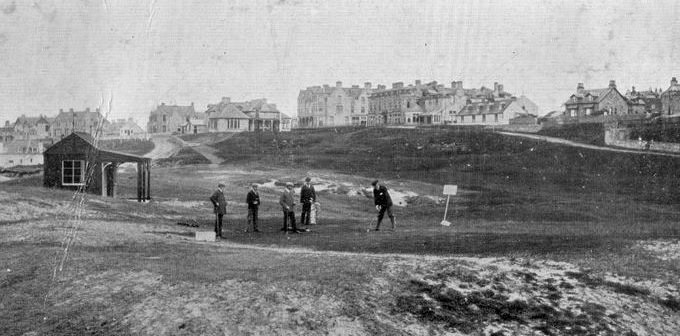
In their view, Macdonald was the archetypal leader of the malcontented masses. Celtic, working class, and not even a member of a golf club, for goodness sake. Admittedly, this last point wasn’t entirely his fault, since his local club had expelled him on account of of his opposition to the war. Then again, to lose a golf ball might be considered unlucky, but to lose a whole club looks like carelessness.

Lossiemouth Golf Club – no socialists, no pacifists, no dogs

Further anti-Macdonald feeling was stirred by Lord Milner, a Tory member of Lloyd George’s inner cabinet who had valuable experience of war, having helped start one in South Africa while he was high commissioner.

Read the rest of this entry »

Facebook Twitter Digg Delicious StumbleUpon

UNCUT: Paterson’s in the wrong department to wing it

12/02/2013, 11:33:32 AM

by Kevin Meagher

If there’s one thing that united Northern Ireland’s republicans and unionists alike, it was relief in seeing the back of Owen Paterson as secretary of state. His Tory grandee shtick didn’t play with either side, but it was more than his air of lofty patrician indifference, he was disliked because of his poor grasp of detail.

In that respect, he left the frying pan to jump headlong in to the fire. Reshuffled to Defra last September, Paterson is currently floundering, trying to respond to the corruption of our food-chain security which has seen horsemeat turn up, well, everywhere it shouldn’t; while Muslim prisoners have been eating non-Halal pasties. Further scandals are promised.

Paterson is suffereing because of two problems specific to Defra. The first is that the everyday substance of policy there is detailed, pernickety and hard to grasp. It favours clever, assiduous ministers like Michael Meacher or genuine enthusiasts like Elliot Morley with a personal interest in the department’s stock-in-trade. (He was a twitcher before, alas, serving a spell of bird). Assiduous and enthusiastic are not words to describe Paterson’s performance over the past couple of weeks.

The second is that the department is like a portmanteau case, opening out to include powerful vested interests. There’s quangos like the Environment Agency. The privatised water companies and their independent regulator, Ofwat. And the farming lobby. And the landowners. And the animal rights people. There are plenty of well-organised groups to fall out with and Paterson needs to do just that, firing a rocket at powerful food producers and retailers.

I remember asking a former boss of mine who had worked in the gas industry why the old department of energy was folded into the department of trade and industry. His answer? The department was simply a focal point for powerful corporates in the oil and gas industries who button-holed ministers with their own particular gripes. Better to have an energy minister in a department with a wider mandate to dilute their influence on policy.

So, too, it is with Defra. Amalgamating the old Ministry of Agriculture Fisheries and Food (MAFF) with the Department of Environment after the 2001 foot-and-mouth outbreak simply aggregated-up the knotty issues and vocal lobbies.

Read the rest of this entry »

Facebook Twitter Digg Delicious StumbleUpon

INSIDE: The runners and riders to succeed the pope

11/02/2013, 04:00:02 PM

It might not be a form of politics that the Westminster village is familiar with, but the papal succession is nevertheless pure politics.

There are factions, rebels, personality clashes and fickle electors a plenty. Behind closed doors debates rage about how to maximise reach in new markets like Africa and Asia, turn back the opposition in these markets (that would be Islam) and how to rebuild a declining base in Europe. The economy and global austerity could even influence the selectorate of cardinals.

At this early stage, the choice seems likely to be forward looking. So it will be a new generation that takes the papal helm – “new generation” in this case meaning someone in their early 70s rather than knocking on 80. But don’t expect a liberal choice, the conclave of Cardinals that elects the pope has been packed with conservatives over the past years and doctrinal orthodoxy will be one of the entry level criteria.

So who are the runners and riders to succeed Benedict? Here are three to watch.

Cardinal Wilfred Fox Napier, Archbishop of Durban – the media candidate

At the time of the last succession in 2005 there was much talk of the potential for a black pope. Back then the Nigerian Cardinal Francis Arinze was the leading candidate, but the mood of the papal conclave was too conservative. Now 81, Arinze is seen as too old and Cardinal Wilfred Napier (72) is this year’s great black hope. From a media perspective, interest in an African pope would be intense and expect to see stories in the coming days heralding to the Catholic Obama.

Napier is known as passionate advocate of social justice, going so far as to oppose a papal visit to South Africa in 1988 as legitimising the apartheid government. But he is also the driest of dry on the Catholic touchstones of contraception and abortion. He is a resolute backer of church orthodoxy on the use of condoms in preventing AIDS

Napier’s main rival from Africa is likely to be Cardinal Peter Turkson, Archbishop of Cape Coast, Ghana. Turkson has similar beliefs, but controversially, authored an economic critique of the world financial system in 2011 that called for the establishment of a global public authority and a “central world bank”. All fine ideas, but unlikely to find favour with many governments or the important American market.

Cardinal Angelo Scola, Patriarch of Venice – the Italian

Of course, there’s got to be an Italian. If the papal conclave wants to play it safe, Cardinal Scola (72) will be a hot favourite. The Italian lobby will already be pointing out there hasn’t been a local pope at the Vatican since the 1970s and Scola has a good biography. The son of a truck driver, he could use his formative experiences in post-war austerity Italy to lay claim to understanding the current concerns of working people around the world.

Scola’s scholastic interests in trying to find a way to avoid a “clash of civilisations” would position him well as a concilliatory sounding champion in the global competition for converts that is being contested with Islam. He also has impeccable organisational pedigree – three of Scola’s predecessors as Patriarch of Venice have gone on to take the big job in the past 100 years: Pius X, John XXIII, and John Paul I.

Read the rest of this entry »

Facebook Twitter Digg Delicious StumbleUpon

UNCUT: Labour’s bandwagon needs a shove

11/02/2013, 12:43:42 PM

by John Braggins

The first polls are out for the Eastleigh by-election and they give the Tories a three point lead over the Lib Dems, or the Lib Dems a three point lead over the Tories – depending on which poll you believe or how you interpret them.  I know from many years of campaigning that by elections have a special dynamic that means early polls often turn out to be deceptive.

Veteran Lib Dem campaign supremo, Lord Rennard, ennobled, it is said, for his services to the dark art of by-election campaigning, says the Labour vote is there to be squeezed in a “classic two-horse race.” Where have we heard this before?  Well in every Lib Dem leaflet penned by Chris Rennard, at every by-election since the Liberals won Bermondsey in 1983.

In the past this was a largely successful ploy as the LibDems have always claimed they were neither Tories nor Labour and if you didn’t like one or the other, then you could vote for them.  But that was the old politics and today things are very different – voters In Eastleigh can vote Labour precisely because they are not the Tories or the Lib Dems.

Now is time for Ed Miliband to step forward and show he has the vision and guts to pull-off an amazing by-election victory in this ex-railway town. And why not, all the components of an electoral bandwagon are in place.

Tory candidate Maria Hutchings begun her campaign being forced to deny quotes from the past and quarrelling with David Cameron on Europe, gay marriage and abortion.

In 2005 she was quoted as saying “With an increasing number of immigrants and asylum seekers then the pot is reduced for the rest of us, Mr Blair has got to stop focusing on issues around the world such as Afghanistan and AIDS in Africa and concentrate on the issues that affect the people of middle England.” Undoubtedly Ms Hutchings could turn into a liability – her presence in Westminster would certainly send a shiver down the spine of David Cameron.

And with a nasty Tory campaign, if the early comments by party chairman, Grant Shapps, are anything to go by, that will upset the many decent voters of Eastleigh.

Read the rest of this entry »

Facebook Twitter Digg Delicious StumbleUpon

UNCUT: Labour history uncut: Lloyd George topples Asquith as Labour sit tight in government

10/02/2013, 03:28:22 PM

by Pete Goddard and Atul Hatwal

On the 13th November 1916 the battle of the Somme finally ended. Since its launch at the start of July, the British army had suffered 420,000 casualties to advance a grand total of 5 miles.

This rate of attrition revealed that the army’s brilliant “more men forward” approach would indeed get us to Berlin, just as long as we didn’t mind taking another 48 million casualties on the way.

A quick head count of the British population (46 million) led people to suspect the wisdom of this military strategy, despite the resolute self-confidence of generals.

Even Arthur Henderson and the Labour party, however much they tended to go weak at the knees for a man in uniform, had doubts. But as minor members of the government, there wasn’t a whole lot they could do. The sight of Labour men questioning the war effort could easily be mistaken for a lack of patriotism and they were getting enough criticism on that front already thanks to the barbs of Ramsay Macdonald and his anti-war chums.

Instead, Labour opted to stay quiet and look hopefully to prime minster Asquith for some inspiring leadership.

Unlucky.

What they got instead in November 1916 was Asquith asking the cabinet to jot down any ideas they might have about what to do for “Herbert’s big book of war-winning notions.” As leadership goes, it wasn’t exactly “Once more unto the breach dear friends.”

Things got worse when Tory grandee Lord Landsdowne, did jot his ideas down. They weren’t exactly what Asquith was hoping for.

“[the war’s] prolongation will spell ruin for the civilised world, and an infinite addition to the load of human suffering which already weighs upon it.”

He put this upbeat prognosis in a letter he offered to the Times, to perhaps publish for a bit of fun alongside the horoscopes and sudoku. The Times was appalled by what they saw as the anti-British letter and refused to publish it, as they believed any decent paper would.

The Telegraph happily ran it.

Lord Landsdowne shows the sunny demeanour that inspired his famous letter

Read the rest of this entry »

Facebook Twitter Digg Delicious StumbleUpon

UNCUT: Labour’s new way of selecting parliamentary candidates makes a mockery of calls for more working class MPs

08/02/2013, 07:00:08 AM

by Peter Watt

Class is back on the agenda.  Bashing the posh “Eton” Tories has become popular again for many in Labour’s ranks.  Personally I think the “posh” attacks are pretty appalling.   But the Tories don’t really help themselves and I guess you could argue that they invited it with the “we’re all in it together” nonsense.  But it’s a long time since the Labour party was stuffed full of working class members or representatives.

Nope, Labour may not have quite the public school quotient of the Tories but our ranks are still drawn from a narrow pool.  We are pretty much wholly middle class and there are an awful lot of teachers and lawyers at most party meetings!  The same is true of our MP’s except that there are also a fair old number of political professionals from the ranks of trade unions and political advisors.

The party has though made some real strides over recent years in increasing the numbers of women.  There’s a way to go, but the progress is clearly good news.  And you’d think that the recent signals that the party was looking to diversify its ranks in Westminster further, by recruiting more working class MPs for instance, would be the start of further progress.  But I fear that it is in fact just hollow words that will come to nothing.

Those who really know the Labour party know that real power is in the hands of those who control the organisation.  And that means that you need to understand the rules and procedures.  Better still, mould them to your own ends.

It is why the Organisation Sub-Committee (Org Sub) of the NEC is the committee that every member of the NEC wants to be on.  And it’s why the Trade Unions fight so hard to make sure that they have plenty of reps on it and generally chair it.  You see, the Org Sub controls selections, discipline, the rule book and internal elections.  And the reality is, that it is the wording of the rules and regulations for the selection of Parliamentary candidates, approved by the Org Sub that determines whether fine words are translated into reality.

Read the rest of this entry »

Facebook Twitter Digg Delicious StumbleUpon

UNCUT: Back to the future with GDH Cole

07/02/2013, 04:44:58 PM

by Jonathan Todd

How much left the room when GDH Cole stormed out of a Fabian executive meeting in 1915? More than you might imagine.

James M. Buchanan was born a few years prior to Cole’s exit and died last month. He tends to be celebrated by right-wingers, enamoured with a small-state, as his work on public choice theory supports scepticism in big government. Unlike Cole, such right-wingers have never been inspired to socialism by reading William Morris. Yet Cole’s doubts about the central state were as vehement as Buchanan’s.

Cole’s was a socialism with as small a central state as possible. Subsequent perceptions have tended to see socialism and the state as so synonymous as to make Cole’s minimal state socialism oxymoronic.

Those who remained in the Fabian executive meeting after Cole had left it would be relaxed about this association. Their aim was to capture the commanding heights of the state through democratic elections and have socialist politicians use the organs of the state to gradually transform society to socialism.

Tony Crosland’s The Future of Socialism (1956), the great revisionist text of post-war Britain, contained some caustic lines about Beatrice and Sidney Webb, the leading exponents of this dominant Fabian view. He mocked them for spending their honeymoon investigating Trade Societies in Dublin. It was their austere methods that he had in mind when he warned that: “Total abstinence and a good filing-system are not now the right signposts to the socialist Utopia: or at least, if they are, some of us will fall by the wayside.”

Crosland liked a drink and was right to put more emphasis on relaxation, fun and culture than the Webbs did: quality of life, in contemporary parlance. And right also to assert that in the blood of the socialist “there should always run a trace of the anarchist and the libertarian, and not too much of the prig and the prude”. This liberalism justified the reforms enacted by Roy Jenkins, another protégé of Hugh Gaitskell, as Home Secretary in the 1960s and distanced Crosland from the Webbs.

But the break made by Crosland with the Webbs was not as decisive as he thought. While being socially much more liberal than the Webbs, his dominant pre-occupation was equality and creating a more equal society through a comprehensive school system. The Bevanites with whom Gaitskellites, like Crosland, quarrelled in the 1950s put more emphasis on nationalisation, rather than equality, as the end of socialism. In so doing, the Bevanites were as attached to the central state and public ownership as the Webbs were.

Read the rest of this entry »

Facebook Twitter Digg Delicious StumbleUpon

UNCUT: Whip’s Notebook: Who does the PM ask to find out what’s going on with his flagship equal marriage bill? The Labour whips

07/02/2013, 01:16:13 PM

by Jon Ashworth

If you want to find out what is going on in the Commons you ask a Labour whip, so said a Tory MP to the Labour whips’ office on the night of the equal marriage vote. While I can’t claim to know what is always going on I certainly know that the prime minister’s party management skills were again called into question this week.

This blog has already argued David Cameron’s modernisation of the Tory party is on its last legs. This week we had more evidence. On something that Cameron himself had decided was a touchstone issue, the majority of his MPs voted against him. In fact 136 voted no, 127 voted yes and 36 abstained. More starkly roughly 40 per cent of the “payroll” vote failed to back him – including nine out of fourteen in his own whips office – the very people who are supposed to enforce the will of the prime minister.

Of course the issue was a free vote but Cameron, Michael Gove, George Osborne and Theresa May were all out in force in recent days desperately trying to persuade their backbenchers to back the prime minister, and yet amazingly 70 per cent of Tory backbenchers ignored them and refused to vote the same way as the Prime Minister.

The free vote on Tuesday evening was on whether to give the bill its second reading and so the bill will now go off to committee to be scrutinised line by line before returning to the Commons and then the Lords. Immediately after these second reading votes the Commons also usually agrees a “programme motion” which timetables the bill though committee, a “money resolution” which agrees the relevant funds for the policy enacted in the bill and a “carry-over motion” to agree that the bill can be “carried over” to the next Parliamentary session should its passage not be completed in this session. The Commons often, though not always, agrees these motions without “dividing” i.e. voting on them.

But on Tuesday evening some Tory backbenchers were determined to cause as much trouble as possible for the Tory leadership and so forced votes on all of them.

And yet despite the scale of the vote against second reading, the Tory whips either were not motivated or caught unaware as to what would happen next. Perhaps it was a bit of both.

Read the rest of this entry »

Facebook Twitter Digg Delicious StumbleUpon