by Atul Hatwal
What a result in Barnsley. To increase the numerical majority in an already safe seat as the turnout halves, this is the stuff of psephological fantasy. For the Libs to come sixth, losing their deposit, is the dark matter of disreputable dreams.
So, what does it tell us about the national picture? About voting intentions in the next general election? About how we’re doing?
To be honest, sadly, it tells us nothing.
By-elections are almost entirely beyond interpretation at the best of times. A by-election in a highly atypical constituency, caused by extraordinary circumstances, fought by asymmetrically effective candidates and teams is entirely so.
The polls, by contrast, are just starting to have tracked long enough since Miliband took over to show trends. The latest YouGov tracker poll posted a Labour lead of 5% and it was as high as 9% earlier in the week. On Wednesday, Anthony Wells, YouGov’s resident polling guru, assured us that Labour’s lead is “still going strong”.
So perhaps Barnsley really is a sign of things to come?
No.
Progress is being made, but nagging doubts remain about a Labour poll lead that feels very 1980s. Something doesn’t quite sit right.
Systematic polling evidence to back-up these doubts has been patchy. Underneath the headlines there have been individual questions that cast doubt on its solidity, but not enough to build a narrative that describes where voters really are.
This changed last month.
In the mass of polling conducted by YouGov for the Sunday Times and the Sun, some of those questions that are asked infrequently, but which shine a light on voters’ core motivations, were finally repeated. It means a consistent pattern of questions can now be tracked back over the past few months.
These questions fall into three areas: the impact of cuts on voters’ wallets; support for the Tories’ approach to the deficit now it is being implemented, and voters’ views on whom they prefer for PM.
The results are unequivocal and give some hard numbers to quantify that intuitive doubt.
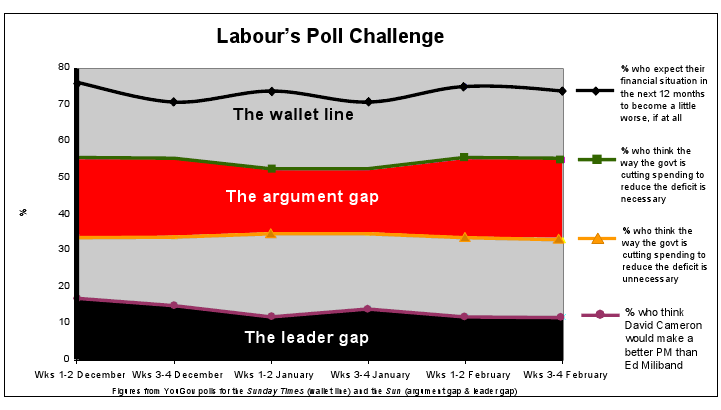
The top line on the graph shows that for all the angst and outrage on cuts as covered in the media, at a time of global downturn, most people are pretty sanguine about their personal prospects. Read the rest of this entry »