




UNBOUND: Friday News Review

26/11/2010, 06:55:51 AM

AV campaign heats up

The 5 May referendum will ask voters whether they want to keep the first-past-the-post system for electing MPs or to replace it with the alternative vote (AV), under which candidates are ranked in order of preference. The president of the “no” campaign was named last night as Margaret Beckett, the former Foreign Secretary. She will be joined by four other Labour veterans – Lord Prescott, Lord Reid, Lord Falconer, and David Blunkett. Three Tory Cabinet ministers will be campaign patrons – William Hague, Kenneth Clarke, and Baroness Warsi. The heavyweight line-up – described by No to AV as “titans of the British political system” – is evidence the campaign to retain the status quo will be highly-organised. Supporters of a yes vote intend to portray themselves as the “people against the political establishment”. – The Independent

The depth of division within Labour over voting reform was exposed tonight when it was announced that Margaret Beckett, the former foreign secretary, is to lead a group of the party’s big beasts in a campaign to reject the reform in a referendum on 5 May. Beckett will chair the campaign against the alternative vote system, with the help of figures including two former Labour home secretaries, David Blunkett and Lord Reid, former lord chancellor Lord Falconer, and the former deputy prime minister Lord Prescott. Labour’s manifesto committed the party to the referendum, and several shadow cabinet members, including Alan Johnson, John Denham and Peter Hain, will campaign for a yes vote. – The Guardian

The No to AV campaign has unveiled its list of patrons, and a fascinating picture emerges of cross-party co-operation between some of the biggest hitters (Prescott’s on the list) from the Labour and Tory sides. It starts to look like a pincer movement by the establishments of the two big parties, designed to squeeze a Lib Dem orientated Yes campaign in the middle. And, yes, yes, I know there are Labour people in the pro-AV team but unless they can pull a rabbit out of the hat soon then they risk the widespread perception being that their campaign is broadly Clegg’s creature. Considering recent developments, such as the emergence of considerable opposition to the Lib Dems on student fees, having Nick Clegg out front isn’t likely to be a campaigning advantage. – Wall Street Journal

Ed sets out his stall

Thirteen years in government led to many lasting achievements, but also to a party remote from many people’s hopes and aspirations. In government we lost the humility to listen and learn. In opposition we must find it again. We must understand why, despite all that was achieved over the last decade, so many people who work hard and want to get on came to feel squeezed. Why did too many families feel that the gap between their lives and their dreams became larger and harder to bridge? It is a gap that I fear this Coalition will widen dramatically. The prospects for millions of families under Mr Cameron’s government look bleak. Slashing funding for universities and tripling student fees risks making the burden of personal debt far worse. The slogan “we are all in it together” is being used as rhetorical cover to push millions of families outside of the basic social deal, that if you work hard and do the right things, you will be helped to get on. It’s not just Child Benefit. Scaling back support for child care through tax credits and support for young people in education will hit the aspirations of millions. – Ed Miliband, The Telegraph Read the rest of this entry »

Facebook Twitter Digg Delicious StumbleUpon

UNCUT: Who the new Lib Dem president really is. And why.

25/11/2010, 03:00:43 PM

by Jonathan Todd

For all Nick Clegg’s slightly vague talk of “giving the party with the biggest mandate the chance to govern” it wasn’t hard, given opinion polls, to see a Tory/Lib Dem government as a potential outcome throughout the general election. I warned Westmorland and Lonsdale that they might vote Liberal Democrat and end up with such a government. They didn’t listen. I was less surprised by the government we ended up with than the extent to which the motivations of my Liberal Democrat opponent, Tim Farron, recently elected president of his party, seemed so close to those of Labourites.

He professes “anger at the injustice” of Margaret Thatcher. At hustings he’d offer impassioned rhetoric on whatever social problem was most germane. Whether this was the struggles of hill sheep farmers or global warning, he challenged market iniquities. His stump speech tells of watching a repeat of Cathy Come Home as a teenager and being so compelled to do something about the injustice he’d witnessed that he decided to use his pocket money to join a political party instead of buying a Smiths single. While he was far more profligate in Biblical quotations than me, at hustings we battled to colonise the language of poverty and oppression.

Farron’s constituency once belonged to Tory grandee, Michael Jopling, whom Alan Clark famously recorded saying of Michael Heseltine that “his trouble is that he had to buy his own furniture”. Jopling stood down in 1997, bequeathing Tim Collins a majority of over 16,000. Collins was defeated eight years later by a candidate fired by rage at a Prime Minister in whose government Jopling served.

Farron first contested the seat in 2001, when Collins was a shoo-in. The next year he switched jobs to work in the constituency and at some stage – long before it was thought a potential site of a Tory “decapitation” – he settled his family locally. All of this suggests reserves of self-belief and a willingness to play the long game.

He may sometimes sound like a lost member of our tribe, but part of the reason for Farron turning a safe Tory seat into a solid Liberal Democrat one has been a ruthless crushing of Labour. His annihilation of me came after all Labour councillors had been vanquished. As considerable Tory support remains in the more rural parts of the constituency, which have recently formed the backdrop to Rob Brydon and Steve Coogan’s The Trip, he has assiduously worked wards that were once Labour.

Good Labour councillors have been crushed by Farron’s machine. While it would delight me to see these councillors returned to office, Farron represents a different kind of Liberal Democrat from, say, David Laws. In effect, they are now in different parties.

As Tim Montgomerie observes, this is a governing ensemble in three parts:

  1. the almost indistinguishable front benches;
  2. the Tory right;
  3. the left of the Liberal Democrats who, in their hearts, would still have preferred a deal with Labour.

Farron is one of the leaders of the latter and Laws seeks – with, for example, his crass dig at Ed Miliband for buying a round of teas – only to help the former.

The difference between being a human shield happily (Laws) and begrudgingly (Farron) may seem trivial when you are protecting a prime minister as destructive as she who inspired Farron to go into politics. But there is significance in the distinction. The willing human shields will be appealed to by Cameronites like Nick Boles who intend the Tory/Lib-Dem alliance to endure beyond this parliament. Longevity in this axis is to be feared by Labour.

Immediately upon becoming Lib Dem president, however, Tim Farron dismissed the notion as “absolutely stark raving mad”.

Labour might build upon this by following the advice offered by Liberal Democrat David Hall-Matthews in Renewal:

“There might be more to be gained for Labour by trying to woo the Lib Dems – or at least by highlighting their (huge) differences from the Tories, rather than condemning their similarities. It would be a disaster for the left if a 2015 balanced parliament created the possibility of a clear Lib-Lab majority but five years of mutual carping had poisoned the well”.

It would be in tune with the post-tribal sensibilities of the public for Labour to be upfront about where we can agree with the Liberal Democrats and where we can’t. This should uncover a considerable basis of common ground, potentially on issues like a land tax and a second chamber elected by full PR, which the Lib Dems share with Labour and which neither can share with the Tories. The election of a social democrat like Farron as president and quotations like that from Hall-Matthews indicate that there are plenty of Liberal Democrats looking for common ground. For them, perpetual governance by the Boles-Law class is almost as nightmarish as it is for us.

We shouldn’t forget, and should continue to resist, the damage that Farron has wrought on a CLP. We should be suspicious of his ambitions (having been told he was crazy to think he could beat Collins, he may now secretly think he can lead the Lib Dems to be the largest leftist force). We should expect him to over-egg the progressive credentials of the Liberal Democrats.

But we should probe these credentials fairly and seek – rather than firing endless rounds into the human shields – to build bridges and back-channels with those of Farron’s bent. This will expose the greatest enemy: David Cameron. And we may even discover that Farron got Stockholm syndrome not six months ago but soon after watching Cathy Come Home.

Jonathan Todd is Uncut’s economic columnist and was Labour’s Parliamentary candidate in Westmorland and Lonsdale at the 2010 general election.

Facebook Twitter Digg Delicious StumbleUpon

GRASSROOTS: Let’s not play politics with drugs

25/11/2010, 12:00:42 PM

by James Watkins

Drug addiction is too often the background noise in communities up and down the country. Even if your own family has not been affected, it is very likely you will know someone who, in some form, has been damaged by this trade.

The financial costs of the drugs trade also demonstrates in stark terms the harm that is being caused. For instance, in the West Midlands police area, as of January 2009, crime linked to 1125 class A drug users had an estimated impact of £108 million on the economy. The charity, Addaction, claim that between 1998 and 2008, drug-related ill health and crime cost the UK economy £110 billion.

The last government had made progress in tackling this problem. The 2009/10 British crime survey found that 8.6% of 16 – 59 year olds in England and Wales used illicit drugs. That figure in 2008/09 had been 10.1%. The number of 16 – 24 year olds using illicit drugs in England and Wales dropped to 20% – compared to 22.6% in 2008/09.

But these statistics also show the shockingly high numbers of people whose lives are being steadily destroyed by drugs. The government will shortly publish its public health and drugs strategies – which will have implications for every single family. This will also be a test of Labour’s commitment to constructive opposition. Read the rest of this entry »

Facebook Twitter Digg Delicious StumbleUpon

UNCUT: Osborne’s regressive VAT bombshell is both mad & bad

25/11/2010, 07:00:35 AM

by Sally Bercow

There was certainly no age-of-austerity angst or belt-tightening blues in evidence at the big blue and yellow box in Wembley earlier this week. Ikea was rammed – not just the downstairs marketplace with its Xmas decorations, tealights and festive bits and bobs – but the entire store. Consumer confidence may be falling (the Nationwide index now sits at its lowest level since March 2009) but there were more people sprawling on Klippan sofas, bustling by Billy bookcases, bouncing on Sultan mattresses and measuring up Faktum kitchens than you could shake a stick at.

Now, of course, I appreciate that Ikea is almost always busy, not to mention nightmarishly stressful (all couples argue in Ikea right)? Nonetheless, the member of staff I (eventually) found agreed that there were even more shoppers than usual. More interestingly, he divulged (after only one leading question and the teeniest amount of prompting) a theory as to why: namely, that people are enjoying one last hurrah; a final spending splurge before the VAT increase hits in January.

What is more, this is borne out across the high street: although John Lewis last week reported a booming 6.8 per cent increase in sales on the same time last year, their MD, Andy Street, observed: “The imminent VAT increase is a major issue. We are seeing customers already talking to us about bringing forward big home purchases, such as carpets and kitchens, before the VAT increase and who can blame them frankly”. Read the rest of this entry »

Facebook Twitter Digg Delicious StumbleUpon

UNBOUND: Thursday News Review

25/11/2010, 06:45:35 AM

Gove announces schools shake up

Tough new powers to stop pupils repeatedly re-sitting GCSEs and A-levels. New moves to make it harder for potential recruits to enter teaching, and easier to get rid of those who do. Fines for schools who wrongly exclude pupils, plus a responsibility to ensure any expelled pupils continue to get a full-time education.These are the key planks of the biggest educational upheaval for more than two decades which was announced yesterday by Education Secretary Michael Gove in his much-trailed government White Paper. – The Independent

Chris Keates, general secretary of teachers’ union NASUWT, said: “We are seeing a vicious assault by the secretary of state on teachers’ commitment and professionalism. We are now witnessing the plans for another lost generation of young people.” The Association of Teachers and Lecturers said Mr Gove was dismantling state education and Shadow Education Secretary Andy Burnham said the “elitist” reforms would create a two-tier system. Mr Gove laughed off spelling “bureaucracy” wrongly on the Commons statement. He justified the error by saying his “eyes glaze over” when he sees the word. – The Mirror

Mr Gove’s contradictory instincts take tangible form in his attitude to spending on school sports. Suddenly there is no “We will…” driving his approach. Instead he is dropping the ring- fenced cash that was targeted on sport. No doubt ring-fencing of cash has a sinister ring to it. It sounds indiscriminately proscriptive to those, including most in the Coalition, that regard the state with extreme wariness. But ring-fencing is a highly effective way of targeting tax payers’ money on a particular worthy cause and making sure the cash is spent productively. In this case head teachers popped up on the airwaves to say, whether the money was ring-fenced or not, they would continue to spend it on sports, only the cash was being scrapped altogether. – The Independent

SCHOOL sport co-ordinators have invited the Education Secretary to Bristol to see first-hand the work of the partnerships he wants to scrap. They believe the decision by Michael Gove to cut the £162-million funding for School Sport Partnerships will have a “devastating effect” on the sporting opportunities for young people in Bristol. And they claim hundreds of events will no longer take place if the £750,000 funding for the three SSPs in the city is pulled, as planned, in March. SSPs cover every school in the country. Each one consists of a sports college or academy, secondary, primary and special schools, working together to develop sport opportunities for young people. – Bristol Evening Post Read the rest of this entry »

Facebook Twitter Digg Delicious StumbleUpon

UNCUT: Alan Sugar is right. Nick Clegg is wrong. It’s people that matter, not “progress”.

24/11/2010, 03:30:09 PM

by Anthony Painter

Lord Alan Sugar couldn’t care less where you’ve come from or what university you’ve been to. All he cares about is how you acquit yourself both personally and professionally. Your individual performance matters, but so does your emotional intelligence and ability to work in a team. He judges people on their merits as he sees them. To impress him you have to think on your feet, adapt yourself to the task in hand. It’s not merit in a formal sense. It’s about creativity and worth.

Nick Clegg has sought refuge in “social mobility”. Politicians at a low ebb of creativity and imagination tend to. Let’s take social mobility to mean ending up with a higher status or in a more elevated social class than your parents. In this regard, Lord Sugar is highly socially mobile. Nick Clegg is pretty static. The former was luckily enough to be born into a north London working class family; Clegg had nowhere to go really, but good for him in maintaining his family’s class and status.

Straight away we are seeing how ludicrous social mobility can be as a concept. It gets worse. By focusing on social mobility we exacerbate that very British bad habit of obsessing with class and status. Do we really want the measure of “success” to be your class (economic position) or status (social standing)? In measuring success in this way you only exacerbate social division and stigmatise “failure”. In a highly mobile society, anyone who doesn’t end up with a higher status or in a higher class has failed. And to achieve the supposed idyll of perfect social mobility implies a monumental and brutal task of social engineering, the like of which won’t be contemplated- rightly, because it’s monstrous.

Just before the left gets too smug, it has a similarly divisive view of the world. Nick Clegg’s Hugo Young speech has been adversely criticised by some on the left for failing to appreciate the link between inequality and diminished social mobility. This is just as bad. First, it accepts the end of social mobility unquestioningly. Second, it reduces the means to that end to greater “equality” (a lower Gini coefficient). The attitude is basically “we’ll set you the goal and give you help to fly up the social ladder and when you don’t we’ll compensate you anyway then we’ll play the game again with your kids and their kids”. Politically, it’s a nonsensical proposition. Read the rest of this entry »

Facebook Twitter Digg Delicious StumbleUpon

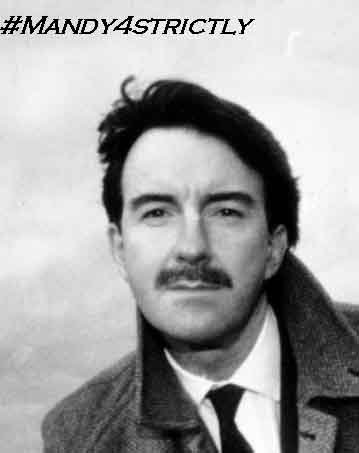
INSIDE: Mandelson tells friends he would love to do Strictly

24/11/2010, 08:35:11 AM

Scandal! Peter Mandelson has told close friends that, contrary to reports, he has never been approached to appear on Strictly Come Dancing.

According to a close confidente of the granddaddy of the Labour movement, if Peter were to be invited to trip the lacquered boards he would readily accept.

This news directly contradicts assurances given to Uncut by the BBC that the dark lord of the dance had been given a chance to embrace his inner Widders.

Something here is amiss. Someone is being economical with the actualité.

Whom does one trust? Lord M, renowned the world over for his candour. Or the BBC? Less an aunty, these days, than a punch-drunk uncle.

Uncut is on the case. Our intrepid journalistic team will leave no stone unturned. We have a source close to the heart of the controversy. We shall call him Brucethroat. We will follow the sequins.

Uncut vows to  get to the bottom of Strictlygate. There will be no whitewash at White City…

Facebook Twitter Digg Delicious StumbleUpon

UNBOUND: Wednesday News Review

24/11/2010, 08:25:16 AM

Clegg pleads with students

Clegg said he would defend the planned trebling of tuition fees, despite campaigning for their total abolition during the election: “I will defend the government’s plan for reforming the funding of universities, even though it is not the one I campaigned for. It is not my party’s policy, but it is the best policy, given the choices we face.”

His remarks came as it emerged that threats to Clegg’s personal safety had led his security advisers to review his travel arrangements. He has been told by his protection officers it is no longer safe for him to cycle from his south London home to Downing Street, and that he must travel by car. He has also dropped plans to visit university campuses, once the heartland of his support base, until emotions have subsided. – The Guardian

Nick Clegg, the deputy Prime Minister, is expected to be handed a letter by a group of students who claim “no amount of twisted reasoning” can hide the fact the party lied to young voters. It will read: “In the general election hundreds of thousands of young people, many voting for the first time, chose your party … they identified in particular with your public pledge to oppose raising tuition fees.”We call on you to withdraw Lib Dem support for Conservative cuts to our education system, or face the disappointment and anger of a generation that has been betrayed.” Nick Clegg on Tuesday night urged students to call off the protest, claiming the coalition’s plans were “even fairer” than the graduate tax supported by the National Union of Students. – The Telegraph Read the rest of this entry »

Facebook Twitter Digg Delicious StumbleUpon

UNCUT: The Tories can’t have the Irish crisis both ways

23/11/2010, 03:00:55 PM

by Pat McFadden

The UK government has been determined to paint our economic situation as a domestic one, blaming the Labour government for the deficit and thus for their response to it in terms of the spending cuts set out in the CSR. This politically-led approach to the crisis also requires them to play down or ignore the international nature of it. After all, the more they talk about common problems being faced by countries across the world, the more threadbare their case against the previous government becomes. It can’t all be Labour’s fault if a number of countries are going through the same difficulties.

You could see this approach reflected at the recent G20 summit. Instead of shaping the agenda as Britain did when Gordon Brown chaired the G20 summit in London last year, we appeared to play a marginal role, with little to say about how countries should work together, or what the response should be to the exchange rate tensions and the discussion of trade imbalances that dominated the summit. When the prime minister was asked what he had been doing at the summit, he said that he had been lobbying for England to host the 2018 world cup – a good goal to aim for but not the reason he was there.

Enter Ireland, with a flight of deposits causing a crisis of confidence in the country’s economy – and this after the country has implemented the kind of austerity programme the UK government is setting out on. Yet when government ministers talk of the Irish economy’s problems, they don’t want to talk about the Irish government’s fiscal policies. No. They insist that In Ireland the issue is all about banks, not the actions of the government.

This contradictory stance exposes their political strategy in the UK. How can it be all about banks in Ireland but all about Labour government profligacy in the UK? The truth is that the last few years has seen the unfolding of a banking crisis across the world to which governments of all stripes have had to respond. In the UK, the Labour government responded in a way that was determined not to let recession turn into depression. That’s the reason for the deficit, not government profligacy. And in the same way, it is a banking crisis that lies at the core of Ireland’s economic problems.

I hope the Irish economy recovers. It is true that as neighbours and trading partners, it is in the UK’s interests to have a healthy and stable Irish economy. But it does no one any good for our government to offer one version of events when it comes to talking about our own economy and another one entirely when talking about others.

Pat McFadden is Labour MP for Wolverhampton South East and a former BIS minister.

Facebook Twitter Digg Delicious StumbleUpon